Podcast: Play in new window | Download
Subscribe To Our Podcast




In this episode, host Anji sits down with Dr. Carla Pearson and Mary Ford, co-founders of Smiley Aesthetics, to challenge the instinct every practice owner has when a top injector wants more independence: fight to retain her. Instead, Carla and Mary explain why Smiley built an independent provider platform that lets injectors own their own business inside Smiley’s ecosystem, turning a retention problem into a growth model spanning seven locations and eight providers.
They break down exactly what an independent provider receives on day one, from medical directorship and a fully built EMR to compliance oversight and free ongoing training, and how Smiley manages medical direction and clinical standards across eight states without letting quality drift. The conversation also digs into the 2025 numbers, why raising prices beats discounting against tax-pricing compression, and where GLP-1 patients actually create new revenue instead of eroding it.
Carla and Mary close with a candid look at where AI is genuinely cutting cost inside Smiley’s operations, bookkeeping, website management, and compliance checks, and where it hasn’t replaced a human yet. Their final advice for owners: stop building your practice around one provider, and start building the agreements, expectations, and patient stickiness that let it thrive no matter who’s in the room.
Key Takeaways
- Stop trying to retain injectors who want independence, build a platform for them instead. Smiley Aesthetics runs a pay-as-you-grow independent provider model that supplies medical direction, an EMR, training, and compliance so nurses can own their own business without becoming Smiley’s competitor.
- Verify non-compete enforceability against real case law, not social media consensus. Enforceability varies sharply by state, Tennessee actively honors non-competes while California voids them outright, so owners need state-specific legal research before assuming a non-compete protects them.
- Raise your prices instead of discounting to compete on tax pricing. Clients are not habitual price-hoppers, so chasing compression with discounts erodes margin without meaningfully improving retention.
- Treat GLP-1 patients as an upsell opportunity, not a threat to injectables. GLP-1-driven weight loss causes facial volume and collagen loss, making these clients strong candidates for Sculptra and filler when the conversation frames a full treatment plan.
- Invest in a dedicated quality and compliance function before scaling across states. Smiley staffs full-time quality and compliance roles because supervision rules, medical-director caps, and scope-of-practice laws differ by state and must be actively monitored, not assumed.
- Deploy AI for back-office and financial operations before front-desk automation. Tools connected to accounting platforms and website builders can meaningfully cut administrative overhead, while patient-facing AI and HIPAA-sensitive workflows require more caution and trust built gradually.
- Build stickiness into the patient relationship, not just the provider relationship. Memberships and loyalty programs keep patients financially attached to the practice, so a departing injector doesn’t take the revenue with her.
Carla Pearson and Mary Ford made clear that the practices winning right now aren’t the ones holding tightest to their top injectors, they’re the ones building a structure and patient experience sticky enough to keep growing regardless of who’s in the chair. This session is where you turn that philosophy into a concrete 12-month plan for attracting the high-value patients your model is built to serve.

- Get a 1-on-1 diagnosis of your online presence & patient acquisition funnel
- Identify critical, untapped growth levers (SEO, Social, Referrals)
- Define a clear action plan to attract and convert your ideal patients
- Receive expert solutions for your most pressing marketing challenges
Resources

Live Webinar: Future-Proofing Your Aesthetic Practice: Decisions You Must Get Right in the Next 18 Months
Join industry experts to modernize operations, enhance patient experience, and drive sustainable growth.
Wednesday, May 20, 2026 @ 7:00 PM EST – 9:00 PM EST

Are you ready for the “GLP-1 Body” Era?
Download the 2026 Aesthetic Patient Behavior Model to see the numbers driving decisions this year:
- Why 73% of patients now define beauty by “individuality” over transformation?
- The shift away from non-invasive fat reduction (down ~40%).
- Real data on the rise of the male aesthetic patient.
Key Highlights:
- 00:00:10 – Introduction & Speaker/Topic Setup
- The episode opens on the scenario every multi-location owner fears: a top injector who knows her book is worth building on her own, held back only by a non-compete her attorney isn’t fully confident in.
- Host Anji introduces Dr. Carla Pearson, co-founder and chief of business and operations at Smiley Aesthetics, seven locations across three states, eight providers, and past seven figures in its first year.
- Anji outlines Carla’s background: nearly 12 years at HCA rising to director of nursing and clinical operations for their group purchasing organization, giving her a systems view of multi-site governance rather than “med spa folklore.”
- The topics for the episode are framed: the mechanics of Smiley’s independent provider model, running medical direction across eight states without clinical drift, the 2025 tax-pricing squeeze, and where AI is genuinely cutting cost versus where it’s oversold.
- The episode’s sponsor, Ekwa Marketing, is introduced.
View TranscriptAnji: Thinking about leaving, she’s looked at the numbers, she knows what her book is worth, and the only thing standing between her and her own med spa four miles away is a non-compete her attorney isn’t fully confident in. Welcome back to the Business of Aesthetics podcast. I’m your host, Anji, and today we’re going to rethink that problem entirely. We’re joined by Dr. Carla Pearson.
Carla is the co-founder and chief of business and operations at Smiley Aesthetics, seven locations across three states, providers serving eight, and past seven figures in its first year.
Before aesthetics, she spent nearly 12 years at HCA and rose to director of nursing, clinical operations, for their group purchasing organization. So she thinks about this business in unit economics and multi-site governance rather than med spa folklore.
And she built her entire company on the premise that the injector who wants to go independent isn’t a retention problem to solve, she’s the customer. Today we’re getting into the mechanics of that independent provider model and where the money actually sits in it. We’re talking about running medical directions across eight states without clinical standards drifting.
And we’re looking at what the 2025 numbers mean for owners watching tax pricing compress, plus where AI is genuinely pulling costs out of a practice, which is nowhere near where it’s being sold. This episode is brought to you by Ekwa Marketing.
- 00:01:54 – The Independent Provider Philosophy & Non-Compete Reality
- Anji asks Carla to walk through the moment the model clicked: why Smiley moved away from trying to retain injectors with more pay or tighter non-competes.
- Carla introduces her identical twin and Smiley co-founder, Mary Ford, and explains Smiley’s two-sided model: employed injectors across its locations, plus an independent provider platform where nurses and medical professionals own their own business under a pay-as-you-grow structure with no upfront fees.
- Carla frames the model as a response to the compliance and business education gap nurses face coming out of school, and as a way to grow without directly employing everyone.
- Mary adds that non-compete enforceability is state-dependent, and that a lot of the “non-competes don’t matter anymore” narrative from 2025 is overstated, many providers don’t actually want to run a business once they see what’s behind the curtain.
- Carla notes Smiley has both directions covered: employees can leave and become independent providers within the ecosystem, or come in as independent from the start, but stresses non-competes remain enforceable and widely honored in states like Tennessee, and owners should check real case law rather than social media claims.
View TranscriptAnji: So the philosophy is clear, you stopped trying to hold on to people and build something they’d want to stay attached to. But philosophy doesn’t pay for medical direction or EMR licenses. Carla, let’s start with the moment the model clicked. Most owners respond to an injector who wants more independence by trying to retain her, more pay, more autonomy, a tighter non-compete. You went the other direction and built a structure where she leaves and stays inside your ecosystem. Walk me through what you were actually looking at in those early months that made you decide the traditional employment model wasn’t worth fixing.
Carla: Absolutely, Anji, first of all, thanks for having me. I also want to take a moment to introduce Mary Ford, who’s also on the podcast with us. She’s my identical twin, co-founder, co-owner, and CEO of Smiley Aesthetics. She built Smiley right alongside me, so we’ll bounce back and forth with our takes on things, because it’s interestingly different, albeit being identical twins.
As far as the injector who wants more independence, we address this in both ways. Our model is: we have employed injectors in our seven locations, about to be eight, and we also have an independent provider platform where nurses and medical professionals can own and operate their own business. We’re a pay-as-you-grow model, we don’t charge fees and all that other stuff. We’re hoping and banking on the injector growing and having a successful business where they go, we go, and we’re successful together. That really is the answer to your question in so many ways: how do we create a model where nurses and medical professionals own and operate their own business, and we provide them the compliance, the business, and all the things they need that we don’t get in school and aren’t taught, while they’re independently operating.
There’s nothing to leave. They make their own hours, they do their own thing, it’s their business. Coming from HCA, leadership did not want to employ a bunch of people, so Mary and I tried to figure out how to create something that nurses in particular could own without having direct employees. That’s really how the model was born. Wouldn’t you say, Mary?
Mary: Yeah. And to answer the non-compete question, depending on the state, of course, it’s tough for people. I think the stuff that came out in 2025 about it, that ended up not passing, put this “I can do whatever I want, I can just leave and do my own thing and make more of my profit margin” idea out there. That goes back to culture and what’s happening inside, a deeper conversation about maintaining your employees. But it’s also the fact that a lot of nurses and medical providers don’t want to be entrepreneurs. They don’t want to be business owners. They think, “I’m going to go out and make my own money,” and then they realize all the other stuff happening in the background is way more than they bargained for, when in reality they just want to care for clients and take care of patients. It’s an interesting dynamic, for sure, and we’ve tried to build something for both, an avenue for both.
Carla: I completely agree. And another part of this, a structure where she leaves and stays, we have a two-sided structure. Employees could, in theory, leave and start their own business with us, and we have independent injectors who are almost always former employees in our spas. We’ve had an injector come in as an employee and then, to your point Anji, leave and stay within our ecosystem. It’s a machine that’s helped solve this issue appropriately without straining anybody too much. However, the last thing I’ll say, non-competes are enforceable, and the idea that they’re not has kind of gone away, depending on where you are. Tennessee, for example, I was just sent this morning to someone openly violating a non-compete. Tennessee does, in fact, honor them, and honors them pretty widely. There’s case law. My recommendation for those listening: look at case law in your state before listening to people on social media who say non-competes aren’t enforceable. Look at the facts first and search real case law, you can see what’s enforceable and what’s being enforced in your state.
- 00:07:01 – Inside the Economics: What Smiley Provides Day One
- Anji pushes past philosophy to ask about the actual economics: what Smiley supplies to a new independent provider on day one, where the revenue split sits, and when a provider becomes profitable for Smiley rather than a cost.
- Carla details what an independent provider gets from day one, guidance on forming an LLC, medical directorship, collaborative and medical director agreements, and a fully built EMR including POS, booking, policies, procedures, and consents, all aimed at keeping overhead low in what she calls a “predatory” industry for new nurses.
- Carla describes the accredited training program Mary built, ongoing chart checks and quality/compliance support, and simple financial tools like an expense spreadsheet so providers don’t need a CPA to get started.
- Mary describes the community piece, a protected internal system connecting over 100 providers with Smiley’s administration and executives, plus free ongoing training after the initial investment and marketing support, especially around compliant self-marketing.
- Both summarize: everything is provided except handing the provider her first clients.
View TranscriptAnji: So the philosophy is clear on why you built this. But I want to get under the hood on the actual money, because I think that’s where most owners hearing this are quietly skeptical. Take me inside the economics of one independent provider. When a nurse joins Smiley and launches her own book, what does Smiley actually supply on day one? Where does the revenue split sit, and at what point does that provider become profitable for you rather than a cost center?
Mary: Carla, take it away, revenue split makes me want to go off into my little TED talk, but I’ll hold myself back.
Carla: I’ll start. What the independent provider gets on day one is, literally, every direction and thing they could possibly need to start their own business. It doesn’t mean I’m opening an LLC for somebody, but I’m certainly helping them understand how to do it and where to do it, you don’t need an attorney charging you 500 bucks to open that LLC. It’s going to cost five minutes and a hundred dollars. Our real mission, especially in this industry, and let’s be honest, it’s a difficult one, I use the word “predatory” a lot because it is, people know that nurses just don’t know. So we’re attempting to help them keep their overhead as low as possible from day one. We give them the medical directorship, we have different medical directors in every state, multiple in most states, we stay compliant, make sure we have collaborative agreements and medical director agreements, all the things that attorneys and other people are charging thousands of dollars for that people don’t know they don’t have to pay for.
We give them the EMR fully built out and ready to go, including the POS system, booking system, and all their policies, procedures, and consents. We train them, that’s how they get into our ecosystem, through training. Mary built an accredited training program, accredited to this day, for basic Botox and dermal filler, and we also do advanced training, but I’ll let Mary talk about why we don’t shove all that down their throat on day one and how we quality-control it. We do quality and compliance for them, I’m literally running, as we speak, Claude through questions on compliance and different states and the news of the day so we can stay up to date. We do chart checks on everything to keep our medical directors safe. We help them with their finances, give them an expense spreadsheet, you don’t need a CPA to write down “Susan Smith, 54 units of Botox, cost was this, I made this, here’s my profit.” We provide all of that on the front end, plus guidance and community. I’ll let Mary speak to the training and community piece, since that’s her specialty.
Mary: The community piece is a big one, you’re coming into a community, an internal, protected system where you walk into over a hundred medical providers plus our administration and executives, all in chats that can answer questions from day one. That’s something most injectors, including myself, don’t typically have, we’re scrounging around on social media for answers, which can give you value but can also lead you astray. Their biggest investment in a provider is that initial training. After that, our training is free, for employees, but also for the independent providers running their own business, which I’m not sure I’ve heard of anywhere else. And then there’s the marketing support, which is probably the other biggest issue: how do I market myself compliantly, a lot of people don’t think about that initially, and how do I do it best and most efficiently. If I could shorten the question: everything is covered except handing them clients, which is impossible. We’ve tried to cover every single basis and go above and beyond to help them be successful.
- 00:11:24 – Multi-State Medical Direction & Compliance at Scale
- Anji asks how Smiley runs medical oversight across eight states with different scope-of-practice and supervision rules without overwhelming medical directors or letting standards drift.
- Mary criticizes competitor platforms that offer telehealth-only medical directors from out of state in markets like Tennessee, which requires an actively practicing in-state medical director, warning that scale doesn’t equal legality.
- Mary explains Smiley’s approach: multiple medical directors per state, staying current on changing compliance rules, and a dedicated internal quality team (a VP of quality and a director of quality) to protect medical directors and maintain licenses.
- Carla adds a broader point about nurse conditioning around license fear, arguing most compliance questions are answerable from public statutes and law, increasingly with AI assistance, while stressing Smiley never gives legal or tax advice.
View TranscriptAnji: We all know medical direction is where most multi-state models quietly break. You’ve got providers operating across eight states with different scope-of-practice rules and different supervision requirements. How do you practically run oversight at that scale without either drowning your medical directors or letting clinical standards drift at the edges?
Mary: I’ll do this one first. This has been at the forefront for me recently because we mentor a lot of people who have nothing to do with Smiley. This competitive nature in the medical aesthetics industry has got to stop, it only hurts patients and makes the entire industry, including the providers, look silly and petty on social media. With that said, I’ve been helping several people recently who use platforms that provide medical directors online, telehealth only. In Tennessee, you need an active medical director with an active practice in Tennessee. The biggest platform currently offering this service provides medical directors from California. When these providers come to me and say, “well, they’re huge, they’re big, if they’re doing it, it must be allowed”, my favorite line to smush into the mud is: just because someone else is doing it does not mean it’s legal. We just don’t have the enforcement yet, which is clearly coming, every day something else comes down the pipeline, we’ll have a board soon.
The multi-state medical director thing is real. Having medical directors in each state, knowing that some states only allow oversight of a few providers, knowing all those compliance pieces and laws, it’s about taking the time to get the foundation right and then staying up to date with changes, because “I didn’t know” will never be sufficient in a court of law. To not overwhelm people, we have multiple providers in multiple states, and we built a quality system with full-time internal quality employees, our VP of quality, our director of quality, to ensure that’s our most important piece. We protect our medical directors, keep them and our other providers and licenses up to date. It’s a matter of investing in the foundation and in quality and compliance. It’s expensive, but we feel we found a way to be efficiently expensive.
Carla: I want to add something I think is missed by a lot of nurses and medical providers. We’re conditioned to be very fearful in a hospital of losing our license, it’s everything. I know very few people in my entire career who’ve actually lost their license, unless they were intentionally trying to harm somebody. It’s something people use to continue conditioning nurses and medical providers to be fearful. The public information is available, you can go find the answers. Now, with AI, you can have it help you work through those. It’s not legal advice, we never give legal or tax advice, but the tools at our fingertips can go get public information that’s a fact written in a statute or law in a state, it’s there. Interpretations can vary by investigator, but no one’s losing their license because something’s interpreted one way versus another. We’re not talking about scope issues, we know what’s right and wrong. From a medical director perspective, we sift through that, stay in touch with it, do the quality checks, and make sure it’s a reasonable, safe, and compliant environment.
- 00:15:57 – Sponsor Break: Ekwa Marketing
- Anji bridges from the operational discussion to the reality that none of it matters if patients can’t find the practice.
- Ekwa Marketing’s offer is introduced: a complimentary 60-minute marketing strategy session to map a realistic 12-month roadmap for attracting high-value patients.
View TranscriptAnji: Let’s hold there for a second, because I want to shift from how you build to what the market’s doing to all of us right now. Everything Carla and Mary just described, the independent provider model, multi-state expansion, redesigning how your practice is structured, none of it works if patients can’t find you. You can build the most elegant operational model in the industry, and it still needs a front door. Most practices we talk to are carrying real structural ambition with a patient acquisition engine that was set up three years ago and hasn’t been touched since. If that sounds like your situation, Ekwa Marketing is offering listeners of this show a complimentary 60-minute marketing strategy session. It’s not a sales call, it’s a one-hour, one-on-one mapping out a realistic 12-month roadmap for attracting the high-value patients your model is actually built to serve. You’ll walk away with a plan whether you work with us or not. Head to www.businessofaesthetics.org/msm and grab a time that works for you.
- 00:17:07 – The 2025 Squeeze: Tax Pricing Compression & GLP-1s
- Anji frames the 2025 data: tax pricing compressing in competitive markets while GLP-1s pull discretionary spend away from injectables, and asks for a specific 90-day structural change.
- Mary argues owners hurt themselves by discounting instead of raising prices, since most clients aren’t habitual price-hoppers, and stresses building “stickiness” so GLP-1 clients return to injectables between doses.
- Carla takes a clinical angle: GLP-1 patients lose facial volume and collagen, making them strong candidates for Sculptra and filler when treatment-plan conversations are framed around their full picture rather than a single service.
View TranscriptAnji: I want to put the 2025 data in front of you, because I think there’s a squeeze happening that owners are feeling in two separate places without connecting them. The 2025 numbers show tax pricing compressing hard in competitive markets, while GLP-1s pull discretionary spend away from injectables. For an owner watching margin erode on their highest labor-cost service line right now, what’s the specific structural change you tell them to make in the next 90 days?
Mary: This is one of my favorite questions. One thing I think providers are failing to do, which is directly against tax pricing compressing hard, is failing to raise their own prices. If we would all raise our prices appropriately together, it would certainly help. We shoot ourselves in the foot by not raising prices or over-discounting, that’s something we try very hard to teach our network not to do. We find that a lot of clients are not hoppers by nature; if they’ve come to you for a while, they’re not going to hop to someone else for a dollar off. If we’d stop shooting ourselves in the foot there, it helps. GLP-1s are absolutely pulling discretionary money away, especially for middle-class or lower-upper-middle-class clients. From a business perspective, it’s about making sure you’re sticky in other ways, so that even if a client uses a GLP-1 for however many months, that will end at some point, and they’ll come back to something else.
Carla: I’ll take a much more clinical approach. In the next 90 days, the conversations you’re having with clients, your ability to convert them from one thing to another, matter most. GLP-1 clients need Sculptra and filler. They’ve lost volume in their face, and most haven’t paired their GLP-1 with the proper protein, nutrition, and hydration, which affects collagen, elastin, and facial volume. So the conversations had and the full treatment plans discussed are where the 90-day plan really works. We’re not losing clients purely because of a financial thing, our GLP-1 clients keep coming in, because GLP-1s have become less expensive since 2025 as compounding has continued. It’s more about the conversation, what does my client need that’s best, instead of tunnel vision where they came in for Botox so that’s all you treat them with. Those conversations are everything, that’s my number one way to get clients to spend more money, in the right way, on what they actually need. That speaks to client retention versus new client acquisition, which is where the focus should be as this industry continuously changes.
- 00:21:23 – Where AI Actually Cuts Cost
- Anji asks where AI has genuinely removed cost or headcount in Smiley’s back office, not the patient-facing chatbot layer everyone’s selling.
- Mary explains AI success depends on the user and oversight, not the tool itself, and that Smiley still uses a human for its front desk despite impressive automated-call demos.
- Carla lists concrete replacements: Claude connected to QuickBooks for bookkeeping, and Wix’s built-in AI managing the website for under $100 a month, reducing the need for dedicated staff on those functions.
- Both stress HIPAA compliance as non-negotiable for any patient-touching AI use, and frame trust in AI as something built gradually through real education rather than social media claims.
View TranscriptAnji: Let’s get into the other thing everybody’s being sold as a fix right now. I want to be honest, I think most of what’s on the conference floor is theater. Most of what’s being sold to this audience is front-desk chatbots. Where inside Smiley’s operation has AI actually removed cost or headcount, the unglamorous back-office work, not the patient-facing stuff, and what did that take to implement?
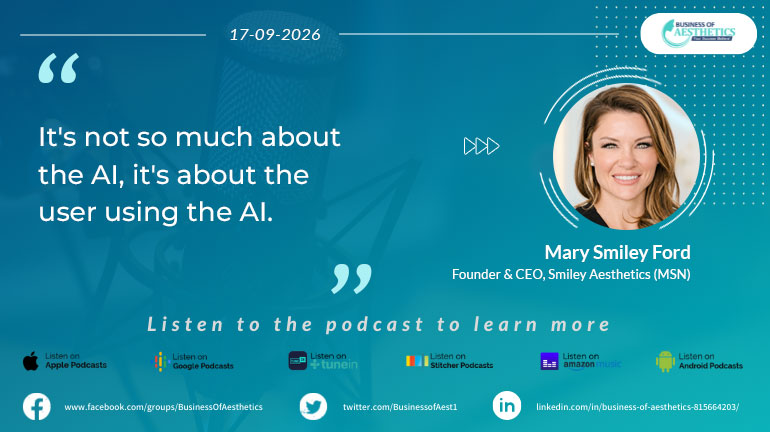
Mary: I’ll start, because this is one Carla and I can fight over who wants to go first. I’d argue we’ve both been using AI for a couple of years, and then about eight months ago I took a deep dive into it, per usual, probably a little aggressively and fast, and wanted everybody to do the same. It’s a constant work in progress, because AI is really about the user using it, the control and oversight you keep over it, it’s not set-it-and-forget-it. To this question specifically: front desk is the one thing we haven’t replaced. The chatbots and automated phone calls are amazing, I did a demo this week that blew me away, but we still have a human answering our phones, and we haven’t moved away from that, though I won’t say we never will. What we have made more efficient or fully replaced with AI includes a lot of the quality work Carla’s talking about, how we do quality checks and compliance using AI to assist, very much assisting rather than replacing for a lot of things. You can have Claude post to your Instagram, use connectors and plugins, we’ve spent the last six months trying to get as close to expert as possible. I’m completing my executive MBA next month with a whole semester specializing in AI. I’ll switch to Carla for a more hardcore list of what we’ve actually replaced.
Carla: Claude, obviously, is a good example, by no means am I claiming to be an expert, we’re not getting into coding or that kind of thing. But the connectors are fantastic. QuickBooks, for example, we haven’t replaced our controller, who’s probably too senior a role to replace and honestly the light of my life. But for a smaller or solo med spa, which is a lot of us, Claude connects to QBO. With little setup effort, you can talk to Claude and it’ll manage your books for you, which reduces the cost of someone reviewing them before taxes. Talking to Claude about finance-related things is fantastic, and the more it learns, the more it knows. I’ll admit I’m secretly afraid robots are going to take over the world and eat my dog, I really am, but in the meantime I’m going to keep allowing things to connect. Another example is Wix, we do a lot of our marketing in-house now, which we love, and we’re big fans of Ekwa Marketing, we’ve done all kinds of things with Business of Aesthetics. But Wix, for example, is huge, we no longer need anyone to really manage our website, because Claude integrates with Wix and Wix has its own AI built in, and for under $100 a month your whole website can be handled through the tools, bots, and agents in there. It hasn’t replaced our front end yet, we haven’t used AI to answer our phones, because I see the challenge, but I ordered a pizza the other day through an AI phone system and it was fantastic compared to six months ago, when I wanted to pull my hair out. The world is changing, and if you don’t change with it, you’re going to get left behind. One of our nurse practitioners, Amanda, said it well: if you were a VCR repairman, you lived your best life for about 20 years, if you didn’t become a DVD repairman, you didn’t have a job; if you did, your life continued. That’s where we are now. It’s up to you how you want to do things, but if you don’t shift with the technology, it is what it is.
I want to close with two things. First, patient care, PHI, and HIPAA are extremely important, and there are safeguards to make your AI use HIPAA compliant; that’s non-negotiable for anything touching patients. Second, the biggest takeaway for AI is learning to trust it, slowly and as it should be, and learning its limitations. There are limitations to Claude, regardless of what social media says, it’s very much like medical aesthetics: don’t get all your information from social media on AI either. It takes true education and real learning. That trust can be built, and it can seriously change your life and give you back your time, especially for solo or two-person practice owners. We’re about to start a free weekly series for our independent providers where Mary and I go back and forth on exactly this, how to be a solo owner and save money safely and compliantly.
- 00:28:48 – Final Advice: Building a Practice That Doesn’t Depend on One Person
- Anji closes by asking where an owner whose whole structure is built on holding onto people should look first.
- Carla points to agreements and having a backup plan, since non-compete protection varies by state and the market now has far more experienced injectors than it did five years ago.
- Mary reframes the fix as building the practice around the patient experience rather than around any one provider, and as setting clear expectations up front so providers aren’t caught off guard.
- Anji adds a practical closing point: memberships and loyalty programs create financial stickiness, so patients, and revenue, stay with the practice even if a specific injector leaves.
View TranscriptAnji: Before we go, one last thing from both of you. For the owner listening who’s realizing their whole structure is built on holding on to people, where’s the first place you tell them to look?
Carla: I’d say your agreements, the agreement with them, because we still live in a world where contracts are important. Do you have protections? Are you allowed to have them? And if not, what’s the backup plan? If you’re in California, non-competes don’t exist, they’re completely unenforceable. But as we’ve moved into this phase of aesthetics, so many more people are in the market and more experienced than they were five years ago, thousands more experienced injectors than five years ago. While someone leaving is detrimental in a lot of ways, it’s just not the world anymore, and you’ve got to have a plan B, your job description, whatever pieces you need to get someone else in. Just make sure you’re prepared, kind of like a disaster plan.
Mary: We used to build the practice around the provider. What Smiley’s done a little differently is build the practice around the experience, provider to provider, the experience doesn’t change within Smiley. We’re not pinned to any one person; we love our providers, and loyalty matters, there’s still a place for loyalty to an injector. But we tested this a bit, especially when I left one place and moved to another city, we didn’t lose people, because the experience carried on, and that’s what gets you the reviews. My concrete answer would be setting expectations, what’s happening and why. Look at yourself as a boss and practice owner first, but then the expectations you set for that provider are what matter most. If you expect them to post on social media twice a week, set that expectation on the front end, not roses and daisies, real expectations so they’re not caught off guard, because that’s what makes them start looking elsewhere. Money and paying people well matters, and we pay well on the front end with zero commission, but our expectations are set to match that. We’ve learned that over the years and gotten much better at it.
Anji: And the last practical thing I’ll add, stickiness. If your clients are under memberships, loyalty programs, and other sticky structures, they don’t leave, because you literally have them stuck to you financially and in other ways. That experience is everything, how many people do they interact with when they come into your place? The injector isn’t the only person they see if you have more people there. There’s a sticky situation where, just because the injector leaves, that doesn’t mean the client gets to just leave, that’s not how it works. It sounds cold, but it’s practical: get them stuck to you in other ways, so if a provider leaves, they’re not walking out with the revenue too.
- 00:32:50 – Closing & Call to Action
- Anji recaps the episode’s reframe: building a practice that profits when talent goes independent is a structural advantage, not a retention tactic.
- Listeners are pointed to Smiley Aesthetics as a proof point of the model working past seven figures and across state lines.
- The Ekwa Marketing offer is repeated to close the episode.
View TranscriptAnji: That was a hard look at talent, ownership, and structure with Carla Pearson and Mary Ford. If you’ve been managing your practice around the fear of losing your top injector, writing tighter agreements, layering on commission tiers, hoping the next one stays longer, this conversation should have given you a very different way to think about where that ambition belongs in your business model. Building a practice that profits when talent goes independent isn’t a retention tactic, it’s the difference between a business that shrinks every time someone grows and one that compounds. If Carla’s and Mary’s approach resonated with you, I’d recommend connecting with them and looking at what they’ve built at Smiley Aesthetics, where they’ve spent the last four years proving the model works past seven figures and across state lines.
As we wrap up, if you’re looking for clarity on the digital side of your practice, Ekwa Marketing is offering our listeners a complimentary 60-minute strategy session, a one-on-one conversation to help you map out a realistic 12-month roadmap for attracting high-value patients. Grab a time that works for you at www.businessofaesthetics.org/msm. I’m Anji, and this has been the Business of Aesthetics podcast. Thanks for listening, keep on leading.
GUEST – Carla Pierson, DNP, MBA, RN
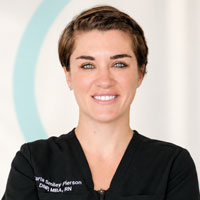
Carla Pierson is a healthcare leader turned entrepreneur who co-founded Smiley Aesthetics with her identical twin sister, Mary Smiley Ford. Raised in Nashville and a lifelong athlete, she built her academic path around leadership and operations, earning a nursing degree, a master’s in nursing administration, an MBA with a healthcare focus, and ultimately a Doctorate in Nursing Practice. Before Smiley, she spent over a decade in nursing leadership and corporate healthcare, most notably at HCA, working across critical care, hospital operations, and the business side of healthcare. That background shaped Smiley’s operational foundation and helped the company cross one million dollars in revenue in under a year. She now leads the company’s strategy and quality focus, with an emphasis on sustainable, methodical growth.
GUEST – Mary Smiley Ford, MSN
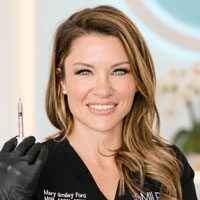
Mary Smiley Ford is a nurse, trainer, and entrepreneur who built Smiley Aesthetics from the ground up. She’s an accredited injectables trainer with certifications from many of the field’s top programs and is one of just 500 faculty injectable trainers for Allergan’s Medical Institute. She’s trained privately under leading names in the space, including ultrasound-guided injection work and advanced lip-injection technique, and has taught alongside international faculty on cadaver courses. Her own training curriculum is accredited by the American Association of Nurse Anesthetists and state Boards of Nursing, and she regularly hosts nationally recognized trainers at Smiley’s Nashville training facility. She’s a frequent conference speaker and faculty member, with credits including Aesthetic Next and The Medical Spa Show.
Learn more: smileyaesthetics.com/services/
HOST – Manjali Kulathunga
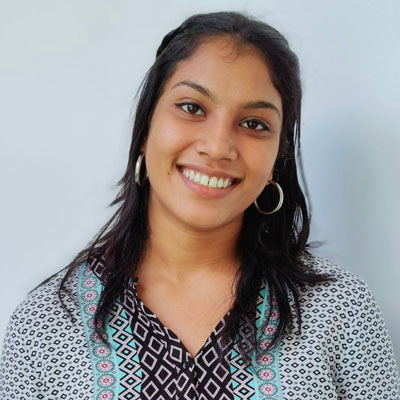
Drawing on her background in radio broadcasting, Angie brings confidence, energy, and a conversational approach to every virtual event she hosts. As the host of Business of Aesthetics (BOA) webinars and podcasts, she leads discussions with renowned industry experts, creating an engaging environment where knowledge is shared and meaningful conversations thrive.
Recognized for her approachable hosting style and strong communication skills, Angie excels at connecting with both speakers and audiences. Her ability to keep conversations engaging, encourage audience participation, and maintain a seamless flow helps make every webinar and podcast an insightful and enjoyable experience.
Connect with Us:
Category: Business of Aesthetics Podcast