Podcast: Play in new window | Download
Subscribe To Our Podcast




In this episode, host Don sits down with Dr. Mark Tager, CEO of ChangeWell Inc. and creator of The Art of the Healthcare Presentation, to solve a problem hiding in plain sight: the most technically gifted injector is often the weakest closer. The high-ticket case is rarely lost over price. It is lost in the quiet minutes of the consultation.
Dr. Tager breaks down why a researched patient is investigating, not sold, and how presence built on attention and intention lights up new possibilities instead of pushing product. He shares the practical moves that shift a consult, from splitting the injector and closer roles, to disarming “let me think about it” by surfacing the real objection, to creating genuine resonance by slowing down and truly listening.
He then makes the case for integrative aesthetics, the idea that real beauty also comes from within through nutrition, hormones, and gut health. From crossing the Rubicon with GLP-1s to capturing spontaneous, camera-ready testimonials, Dr. Tager lays out how the practices that treat the whole patient will own the next era of aesthetics.
Key Takeaways
- Stop treating researched patients as already sold. They are investigating whether to trust you, so your job in the consult is to earn faith, not to push a transaction.
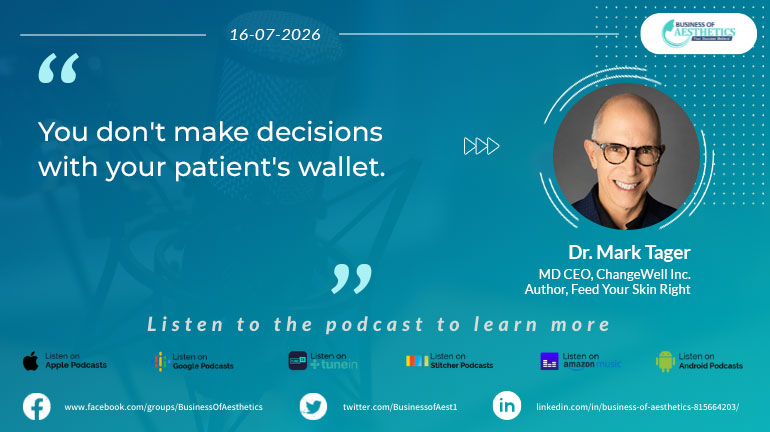
- Never spend your patient’s wallet for them. Lay out the full range of options and let them make an informed choice, because what feels expensive to you may be exactly what they value.
- Split the injector and the closer into two roles. Keep your most gifted injector injecting all day and hand higher-ticket treatment plans to a dedicated closer who has time to build rapport.
- Audit the entire patient journey, starting with the phone. Every touchpoint from the first ring to a messy bathroom is a hole where high-value patients quietly fall through the cracks.
- Disarm “let me think about it” by surfacing the real objection. Affirm the decision, ask what concern went unaddressed, then reframe that fear into a feature of your practice’s care.
- Move your practice from outside-in to inside-out. Add nutrition, hormones, and gut health to your model so patients heal better and tell their book club you treated the whole person.
- Capture spontaneous compliments on camera immediately. An uncoerced, heartfelt testimonial removes resistance for every prospect watching and is worth far more than anything you say about yourself.
Dr. Mark Tager showed that presence is not a personality you are born with but a system you can install across your whole team, and that the same principle applies to the digital first impression a high-value patient forms long before they walk in. This session is your chance to see exactly what that first impression looks like online and to build a presence that pulls the right patients into the room.

- Get a 1-on-1 diagnosis of your online presence & patient acquisition funnel
- Identify critical, untapped growth levers (SEO, Social, Referrals)
- Define a clear action plan to attract and convert your ideal patients
- Receive expert solutions for your most pressing marketing challenges
Resources

Live Webinar: Future-Proofing Your Aesthetic Practice: Decisions You Must Get Right in the Next 18 Months
Join industry experts to modernize operations, enhance patient experience, and drive sustainable growth.
Wednesday, May 20, 2026 @ 7:00 PM EST – 9:00 PM EST

Are you ready for the “GLP-1 Body” Era?
Download the 2026 Aesthetic Patient Behavior Model to see the numbers driving decisions this year:
- Why 73% of patients now define beauty by “individuality” over transformation?
- The shift away from non-invasive fat reduction (down ~40%).
- Real data on the rise of the male aesthetic patient.
Key Highlights:
- 00:00:14 – Introduction & The Presence Gap
- Don opens with the uncomfortable truth that practice growth problems are usually misdiagnosed as lead or pricing problems, when high-ticket cases are actually lost in the quiet minutes of the consultation.
- He introduces Dr. Mark Tager, CEO of ChangeWell Inc. and creator of The Art of the Healthcare Presentation, framing presence as an installable skill rather than an inborn personality trait.
- The episode is sponsored by Ekwa Marketing, the growth partner behind the podcast.
View TranscriptDon: Most practice owners are convinced that their growth problem is a lead problem or a pricing problem. But the uncomfortable truth is that most high-ticket cases are lost in the quiet 10 minutes of the consultation, by providers who can inject flawlessly but can’t carry a room. Welcome back to the Business of Aesthetics podcast. I’m your host, Don Adeesha. And to help us close the gap between a brilliant clinician and a fully booked one, we’re joined by none other than Dr. Mark Tager. Dr. Tager is the CEO of ChangeWell Inc. and the creator of The Art of the Healthcare Presentation, proving that presence is not a personality you’re born with. It’s a skill you can install. So today we are discussing why the most technically gifted injector is so often the weakest closer. We’re going to talk about how to defuse "let me think about it" in real time, and how to carry that same magnetic presence onto the camera, where today’s patients are actually deciding. This episode is brought to you by Ekwa Marketing, the growth partner behind this podcast and a trusted resource in the aesthetic community. Dr. Tager, welcome to the podcast.
Dr. Tager: Thank you so much. My pleasure to be here.
- 00:01:33 – They’re Not Sold, They’re Investigating
- Dr. Tager pushes back on the premise that a researched, ready patient is already sold, reframing them as investigating whether the provider is worthy of their trust.
- He introduces his model of presence, distinguishing it from mindfulness by pairing attention with intention.
- He warns that when the intention is to sell, patients feel it; the real outcome of presence is to light up new possibilities in the patient’s mind.
View TranscriptDon: Absolutely. So let’s start inside the room, Dr. Tager. Picture the patient who already walked in already sold. They’d researched you. They wanted the treatment. Money wasn’t really the issue. And they still left without booking. When you replay that consult in slow motion, what’s the precise moment the provider lost them?
Dr. Tager: I’m going to take issue with your terms. They’re not already sold. They’re investigating and watching and learning and trying to determine whether you are the right person for them to place their faith and trust in. And for me, this comes down to what I call an issue of presence, practitioner presence. Let me take a couple of minutes to go through a model that we use when we think about presence. Presence is different from mindfulness. We hear a lot about mindfulness, which is wonderful. Breathe, let it flow. But in the healthcare setting, you have attention and intention. You have to pay attention to your patient, but you also have an intention. There are a set of skills that you need in order to be a great clinician, and there is passion. Why are you doing this? Well, you have an intention. Now, if your intention is to sell, then that is the wrong intention, because we all know when we’re being sold. The real outcome of presence is to light up new possibilities in the minds and hearts of your prospect or your patient. So if you think you’re trying to sell them some syringes of filler or a neurotoxin or the latest body shaping treatment, you’re making a mistake. What you’re trying to do is attend to them, be there, have your intention be lighting up possibilities, and learn the skills of really good listening, of attending to body language, of leaning in, of trying to mirror and relate and have resonance with your patient, have passion for what you’re doing, all of this in service of new possibilities for them.
- 00:04:15 – Budget vs. Intention: Never Spend the Patient’s Wallet for Them
- When staff blame the cheap patient, Dr. Tager argues the lost sale usually reflects a failure to light up possibilities, not a genuine budget ceiling.
- He notes people prioritize what matters to them, arguing over a small copay yet spending thousands on aesthetics.
- His rule: never make decisions with your patient’s money; lay out the options and let them choose.
View TranscriptDon: Now, Dr. Tager, staff often blame the cheap patient. How much of this lost moment is actually the patient’s budget versus the provider’s lack of intention?
Dr. Tager: Look, there are always budget considerations for people. But I’m amazed how, in the old days, people would come into a practice that took both insurance and cash pay, and they would argue with the receptionist about a 30 or 40 dollar copay, then walk down the hall and spend 2,500 dollars for fillers and neurotoxins. So people prioritize what is important to them. What that says is that you’ve not made the case to light up the possibilities for them. They do not leave convinced and enthusiastic. They may have issues about your competence. They may get subtle vibes about the quality, from little things like going into the bathroom and seeing it’s messy, or seeing the staff stressed out. All of that contributes. That ambience is really important in the cash-pay healthcare setting, particularly in aesthetics. And here’s another barrier that comes up: you never want to make decisions with your patient’s money. You don’t know what’s important to them. You don’t know what they value. You may think, oh my goodness, 3,000, 3,500 dollars for all of this product. That may feel like a lot to you, but you can’t put a price tag on that for your patients. So you never make those decisions. You lay out the options, you lay out the choices, you put forth the possibility, and you let them make an intelligent, informed decision.
Don: That’s a very interesting framing. You are not there to make the decision for them, but rather to uncover the possibilities.
Dr. Tager: Exactly. You don’t make decisions with your patient’s wallet.
- 00:06:29 – Why the Best Injector Isn’t Always the Best Closer
- Dr. Tager resists a blanket claim, noting some world-class injectors are also magnificent communicators who project relaxed competence.
- He distinguishes the skills that drive technical excellence from the skills of persuasion, arguing a surgeon should be excellent at the craft first.
- For higher-ticket items, he recommends the practice have a dedicated closer, keeping the gifted injector focused on injecting, while smaller practices have to do it all until they grow.
View TranscriptDon: Okay. Now, Dr. Tager, you spend your life around technically brilliant injectors, genuinely world-class hands. So why is it so often that the exact same person, the most clinically gifted one in the building, turns out to be the weakest one in the consult chair?
Dr. Tager: They may, or they may not. There’s a spectrum. There are some magnificent injectors who are magnificent communicators, who resonate and take the time and have an aura of relaxed competence. So I don’t know that you can make that judgment across the board. But if you look at what drives people into certain professions, I don’t necessarily want my surgeon to be a brilliant communicator who sells me on possibility. I want him to be excellent at the craft of surgery. So I’ll cut a lot of people slack if they’re very good. They need to project confidence, they need to lay out the possibility for the patient, but for the higher-ticket items, you want someone in the practice who is the closer. I don’t believe most injectors or practitioners should discuss money. I think they should frame up a rough treatment plan and then hand that off to someone who can spend the time, develop rapport, get to know the patient, and present the treatment plan and close the case. The really good injector who gets great results should be doing that all day long. That’s what they’re good at. That’s what they love to do. That’s what will build the practice. They don’t necessarily need to be closer.
Don: Now, on the surgical side, why do you consider it so important to divide that duty?
Dr. Tager: In some of the larger practices, the great injectors should inject. That’s what they should do. Now, if you are a smaller practice, then you have to do it all. If you’re a nurse practitioner starting out and you’re not crazy busy, then you do need to develop that skill set, because early on you do everything. If and when you get bigger, you hand it off. But think about what your time is worth. If you look at the money you have to generate per room per hour, you’re better off, as a great injector, injecting, and having someone else do the informing and the treatment plan. But if you’re just starting out, you have to do it all.
- 00:10:42 – The Patient Journey Starts When the Phone Rings
- Dr. Tager reframes closing as understanding the entire patient journey, which begins the moment the phone rings.
- Every touchpoint, what patients see, smell, and hear, is a stage where they can fall through the cracks.
- Excellence is required at each stage: the call, the reception experience, the consult, the follow-up, and the Q&A.
View TranscriptDon: Closing truly is a full-time role in itself.
Dr. Tager: If you think about it, you have to understand the patient’s journey. That journey begins when the phone rings, when they call your office, and whether that person is so charming and engaging and positive that they pull the caller right through the airwaves into your reception area. It begins with how they’re treated, what they see, what they smell, what they hear. These are all stages along a journey, and you’ve got to become excellent at all of them, because they’re all potential holes where patients fall through the cracks. The consultation is one part of the patient journey. The follow-up, the Q&A, all of those are pieces in that journey.
- 00:11:20 – The Art of the Healthcare Presentation: 20 Teachable Skills
- Dr. Tager describes his system of 20 teachable skills for being great on stage or on camera, built well before the pandemic shifted everyone to video.
- He notes a swing back toward live meetings, with more practitioners wanting to speak from the podium at events like the Aesthetic Show and AMWC.
- His book Enhance Your Presence covers presentation anxiety, vocal power, pausing, structure, gestures, and body language, and the same skills apply whether you address 10 people or 1,000.
View TranscriptDon: Now, your Art of the Healthcare Presentation system has 20 teachable skills in it.
Dr. Tager: Yeah, that was a piece I did some years back to help practitioners be great on stage or on camera. Before COVID, people aspired to be on the podium. Then COVID hit and you had to learn skills for the camera. But now things are shifting back to larger meetings. I’m seeing many more practitioners who want to be on stage. They have a message and they want to get it across. I do a lot of work with Informa. I run the integrative aesthetics track for the Aesthetic Show and for the Miami meeting, AMWC, and we’re increasingly seeing people say, hey, I want to be on the podium, I want to speak. Those podium skills were never taught to us. When you went through medical school, or as a PA or an NP or a nutritionist, you were never taught how to deliver a powerful, impactful presentation that moves people. I have a book called Enhance Your Presence, available on Amazon, that summarizes those 20 skills. It walks people through how to conquer presentation anxiety, how to channel that energy, the power of the voice, pausing, organizing a presentation, gestures, body language. All of those are learned skills. And they’re the same skills that apply if you’re doing a small workshop on a Saturday, inviting 20 patients and prospects in. Whether you’re talking to 10 people, 20 people, or 1,000 people, they’re the same skills.
- 00:14:22 – The One Skill to Install This Month: Presence & Resonance
- Asked for the single highest-leverage skill, Dr. Tager says to shut up, breathe, make eye contact, mirror body language, and ask the patient what’s going on.
- He pushes past the mirror moment to deeper discovery, asking how a change would affect the patient’s energy, confidence, and self-projection.
- He introduces heart-based resonance, grounding a "California" idea in the measurable electromagnetic field of the heart to explain why genuine service creates connection.
View TranscriptDon: What’s the one skill that our listeners can install across their team this month, the one that moves the needle most in a live consult?
Dr. Tager: In a live consult? You know what I think it is? It is to shut up, to breathe, to make eye contact, to mirror body language, and to ask, tell me what’s going on. Usually you give them the mirror. What do you like, what don’t you like? But then there’s a step beyond that. Tell me a little about your life, what you’re doing, what you’d like to change. If we were to change this for you, how would that affect your energy, your confidence, the way you project yourself? All of that has to do with getting that relationship. I’ll give you a strange little example. You can detect the energy from the heart with an electromagnetometer three feet from the body. You can’t detect the brain waves at that distance because they’re encased in bone, but the heart energy can be measured three feet from the body. So when you’re standing within six feet of someone, you have the capacity to create resonance. Resonance is when the heart energy of two human beings connects. I know this is a little out there, and I live in California, but there’s real science here. If you’re doing nothing else, you’re breathing, you’re slowing down, you’re making eye contact, you’re mirroring body language, and you’re coming from a place of genuine service, trying to create those possibilities in their minds and hearts. Then it just happens. You’ll notice something changes in the middle of the interaction. Something feels like, wow, we really hit it off, I really like her, she understood what I was saying. She’s in. She loves our practice. That’s the concept of resonance. It’s a little California, but it really is grounded in science.
Don: It’s true. These are some of the things that you feel intuitively, but we don’t always know how to execute it, how to think about it, or even whether it’s proven. We just overlook it and focus on what we can see, the numbers.
- 00:17:41 – Catching People Doing Something Right
- Dr. Tager recalls live "mystery call" workshops that exposed how often practices lose patients at the very first phone touchpoint.
- He argues practices under-affirm their clinicians and don’t celebrate the skill of their injectors enough.
- Drawing on his book Working Well with Margie Blanchard, he champions catching people doing something right and praising them on the spot to build a healthy culture.
View TranscriptDr. Tager: You have to go beyond the numbers. The numbers are important. When I was running practice management for A4M some years ago, I lost some friends. Let me tell you why. I would do these workshops with large groups, 100 or 200 people, and I’d say, who would like to volunteer to let me call your practice? I’ll put it on the speaker so we can all hear. And the call would go, "Doctor’s office, can you hold?" "I don’t know, we just got that device, I don’t know anything about it, but I’m sure it’s going to be good." That’s the first place we lose people in the patient journey. Part of that is training, and part of it is having happy people. There’s nothing like having happy people in a practice who believe and trust you. I also believe we don’t affirm our clinicians enough. Dr. Smith is so wonderful with his hands. Our injector, Jenny, she’s fantastic. She’ll use just the right amount in just the right places to get you that beautiful, natural result. Can I schedule you for this Thursday morning or Friday afternoon? We don’t hear enough of that. I did a book many years ago called Working Well with Margie Blanchard, whose husband wrote The One Minute Manager. The concept was always to catch people doing something right and praise them right then and there.
- 00:19:21 – The Director of First Impressions
- Don references a prior guest, Jay Shorr, who called the front desk team member the "director of first impressions."
- Dr. Tager, a longtime friend of Shorr, affirms the title and shares a story of praising a standout front desk employee directly to the practice owner.
- The lesson: the upbeat energy in someone’s voice is worth calling out, and on-the-spot praise builds culture.
View TranscriptDon: It’s truly one of the most underrated roles in the practice. I think it was Jay Shorr, another podcast guest a couple of weeks back, who mentioned that the front desk team member is usually the director of first impressions.
Dr. Tager: Yes, exactly right. Jay and I go way, way back. We’re really good buddies. We see him all the time on the courses. We called that person the director of first impressions. It’s interesting, I called an office the other day and the front desk was fantastic. The woman who answered was cheerful and bright and helpful. So I talked to the owner of the practice and said, I have to tell you, please praise her, because she did an amazing job. You could hear the upbeat nature in her voice. That’s another important thing. If you catch people doing things right, that creates a nice, healthy culture. She heard what I said and went and praised the front desk person: that was Dr. Tager on the phone, and he said you did an amazing job. Thank you so much, you’re so important to the practice.
- 00:21:17 – Sponsor Break: Ekwa Marketing
Dr. Mark Tager showed that presence is not a personality you are born with but a system you can install across your whole team, and that the same principle applies to the digital first impression a high-value patient forms long before they walk in. This session is your chance to see exactly what that first impression looks like online and to build a presence that pulls the right patients into the room.
View TranscriptDon: Dr. Tager just handed us something pretty rare: a teachable skill you can install across your whole team by Monday. That’s his entire premise. Presence isn’t a personality, it’s a system you can build. And here’s where most owners stop short. They’ll install a system in the consult room and leave the first consult, the one that happens on their video, their reel, their bio page, completely unbuilt. So flawless presence in the chair doesn’t help if your digital presence is already sending the patient elsewhere. That’s the gap our sponsor, Ekwa Marketing, closes. Their complimentary marketing strategy session is 60 minutes with a senior strategist who shows you what your presence actually looks like to a high-value patient online. So the people we’re teaching you to close are the ones who walk in to begin with. Go ahead and book your consult at www.businessofaesthetics.org/msm. That’s www.businessofaesthetics.org/msm. It’s a completely complimentary meeting for our listeners.
- 00:22:37 – The Five Most Expensive Words: "Let Me Think About It"
- Dr. Tager’s response to hesitation is to affirm the patient and treat it as a big decision, never to fold or quietly discount.
- He surfaces the real objection by asking what questions or concerns went unaddressed, then reframes fears like pre-wedding bruising into features and benefits.
- He uses nutritional support as a differentiator, turning a doubt into evidence of the practice’s integrative care.
View TranscriptDon: So, Dr. Tager, let’s talk about the four most expensive words in aesthetics: let me think about it.
Dr. Tager: That’s actually five words.
Don: The instant a patient says that, most providers either fold or start quietly discounting, in that exact moment before they’ve left the room. What do you actually say back?
Dr. Tager: I affirm the patient. I say, absolutely, this is a big decision. We need you to be completely comfortable with this. If there’s more information you need, if I can show you more before-and-afters, if we can break this down and start with something small and actionable rather than a larger treatment plan, let’s do that. So you acknowledge the fact that people have issues and fears and doubts, and you ask, are there any questions or concerns you didn’t get addressed? You might surface something. "Yeah, I’ve got this wedding six or eight weeks from now, and I’m really afraid I’m going to be bruised." Great. What we’ve found is that most people don’t bruise, and those who do are totally resolved over a three-week period. Plus, we’ll work with you on your nutrition so you have all the vitamins and minerals you need to heal quickly as we help remodel your collagen. So you take that objection and turn it around to focus on the features and benefits of your practice. People say, oh, hmm. Those are just little pieces.
- 00:24:46 – Integrative Aesthetics: Beauty From Within
- Dr. Tager frames integrative aesthetics, the subject of his 12th book, as a 40-year conviction that real beauty must also come from within through diet, hormones, and gut health.
- He explains why two patients getting the identical procedure heal differently, citing tissue nutrients and vascular health as the divide between a great result and delayed healing.
- He argues GLP-1s have pushed 60 to 70 percent of US med spas to cross the Rubicon from outside-in to inside-out care, opening the door to nutrition, hormones, and lifestyle work.
- He sees this internal-plus-external approach as a primary way practices will differentiate themselves going forward.
View TranscriptDr. Tager: Now, my whole reason for being is integrative aesthetics. That’s my latest book, my 12th book. I’ve been advocating for 40 years that if we really want to create beauty, it also has to come from within. We have to look at diet and hormones and gut health and so many internal factors. I believe that’s one of the major ways practices will distinguish themselves in the future. So when that patient leaves and goes to her book club, she says, when I met with my aesthetic practitioner, she talked about my diet and my nutrients, and she made a referral to a doctor who could help me with my hormones. So much of looking good is feeling good, energy, vitality. You’re not going to get that glow if you don’t have good circulation or good tissue health. I ask practitioners all the time: the best surgeons do the exact same procedure on two different patients. One heals magnificently and looks really great. The other has delayed wound healing, continued swelling, continued redness. Pardon my French, but that’s a condition I call PPP, piss-poor protoplasm. They don’t have the tissue nutrients they need to make new collagen, and they don’t have the vascular health in that tissue. One of the things I really like is the GLP-1s. Sixty to seventy percent of the med spas in the United States are doing GLP-1s. That means they have crossed the Rubicon. They’ve gone from just outside-in to also doing inside-out. Once you start doing that, if you take it to heart and want to do it ethically and honestly, then you are in the realm of looking at nutrition, lifestyle, exercise, nutrients, hormones, and gut health, all the things necessary to create well-being from the inside out. That’s been the work I’ve been doing for a long time, and I’m gratified now to see more and more practices doing it. When I speak at aesthetic conferences, I ask for a show of hands: who’s doing blood work, nutrition work, lifestyle counseling, hormone work, peptides? We’re seeing this crossover, inside-out meets outside-in.
Don: That’s great news. The outcome is going to be so much better.
Dr. Tager: So much better.
- 00:28:44 – Manufacturing Presence Through the Camera
- With many consultations now starting on video calls and reels, Dr. Tager says you must first decide who you want to be on camera by choosing a persona.
- He contrasts two successful surgeon friends, one playful and dancing, one serious and somber, to show authenticity matters more than a single right style.
- The winning formula blends a personal reveal, short educational value with a strong hook, and a showcase of the practice and its people.
View TranscriptDon: So, Dr. Tager, recently more and more real consultations happen before anyone sets foot in the building: video calls, Instagram reels. How do you manufacture that same in-room presence through a camera lens?
Dr. Tager: It’s really interesting. First of all, I’ve got a chapter in my latest book about personas. You have to decide who you want to be on camera. I’ve got two friends who are fabulous facial plastic surgeons. They both get incredible results. One of them is dancing through life, encouraging her patients, doing fun, creative things, literally dancing in skits. The other answers questions very seriously and somberly. Both get phenomenal outcomes, but they are night and day in the persona they project. People want to see who you are. They want to get a sense of you. So you have to have a level of authenticity. That’s what comes through. I’m not going to be dancing on camera, although I could in the old days. I’m going to come across as trying to instill these possibilities for practitioners to be better. Usually what you’re looking at is a mix on camera. You’re doing a little reveal about yourself and what makes you tick, so people say, oh, I love that reel with you and your dog last week, I love seeing you in your garden. They see you as a whole person, which is wonderful. But you’re also giving them information and guidance, short, sweet, to the point, with a big hook. I’ll bet you’re confused about what vitamins and minerals to take for glowing skin. Let me fill you in. One, two, three, four. More questions? Come see me. So you’ve got the hook, a bit of persona, some education, and you’re showcasing your practice and the people in it.
- 00:31:35 – The Million-Dollar Spontaneous Testimonial
- Dr. Tager’s long-standing advice: the moment a patient offers a spontaneous compliment, thank them and ask to capture it on camera right then.
- A spontaneous, uncoerced testimonial is worth a fortune because it is authentic and from the heart; if they decline, simply ask for a good review and a referral.
- These captured moments validate the decision for every prospect watching and remove resistance by letting them see someone just like themselves.
View TranscriptDr. Tager: The other thing I’ve advocated forever: anytime a patient gives you a spontaneous compliment, you very simply say, Roberta, thank you, that means the world to me. We work so hard to get these results for our people. Would you be willing to say that same thing on camera? I’ll have our office manager come in, and you can just say what you said to me. We’d love to be able to use that. That testimonial is worth a million bucks because it’s from the heart, it’s authentic, it’s spontaneous, they’re not coerced. If they say yes, you shoot it. If they say no, you say, no problem, leave us a good review, and if you have any friends or family members, we’d be honored to take care of them as well. Either way you win. When a patient says, she was amazing, I feel 10 years younger, I went to my reunion, make sure to catch those things on video.
Don: Amazing. That gives a next-level of validation to anyone who’s watching.
Dr. Tager: Exactly. It confirms for them that they made the right decision coming to see you. It takes the resistance out, because there’s somebody kind of like them. A young woman says, I love my lips, she’s such an artist, they’re so perfectly filled. That’s worth a lot.
- 00:34:16 – Where to Find Dr. Tager & Closing
- Dr. Tager points listeners to LinkedIn, his Instagram handle @drmtager, and email at contact@drtager.com.
- He recommends his Amazon books Feed Your Skin Right and Integrative Aesthetics, the latter functioning as a practice management guide for adding wellness products and services.
- Don closes by inviting listeners to book Ekwa Marketing’s complimentary 60-minute strategy session at www.businessofaesthetics.org/msm.
View TranscriptDon: That’s indeed worth a lot. So, Dr. Tager, where can our listeners find you and get in touch with you?
Dr. Tager: I’m on LinkedIn, so I’m easy to find there. My Instagram handle is @drmtager. I’m just starting to do some TikTok work. Those are the two best ways, LinkedIn or @drmtager. You can also reach me at contact@drtager.com. And I’d encourage people to go to Amazon. I’ve got a book called Feed Your Skin Right and another called Integrative Aesthetics. Both are easy reads, with big text, pictures, graphs, and a lot of white space. The Integrative Aesthetics book is especially helpful because it’s essentially a practice management book on how to incorporate new wellness products and services into your practice.
Don: Dr. Mark Tager, thank you very much for spending your time with us.
Dr. Tager: Okay, take care. Thanks.
Don: So as we wrap up, if you’re looking for clarity on the digital side of your practice, Ekwa Marketing is offering our listeners a complimentary 60-minute strategy session, a one-on-one conversation to help you map out a real plan for attracting high-value patients. You can grab a time that works for you at www.businessofaesthetics.org/msm. That’s www.businessofaesthetics.org/msm. I’m Don Adeesha. This has been the Business of Aesthetics podcast. Thanks for listening. Keep on leading.
GUEST – Dr. Mark Tager
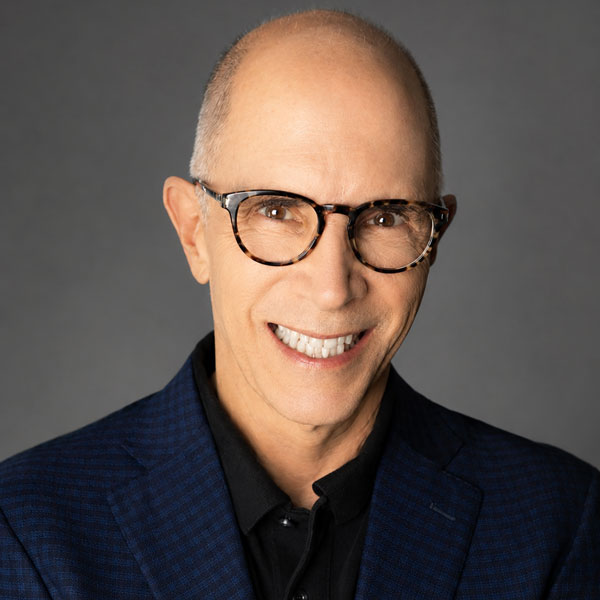
Dr. Mark Tager is one of the most versatile operators in the business of aesthetics and integrative medicine, a physician who has spent five decades at the intersection of clinical practice, company-building, and the craft of communication. Known widely as “The Healthcare Synergist,” he is CEO of San Diego–based ChangeWell Inc., where he trains and coaches healthcare practitioners to sharpen their presence in person, on camera, and online. A veteran of more than 1,200 programs worldwide, he has trained thousands of providers in the skills that quietly separate the practices that grow from the ones that stall, not just clinical excellence, but the messaging, positioning, and patient communication that turn expertise into a thriving business.
Beyond his coaching and consulting work, Dr. Tager is a true multi-vertical operator. He founded one of the first integrative medicine centers in the U.S. in 1977, went on to direct health promotion for Kaiser Permanente Oregon, and later served as founding marketing VP for the Fraxel laser and Chief Marketing Officer for Syneron, giving him a rare inside view of how aesthetic technologies actually reach the market. He lectures internationally for medical device, nutraceutical, cosmeceutical, and biotech companies, has served as course director for A4M/MMI’s Practice Enhancement Training program, sits on the faculty at Duke Integrative Health, and authored a 40-hour CME course in Personalized Nutrition for the American Nutrition Association. A graduate of Duke University for both his undergraduate and medical training, he is the author or co-author of eleven books, including Feed Your Skin Right: Your Personalized Nutrition Plan for Radiant Beauty and Enhance Your Presence (with Robert John Hughes). He brings a deep grounding in aesthetic, lifestyle, regenerative, and integrative medicine to every stage and conversation.
Learn more: www.drtager.com
HOST – Adeesha Pemananda

A seasoned marketing professional and a natural on-camera presence, Adeesha Pemananda is a skilled virtual event host and presenter. His extensive experience in brand building and project management provides a unique strategic advantage, allowing him to not only facilitate but also elevate virtual events.
Adeesha is known for his ability to captivate digital audiences, foster interaction, and ensure that the event’s core message resonates with every attendee. Whether you’re planning a global webinar, an interactive workshop, or a multi-session virtual conference, Adeesha brings the perfect blend of professionalism, energy, and technical savvy to guarantee a successful and impactful event.
Connect with Us:
Category: Business of Aesthetics Podcast