Podcast: Play in new window | Download
Subscribe To Our Podcast




In this episode, host Don Adeesha joins double board-certified dermatologist and somatic trauma specialist Dr. Kiera Barr to explain why a clinically excellent aesthetic consultation can still end with, “Let me think about it.” They reveal how rushed communication and unseen nervous-system responses can quietly undermine trust before price or treatment quality ever becomes the deciding factor.
Dr. Barr breaks down the visible and subtle signs of fight, flight, and shutdown, from shallow breathing and repeated reassurance-seeking to silence, flat affect, and disengagement. She shares practical ways to regulate provider presence, slow the pace, ask better questions, use consent-based touch, and design the full patient journey – from scheduling and the waiting room to the consultation and follow-up – around safety.
Her framework centers on helping patients feel safe, seen, soothed, and secure while keeping nervous-system awareness ethical and free from manipulation. The final message is clear: regulation is not about staying calm; it is about consistently returning to a grounded state so the entire team can build stronger relationships, better outcomes, and a more trusted practice.
Key Takeaways
- Build safety before presenting the treatment plan. Train providers to regulate their pace, breath, gaze, and presence so patients can process information instead of shifting into protection mode.
- Treat withdrawal as a signal, not agreement. Watch for quietness, flat affect, repeated apologizing, shallow breathing, and reassurance-seeking, then slow down and ask what feels concerning.
- Replace pressure with disciplined curiosity. Ask what transformation the patient expects so you can identify unrealistic hopes, communicate value accurately, and decide whether treatment is appropriate.
- Design the entire patient journey around trust. Audit scheduling, front-desk interactions, waiting-room sensory cues, assistant handoffs, consultation language, examination touch, and follow-up for points that create unnecessary stress.
- Make presence a trained operating standard. Use short huddles and pre-patient resets so nervous-system awareness remains consistent even when the schedule is full or the team is under pressure.
- Protect consent while improving the experience. Use appropriate, unrushed touch and clear communication to help patients feel supported without turning nervous-system awareness into a persuasion tactic.
- Measure relationship quality as a business asset. Patients who feel seen and cared for are more likely to move forward, remain satisfied through adjustments, return, and refer others.
Dr. Kiera Barr emphasized that sustainable patient trust begins before the treatment plan, with a practice experience that helps people feel safe, seen, soothed, and secure. This session is the logical next step for identifying where your patient journey is quietly losing trust and building a clearer path from initial interest to confident treatment decisions.

- Get a 1-on-1 diagnosis of your online presence & patient acquisition funnel
- Identify critical, untapped growth levers (SEO, Social, Referrals)
- Define a clear action plan to attract and convert your ideal patients
- Receive expert solutions for your most pressing marketing challenges
Resources

Live Webinar: Future-Proofing Your Aesthetic Practice: Decisions You Must Get Right in the Next 18 Months
Join industry experts to modernize operations, enhance patient experience, and drive sustainable growth.
Wednesday, May 20, 2026 @ 7:00 PM EST – 9:00 PM EST

Are you ready for the “GLP-1 Body” Era?
Download the 2026 Aesthetic Patient Behavior Model to see the numbers driving decisions this year:
- Why 73% of patients now define beauty by “individuality” over transformation?
- The shift away from non-invasive fat reduction (down ~40%).
- Real data on the rise of the male aesthetic patient.
Key Highlights:
- 00:00:11 – Introduction: Why Excellent Consultations Still Lose Patients
- A patient may receive a clinically sound treatment plan and still leave without moving forward because the consultation did not feel safe enough to process.
- Don introduces Dr. Kiera Barr, a double board-certified dermatologist, somatic trauma specialist, educator, author, and founder of the Center for Mind-Skin Medicine.
- The episode examines trust, nervous-system signals, and how practices can create a more supportive patient experience without disrupting the schedule.
View TranscriptDon: Here is something most practices never think to track. A patient can sit through a clinically excellent consultation and still walk out without moving forward – not because the treatment plan is wrong and not necessarily because of price, but because their body never received the signal that it was safe enough to fully process the conversation and make a decision.
Don: Welcome back to the Business of Aesthetics podcast. I am your host, Don Adeesha, and joining me today is Dr. Kiera Barr. Dr. Barr is a double board-certified dermatologist, somatic trauma specialist, author, educator, and founder of the Center for Mind-Skin Medicine. She has spent more than 20 years examining the connection between the nervous system, the skin, emotional well-being, and the patient experience.
Don: Today, we are exploring why a rushed examination room can quietly undermine trust, what a nervous patient may be communicating before they ever say, ‘Let me think about it,’ and how practices can build a more nervous-system-informed patient experience without disrupting the entire schedule. This episode is brought to you by Ekwa Marketing. Dr. Barr, welcome to the Business of Aesthetics podcast.
Dr. Barr: Thank you. Happy to be here.
Don: You have spent years looking at how the nervous system responds to a room, a provider, and even a diagnosis. Was there a particular moment when you realized that a consultation could go clinically perfectly and still fall apart – not because of the treatment plan, but because of what was happening inside the patient’s body?
- 00:02:08 – Survival Physiology and the Mind-Skin Connection
- The nervous system continuously evaluates whether an interaction feels safe or threatening, often outside conscious awareness.
- Visible signs such as flushing, sweating, warmth, and changes in breathing can reveal a shift into fight-or-flight physiology.
- Providers can improve awareness of patient cues by first learning to notice their own nervous-system responses.
View TranscriptDr. Barr: Before my own health fell apart and I had to start doing this work, no, I would not have known. I would have thought the problem was something outside what was happening in the exam room rather than the communication and connection between people.
Dr. Barr: One of the biggest lessons is that you can give a wonderful explanation, break everything down, and provide all the information a person needs. But outside conscious awareness, the nervous system is asking, ‘Am I safe? Is this life-threatening? Do I need to go into protection mode?’ If the answer is, ‘This is not safe,’ that person’s nervous system shifts into survival physiology during the conversation. You can see it happen if you know what to look for.
Don: Talk to us about survival physiology. What is it, and why do we not want to get there?
Dr. Barr: You might wonder why this matters for skin, aesthetics, or the business of aesthetics. It goes back to science. The nervous system and skin are intimately connected and embryologically linked. In utero, those tissues and organs form from the same layer of tissue. They communicate before birth, and that communication never stops.
Dr. Barr: During a consultation, a client may begin to flush. Or you may be excited about the latest treatment and trying to make a strong impression while your palms or underarms become sweaty. That is your nervous-system state becoming visible on the surface. It is a real-time mind-skin connection.
Dr. Barr: That response is not automatically a problem, but it tells you that the nervous system has shifted into a mobilized state and the sympathetic fight-or-flight response has activated. We can learn to feel it in ourselves first, which helps us recognize it sooner in the person sitting in front of us.
- 00:04:55 – Safety, Presence, and Vulnerability in Aesthetic Care
- Nervous-system support should be considered in every consultation, beginning before the provider enters the room.
- Patients evaluate body language, gaze, vocal pace, pressure, and the overall quality of a provider’s presence before fully processing the treatment explanation.
- Aesthetic consultations are inherently vulnerable because patients may arrive carrying shame, criticism, or a belief that something about them needs to be fixed.
View TranscriptDon: You mentioned that a patient may be asking, ‘Am I safe with this treatment? Is this life-threatening?’ Is nervous-system awareness something to address every time, or only when you notice changes in breathing, flushing, or tension in yourself or the patient?
Dr. Barr: Goosebumps, flushing, and warmth tell you that something has already happened. I would say this needs to be considered every single time and before you even walk into the room.
Dr. Barr: Before the nervous system takes in what you are saying, it takes in the quality of your presence. We all engage in relationships constantly. There are people who enter a room and immediately create ease – you think, ‘That is my person; that is my vibe.’ With someone else, you may feel more alert.
Dr. Barr: The difference can be body language, the pace and prosody of the voice, the gaze, and many other cues the nervous system is always receiving. We have done this our entire lives, but it matters enormously in the consultation room.
Dr. Barr: I presented at an aesthetic world congress about trauma and the exam room. Across multiple studies, I was surprised to find statistics suggesting that upwards of 90% of individuals seeking aesthetic procedures have a history of trauma.
Dr. Barr: Trauma is not necessarily one singular event. It is how an experience affects our capacity to adapt. We are wired to adapt to stress, but when a stressor overwhelms the system, we may not bounce back easily. We can shift into fight-or-flight survival physiology and sometimes remain stuck there.
Dr. Barr: When we talk about whether something feels safe or unsafe, it is not always about the provider as an individual. The provider’s presence, stance, voice, pace, or felt pressure may resemble something from the patient’s past and reactivate it in the exam room.
Dr. Barr: A person seeking an aesthetic procedure may want to enhance something or may feel shame about it. That is a vulnerable experience. Patients can arrive believing there is something about them that needs to be fixed. We can approach them with the message, ‘There is nothing about you that needs to be fixed. How is this affecting you?’ That helps them feel seen and understood.
Dr. Barr: People who repeatedly seek procedures despite technically excellent results are not necessarily acting from vanity. Sometimes it is survival biology – an attempt to feel safe in a visible body within a culture that promotes flawless appearance. Their body may have been criticized, judged, or shamed earlier in life. The consultation room can give them a different experience.
Don: I love that. It frames so much of what the aesthetics industry does because many elective treatments are connected to confidence. The idea that so many people seeking these treatments may have experienced trauma is surprising, but it also makes sense.
- 00:10:45 – Creating Safety: Seen, Soothed, and Secure
- The consultation is a relational experience, and providers can help patients feel safe, seen, soothed, and secure without becoming therapists.
- A brief provider reset before entering the room can change the tone of the interaction and reduce the pressure a nervous patient feels.
- Patients often rely on the steadiness of another person’s nervous system to regulate their own response during a vulnerable decision.
View TranscriptDr. Barr: So much trauma happens in relationships. In childhood, people may be told to suck it up, not cry, not talk, or make themselves small. A consultation is also a relational dynamic, so we have an opportunity to create something different.
Dr. Barr: Dr. Dan Siegel has shared that healing happens in relationships when people feel safe, seen, soothed, and secure. His work was not specifically about aesthetics, but the principle applies. A person comes to you with a vulnerable request and may feel that something about them needs fixing.
Dr. Barr: Helping that person feel safe, seen, soothed, and secure does not require overhauling the entire practice. It begins with checking in with your own nervous system. Are you harried or rushed? Can you place a hand on your chest, slow down for 30 seconds, and take a breath before entering the room?
Dr. Barr: Then you can enter as a calming presence for someone who may already feel nervous or worried. We come into the world unable to regulate ourselves independently. We are wired to borrow the anchored, grounded nervous system of another person.
Dr. Barr: When a client comes into your office, they are looking for you to hold the experience and provide certainty so they feel supported and seen. When that is missing, survival physiology can activate.
- 00:12:44 – Recognizing Alarm Signals Before “Let Me Think About It”
- Alarm does not always look anxious; it can appear as tension, repeated apologizing, excessive reassurance-seeking, silence, flat affect, withdrawal, or disengagement.
- Providers should ground themselves before responding, then acknowledge the shift with curiosity rather than pressure or judgment.
- Questions that explore the concern beneath repeated reassurance-seeking can uncover what the patient actually needs to understand.
View TranscriptDon: When someone’s nervous system begins moving into alarm mode during a consultation, what does that look like from the provider’s perspective? What commonly missed signals appear before the patient says, ‘Let me think about it’?
Dr. Barr: Alarm does not always look anxious, although it often can. The patient’s breathing may become shallow. They may appear tense, hold their shoulders up near their ears, apologize repeatedly, or seek excessive reassurance. Those can be signs of the sympathetic fight-or-flight response.
Dr. Barr: When we do not feel able to fight or get away, the next level of survival physiology can slow the system down and conserve energy. Think of an animal playing dead. A person in alarm mode may suddenly become very quiet, look around the room, or show a flatter affect.
Dr. Barr: They may disconnect, withdraw, resist, or appear disengaged. Alarm does not always look hyperactive. It may look like the person is no longer fully present.
Don: What can a provider do when a patient is apologizing excessively, repeatedly seeking reassurance, or becoming disengaged? Those feel like three different situations.
Dr. Barr: The first step is to check in with yourself and ground yourself. This is a relational field. When you regulate yourself, you can hold more space for the other person.
Dr. Barr: Take a breath and gently name what you notice. You might say, ‘I am noticing that I am holding my breath a little as we talk about this. The energy feels as though it is increasing, and I want to check in. How are you doing?’ It does not have to sound scripted.
Dr. Barr: The goal is not to shame the person but to create space. Ask, ‘Do we need to slow down? Is this making sense? Do you have any questions?’ If they are asking many questions, explore what sits beneath them: ‘What about this feels concerning to you?’ Try to understand the reassurance they are actually seeking.
Dr. Barr: Curiosity is the most important thing. Do not jump to conclusions. Notice whether you feel anxious or whether your pace has accelerated. Slow yourself down, check in with the patient, and perhaps say, ‘I feel as though we went a little off track. Would it help to take a breath together and then continue?’
Don: I like that: be curious and get underneath the question.
- 00:16:55 – Curiosity, Expectations, and the Right Patient Decision
- A direct, fast-moving communication style may work for some patients but can intensify distress for others.
- Providers should explore the transformation a patient expects and identify unrealistic hopes before recommending treatment.
- The goal is not simply to close the consultation; it is to determine whether the treatment, timing, and patient-practice fit are appropriate.
View TranscriptDon: This subject requires soothing, but practices can sometimes be brash because everyone is short on time. Even when consultation time is protected, there may be pressure to reach the close quickly and push through objections. Why is that a problem, or can it sometimes be a good tactic?
Dr. Barr: It depends on the individual and the dynamic. Some people come in and say, ‘Tell it to me straight. Give me what I need to know.’ They have already demonstrated their communication style. In that case, directness may work very well.
Dr. Barr: But when someone has many understandable concerns, that approach may not work. A patient who repeatedly seeks reassurance may remain dissatisfied no matter how much reassurance you provide. Satisfaction, word of mouth, and referrals matter, so curiosity becomes essential.
Dr. Barr: Ask, ‘If you were to do this procedure, what outcome would you hope to achieve? What transformation are you seeking?’ If someone believes the procedure will completely change their life or repair their relationships, that can be a red flag. A filler injection or laser treatment cannot solve those underlying problems.
Dr. Barr: You need to know that before moving forward, and you can only discover it by asking questions. What interests them about the procedure? What do they hope will become possible afterward? The answers help you communicate benefits and value appropriately – or recognize that it is not the right treatment, the right time, or perhaps the right client for the practice.
Don: When the examination room feels rushed, how can that push a genuinely interested patient toward shutting down?
- 00:20:00 – Therapeutic Presence, Consent, and the Power of Touch
- Rushed conditions can activate survival physiology when patients no longer feel safe, seen, soothed, or secure.
- Therapeutic presence creates an opportunity for communication without turning the provider into a therapist.
- Intentional, consent-based touch and a calm pace can communicate care, while nervous-system awareness must never become a manipulation tactic.
View TranscriptDr. Barr: This speaks to therapeutic presence. A patient may arrive genuinely excited, but if any part of the interaction makes them feel unsafe, unseen, insecure, or unsoothed, survival physiology may activate.
Dr. Barr: It begins with the provider. Supporting the nervous system does not have to derail the visit or take much extra time. Check your breath, pace, eye contact, and what is happening with the patient. If the interaction seems to shift, ask, ‘I noticed a change. Did something shift for you?’
Dr. Barr: They may say, ‘When you said that, I felt something,’ or, ‘I got lost in the explanation.’ That creates an opportunity for better communication. This is a relational dynamic, and relationships are nuanced.
Dr. Barr: The aesthetic relationship can create a positive new experience for someone who may have lacked support for years or decades. You do not have to be their therapist, but you can create a felt sense of presence that supports them in a vulnerable moment.
Don: You have mentioned feeling safe, seen, and secure several times, but ‘soothed’ is newer to me. Why is soothing important?
Dr. Barr: Soothing can be a felt sense created by someone’s tone, pace, or reassurance. In an aesthetic consultation, there may also be a physical examination involving the skin and face, so soothing can be understood literally as well.
Dr. Barr: The skin is an extraordinary organ. It communicates with the nervous system and brain through visible signs and symptoms, and it is filled with sensory nerve endings that communicate with the emotional regulation centers of the brain.
Dr. Barr: We learn safety through touch from the beginning of life. The skin is where someone may have touched you with care, aggression, neglect, or in an unwelcome way. In an aesthetic setting, you are laying your hands on someone, so it is not only what you touch; it is how you touch.
Dr. Barr: Many patients already scrutinize their skin and focus on what to fix or criticize. Through verbal communication, nonverbal communication, presence, and the way you examine them, you can create a different experience. You do not need to massage or caress. The point is to use intentional, unrushed, appropriate touch with consent so the person feels securely held within the clinical interaction.
Don: How do you use this understanding to support an informed decision without turning nervous-system awareness into another persuasion technique?
Dr. Barr: The nervous system is like a personal surveillance system. It is constantly scanning for cues of threat and danger outside conscious awareness. No matter what you say, if your words are not paired with presence, pace, and processing time, persuasion will not work anyway.
Dr. Barr: This is not sleight of hand. It is a felt experience already taking place outside conscious awareness. The goal is not manipulation; it is to support the person in having a positive – ideally exceptionally positive – experience with you.
- 00:26:58 – Patient-Journey Breaks and the Ekwa Marketing Strategy Session
- Practices often focus heavily on the treatment plan while overlooking the first several minutes in which the patient decides whether to trust the practice.
- The same trust and continuity problems can occur across search, the website, inquiry handling, follow-up, offer framing, and the transition into the practice.
- Ekwa Marketing invites listeners to examine patient drop-off points and clarify a focused growth strategy for the next 12 months.
View TranscriptDon: We are going to take a brief pause. When we return, I want to move from understanding the problem to what a practice can actually do about it.
Don: As an industry, we spend an enormous amount of time talking about the treatment plan and very little time examining the seven or ten minutes before it – the period in which the patient is deciding whether they trust the practice enough to continue the conversation.
Don: A similar problem happens on the marketing side. Many practices invest heavily in advertising and generate patient interest, but quietly lose prospective patients somewhere between the first search, the website, the follow-up process, the way the offer is framed, and the moment the patient arrives at the practice.
Don: If you are wondering where your own patient journey may be breaking down, Ekwa Marketing, in collaboration with Business of Aesthetics, is offering listeners a complimentary 60-minute strategy session. Their team will help you examine where your practice may be losing potential patients and begin mapping a clearer growth strategy for the next 12 months.
Don: There is no obligation – just a practical conversation about your numbers, your patient journey, and opportunities you may be overlooking. Visit www.businessofaesthetics.org/msm to reserve a time.
Don: Dr. Barr, let us get back into it. We have established that the appointment structure itself can begin working against the provider before the treatment recommendation is presented. If a practice wanted to start supporting a patient’s nervous system tomorrow, what would that look and sound like in terms of pacing, language, and behavior?
- 00:28:56 – Building a Nervous-System-Informed Practice Culture
- The patient experience begins with scheduling and continues through the front desk, waiting room, assistant handoff, consultation, and physical environment.
- Sensory details such as sound, seating, texture, table movement, and spatial comfort can influence whether the patient’s body interprets the environment as safe.
- Practice founders must hire and develop people who share responsibility for helping patients feel seen, heard, valued, and supported.
View TranscriptDr. Barr: It needs to start before the patient enters the exam room. It has to include the entire patient life cycle through the practice – scheduling, the front desk, the assistant who brings them into the room, and the consultation itself.
Dr. Barr: The responsibility does not sit with one provider. It is a culture created inside the practice. Attending to nervous-system responses and stress does not only support revenue; it can also create a more pleasant and productive workplace for everyone.
Dr. Barr: At every step, the person coming for a consultation should have a felt sense of safety and of being seen, heard, understood, valued, and validated. It is not limited to the examination room.
Dr. Barr: The waiting room matters too. The nervous system continuously receives sensory information: sight, sound, smell, touch, and taste, as well as interoception – what is happening inside the body – and proprioception, or where the body is in space.
Dr. Barr: The comfort of the seats, the stability of the table, and how quickly it moves up or down are all details that can support or challenge the person’s stress response. The experience is not created only by spoken language or provider presence. The entire clinic contributes.
Don: Who is responsible for creating that culture?
Dr. Barr: The founders of the practice and the people they hire. Culture is essential. If you want to create a world-class experience and help people feel their best, the goal cannot be limited to helping them look their best.
Dr. Barr: I know people who have had aesthetic procedures and look amazing, but when you ask how they feel, they remain anxious and continue negative self-talk. The procedure did not change that. The deeper transformation is to help how they look and how they feel come into sync.
Dr. Barr: A major part of that is building a practice culture and hiring people who are as invested in those outcomes as you are.
Don: In aesthetics, we often discuss PRP, HRT, and clinical techniques, but rarely discuss communication and how the practice made someone feel. The aesthetic outcome may look excellent, but the internal experience can still be very different.
- 00:33:28 – Team Training, Provider Regulation, and Closing Advice
- Presence must be trained and reinforced like any other clinical skill so it does not disappear when the schedule becomes tight.
- Short team huddles and deliberate resets before each patient can help providers return to a regulated state and reduce mistakes.
- Regulation is not permanent calm; it is the ability to notice activation and return to a workable baseline so the team can support patients and one another.
View TranscriptDon: How do you teach something this personal – the ability to recognize and respond to a patient’s nervous system – across an entire team? How do you prevent it from becoming a soft skill that disappears when the schedule gets tight?
Dr. Barr: It requires consistency and reinforcement. I did not learn this on my own. I took training, and now I train other people. It is a practice, just like the practice of aesthetics. Practicing presence is a core part of it.
Dr. Barr: Some teams, particularly in operating rooms, hold a huddle before a procedure. A mindful moment gets everyone on the same page, slows the pace, creates an environment that supports the work, helps the patient feel safer and more secure, and may reduce mistakes by helping the team pay attention with intention.
Dr. Barr: This must be practiced day after day and reset before every patient. It does not have to take long. Placing a hand on my chest is instinctive for me because touch is powerful. I may acknowledge, ‘We are behind schedule. That interaction did not go as I hoped, but I have got you. In this moment, you are all right.’
Dr. Barr: Reset, shake it off if needed, and enter the next room ready for what comes next. Stress will always occur. Running an aesthetic practice – especially a cash-pay practice with many moving parts – includes many stressors.
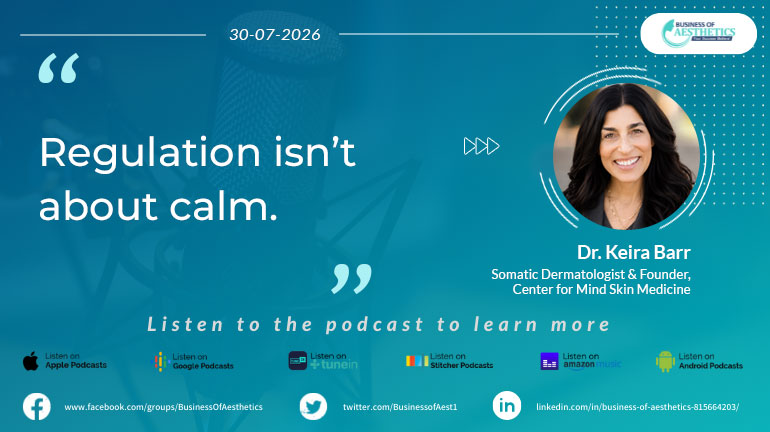
Dr. Barr: Resilience is not always bouncing back instantly or staying calm. Regulation is not about calm. It is about how quickly and how easily you can return to homeostasis. We will become anxious, and we may shut down. The important part is noticing it and asking, ‘How can I bring myself back so I can show up for my employees, my patient, and myself?’
Dr. Barr: This is a practice on purpose. You do not have to perfect it or overhaul everything. We rarely pay attention to our breathing, vocal pace, or whether our shoulders are constantly lifted. These simple adjustments can profoundly affect relationships.
Dr. Barr: Better relationships can lead to patients who feel ready to proceed and patients who remain satisfied. Even when a result is not technically perfect and an adjustment is needed, patients who feel held and cared for are more likely to return.
Don: Better relationships, better business. As you spoke, I placed my hand over my heart and took a breath. It felt good, but for a moment it also felt vulnerable. I noticed my breathing and the tension in my shoulders. What would you say to providers or staff members who feel vulnerable doing something like that in a culture that does not always appreciate perceived weakness?
Dr. Barr: That is a culture shift that needs to happen. We can name and normalize the fact that we all struggle because we are human. If putting a hand over your chest does not feel right, you do not have to do it. I teach many techniques that people can use without anyone else noticing. Touch is not accessible or comfortable for everyone, and that is not a problem.
Dr. Barr: Vulnerability is courage. We can say, ‘I am feeling a little tense, stressed, or anxious. What are you noticing?’ That can give the patient permission to say, ‘I am glad you asked. Can we take a minute?’
Dr. Barr: The larger shift is to stop pathologizing every part of the human experience. Human experience is complex. Feeling anxious or angry at times is normal. All emotions are welcome.
Dr. Barr: An aesthetic patient may be telling you, ‘I do not like this about myself.’ Receiving that with curiosity – ‘Tell me more. What do you hope will change?’ – may reveal that the person also needs therapeutic support. You can then be honest about your scope of practice and what transformation the treatment can and cannot provide. Sometimes it is both-and.
Don: We have reached the end of our session. Where can listeners learn more about you and your work?
Dr. Barr: I do a great deal of speaking through keynotes and workshops, and I spend more time on LinkedIn and Instagram. This is a different perspective from what many of us learned in dermatology and aesthetics, but translating autonomic science and interpersonal biology can help clinicians build trust, strengthen relationships, and ultimately improve outcomes.
Don: Thank you, Dr. Barr. Before you go, if you are seeking greater clarity around the marketing and growth side of your practice, Ekwa Marketing is offering listeners a complimentary 60-minute strategy session. It is an opportunity to examine your current patient journey, identify where prospective patients may be falling off, and map a more focused strategy for the next 12 months.
Don: Visit www.businessofaesthetics.org/msm to reserve your session. Dr. Barr, thank you for your time, your expertise, and for giving our audience such a thoughtful and practical way to understand the patient experience.
GUEST – Dr. Keira Barr
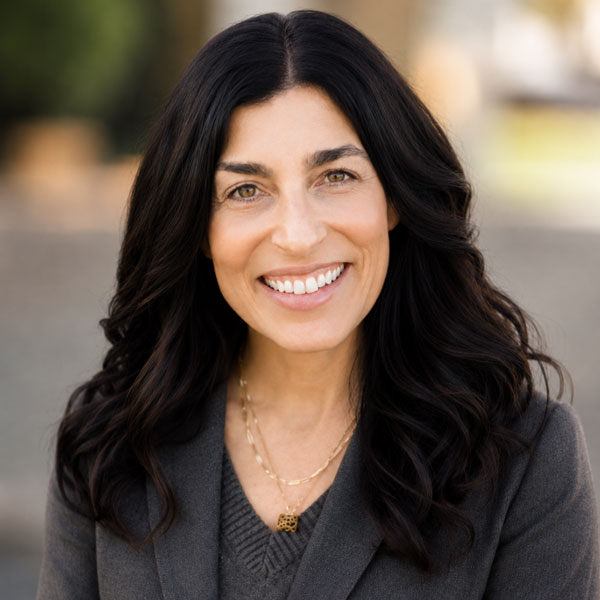
Dr. Keira Barr is one of the leading voices at the intersection of dermatology, nervous system regulation, trauma healing, and mind-body medicine. As a somatic dermatologist, dual board-certified integrative dermatologist, somatic trauma specialist, and founder of the Center for Mind Skin Medicine, she helps women understand the deeper connection between stress, emotional patterns, inflammation, and chronic skin flare-ups. Her work moves beyond surface-level skincare by addressing the nervous system patterns that often drive conditions such as acne, eczema, psoriasis, rosacea, hair loss, autoimmune skin issues, and stress-triggered inflammation.
Through her Mind Skin Medicine™ approach, Dr. Barr brings together clinical dermatology, psycho-dermatology, somatic practices, and trauma-informed care to help patients break the stress-flare cycle and feel more confident in their skin. She is also an educator, speaker, author, and host of The Skinny Dipping Rx podcast, with a background that includes academic, clinical, and thought-leadership work in integrative skin health. Her mission is to help people stop seeing their skin as the problem and start understanding it as a messenger, guiding them toward greater resilience, self-trust, and whole-body healing.
Learn more: www.drkeirabarr.com
HOST – Adeesha Pemananda

A seasoned marketing professional and a natural on-camera presence, Adeesha Pemananda is a skilled virtual event host and presenter. His extensive experience in brand building and project management provides a unique strategic advantage, allowing him to not only facilitate but also elevate virtual events.
Adeesha is known for his ability to captivate digital audiences, foster interaction, and ensure that the event’s core message resonates with every attendee. Whether you’re planning a global webinar, an interactive workshop, or a multi-session virtual conference, Adeesha brings the perfect blend of professionalism, energy, and technical savvy to guarantee a successful and impactful event.
Connect with Us:
Category: Business of Aesthetics Podcast