Podcast: Play in new window | Download
Subscribe To Our Podcast




Host Don Adeesha sits down with Kara Kelly, CEO of Clinical HR, to tackle the people problems that quietly derail aesthetic practices, from the moment a clinician becomes a reluctant manager to the chaos of a private equity acquisition. Kara brings fifteen-plus years of direct experience inside med spas and medical practices, and she pulls no punches on the compliance traps that cost owners real money before they ever see an audit coming.
The conversation goes deep on the W2 versus 1099 misclassification issue, one of the most widespread and expensive mistakes in the aesthetic industry. Kara walks through a real-world case where a five-location practice was hit with a $142,000 IRS penalty for misclassifying just 13 providers, explains why signed contracts and S-Corps offer zero protection, and outlines the SS-8 filing process and the step-by-step path to correcting classification before the letter arrives.
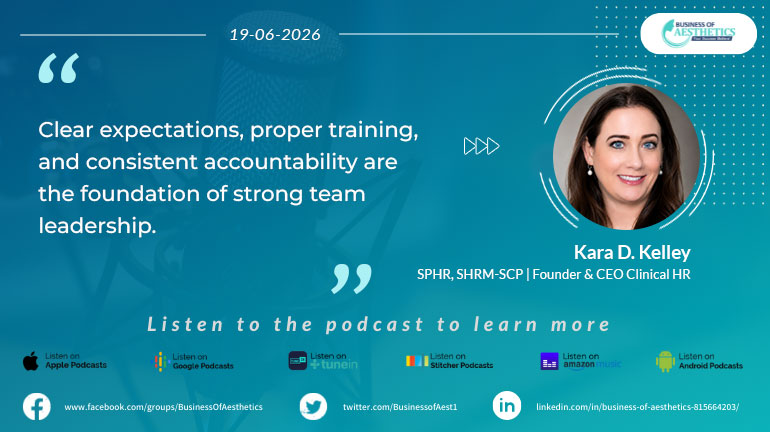
Kara closes with her HR ETA framework, clear Expectations, the right Tools and Training, and consistent Accountability, as the foundation every practice owner needs before they hire their next team member, restructure their compensation model, or close on an acquisition. Her central message: the practices that build great cultures do not do it by reacting to problems. They do it by writing the rules before the game starts.
Key Takeaways
- Know the line: if they do the business of the business, they must be W2.
Injectors, estheticians, and clinical staff providing services you sell to clients cannot legally be classified as 1099 contractors, regardless of what contracts they’ve signed or whether they have their own S-Corp. - Misclassification is not a technicality. It is a six-figure liability.
One real-world audit of a five-location practice resulted in a $142,000 IRS penalty for 13 misclassified providers, with the potential to multiply four times over if challenged. - Replace commission-only with base plus commission to unlock compliance flexibility.
A base wage is what allows you to mandate team meetings, provide legally required sick leave, offer paid holidays, and avoid wage-and-hour violations, without gutting your producers’ earning potential. - Compete for talent with total compensation, not just the hourly rate.
PTO, 401k, immediate benefits eligibility, and a 90-second culture video on your hiring page will outperform a six-figure salary posted in a wall-of-text job listing on Indeed. - Never run a working interview. The compliance risk is not worth it.
The moment a candidate performs productive work in your clinic, the employment clock has started. Skip the liability and use structured skills assessments and mock scenarios instead. - In an acquisition, lead with compliance non-negotiables and delay culture integration.
Identify the one or two things you must change immediately for legal reasons, then spend three to six months earning the team’s trust before rolling out anything that feels like a corporate takeover. - Communicate expectations in writing before a problem ever happens.
Job descriptions and employee handbooks are not bureaucratic paperwork. They are the operating system of your team, and they eliminate 80% of the conflicts, confusion, and compliance exposure that catch practice owners off guard.
Kara made it clear that the real risk in a growing aesthetic practice is not clinical, it is the systems, structures, and people management gaps that quietly accumulate into compliance disasters and team fallout. This session is your opportunity to diagnose where those gaps are hiding in your own practice and walk away with a concrete plan to close them before they close in on you.

- Get a 1-on-1 diagnosis of your online presence & patient acquisition funnel
- Identify critical, untapped growth levers (SEO, Social, Referrals)
- Define a clear action plan to attract and convert your ideal patients
- Receive expert solutions for your most pressing marketing challenges
Resources

Live Webinar: Future-Proofing Your Aesthetic Practice: Decisions You Must Get Right in the Next 18 Months
Join industry experts to modernize operations, enhance patient experience, and drive sustainable growth.
Wednesday, May 20, 2026 @ 7:00 PM EST – 9:00 PM EST

Are you ready for the “GLP-1 Body” Era?
Download the 2026 Aesthetic Patient Behavior Model to see the numbers driving decisions this year:
- Why 73% of patients now define beauty by “individuality” over transformation.
- The shift away from non-invasive fat reduction (down ~40%).
- Real data on the rise of the male aesthetic patient.
Key Highlights:
- 00:00:14 – Introduction & Topic Setup
Key Points:
- The episode opens with the high-stakes reality of managing people in a medical practice, including toxic team members, surprise resignations, and HR compliance fears.
- Host Adeesha introduces Kara Kelly, CEO of Clinical HR and nationally recognized fractional HR business partner for medical practices.
- Topics covered include W2 vs. 1099 misclassification, total compensation structuring, and the HR playbook for surviving a practice acquisition.
- The episode is sponsored by Ekwa Marketing, the digital growth partner for aesthetic practices.
View TranscriptAdeesha: For a practice owner, there is nothing more stressful than dealing with a toxic team member, a surprise resignation from a top producer, or the lingering fear of an HR compliance audit. A provider may spend years learning how to deliver the perfect clinical result, but almost no time learning how to manage the people who make those results possible.
Welcome back to the Business of Aesthetics podcast. I’m your host, Don Adeesha. And to help us build a bulletproof team, we are joined by Kara Kelly. Kara is the CEO of Clinical HR and a nationally recognized fractional HR business partner, specifically for medical practices. With top-tier HR certifications and expertise in behavioral assessments, she helps practices fix broken cultures, restructure compensation packages, and ensure legal compliance.
Today we are discussing the dangers of the W2 versus 1099 trap, how to structure a modern total compensation package, and the HR playbook for surviving a practice acquisition. This episode is brought to you by Ekwa Marketing, the digital growth partner behind this podcast and a trusted resource for aesthetic practices looking to dominate their local markets. Kara, welcome to the show.
Kara Kelly: Thank you, Don. Honored to be here.
Adeesha: I’m excited about today.
Kara Kelly: Wonderful.
- 00:01:44 – The Clinician-to-CEO Transition: Leadership Blind Spots
Key Points:
- Most clinicians enter practice ownership without any training in people management or HR compliance.
- The two biggest blind spots are compliance ignorance and the inability to lead a team the same way they lead client relationships.
- Setting and enforcing behavioral standards, like punctuality, requires visible leadership modeling, not just verbal expectations.
View TranscriptAdeesha: Let’s get right into the conversation. So Kara, as a fractional HR business partner, you step into clinics where the owner is often a brilliant clinician but a reluctant manager. When a provider first attempts to transition into that CEO role, what is the most common HR or leadership blind spot that immediately damages team morale? And how do you go about correcting it?
Kara Kelly: That’s a fun question, because honestly, there are so many. The providers are the ones that have spent so many years perfecting their craft. They’ve got years of education, years of building up their own client base and their own client roster. And they just aren’t always prepared, first of all, from the culture side, and then the other side is the compliance, of course.
I’ve got about a decade and a half of background working with med spas and aesthetics practices. Compliance is definitely one of the areas where they have a major blind spot, and it’s just because of lack of awareness. The IRS and Department of Labor, they don’t take ignorance as an excuse whenever somebody makes a mistake. You’re not going to learn that whenever you’re getting your license or medical degree or certification. But that’s not going to matter whenever it comes time for an audit.
The other area is the leadership side. A lot of clinicians and practitioners are amazing with their patients or clients. They’re not always great at leading their team, because there’s a huge difference between building a relationship with a client versus being responsible for payroll and making sure people show up on time.
Adeesha: How does your leadership behavior affect whether your team shows up on time? I mean, they signed up for it, right?
Kara Kelly: Oh, because people are human and they’re messy and sticky and they’ve got personal lives and traffic and all of the excuses that we hear. A lot of it comes from setting a standard. This is the expectation here. We expect you to arrive X number of minutes prior to your first scheduled client. I hear a lot of providers that complain, "I want my team here at this time," but they’re the ones rolling in three minutes after the first client has arrived with their Starbucks in hand. They’re just not setting an example.
- 00:05:17 – The Perfectionist Trap: Learning to Delegate
Key Points:
- Clinicians trained as perfectionists often struggle with delegation, which stalls business growth.
- The Traction framework "Elevate and Delegate" helps owners identify what only they can do versus what they should hand off.
- Admitting personal weaknesses is the first step, even for the practice owner, before effective delegation becomes possible.
View TranscriptAdeesha: Clinicians are trained to be perfectionists, which often makes them terrible delegators. How do you help an owner let go of controlling the front desk or even the marketing without feeling like they are compromising their brand standard of care?
Kara Kelly: One of my favorite books is Traction by Gino Wickman. And there’s a tool in that book called Elevate and Delegate. What are the things that only you can do? And what are things you can get off your plate and let someone else do?
They may be perfectionists, but it doesn’t mean they’re good at everything. You have to have some level of trust and delegation from an owner-operator standpoint, because you’re also doing accounting, running payroll, having conversations with marketing companies and attorneys. Somebody’s got to answer the phone. Someone has to help process payments. You have to be able to let a little bit of it go.
I’m a recovering perfectionist myself. I have an assistant and she helps me with contracts, emails, outreach, and follow-ups, the things I know I’m not great at. It really just took me admitting to myself that I am not good at this. I work with doctors and practitioners to help shift that same mindset and help them realize that holding on to everything is not helping their business grow.
- 00:07:18 – Hiring for Cultural Fit: Beyond Clinical Experience
Key Points:
- Practices in a staffing shortage often hire purely on clinical skills, skipping cultural vetting entirely.
- The better path is a structured interview process with skills assessments, mock phone calls, software walkthroughs, and stress-response observations.
- The goal is not a perfect performance during the interview; it is watching how a candidate recovers when something goes wrong.
View TranscriptAdeesha: In a market with severe staffing shortages, owners are desperate and often hire purely based on clinical experience rather than cultural fit. How should an aesthetic practice integrate behavioral profiling into their interview process to spot a high-performing toxic personality before they ever even offer them a contract?
Kara Kelly: I don’t even bring DISC in at this point. Sometimes this is more a matter of setting up your interview process properly. What I recommend is structuring your interview to test for soft skills as well as technical ones. Have them run through a mock phone call. Give them a script and show them how you want it done. Can they follow it? If you make a change, do they trip up?
You can even have another employee or a friend call in as a new patient. It’s not about whether it’s perfect, it’s how do they recover? Same with your management software. If they say they have experience, set up a training account, redact any client information, and give them a 20-minute skills assessment.
If they don’t know something, what do they do? Do they Google it? Ask for help? The goal isn’t for them to do it 100% perfectly. It’s to see what happens under stress, what happens when somebody throws a wrench into the system.
- 00:11:30 – The W2 vs. 1099 Trap: Compliance and Consequences
Key Points:
- The core rule: if a worker is doing the business of the business, they should be a W2 employee, not a 1099 contractor.
- Misclassification is not just a technicality. A real client audit resulted in a $142,000 IRS penalty for misclassifying 13 providers, even though those contractors had signed agreements and S-Corps.
- If challenged, the IRS can open up to four years of audits, potentially turning a $142,000 bill into $500,000 or more.
View TranscriptAdeesha: Let’s talk about legal risk. The regulatory landscape in aesthetics is shifting rapidly and misclassification is a massive trap. Why are so many practices still illegally classifying their injectors and estheticians as 1099 independent contractors? And what is the specific financial or legal penalty an owner faces?
Kara Kelly: Worker classification is actually under the IRS, and I’ll reiterate, I’m not an attorney and I’m not giving legal advice. The easiest way for me to explain this is: if they are doing the business of the business, they should be a W2 employee. If you are a med spa or aesthetics practice and they are coming in and injecting, doing facials and treatments, providing services that anyone else in the business would be doing because that’s what you’re selling to clients, that person should be a W2 employee.
The practice I worked with in 2018 or 2019 had misclassified 13 of their providers at a five-location dental practice. They had contracts. They had things signed. Some of those contractors had S-Corps. They were still deemed misclassified by the IRS. The penalty for that year was $142,000, just from the IRS, before the state even got involved. And if you decide to push back? They can open that up to the four years they’re able to audit. That $142,000 could have very easily been half a million or higher.
Adeesha: If a listener is realizing right now that they’re operating with 1099s incorrectly, what is the exact first step to transition those providers to W2s?
Kara Kelly: Go talk to your CPA. They may have to go back and refile reports and filings depending on what you’ve already been doing. You can also file an SS-8 with the IRS. That form gives you a determination on whether someone qualifies as a 1099 contractor or a W2 employee if there’s a genuine question.
The other big area I see is businesses that just put everybody on salary because they don’t want to deal with timesheets. Under the Fair Labor Standards Act, most of your administrative team members are going to be non-exempt, which means federal law requires you to pay them at least minimum wage and time and a half when they work more than 40 hours.
- 00:21:17 – Total Compensation: Moving Beyond Commission-Only Models
Key Points:
- Commission-only models create compliance exposure. Base plus commission is the right structure.
- A base wage enables mandatory sick leave compliance, paid holiday structuring, and the ability to call team meetings.
- Competing for talent means going beyond pay. PTO, 401k, flexibility, and a compelling employer brand video are differentiators that attract and retain.
View TranscriptAdeesha: Base plus heavy commission is a common model. However, you advocate for a total compensation approach to improve retention and avoid legal fee-splitting issues. How does a practice owner safely transition their existing team away from a heavy commission structure without causing a mass exodus of their top producers?
Kara Kelly: I still think you can have a commission structure, but you said the key word: base plus commission. If you’re looking at it as commission only, you’re losing out. First of all, you potentially run into a compliance issue. But you’re also losing the ability to say, "Hey, I want you all to come in for a team meeting," because if they’re commission only, that meeting just cost them money.
With a base plus commission structure, you can say that sick leave and paid holidays are calculated on the base. When I’m looking at it from a total rewards standpoint, I want to ask: what are the things I can offer that other businesses in my area are not?
Work with your marketing company to create a short video that showcases the culture and benefits of working at your spa or clinic. With younger generations in the workforce who get their information in 90-second Reels, attention spans are short. What can you show in 90 seconds that makes someone want to work for you? That matters more than burying the benefits at the bottom of a 16-paragraph job post on Indeed.
Adeesha: Are there times where you completely customize the compensation package for specific talent?
Kara Kelly: You can, but you want to be as consistent as possible across similarly situated employees, because you can end up with discrimination issues if you’re picking and choosing individually. Your high-level providers, nurse practitioners, doctors, may have individual contracts and a different compensation package. But for your administrative team or your clinical assisting team, have something across the board at different level tiers. I’ve worked with practices that color-coded their compensation tiers in the employee handbook so it wasn’t immediately obvious which level someone was on.
- 00:27:18 – The Acquisition Playbook: Merging Cultures Without Losing Your Team
Key Points:
- The biggest risk in a private equity or individual acquisition is losing the team, the very goodwill asset that justified the purchase price.
- A change agent who understands both cultures is essential to bridging the gap during integration.
- Lead with compliance non-negotiables first, then ease culture changes in over a three-to-six-month period, and never make the team feel like they’re losing something.
View TranscriptAdeesha: The aesthetic industry is seeing a massive wave of private equity roll-ups and practice acquisitions. You specialize in cultural integration during buy-side acquisitions. When a practice is bought out or merges with another clinic, what is the exact HR playbook to merge two completely different staff cultures without losing the key providers that made the practice valuable in the first place?
Kara Kelly: That is always really difficult. My number one tip is having a change agent, somebody who understands both cultures, to help with the merge. If you step in on day one with a 60-page employee handbook and "here’s your new boss, here’s how we do things," that’s a disaster.
Instead, start with the things you have to do from a compliance standpoint. Communicate those non-negotiables. Then, over the first three to six months, start integrating the culture. Make sure the team does not feel like they’re losing anything. Pick your battles. A lot of this is communication, empathy, and understanding.
Adeesha: When should you be having those conversations with the existing team?
Kara Kelly: As soon as possible. Once the deal closes, you want a team meeting during the first day, or the first week at minimum. I had a situation where a new owner called me on a Friday afternoon and said she’d closed on the business the day before. We worked through what she absolutely needed to do by Monday, payroll setup, an onboarding checklist, the documents the team needed to bring in. Yes, a proper transition day means a loss of production. But it is absolutely part of making the transition successful.
Adeesha: How much does transparency really play a role in getting the culture right through an acquisition?
Kara Kelly: It plays a massive role. I always say: make sure they don’t feel like they’re losing anything. If we have to lower compensation in some area because that’s how corporate does it, what else can we offer? More flexibility? The ability to fill in across locations? Communication is the answer.
Even things like being on video for social media, you can have a conversation: "This is the why behind it. This helps you. This benefits the business. We all win when our schedules are full." Those conversations should happen early.
- 00:39:12 – Final Takeaway: The HR ETA Framework
Key Points:
- The most powerful HR tool for any practice owner is simple: clear communication of expectations.
- Kara’s HR ETA framework: Expectations clearly communicated, tools, time, and training provided, accountability enforced.
- Employee handbooks and job descriptions are not just paperwork. They are the operating manual for your team culture.
View TranscriptAdeesha: Kara, we’ve arrived at the end of the podcast. I’d like you to give our listeners one final golden nugget. What would it be?
Kara Kelly: The communication of our expectations is probably one of the most useful tools we can have in a business. One of the very first things I learned from one of my earliest leadership mentors is what I now call my HR ETA. Make your expectations clear, give them the tools, time, and training to do the job, and hold them accountable.
That first one, making your expectations clear, can sometimes be the most difficult when you’re stuck in the clinician mindset. Job descriptions. Employee handbooks. Those are my favorite ways to make sure everyone is on the same page. That would be my biggest takeaway for someone who is struggling with leadership, or who is thinking of starting or buying a business.
Get the communication on paper as best you possibly can, because that is what makes things move forward smoothly.
Adeesha: Kara, this has been an absolute masterclass in HR and practice management. Thank you so much for being on the show today.
Kara Kelly: You are welcome. Thank you so much for inviting me. This was so much fun.
- 00:40:55 – Host Closing & Sponsor Offer
Key Points:
- Building a great aesthetic practice ultimately rises or falls on the people inside it.
- Key reminder: HR cannot be reactive. It must be proactive, built on clear expectations, proper training, and consistent accountability.
- Ekwa Marketing is offering listeners a complimentary 60-minute strategy session at www.businessofaesthetics.org/msm.
View TranscriptAdeesha: Kara, this was such a valuable conversation and I think many practice owners listening probably had a few lightbulb moments today. Because building a successful aesthetic practice is not just about great treatments, great results, or even great marketing. At some point, the practice rises or falls based on the people inside it.
Whether it is dealing with a difficult team member, navigating W2 versus 1099 issues, creating a compensation plan that keeps good people, or going through an acquisition without losing your culture, HR cannot be something owners only think about when there is a problem.
What I really appreciated from Kara today is that it starts with simple but powerful foundations. Clear expectations, the right tools, proper training, and consistent accountability.
If Kara’s approach resonated with you, I highly recommend connecting with her and learning more about her work at Clinical HR. And if you are looking for more clarity on the digital growth side of your practice, Ekwa Marketing is offering our listeners a complimentary 60-minute strategy session at www.businessofaesthetics.org/msm.
I’m Don Adeesha and this has been the Business of Aesthetics podcast. Thanks for listening. Keep on leading.
GUEST – Kara D. Kelley
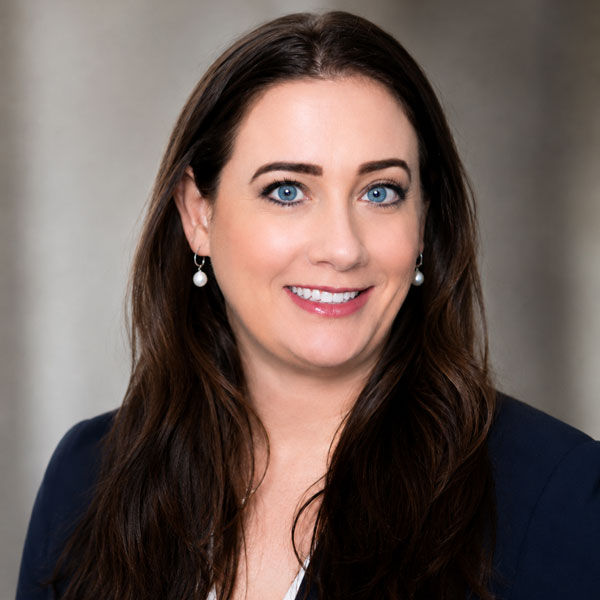
Kara D. Kelley is the Founder and CEO of Clinical HR LLC, where she serves as a strategic HR advisor and fractional HR business partner for dental, medical, and aesthetic practice leaders. With more than a decade of experience in the clinical practice space, Kara helps owners move beyond reactive people management and build stronger, more compliant, and more scalable teams.
A Senior Professional in Human Resources and SHRM Senior Certified Professional, Kara specializes in employee relations, HR compliance, leadership development, compensation strategy, and total rewards systems. Her work helps practice owners clarify expectations, reduce turnover, strengthen culture, and create HR systems that support both team performance and long-term business growth.
Kara’s background also includes business development, marketing, internal HR, and advisory work with dental and medical practices, giving her a practical understanding of how people’s decisions directly impact profitability, patient experience, and practice value. She is also certified in Everything DiSC and Five Behaviors, allowing her to support practice leaders in building better communication, trust, and team alignment.
Through Clinical HR, Kara partners with practice owners who are ready to stop managing people’s problems in survival mode and start leading with structure, confidence, and accountability.
Learn more: www.clinicalhr.com
HOST – Adeesha Pemananda

A seasoned marketing professional and a natural on-camera presence, Adeesha Pemananda is a skilled virtual event host and presenter. His extensive experience in brand building and project management provides a unique strategic advantage, allowing him to not only facilitate but also elevate virtual events.
Adeesha is known for his ability to captivate digital audiences, foster interaction, and ensure that the event’s core message resonates with every attendee. Whether you’re planning a global webinar, an interactive workshop, or a multi-session virtual conference, Adeesha brings the perfect blend of professionalism, energy, and technical savvy to guarantee a successful and impactful event.
Connect with Us:
Category: Business of Aesthetics Podcast