Podcast: Play in new window | Download
Subscribe To Our Podcast




In this episode, host Don sits down with Danielle Hayden, CEO of Kickstart Accounting, to address a costly problem in aesthetic practices: buying equipment based on enthusiasm or a sales promise instead of financial readiness.
Danielle breaks down the three numbers that should guide any capital purchase, rolling 12-month revenue, average net profit, and monthly cash outflow, and explains how to model a device at 25%, 50%, and 75% utilization. She also shares practical spending benchmarks for marketing, facility costs, and payroll.
Her framework is clear: build a money team, review numbers monthly, and ask what happened, why it happened, and what you will do next. Keep the 10-year North Star fixed, reforecast the budget as conditions change, and never let a profitable P&L hide a cash-flow problem.
Key Takeaways
- Build a money team before approving a major equipment purchase. Bring together bookkeeping, CFO, tax, and CEO perspectives so your decision is based on clean financial data rather than a vendor promise.
- Model every device purchase at 25%, 50%, and 75% utilization. Confirm the practice can cover debt service and operating commitments even if patient demand grows more slowly than expected.
- Use three numbers to simplify high-stakes decisions: rolling 12-month revenue, average net profit, and average monthly cash outflow. A profitable P&L is not proof that the business has enough cash to take on another obligation.
- Protect a healthy profit margin while monitoring the spending categories that shape it. Danielle uses 15% net profit as a general baseline, with marketing, facility, and payroll tracked as a percentage of sales.
- Review the financials every month using a CEO framework: what happened, why did it happen, and what will I do next? Assign a concrete next action and monitor return on investment rather than reacting emotionally to a single month.
- Set decisions inside a long-term North Star, then reforecast the one-year budget as the business changes. Keep the destination clear while using current data to adjust the route.
Danielle Hayden makes the case that every capital decision should be grounded in cash flow, scenario planning, and a clear long-term North Star—not a vendor promise. This session gives you a practical path to align patient acquisition with the financial discipline needed to turn your next growth investment into a profitable one.

- Get a 1-on-1 diagnosis of your online presence & patient acquisition funnel
- Identify critical, untapped growth levers (SEO, Social, Referrals)
- Define a clear action plan to attract and convert your ideal patients
- Receive expert solutions for your most pressing marketing challenges
Resources

Live Webinar: Future-Proofing Your Aesthetic Practice: Decisions You Must Get Right in the Next 18 Months
Join industry experts to modernize operations, enhance patient experience, and drive sustainable growth.
Wednesday, May 20, 2026 @ 7:00 PM EST – 9:00 PM EST

Are you ready for the “GLP-1 Body” Era?
Download the 2026 Aesthetic Patient Behavior Model to see the numbers driving decisions this year:
- Why 73% of patients now define beauty by “individuality” over transformation?
- The shift away from non-invasive fat reduction (down ~40%).
- Real data on the rise of the male aesthetic patient.
Key Highlights:
- 00:00:24 – Why Equipment Purchases Need Financial Review
- Don opens with the risk of buying expensive equipment without first running the numbers.
- He introduces Danielle Hayden of Kickstart Accounting and frames the conversation around capital spending, cash flow, and CEO-level financial decision-making.
- The episode is sponsored by Ekwa Marketing.
View TranscriptDon: Here is a number that should make every practice owner uncomfortable. The most expensive piece of equipment in your practice might not be the one you bought. It’s the one you bought without running the math.
Don: Welcome back to the Business of Aesthetics podcast. I’m your host for this session, Don. And to help us turn capital spending from a gut feeling into CFO-level math, we’re joined by Danielle Hayden. Danielle is the CEO of Kickstart Accounting and the author of the Profit Planner book series.
Don: She spent more than 10 years in corporate boardrooms as a CFO before dedicating her career to giving business owners the same financial clarity that boards and investors demand. She has helped over a thousand owners transform the way they read the numbers.
Don: Today, we’re discussing the three financial numbers that decide whether your practice can truly afford its next device. We’re talking about how to spot the spending that quietly bleeds the practice and how to run your finances like a CEO instead of guessing from a bank balance. This episode is brought to you by Ekwa Marketing, the growth partner behind this podcast and a trusted resource in the aesthetic community. That being said, Danielle, welcome to the podcast.
Danielle: Thank you so much for having me here. Looking forward to this conversation.
Don: Absolutely. Now, Danielle, you spent over a decade in corporate boardrooms before working with business owners. So when a practice owner tells you, “I just bought a $150,000 laser because my rep said it pays for itself,” what is the very first number you pull up to test whether that decision was actually a good idea?
- 00:02:13 – Build a Money Team Before Buying a Device
- Danielle recommends consulting a “money team” before committing to a major capital purchase.
- She explains that clean bookkeeping, a budget, and a long-term business plan should guide equipment decisions.
- Profit alone is not enough; the practice must have sufficient cash flow for owner draws, taxes, inventory, and debt payments.
View TranscriptDanielle: Well, my hope is that the business owner can call us before they pull the trigger. So I’d love to have the opportunity. I believe that every single CEO, every single business owner, deserves to have a money team.
Danielle: On your money team should be a bookkeeper, a CFO team member, a tax team member, and then you as a CEO. So we have four total team members. And these four team members should work together.
Danielle: Now, I want to be clear. I’m not suggesting that you have four full-time team members on your staff. But what I’m hoping is that before you go to make that decision, you know your numbers.
Danielle: My mission is to help small business owners have access to clean and accurate bookkeeping so that when they go to make these business decisions, they feel confident and empowered by looking at data. They can say, “All right, here’s my financial statements. Here’s what’s happened in my business year to date.”
Danielle: And then that’s the bookkeeping part of it. But step two is the budget. This piece of equipment is going to help me get to my 10-year goal, my three-year business plan, and it fits within my one-year budget. I know I have the cash to be able to pay for this piece of equipment now.
Don: Having the cash, what do you mean by that? Are you talking about cash flow or capital in the bank?
Danielle: I’m talking about cash flow from the business. I believe that every business, when they look at their financial statements—most business owners pay attention to revenue, and then maybe the profit and loss statement. Like, if we’re lucky, a business owner is paying attention to their profit and loss statement. So they’re looking at their revenue and their profit.
Danielle: Here’s the problem, especially when we’re talking about making big capital purchases: that capital purchase does not show up on the income statement. It shows up on your balance sheet. That becomes an investment and a loan on your balance sheet.
Danielle: Your business has to not only have the cash or not only have the profit, but it has to have enough cash to be able to pay you as the owner, fund your owner’s draws, fund tax payments, fund your inventory, and all of your debt for the equipment.
- 00:04:49 – Test “It Pays for Itself” With Scenario Planning
- Danielle advises owners to request data whenever a vendor claims a device will “pay for itself.”
- She recommends modeling low-utilization scenarios before taking on equipment debt.
- A device should support the practice’s long-term vision and remain affordable even if patient demand grows slowly.
View TranscriptDon: Now, when you hear that phrase, “It pays for itself,” what assumption do you immediately want to challenge?
Danielle: I want to see it in data. I understand—look, I’m a salesperson at heart too. I do our discovery calls, so I get it. I think it’s important to think about our purchases as a CEO in terms of return on investment.
Danielle: I believe in the strategy. What I want to challenge each of you to think about when someone says to you there is a return on investment, I want you to ask for the data.
Danielle: When we work with our clients, if you were to have this conversation with us before you made that purchase, we would say, “All right, let’s put this into the budget and then let’s run scenario planning.”
Danielle: Let’s say this piece of equipment—the clients don’t come for six months and you’re running at 25% of the capacity that this has for six months. What does that do for your cash flow?
Danielle: Let’s say it takes eight months and you’re only at 30% of capacity. What are the scenarios that are going to be run in order to get that return on investment?
Don: What are the scenarios that you’re seeing that actually work?
Danielle: When you’re building this budget, we would look at the next 12 months before the capital purchase. We would say, “All right, let’s set the budget for the next 12 months.”
Danielle: Now, I want to be clear. It’s not just about this one purchase, because your business has so many things going on. We need to look at what’s the current revenue coming in, what’s the seasonality of your business, what season are you in, and what are the other spending initiatives that you have.
Danielle: Are you running a marketing campaign? Are you running paid ads? Do we have enough cash to continue our sales and marketing efforts? In this industry, we have high facility costs, so we also need to know what our facility costs are going to be. Are there any rent increases coming up in the next year?
Danielle: Payroll: we have to plan out our payroll dollars. Who’s going to use the machine? Who’s going to operate it? Who is going to continue to run the operations of your business? We’re going to map out the next 12 months’ worth of payroll.
Danielle: That’s the base model. The budget is the base. We can say, “If I don’t buy this piece of equipment, here’s my budget. Here’s my base scenario for the next 12 months.”
Danielle: Now we can run the scenarios. I buy this piece of equipment. Do I need to run any advertising and marketing for the equipment? Do I need any new team members who are trained on the equipment? How long does it take to train each of those team members, and how many team members?
Danielle: Every time you’re paying a team member to go through training, they’re not seeing a client. They’re not seeing a patient. We need to know how many hours it’s going to take to train them. How many months will we be paying for this piece of equipment until we’re actually utilizing it?
Danielle: From there, the scenarios are: if this piece of equipment is utilized at 25%, do I have enough cash to make the debt payments on this piece of equipment? Even if the clients don’t come flooding in the door.
Danielle: I’m a visionary, so I get so excited about new things. I want to make new offers and bring in new things. I think so many of your listeners are visionaries like me.
Don: Absolutely.
Danielle: You’re excited about this piece of equipment. We don’t know if all of your clients are going to be just as excited about this piece of equipment that you are. So the first scenario that we’re going to test is what happens if it’s only 25% utilized. Does your business, from normal business operations, have enough cash to pay for the debt?
Danielle: Then we can run scenario number two. What if about 50% of the machine is utilized? What’s the cash coming in, and is there enough cash to pay for the debt for the piece of equipment?
Danielle: I would also run it at 75%. I run those three scenarios so that you can see the impact it is going to have on your business.
Danielle: This might be the greatest machine in the world, and it’s going to really bring in clients and make a difference. Understanding what your core values are is also going to help you make this decision.
Danielle: If it aligns with your core values, fits into your 10-year North Star, fits into that 10-year plan, and is part of where you want to bring your practice long-term, then the answer can be, “Let’s run the data.” It can be a “hell yeah,” because I know the data, I know I have enough cash to pay for the debt, and it aligns with my long-term goals.
Danielle: Too many of us are making decisions because we’re super excited, not because we’ve run all of that math and we’re making it from a place of confidence and empowerment. I am the CEO and I am the visionary of this business.
Don: Confidence backed by real data. That’s the best formula there is.
- 00:11:05 – The Three Financial Numbers Every Owner Must Know
- The three core numbers are rolling 12-month revenue, average net profit, and average monthly cash outflow.
- Danielle stresses that accurate, up-to-date bookkeeping is essential before using financial reports for decision-making.
- Owners need to understand balance-sheet obligations such as taxes, debt payments, inventory, and owner draws.
View TranscriptDon: Now, Danielle, as you were mentioning all of these different aspects of your scenario planning, I could not help but wonder: paralysis by too much information. You teach that there are three financial numbers every owner needs to know before making a big decision. Please walk us through exactly what those three numbers are and where a practice owner finds each one in their books.
Danielle: I hear the analysis paralysis. I do find there’s kind of those three decision-making styles. Some of us make it on gut and emotion. Some of us make it on data. Then some of us can never make a decision because we’re in paralysis. So I hear that.
Danielle: Let’s simplify it. If you’re like, “Danielle, I can’t run all those scenarios. I don’t have a money team. I don’t have a CFO team to help me run those scenarios,” I do want to give you three.
Danielle: The first one is revenue in the door. I want you to not just look at revenue last month or year to date. I want you to understand your monthly revenue for your rolling 12 months.
Danielle: When we send our clients their financial statements every month, we use what we call the Snapshot. It’s our CEO-level dashboard that we send to our clients instead of a laundry list of financial statements nobody knows how to read.
Danielle: We include this month’s revenue, the revenue year to date, and the rolling 12-month revenue. That rolling 12 months is really important because it smooths out the noise.
Danielle: You can get this by going into QuickBooks. Your data has to be up to date and it has to be accurate. Ask your bookkeeper—or, if you’re the one doing the bookkeeping, have somebody check your books for you—because you cannot make these decisions on incorrect bookkeeping.
Danielle: QuickBooks doesn’t have any features where it goes, “Alarm, alarm, your data is wrong.” It just doesn’t.
Danielle: Once your data is accurate and complete, you can then go and run the income statement by month, or the profit and loss statement by month, and run it for the last 12 months. That’s going to give your average monthly revenue. That’s the number that can become your break-even revenue number.
Danielle: The second number is your net profit. This is what stays in the business. It’s revenue minus cost of goods sold minus all of your operating expenses: that net income number.
Danielle: Same thing: I want you to know what it was for last month. You can know what it is year to date, but most importantly, I want you to know what this number is for the last 12 months. What is your average net profit?
Danielle: That number is what you can use to make these types of investments. This is the number that you use to make draws. We need to know what the monthly net profit is.
Don: So far, so good.
Danielle: Both of those numbers you can find on the profit and loss statement by month. You’re going to pull out the average for revenue and pull out the average for profit.
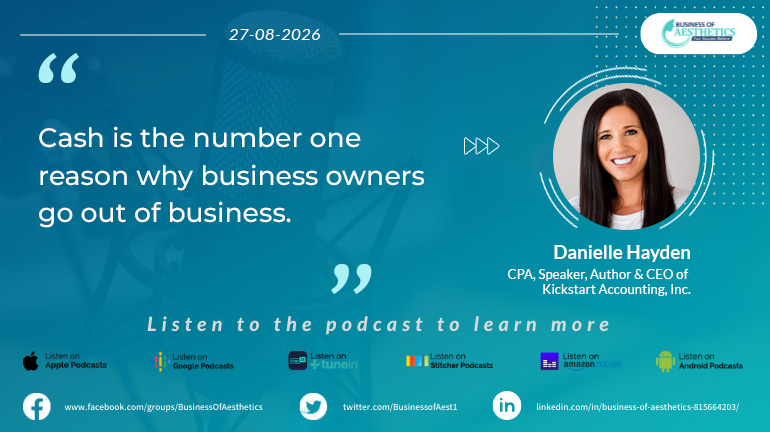
Danielle: Here’s where it gets a little messy. I want you to know the monthly average cash outlay of your business. This number is important because cash is the number one reason why business owners go out of business. I want that to sink in.
Danielle: It’s not that you’re not good enough. It’s not that you’re not talented enough. It’s not that you don’t have good people. It’s not your core values on the wall. It is cash.
Danielle: We need to have enough cash in order to fund these types of investments. You’re going to look at your cash flow statement. For the last 12 months, on average, how much cash left your business each month? That’s going to be through your expenses, plus your debt payments, your current inventory, and tax payments.
Danielle: On average, how much is leaving your business? You’re going to go to the income statement and pull out average monthly operating expenses, plus your average monthly owner’s draws, plus your average monthly debt payments. That’s how much cash is leaving your business.
Danielle: Business owners don’t see the balance sheet because it’s not the sexy statement that everyone feels comfortable with.
Don: Sure.
Danielle: We go and we buy a bunch of inventory. We take out owner’s draws. We make that $30,000 tax payment. That’s on the balance sheet. Then we sign up for the credit card that had low interest, the line of credit to build out the facility, and now we have all these debt payments.
Danielle: Then we come to our financial statements and we say, “Oh my God, I’m profitable, but I have no cash. Where did all my money go?” It’s hiding on your balance sheet.
Danielle: The third number you need to know is the monthly average outflow of cash from your business. If this number is not positive—if it cannot sustain your average monthly business operations today—the answer is no, you cannot buy that machine.
- 00:16:25 – Profit and Spending Benchmarks for Aesthetic Practices
- Danielle uses a 15% net-profit target as a general baseline for business health.
- She suggests monitoring marketing, facility, and payroll spending as percentages of sales.
- Temporary increases may be appropriate during a growth phase, but prolonged overspending should be investigated.
View TranscriptDon: Do you have a safety percentage, perhaps, for numbers such as average net profit? How would you say you’re comfortable if we are seeing average net profit to average monthly revenue?
Danielle: Love that question. We use what we call healthy percentages at Kickstart. It is a way of benchmarking our spending. A lot of people will come to us and say, “I see this profit and loss statement. Thank you. What’s everyone else doing? What’s everyone else spending? It’s normal.”
Danielle: Net, net, net: I want every business owner to be at 15% net profit. So 15% of your revenue is in profit. That way it can sustain your draws and your reinvestments.
Danielle: If you have a lot of debt, if you’re taking a lot of draws, then we might want to bring that number up. However, our base number is 15%. There are a lot of ways that you can get down to the 15%, but net, net, net, we want to stay at 15% profit.
Don: Okay, amazing. We’re going to take a quick pause right here, because a device is only half the equation. The other half is whether enough of the right patients are walking through your door to keep that device busy.
Don: If you’re not sure your marketing can actually fill that schedule, Ekwa Marketing is offering our listeners a complimentary 60-minute marketing strategy meeting. It’s a one-on-one session where you’ll get a clear, realistic 12-month roadmap for attracting high-value patients. That’s your ideal patient right there.
Don: There’s no pressure and no obligation with the meeting. Just go to[www.businessofaesthetics.org/msm](http://www.businessofaesthetics.org/msm) and grab a time that works for you. I’ll repeat that one more time:[www.businessofaesthetics.org/msm](http://www.businessofaesthetics.org/msm).
Don: All right, back to Danielle, because if smart spending has a twin, it’s a silent kind of spending that drains a practice without anyone noticing. You draw a hard line between healthy spending that fuels growth and spending that qualifies business. In an aesthetic practice specifically, what does that unhealthy spending usually look like before the owner ever notices it?
Danielle: What I want to bring attention to is the word “notices it,” because how is a business owner going to notice it? It is our responsibility. I know that’s kind of some tough love right there, but as the business owner, it is your responsibility to know your numbers.
Danielle: The IRS does not care if you are creative, if you are not good with numbers, or if you don’t understand the income statement. You started a business, and now it’s your responsibility to know those numbers.
Danielle: Every month, your bookkeeper goes in and strategically categorizes every single one of your transactions. At the end of each month, you should be receiving a set of financial statements from your bookkeeper. It is then your responsibility to review those numbers and understand them.
Danielle: If you don’t understand them, book a call. Have a conversation with your bookkeeper. Have them walk you through the numbers.
Danielle: We have to look at our numbers to notice that spending. Otherwise, we wake up at tax season. This is what I see too often: we wake up in tax season, and all of a sudden our tax accountant says, “Here’s your net income. Here’s your tax bill.” And we’re like, “Whoa, hold on. How did we get here?”
Danielle: I want to invite you to look at those numbers every single month. In doing that, you can look at the benchmarking.
Danielle: For a business owner who is in growth mode, we want about 10% of your sales each month to go to advertising and marketing. That’s all the ways that you market your business and generate sales. We have to spend money there.
Danielle: There are going to be seasons where that might be closer to 15%. You’re in a high-growth season, maybe filling out a new provider or building up a new machine. Those dollars might go up to 15%, but we need to have spending there.
Danielle: If we’re going up over that percentage for long periods of time, then I would question: is this about ego? Is there something that’s not returning on investment? Is there something bleeding out of this category?
Danielle: Next would be the facility. I want about 10% of your sales going to facility costs. If that’s higher because you bought a larger building and it has space for you to grow into, it’s fine. We can see that number a little bit higher for a season, but we want to be monitoring and noticing each month: are we starting to grow into that space?
Danielle: Payroll is another big area in this industry. We don’t want to go over 50% of our sales in payroll costs. We need to have enough cash in the business to be able to buy equipment, do sales and marketing, and pay for the facility.
Danielle: When your business is creeping over from healthy spending to unhealthy spending for long periods of time, that’s where the profitability creep starts to seep in. Again, we want to see about 15% profit. Month over month, there might be a little roller coaster as we’re investing in new seasons. That’s okay.
Danielle: It’s your responsibility each month to look at those financials. I like to give a framework when you’re looking at your numbers each month: what happened, why did it happen, and what am I, the CEO, going to do about it?
- 00:23:00 – How to Diagnose a Profitability Problem
- Danielle explains a simple monthly financial-review framework: what happened, why it happened, and what the owner will do next.
- New marketing campaigns and new-provider hires may lower short-term profit while supporting a defined growth plan.
- Owners should track return on investment and take specific corrective action rather than reacting emotionally.
View TranscriptDon: What happened? Why did it happen? What am I going to do? If you don’t mind, can you run a short scenario of how that would look in play?
Danielle: I started using this framework back when I was sitting in the boardroom. As a CFO, I had to report each month on what happened in the business. I couldn’t show up to the private equity firm and say, “Oh, we lost money this month. Better luck next time. All shucks.”
Danielle: In small business, we tend to treat our business that way. “Oh, I’m not sure what happened. Try again next month. I’m too busy to deal with it.”
Danielle: One of our CFO-level clients came to Kickstart Accounting Group. She signed up for our Envision CFO services. In Envision, what we do is set that 10-year goal, three-year plan, and one-year budget.
Danielle: We had mapped out her spending for the next 12 months. She was crystal clear about the goals of her business. She came to our financial review call and was very surprised that she had no profit that month.
Danielle: She said, “I feel busy. Practice is booming. We have clients coming in the door. What happened? Why do I feel busy but don’t have any profit or cash in our business?”
Danielle: We walked her through the financial statements and started with each category, not each line, because that’s a lot. We walked through sales and marketing. She had started working with a new firm. They were in the ramp-up series.
Danielle: When we sign up for new marketing initiatives, they don’t happen like that. It takes time. There was also a setup fee. We acknowledged that this is a new cost, that we don’t have true ROI on it yet, and that we are seeing this investment through.
Danielle: What happened? I signed up for a new marketing agency. Why did it happen? I’m in the first month of working with them, so we don’t have true ROI yet. What am I going to do about it? I’m going to monitor it for the next three months to ensure that we do have ROI within the next quarter or so.
Danielle: Then you keep going down the income statement doing that. My facility costs were under budget. Why? What happened? Do I need to do anything about it?
Danielle: My payroll is high this month, but that’s right: I brought on the new practitioner. She’s not fully booked out yet. I know I need to get her booked out, so I need to increase my sales and marketing for a few months.
Danielle: I have low profits because I’m increasing my sales and marketing to get my new provider up and running and booked out with new clients.
Danielle: What happened? Hired a new provider. Why did it happen? She’s part of my growth strategy, a really important growth strategy, but I have to train her and get her fully booked.
Danielle: What am I going to do about it as a CEO? Since that campaign didn’t work, I am going to do a referral campaign with my current clients to see if I can get some new clients booked with her right away. Two simple examples.
Don: Those are some great examples, and it really lands the whole framework in.
- 00:26:47 – Align Your Budget With a Long-Term North Star
- A 10-year North Star should reflect the owner’s desired business and personal life, rather than a rigid checklist.
- The three-year plan adds operational detail, while the one-year budget translates the plan into near-term action.
- Annual, quarterly, or monthly reforecasting helps owners make decisions using current information.
View TranscriptDon: I’m curious about this 10-year goal. What is a good goal? What makes a good goal?
Danielle: It’s really interesting how many people come to us and say, “I have a hard time articulating that. I have a really hard time envisioning it.”
Danielle: There are no good or bad goals. It’s where you want your life to be. When we do the 10-year North Star exercise with our clients, our CFO team is amazing, and they really pull it out of you to say, “Let’s really think about this.”
Danielle: Sometimes we just can’t do that on our own. I know for me, I really depend on my money team to help me articulate and envision where I want to go.
Danielle: I like to do it both business and personal. As a mom, I like to think about how old my kids will be, how I am spending my time, what I want my days to look like, and what my stress level is.
Danielle: We can’t operate in high-growth mode for 10, 20, or 50 years. What does my stress level look like? What’s my role in the business?
Danielle: It can be conceptual. Usually, in our 10-year goal, we’re not thinking, “I have 25 employees. I have three locations.” It doesn’t have to be that detailed. It can be bigger and conceptual: what do I want out of this business and out of this life?
Danielle: For a lot of people, it’s, “I want to exit. In 10 years, I want to sell my practice, and here’s the valuation I want.” Those would be some examples of how I would set that 10-year North Star.
Don: Okay. I was just curious because it’s always difficult to really know that abstract goal. How are you going to put it into paper, and then you’re going to derive a three-year plan and then a one-year budget off of that?
Don: Are there times when you derive the three-year plan and then the budget, and then you go, “You know what? I don’t think I can make it. I don’t think I can do this budget.” Then you have to change up the goals? Does that happen?
Danielle: Of course. Life changes. With our CFO clients, we take them through the exercise of, “Here’s our 10-year goal. Let’s build out the three-year plan.”
Danielle: In a three-year plan, we usually get a little bit more specific: revenue, number of employees, do I need an operations manager, what does my management team look like?
Danielle: We forget about all the other operational pieces that go into hitting seven figures of revenue. When we set the one-year budget, we do it with the best information we have available today. Then life changes, because life changes.
Danielle: What we do with our CFO clients is reforecast. I would say at least once a year we reforecast, but some clients are reforecasting quarterly, even monthly. We take what we know now and update the budget based on the information we have. We’re constantly making decisions based on the most relevant data.
Danielle: What I don’t want you constantly changing is your 10-year North Star and your three-year plan, because I want you to remember what you are striving for. But the one-year budget is going to change in the reforecast.
Danielle: Each January, or December and January, we reset that three-year plan because three years have moved out. We revisit where we thought we were going to be and update it for today.
Don: Love that. I think we went on an interesting tangent there, but at the end of the day, it’s all about monitoring and really noticing where you’re going along with your own numbers so that, the earlier you can catch it, the quicker you can understand where you want to take it and adjust accordingly, ensuring that you are slowly but surely moving step by step closer to that North Star.
- 00:31:11 – Review Underused Devices and Make Data-Led Decisions
- Owners with underused equipment should immediately review their financial statements and focus on two or three revenue actions.
- Danielle encourages owners to pause before reacting with another purchase and seek a supportive money team.
- The central message is to take responsibility as CEO and make calm, informed decisions using data.
View TranscriptDon: For our listeners who already have two or three devices sitting underused in a treatment room, what is the one financial review they should run this month to stop the bleeding and make the next capital decision differently?
Danielle: Look at your financials right now. Your first thing that you can do is to look at your financial statements and what is the impact of what’s happening in your business today.
Danielle: The “what am I going to do about it” part is where your action comes in. You can then set the budget. Look at the next three months. If you have three pieces of equipment sitting underutilized, what are the actions? You don’t have to do 25 of them. What are the two to three actions that you, as a CEO, can take to start to bring in that revenue and stop the reactionary decision-making?
Danielle: I love to buy new things and have the latest and greatest equipment. I’m right there alongside you, but let’s pause. Talk to your money team. If you don’t have a money team, find a money team that you actually want to talk to.
Danielle: Our team is this absolutely amazing, caring group of women who want to take you in and be like, “Okay, let’s do this together. Let me help you make this decision.”
Danielle: Find a money team who wants to do that with you so that they can help you set the budget and think through these decisions, so that you’re not making these decisions with emotion. We’re making them with data: calm, steady, controlled, confident, and empowered decisions.
Don: Right. Now, Danielle, before we close off here, I would love to get a key takeaway from our conversation. What’s the golden rule?
Danielle: The golden rule is to look at the data. If you are on your own and you’re like, “Danielle, I can’t get a whole money team right now,” I want you to leave this episode with that.
Danielle: You need to take responsibility for your role as CEO. Even if you don’t feel like the CEO of your business, you are the CEO. Own that role, straighten up your spine, take control.
Danielle: You are responsible for knowing your numbers. You are responsible for the financials of your business. Cash is the number one reason why business owners go out of business.
Danielle: Take control of your decisions. Look at your data. If you need support, get a money team. You’re not meant to do this alone. You don’t have to do everything yourself. Get a money team so that they can rally around you.
Don: Now, Danielle, this has been incredibly practical. For listeners tuned in, where can they find you and the work that you do?
Danielle: Kickstart Accounting Inc. is our website for bookkeeping. If you are ready to set that 10-year North Star and create a budget, EnvisionCFO.org is our CFO services.
Danielle: Kickstart Accounting is our Instagram. Come hang out with us. We have our podcast, CEO Numbers Network, as well, where we talk about how to use your numbers to make business decisions every single week.
Don: Amazing. Well, thank you very much, Danielle Hayden.
Danielle: Thank you.
- 00:34:59 – Closing Marketing Strategy Session Invitation
- Don closes by connecting financial clarity with a clear patient-acquisition plan.
- Ekwa Marketing offers listeners a complimentary 60-minute strategy session.
- The episode concludes with a call to book at the MSM link.
View TranscriptDon: As we wrap up, if you’re looking for some clarity on the digital side of your practice, Ekwa Marketing is offering our listeners a complimentary 60-minute strategy session, a simple one-on-one conversation to help you map out a realistic 12-month roadmap for attracting high-value patients, get your underused equipment marketed properly, and figure out how you can do that.
Don: You can easily grab a time that works for you at [www.businessofaesthetics.org/msm]. I’ll repeat that one last time:[www.businessofaesthetics.org/msm].
Don: I’m Don, and this has been the Business of Aesthetics podcast. Thanks for listening. Keep on leading.
GUEST – Danielle Hayden
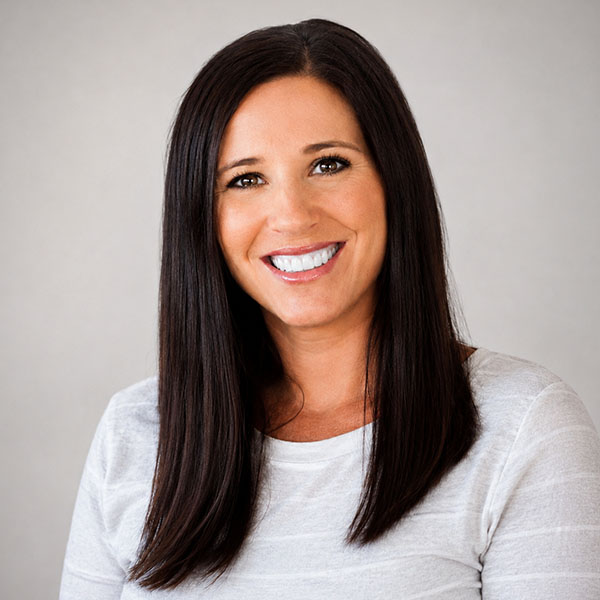
Danielle Hayden is the CEO of Kickstart Accounting, Inc., where she helps business owners replace financial uncertainty with the clarity and confidence to lead like a CEO. A reformed corporate CFO with more than a decade of experience in corporate finance, Danielle brings boardroom-level financial strategy to entrepreneurs ready to build sustainable, profitable businesses.
As the author of the Profit Planner book series, Danielle makes the financial side of business practical and actionable. Her expertise spans bookkeeping, cash-flow management, financial analysis, and the key numbers owners need to make smarter decisions, set meaningful goals, and grow without guesswork.
Through Kickstart Accounting, Danielle and her team provide the education, support, and financial insight business owners need to create lasting profitability. Her mission is to help entrepreneurs understand their numbers, make intentional decisions, and build businesses that support both their vision and their lives.
Learn more: kickstartaccountinginc.com
HOST – Adeesha Pemananda

A seasoned marketing professional and a natural on-camera presence, Adeesha Pemananda is a skilled virtual event host and presenter. His extensive experience in brand building and project management provides a unique strategic advantage, allowing him to not only facilitate but also elevate virtual events.
Adeesha is known for his ability to captivate digital audiences, foster interaction, and ensure that the event’s core message resonates with every attendee. Whether you’re planning a global webinar, an interactive workshop, or a multi-session virtual conference, Adeesha brings the perfect blend of professionalism, energy, and technical savvy to guarantee a successful and impactful event.
Connect with Us:
Category: Business of Aesthetics Podcast