In this episode, host Don Adeesha joins Dr. Milind Kachare, a plastic surgeon at Nayak Plastic Surgery, to dissect the “high-performance associate” model. Dr. Kachare explains his “practice within a practice” approach, detailing how he carved out a distinct Breast and Body lane within a predominantly facial surgery ecosystem. He shares the critical preparatory steps he took before day one, including establishing specific protocols and consents, to ensure he could generate his own leads rather than relying solely on the founder’s overflow.
Dr. Kachare breaks down how to leverage academic weight in a market saturated with social media trends. He argues that while patients may not count publications, they value the translation of that data into understandable safety assurances. He illustrates this with a dramatic case study involving a gunshot wound to an implant, showing how evidence-based storytelling can prove product integrity and empower patients to make decisions, ultimately justifying premium positioning.
Finally, the discussion turns to recruitment and culture, exploring why top talent chooses long-term commitment over short-term stepping stones. Dr. Kachare highlights the importance of transparency and the “green flag” of a founder who prioritizes legacy over quick monetary gains. He urges associates to adopt an owner’s mindset by evaluating equipment purchases through the lens of ROI and viewing board certification as a strategic investment in the practice’s brand equity.
Key Takeaways
- Build a “practice within a practice” to drive net-new revenue.
Stop using associates as overflow valves and instead carve out distinct service lanes, like adding Body to a Face-focused clinic, to avoid cannibalizing existing leads. - Demand proactive infrastructure before day one.
Associates should arrive with their own consents, protocols, and equipment lists ready to execute, ensuring immediate value rather than waiting for the owner to build their system. - Differentiate with academic authority, not viral trends.
Win trust by translating research data into patient education, proving that surgical decisions are based on rigorous evaluation rather than social media whims. - Use evidence-based storytelling to neutralize objections.
Overcome safety fears by using powerful real-world data points, such as implant durability cases, to validate integrity and empower patient decisions. - Hire the “owner mindset” to secure long-term legacy.
Recruit talent seeking a permanent home who evaluate purchases based on ROI and prioritize the practice’s financial health over short-term gain. - Operationalize “unstructured availability” for mentorship.
Accelerate growth by allowing associates to shadow soft skills like consult flows and marking, transferring the founder’s philosophy without micromanagement.
Podcast: Play in new window | Download
Dr. Kachare emphasized that he succeeded by entering the practice with a ‘constructed plan’ rather than proactively waiting for the business to come to him. This session is your opportunity to build that precise 12-month roadmap, ensuring your patient acquisition strategy is proactive, predictable, and focused on high-value growth.

- Get a 1-on-1 diagnosis of your online presence & patient acquisition funnel
- Identify critical, untapped growth levers (SEO, Social, Referrals)
- Define a clear action plan to attract and convert your ideal patients
- Receive expert solutions for your most pressing marketing challenges
Resources

Live Webinar: Enhancing Modern Aesthetic Practices in 2026
Join industry experts to modernize operations, enhance patient experience, and drive sustainable growth.
Wednesday, January 21, 2026 @ 8:00 PM EST.

Are you ready for the “GLP-1 Body” Era?
Download the 2026 Aesthetic Patient Behavior Model to see the numbers driving decisions this year:
- Why 73% of patients now define beauty by “individuality” over transformation.
- The shift away from non-invasive fat reduction (down ~40%).
- Real data on the rise of the male aesthetic patient.
Subscribe To Our Podcast





Key Highlights:
- 00:00:11 – Introduction & The Associate Model
- The episode addresses the challenge of scaling a practice beyond the founder and turning new hires into revenue-generating partners.
- Host Don Adeesha introduces Dr. Milind Kachare, a plastic surgeon at Nayack Plastic Surgery, who exemplifies the "high-performance associate".
- The discussion sets the stage for how to structure a culture that retains top talent and how associates can build their own patient base.
- This episode is brought to you by Ekwa Marketing, offering digital growth strategies for aesthetic practices.
View TranscriptDon Adeesha: Welcome back to the Business of Aesthetics Podcast. I’m your host, Don Adeesha. One of the hardest things to do in this business is to scale beyond the founder. You hire an associate, you train them, and you pray they become profitable before they burn out or leave. How do you turn a new hire into a revenue-generating partner? To answer that, we are joined by Dr. Milind Kachare.
Dr. Kachare is a plastic surgeon at Nayack Plastic Surgery in St. Louis. He is the model of the high-performance associate, someone who brings academic authority, builds his own patient base, and adds value to an already massive brand. Today we are discussing the associate model. We are going to talk about how to get new surgeons to generate their own leads, how to use academic credentials to sell premium cases, and how to structure a culture that retains top talent for the long haul.
This episode is brought to you by Ekwa Marketing, the digital growth partner behind this podcast and a trusted resource for aesthetic practices looking to dominate their local markets. With that being said, Dr. Kachare, welcome to the Business of Aesthetics podcast.
Dr. Milind Kachare: Thank you for having me.
Don Adeesha: Well, let’s get into it then. The biggest frustration for practice owners is hiring an associate who sits around waiting to be fed patients. You have successfully built your own volume within the NAG ecosystem. What specific marketing or networking actions did you take in your first six months to generate your own leads rather than relying entirely on Dr. Nayack’s overflow?
- 00:01:57 – Building a "Practice Within a Practice"
- Dr. Kachare explains his strategy of creating a distinct "lane" (Breast & Body) within a predominantly facial surgery practice.
- He emphasizes the importance of preparation before joining, including setting up specific protocols, consents, and equipment needs.
- The conversation highlights the shift from traditional marketing to educational social media content to build trust without a portfolio of before-and-afters.
- Dr. Kachare details how he mirrored Dr. Nayack’s educational style while adding his own spin to demonstrate knowledge and competence.
View TranscriptDr. Milind Kachare: I think there’s multiple answers to that question. So one, it’s actually even before I started, so even before the first six months, knowing after we signed the contract, one aspect was that not only was I going to continue doing facial surgery, and that would be building upon his practice, he also allowed me the opportunity to have my own lane and actually start the breast and body part of the practice, so expand the already well-renowned practice.
And to do that, I needed to come in with a little bit more structure and not try to act or kind of build it reactively, but build it in a good constructed plan. And so create like this kind of cohesive system. So before I even joined, him and I discussed kind of how he organized his practice and everything’s very thoughtful here. So prior to coming in, I made sure that especially for my different fellowships and training that I brought in with my consents. I had all that set up, my preoperative, postoperative protocols, exactly what equipment I needed to kind of hit the ground running right when I started the practice. So I think that was one of the big things I did before I started.
Then as for the marketing, as you said, I think things have changed nowadays where it’s not really the billboards or the news articles. It’s really social media. And so TikTok, Instagram, Snapchat, a lot of different options. And I think for me, I really focused on Instagram while I was in my last or ninth year of surgical training. That was my aesthetic fellowship. And that’s when I really started my professional account.
And for me, I was never someone who danced around and did the kind of goofy things as I love teaching and education is kind of how I’ve always done it. And so even while I was in my fellowship, I started with small little reels trying just different things. kind of talking points of education. And it really is nice because that’s exactly what Dr. Nayak does as well. And so I kind of mirrored him a little bit and then continue my own kind of spin on how I like to educate.
And I think that’s really important because when you’re a neurosurgeon, you really don’t have before and afters to show. So you don’t have proof of at least concept or proof of your operative ability. But one thing you do have proof of is your knowledge base and actually presenting yourself to your patients and to the community. So how you teach or how you educate or how you portray yourself allows them to gain a little insight into you as a person and you as a surgeon. And so I think that was something I really did in the first six months was doing that. Then I tried to have some meet and greets to allow myself to or allow the community to get to know me in person, answer any questions, not only about procedures, but also just who I am. And there’s a new surgeon here at Nayack Plastic Surgery.
Don Adeesha: Okay, that’s really cool. Now, you have done a lot of preparation for getting, you know, your foot in the door here. Something I’m really interested is you had a discussion with Dr. Nayack way before on how you’re going to establish this new area, which regards the body. How did the conversation start? And could you give us some details as to, you know, what was the discussion like?
Dr. Milind Kachare: I think I was fortunate because I’ve had some solid mentors in my past and just advisors. And so even just how this opportunity with getting connected with Dr. Nayack was that he knew one of my or actually a couple of my mentors and they had told him about me, which is what had him reach out to me. So because I think initially he had said that when he was looking for an associate who would eventually become a partner, he was looking for another facial plastic surgeon or someone who really just focused on face. And in his eyes, that was something that he already has overflow on, something that he knows very well, something that he could mentor someone through.
Luckily, through the references from my advisors and my mentors, he was told that, obviously, I want to do face, but that I have a strong background in breast and body and that I would be very comfortable operating on that without him as my mentor, him as my backup. And that’s kind of how he even told me about that right from the get go. And for me, that was something that I really, really enjoyed and liked because it allowed me to join a well known practice and obviously a world renowned practice, but also have kind of create my own lane a little bit. So I wasn’t just becoming an associate or joining a practice and just going to work. I was kind of creating my own little practice or my own little ecosystem in this massive world renowned practice.
Don Adeesha: Absolutely, absolutely. And I mean, that’s, that’s really amazing that you already had feedback from your mentors and them uh vouching for you uh especially when it comes to breast and body um treatments so how did this all align beforehand you know um since like when you’re back in your uh aesthetic fellowship and right you’re doing your educational videos yeah how did you gather this following?
Dr. Milind Kachare: Following is a term that I don’t know if I would say I had that much of a following, but I started like everyone does. You just got to kind of just start doing it and not think about who’s going to look at you, who’s going to judge you, and just really put your content out there. And so I tried to look at different content creators and just different surgeons, different advisors, different mentors, different friends, and created my own kind of vibe.
And so one thing, like I said, I love teaching. That’s always something that’s been about me. So I took some… uh like just some of my like lectures or some of my papers that i’ve written before and utilize that to create content and educational content small little snippets here and there and that allowed me to create a very and what i why i laughed at the following i mean i did not have a lot of followers in the beginning it took a little bit to start getting my name out there but we all have to start somewhere and i think that’s what i use to slowly build my presence.
Don Adeesha: Absolutely. And how long did it take for you, you know, ever since getting into Dr. Nayack’s practice, which is predominantly for, you know, known for facial plastic surgery, to get your own practice flow of breast and body patients. Yeah. And during this time, were you also working like in the overflow area or were you like really only concentrating, trying to concentrate on the breast and body?
Dr. Milind Kachare: So when I started, I really concentrated on the breast and body just because As I said, that was creating a completely almost building my own practice within a practice. And so not only was I bringing upon or new procedures that we were not already doing, I also had to teach the entire staff. So how the system that he has created over all these years has obviously done very well, I was kind of shaking it. I was kind of changing how the console coordinators, what their job would do, like how they’re going to be assessing patients for breast and body now. how our recovery nurses are going to do. Since we have our own operating rooms, teaching everyone how to do everything, make sure everyone’s prepared.
But also that before we get to the point of operating, we have a completely set system that ensures safety for the patient, but also is very well thought out. So patients don’t feel like we’re doing anything reactively, that we have a set system, that they’re in the best hands. And that even if this is something new for some of the people in the staff, when their approach or their practice, they never feel that this is something that we’ve not done before.
Don Adeesha: Got it. Now I’m just wondering, Dr. Nayack, you said had an overflow of patients for the facial plastic surgery, right? What happened to that?
Dr. Milind Kachare: Overflows. I guess subjective term and so yes in a sense that obviously he is a world renowned surgeon so he has so many people wanting to get a consult with him and obviously having him as a surgeon and no matter what as we know the Dr. Nayak and other large names in our field that there’s a supply and demand no matter what comes into factor. And when it’s only one surgeon, he is the entirety of the practice. So by just default, all these people want to see him no matter what. He can only do one surgery a day and he can only operate so many hours a day, so many hours a week. So, yeah, by nature, there was an overflow.
Prior to me joining, he was the only surgeon. He’s never had a partner or associate before. So a lot of those patients he was, he had to either turn away or patients were waiting for a long period of time before they could see him for a consultation, get the surgery. And so I think finally having someone else in our practice who does face, I think there’s a large overflow per se that if they were open to another surgeon, obviously that I was available.
- 00:11:03 – Leveraging Academic Pedigree for Premium Pricing
- Don Adeesha asks how to market an associate’s academic weight (40+ publications) to justify premium pricing against "Instagram injectors".
- Dr. Kachare argues that patients don’t care about the number of publications, but rather the ability to translate that data into understandable patient education.
- He shares a compelling story about an implant surviving a gunshot wound to demonstrate implant integrity, illustrating how he uses evidence to empower patient decisions.
- The key is showing patients that decisions are based on rigorous evaluation of possibilities, not just whims.
View TranscriptDon Adeesha: Oh, okay, great. Fantastic. Now, in a market saturated with Instagram injectors, you bring serious academic weight with over 40 publications. How can a practice owner better market their associate’s academic pedigree to justify premium pricing and win trust with patients who might be skeptical of a newer surgeon?
Dr. Milind Kachare: So I think this goes a little bit along some of the earlier question, but with the age of social media, I don’t think a lot of patients are really looking at your pedigree or me saying I have 40 publications. I don’t think that means as much. I think it’s not about the number of publications or that I even have publications, but it’s the way of translating that experience that I have into communication with my patients. So taking that information that I’ve known, expressing that showing them that surgery is not just something I’m doing. It’s not just a job, but it’s something it’s a passion.
So when I’m looking at when you do research, you’re evaluating your outcomes, you’re evaluating surgery, you’re looking at the process, you’re seeing you’re evaluating your complications, you’re evaluating how the surgery was done and looking at ways to continue to improve. And I think if you’re able to take all of that and translate that and show the patient how you think, why you think, why you’re doing what you’re doing, I think that’s how you translate your academic prowess. It’s not about the number or what you’re doing. It’s being able to take that information and translate it into terms or words that patients can understand, but also informing the patient.
Because I think the biggest thing is when I go through all those processes, I’m reading and I’m going through all that, I’m more able to answer any questions my patients have. So it’s not just… I had 40 publications just listen to me do what I say. I looked at every possibility of what we can do. And what I’m telling you is not just out of the whim, it’s actually because I’ve evaluated every other possibility. And for me to be able to take all that knowledge educate my patient in a way that they understand it so that they know that the decision is not mine, but it’s a decision that we’re making together. I think that’s how you really create that confidence patients would have, but also eventually create the confidence for premium prices or whatnot, because they understand that you actually put a lot of thought into this and they have that trust in you.
Don Adeesha: Got you. And take me to a practical example of like how you are educating the patient on their level so that they feel empowered that this is, you know, a decision we are making together instead of one that you are kind of just saying, as you mentioned, I have word of publications. You do this.
Dr. Milind Kachare: I mean, so, I mean, this is kind of a more humorous one, but like, I know a lot, the big question that comes up is how, how long should you have your implants in? Should you, after five years, 10 years, like a lot of the studies in the past have shown that because after a certain period of time, we had a good paper that suggested that the rupture rate increases a certain percentage that it was recommended to exchange it.
and when i was training i had a patient who came in she had a breast augmentation about a few months prior to coming to the hospital and she was actually shot point blank in the chest and the bullet went through and through the implant luckily ricocheted off her rib and it went out of her we had a ct scan she came in as a trauma um it on the on the scan it looked like the implant and the silicone was going into her chest cavity. So we obviously had to open up, do the life-saving maneuvers, but also took out the implant. But what we saw in the implant was the implant looked almost undamaged. If you looked at it from the side, you could see the trajectory of the implant. And if you squeeze the implant, you could see the gel stick out at both ends. And if you let go, they just completely retracted or recoiled back into the implant.
And it just showed how much more cohesive these newer implants are, how much more integrity they have. So typically that conversation of, do I have to change my implants in five or 10 years is not really a thing anymore. I can show, show pictures of that, talk about that and be like, it’s these newer implants are a lot more sturdy. They have a lot more integrity. And usually what we’re looking at is one reason to change is if your aesthetics change, obviously if you have one of the complications such as capsular contracture, malposition, infection, rupture, but usually the timeline aspect is kind of changing because these newer implants are so much better, something like that. So I talk about a paper I had to kind of bring into terms that they might find interesting, but also can educate them.
Don Adeesha: yeah that’s awesome i mean you know if you were just yeah you just told a story and right there you showed how you know your point of like uh the timeline not being applicable anymore as the new implants are that much cohesive uh wow i’ve never heard an argument uh so sound for that.
- 00:16:12 – Culture, Recruitment, and Long-Term Vision
- The discussion shifts to recruitment and avoiding turnover. Dr. Kachare identifies transparency and clear expectations as the "green flags" that made him commit.
- He notes that Dr. Nayack was looking for stability and legacy, not a short-term stepping stone or quick monetary gain.
- Dr. Kachare highlights the "practice-first" mindset where he treats decisions as if he were an owner, focusing on ROI and long-term growth.
- He contrasts this opportunity with other offers where he felt he might remain a permanent "trainee" rather than a true partner.
View TranscriptDon Adeesha: Dr. Kachare, recruitment is expensive and turnover is deadly to say, you know, for the practices, financial health. From the perspective of top talent, what was the specific green flag in the contract or culture at Nayack Plastic Surgery that made you commit to building your long term future there rather than viewing it as a short term stepping stone?
Dr. Milind Kachare: I think one aspect was just kind of what I was looking for. So I was looking for, I was not looking for a stepping stone. I was looking for kind of my, where I want to develop my practice MD forever. And so initially when I was looking, I had actually thought about starting my own practice. And so, but when I got connected with Dr. Nayak, when the biggest thing, and actually when I met him, I also met his wife, Avni. And, and that the biggest thing I would say is that they had clear expectations of what they were looking for.
And they were very transparent from the beginning. And Dr. Naik had always said he was not looking for someone that is coming here to be a stepping stone. He has never had a partner before. He has never had an associate before. He’s never brought someone on. So this was a big deal for him as well. And he was looking for someone that will secure the stability of the practice, but also bring security to his staff to know that there’s a future, a longer future, not just security for him as a surgeon, but there’s someone else that’s also going to be here and this practice is going to keep going.
And I think him saying that from the beginning also kind of showed me that he really did care about me, about me staying and the growth of the practice and not just like short-term gains or monetary, quick monetary returns. And so as we started talking more about contract negotiation, obviously he brought up allowing me to have my own lane to kind of create the breast and body completely how I wanted. So I was able to take his mentorship and face and really take that system that he’s created that’s been so successful. But then I had my opportunity of what I was already looking for. I was possibly starting my own practice was that I had my ability to completely shape the breast and body exactly how I wanted. So that was amazing for me. And I think that was really nice. So he allowed me the autonomy with like very good support as well.
Another thing is when I had my interview here, I think it was just the culture. I would say the culture that he had, him and Avni had developed at this practice is unparalleled. Just every single part of this practice is so thoughtful and everything’s done for a purpose. And I really, really liked that. And you could tell that they always thought about the growth of the practice and what’s best for the practice. And by no means the individual, not him, not her, not… their way, just the pocket, but overall the practice.
And you can tell how I mean, a lot of the employees I met or the staff that was there, they’ve been there for multiple years. So you could tell if people stay, there’s a reason. The way his benefits packages, the way he even treats everyone, he’s always very, very, they both are very kind. They’re both very generous. And so it’s about building a nice community that everyone actually cares about the practice. And so that really resonated with me when I was here. And I think a lot of that aspect really kind of drove home of why I was like, this is, I want to put my all into this.
And even for me, I didn’t come in thinking, oh, I’m going to be, it doesn’t, I didn’t have the mindset. I’m going to be a junior associate. I’m going to be an associate. I’m going to be working. It’s, this is something that even though I’m not an owner, obviously now, like this is something I wanted to think of it as if I was an owner. Whenever I use things, whenever I buy, ask for purchasing an equipment, I’m not thinking of just like, oh, let me get whatever I want. What’s best for the practice? What has the best ROI? And really already thinking of it as if it was my practice and what’s best for it versus I’m coming in green. Let me like get whatever I want. Let me just get as much money as I want. Because I think even for the associate, not only for the owner bringing on someone, if I only thought about money, one, I think medicine’s the wrong path. But two, you should join a practice with the mind of how are you going to build it? How are you going to contribute? And not only what are they going to do for you? And I think that’s kind of what I had in mind. And I think that’s what allowed us to connect very well.
Don Adeesha: I see. And you spoke over there about, you know, the culture. And I’m just wondering, did you look at other practices before you chose, like, you know, finalized with Dr. Nayak? Or was it like just such a good opportunity that you just went ahead with it?
Dr. Milind Kachare: I had a I was not actively interviewing per se, but I had two mentors. My fellowship director at the time had offered me if I would like to stay on as staff and work with him. And he at that time was the only surgeon at his practice and the sole owner. So I would be similar to the setting where I would be joining him. And then another mentor of mine that was out in my where I did my initial plastics training, who’s also a big name in the facial plastics world. He had also asked me if I wanted to come on. So I had been in discussions with both of them.
But I think for me at that point, They were amazing mentors. They’re still very close friends and mentors of mine. I was just unsure if I wanted to join someone that was already seeing me as their mentee, as someone that they trained. And even though that might be the wrong way to look at it, but that’s how I thought of it, that they might not ever be able to see me as a true associate or a partner because I will always forever be their trainee. And so some part of that went into my thought process. I think as I talked to them more, that did change. And I was also thinking about starting my own. So at that point, I had also right before I got connected with Dr. Nyack, I think I was actually looking at starting my own, looking at practices, looking at funding and all of that aspect until this came up. So that’s kind of how I think I was kind of getting close to starting my own before I got connected with him.
Don Adeesha: okay so it was um either starting your own but then you saw the benefit of dr naik’s practice in the things that you just mentioned especially with regards to having your own lane and then that yeah it was like the best culture did that culture really really yeah because like if you were to start your own practice to build that part that would take a little while would it?
Dr. Milind Kachare: 100%. I think people always say, even expect the first five years to be net negative, but also it takes a long time for growth. And also- Luckily, joining someone like him, and he’s, if you talk to anyone who’s been in practice for 20 years, they’ve learned a lot through those 20 years. They’ve made a lot of mistakes, but they’ve also done very well. And so joining someone that had a great system in place, it was something that would save me time in a sense, but also more than anything, just joining someone like him, I knew that this was a good future. It was not a short-term type of stepping stone.
- 00:23:32 – Board Collection & Mentorship Dynamics
- Ekwa Marketing is offering a complimentary 60-minute digital strategy session to help practices map a 12-month growth roadmap.
- Dr. Kachare treats board collection not as a distraction but as an investment in the practice’s future, aided by the practice’s existing high-quality documentation.
- The episode explores the mentorship dynamic, describing it as "unstructured but available," allowing for autonomy without micromanagement.
- Dr. Kachare’s final "golden nugget" for associates is to avoid being a "cog in the wheel" and instead focus on building and expanding the practice from day one.
View TranscriptDon Adeesha: Gotcha. Gotcha. Right. Now, before we continue, I have a small message from our sponsor here. Yeah. Yeah. They are offering our listeners a complimentary 60-minute digital strategy session. This is a one-on-one consultation with the senior strategist to help you map your 12-month high-value patient acquisition roadmap. You will get a personal diagnosis of your online presence and patient funnel. Uncover untapped growth levers across SEO and social. Walk away with a clear actionable plan tailored just for your practice. You can check the availability and reserve your spot in under two minutes at www.businessofaesthetics.org/msm. Now, back to you, Dr. Kachare. You’re navigating board collection, which is a massive time commitment. For an owner, this can feel like a distraction from revenue. How should a practice structure the clinical schedule during this phase so the surgeon gets their required cases without hurting the clinic’s overall efficiency?
Dr. Milind Kachare: So, I mean, I would restructure that, even that question to say, I don’t think board collection should be a hurdle or a distraction. If anything, it’s just an investment into the future of not only that surgeon, but that practice. And so for me, I think it was the practice that Dr. Nyack has here I didn’t have to go out of my way for the board collection per se. We have very good documentation here from not only our notes, our operative notes, anesthesia records, finances. So all of that was already set. So that was very easy to transition to. Pictures, we take pictures on every visit. And so that also was very easy in that regards.
The biggest thing was just patience. Obviously, for plastic surgery, you need to get a certain amount of procedures within your first year and by a certain timeline. And you have to have a certain complexity of those cases so that they meet your requirement to be able to sit for the boards. And I think the biggest thing for me, as you talked about before, is creating a name. Yes, I joined a big name practice. However, I was someone new. No one knew me. And just because I’m here does not mean that someone’s just going to come and have me be their surgeon. So I had to slowly in the first many months create content, get my name out there, do meet and greets. just gained the trust of my community and as slowly as I operate.
But one thing he was very, very generous on, he was very helpful in any way he could. He said this, he understood the investment of boards. And so he, any discount, discounts, meet and greets, specials or anything I want to do, he was just like, do anything, do it all because this is your time to grow. and create your books, create your before and after profile and catalog. So patients know the quality of your work. And so he was always there to support me in any way he could. And because of that, I was able to get my numbers last year, which I obviously sat for my boards and I passed my boards. And that’s because of him looking at the whole entire process, but looking at me and looking at my future as an investment for him, for the practice, and not just a short-term gain How Do I monetize him now that he’s in part of my practice?
Don Adeesha: Got you. I’m just, you know, during this discussion, I’m really understanding Dr. Nak as someone who is a very interesting case study on its own, right? Having this kind of mentality to really invest in their future by hiring the partner, because Through a lot of discussions I’ve had, that is not perhaps the first thing a practice owner is thinking about when they’re looking at, you know, expansion or, you know, the future per se. What do you think, having, you know, had these conversations with Dr. Nayak, what is your personal opinion on why that came about as, you know, the ideal way for expansion?
Dr. Milind Kachare: I agree. I agree in everything you said that that is not the common thing. And I think our common aspect that we see in our field, and I say that to him all the time, what do I think that’s different? I think it’s definitely both him and his wife. I think they’ve created this amazing practice. Something with Dr. Nayak, me and him are very close. And I even said to him the other day, I was like, obviously, he understands that me doing well means being The practice is going to do well, too. Anything I grow, anything I benefit is also benefiting the practice. But like even on a personal level, I would say, yes, that is obviously true. But I would say personally, I feel that he actually cares about me, cares about my growth as a person, even not only because my growth means growth for the practice and benefits all of us. And so that’s a huge thing.
Something else is just, I think everything he does, as I said before, is purposeful. He’s very thought out. And I think the way that they have structured the entirety of this practice, the way that every single employee, every single staff member in our practice, what their role is, how we conduct things. each day to day is so well thought out. I think that’s what creates the uniqueness of how this practice is run and what he was looking for in a future, an associate, a partner, because he sees the bigger picture, not short term. It’s not about getting a quick buck or whatnot. It’s about creating And expanding this name, he’s created such a strong presence, a strong name, strong brand. And how can he continue that brand in the best possible way to continue and keep it trustworthy so patients continue to look at this brand with a high quality of care that it’s always had? And I think that’s something that he was looking for and what he was wanting to continue on.
Don Adeesha: And, you know, as an owner, does, like, you know, usual, the usual cases, you know, owners really do find a bit of a struggle when it comes to time to mentor. In your experience, does that structured mentorship, you know, like formal case reviews, perhaps, actually accelerate an associate’s revenue generation enough to justify the senior partner’s time investment?
Dr. Milind Kachare: I would say, well, generally, We currently I don’t have a structured mentorship model per se. But yes, I would say it does. Because, again, say if you’re the owner and you’re bringing on an associate, now everything they do is still a reflection of that practice. And so if you’re taking – especially if you’re trying to grow the practice and you’re trying to get someone who’s newer, who’s just coming out of training, you do want to mentorship. Even if they have the best training, no matter what – Training is not going to give you that experience. You learn so much more in your first year of practice than you do in the nine years of training that you had. And so mentoring someone and allowing them to see or being with them, giving them a little bit of security blank, I think helps. Not that everyone needs it. And so I think in the simple answer of your question, I think, yes, there is a big return of interest because it gains that confidence or gains them confidence, but allows them to go to more complex cases even quicker.
In terms of how I did it here with Dr. Nayak, I wouldn’t say we had a structured mentorship model. Obviously, as I said, when I started the practice, because I was growing that breast and body, I kind of did that on my own. And I had great mentors in the past and those who I could reach out to if I had questions. But I really did that by using everything that I had been trained upon and building upon that to build that part of the practice. Yeah. As now I’ve been doing a lot more face, obviously I do get a lot of mentorship with him. And even throughout that time when I was doing breath and body, anytime, especially in the beginning when I was not very busy, I would utilize that time to go watch him, see how he did his consult, sit in on his consult, see how he evaluates a face, see how he marks his patients preoperatively, go into the OR and watch him operate.
Because all these little techniques, nuances, no matter what, if you read every book, you watch every video, every surgeon is constantly evolving and constantly getting better every single day. So even if you watch all his Q&Ps, what he’s doing actively currently is not what he… The exact way is not what he did on his last Q&P video. And so having that ability to continue to get that mentorship. But then as I’ve been doing face, he is always available. And that I think we have an unstructured mentorship model where he’s always available, but he’s not micromanaging me. He’s not hovering over me. But anytime I have a question, he’s there. He will, as I said, allow me to come and watch him. If I have a question, he’s always available to go over that question, go over previous lectures of his, previous patients of his, what he’s learned, why he does what he does. If I have questions about management or even what technique to use, he’s always available to go over that and even fine tune my plan or go over it so that whatever I’m doing, I’m moving forward that continues that nyack name in the sense especially when it comes to facial black.
Don Adeesha: okay okay well dr kachari we have arrived at the end of the episode here i would like to get uh one last question from you uh which is kind of like is there a question that you wish i had asked um
Dr. Milind Kachare: I guess not, not, not really. I think this was a great conversation about just becoming a new, being a newer associate, how you, in the, what you’re looking for, how to join a practice, obviously when you’re newer, how to go manage that board collection process, becoming board certified, what social media, how to market yourself. So I think we kind of hit upon a lot of important things as a newer surgeon. I don’t know if I have anything else that I would, uh, say that you could ask me per se or that i wanted to discuss i think we really did go through everything
Don Adeesha: awesome awesome and uh let’s give our audience a key takeaway one final last the golden nugget what is the golden nugget let’s see
Dr. Milind Kachare: I think maybe the first thing you asked me was about overflow and how did I build a presence, my own presence in this? And I think the biggest thing is don’t go into anything. And I did not come into this practice asking to be plugged into a system. I really came in prepared to help build one and build this practice and expand it, not just be plugged in into the cog, be a cog in the wheel. But I wanted to help grow the practice. And that’s how I’ve always kind of done this from day one.
Don Adeesha: Got it. Well, Dr. Kachare, that’s a wrap for the podcast. Thank you so much for joining us. And that was a masterclass in Associate Dynamics with Dr. Milind Kachare. My biggest takeaway was the concept of practice within a practice. The goal of an associate shouldn’t be just to help the owner’s workload. It should be to build an autonomous engine that runs itself. Dr. Kachare showed that with the right initiative, an associate can become a multiplier, not just a divider. I also appreciate the insight on academic marketing. If you have a surgeon with 40 publications, shut it from the rooftops. That is a competitive advantage that no amount of Instagram fillers can fake.
Before we sign off, a quick reminder. Ekwa Marketing is offering a complimentary 60-minute digital strategy session. This is a one-on-one consultation to help you map your 12-month growth roadmap. You can check the availability and reserve your spot in under two minutes at www.businessofaesthetics.org/msm or check the show notes of this episode. I’m Don Adeesha and this has been the Business of Aesthetics podcast. Thanks for listening and keep on leading.
GUEST – Dr. Milind Kachare

Dr. Milind Kachare is a Fellowship-Trained Plastic Surgeon and Board-Certified General Surgeon who exemplifies the modern ‘High-Performance Associate.’ After extensive training at Rutgers and a specialized aesthetic fellowship in Texas, he joined the team at Nayak Plastic Surgery in St. Louis.
With a distinguished background that includes over 40 academic publications and the ISAPS Gold Medal for Best Presentation by an Early Career Surgeon, Dr. Kachare specializes in bridging the gap between scientific rigor and commercial aesthetics. He offers a blueprint for how practices can successfully integrate top-tier surgical talent, helping associates build autonomous ‘practices within a practice’ that drive growth for the entire brand.
HOST – Adeesha Pemananda
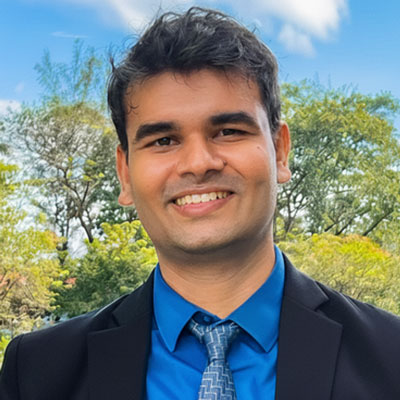
A seasoned marketing professional and a natural on-camera presence, Adeesha Pemananda is a skilled virtual event host and presenter. His extensive experience in brand building and project management provides a unique strategic advantage, allowing him to not only facilitate but also elevate virtual events.
Adeesha is known for his ability to captivate digital audiences, foster interaction, and ensure that the event’s core message resonates with every attendee. Whether you’re planning a global webinar, an interactive workshop, or a multi-session virtual conference, Adeesha brings the perfect blend of professionalism, energy, and technical savvy to guarantee a successful and impactful event.
Connect with Us:
Category: Business of Aesthetics Podcast