Podcast: Play in new window | Download
Subscribe To Our Podcast




In this episode, host Don joins aesthetic medicine practitioner and educator Tracy Mancuso to tackle one of the industry’s most expensive problems: buying technology because it looks innovative rather than because it belongs in your practice. Drawing on more than 30 years across clinical care and manufacturing, Tracy explains how owners can separate genuine advancement from expensive hype.
Tracy breaks down how to evaluate peer-reviewed evidence, validate patient demand before purchasing, test whether staff truly understand the science behind a device, and independently verify manufacturer claims. She also shares a practical patient-survey approach that can reveal demand while simultaneously creating a soft launch list for a new treatment.
Her framework is simple: start with the patient problem, not the machine, and never make a major technology decision in isolation. Build a trusted professional network, choose your own references, keep training beyond the manufacturer’s basics, and make every investment earn its place inside the practice.
Key Takeaways
- Validate demand before buying technology. Survey existing patients on the treatment category, price tolerance, downtime, and desired outcomes before committing capital to a device.
- Demand evidence beyond polished marketing. Look for credible peer-reviewed research, appropriate controls, statistical analysis, and product-specific data rather than relying on white papers, dramatic before-and-afters, or familiar KOL endorsements.
- Buy for your practice, not for the industry’s hype cycle. Even excellent technology becomes a bad investment when your patients do not want the service, your team will not support it, or the treatment does not fit your existing positioning.
- Train clinicians beyond the buttons. Build ongoing education around tissue interaction, device physics, complications, and treatment rationale, then refresh that knowledge every six to twelve months to prevent complacency and declining outcomes.
- Choose your own references before purchasing. Contact practitioners you trust who already use the device and investigate clinical results, treatment frequency, reliability, service quality, and true operating economics instead of relying exclusively on manufacturer-provided testimonials.
- Treat referral networks as an extension of patient care. Build trusted relationships with practitioners who can handle cases outside your equipment or expertise so patients remain protected even when the right treatment is not available in your clinic.
- Start with the patient problem, not the machine. Identify demand for categories such as skin tightening, vascular treatments, resurfacing, or fat reduction first, and only then evaluate which technology deserves your investment.
Tracy Mancuso emphasized that sustainable technology growth starts by validating what patients actually want and building the expertise to deliver it exceptionally well. This session gives you the strategic clarity to turn those same principles into a focused growth roadmap for your practice.

- Get a 1-on-1 diagnosis of your online presence & patient acquisition funnel
- Identify critical, untapped growth levers (SEO, Social, Referrals)
- Define a clear action plan to attract and convert your ideal patients
- Receive expert solutions for your most pressing marketing challenges
Resources

Live Webinar: Future-Proofing Your Aesthetic Practice: Decisions You Must Get Right in the Next 18 Months
Join industry experts to modernize operations, enhance patient experience, and drive sustainable growth.
Wednesday, May 20, 2026 @ 7:00 PM EST – 9:00 PM EST

Are you ready for the “GLP-1 Body” Era?
Download the 2026 Aesthetic Patient Behavior Model to see the numbers driving decisions this year:
- Why 73% of patients now define beauty by “individuality” over transformation?
- The shift away from non-invasive fat reduction (down ~40%).
- Real data on the rise of the male aesthetic patient.
Key Highlights:
- 00:00:12 – Introduction: Separating Innovation From Expensive Hype
- Don introduces Tracy Mancuso, an aesthetic medicine practitioner and educator with more than 30 years of industry experience.
- The episode explores how practice owners can distinguish genuine technological advancement from expensive hype before investing.
- Tracy brings experience from both the clinical and manufacturing sides of aesthetic medicine.
- The episode is brought to you by Ekwa Marketing.
View TranscriptDon: A new device can look like the future of your practice, right up until you’re making the payment and wondering why the schedule isn’t full. Welcome back to the Business of Aesthetics Podcast. I’m your host for this session, Don. It’s great to have you here. Today, I’m joined by Tracy Mancuso, an aesthetic medicine practitioner and educator with more than 30 years of experience in the industry.
We’re going to talk about how practice owners can separate genuine advancement from expensive hype before they make the investment. This episode is brought to you by Ekwa Marketing. Tracy, welcome back to the show.
Tracy: Thank you for having me. It’s always a pleasure, and I love dealing with the Business of Aesthetics and Ekwa.
Don: Tracy, you’ve watched technologies come and go in this industry for more than 30 years, all promising to change the game. Can you take me back to a recent time when you were pitched something and decided, "No, this isn’t for me"? What made you walk away? We want to get real practical experience right out of the gate.
Tracy: Absolutely. One particular incident happened just recently because the practice I work in was looking at different technology. I was pitched, and I’m probably one of the more challenging people to pitch to because, not just because of my tenure in the industry, but I’ve also worked on the manufacturing side. I’ve seen that side of the business, so I’m very well acquainted with that end of it.
When somebody pitches me, they have to have all their ducks in a row. This particular piece of equipment didn’t have any specific studies or anything peer-reviewed. It didn’t have a lot of data. It was all based on predicate products and a lot of astonishing before-and-afters.
When I start seeing that, I start questioning it. This doesn’t seem right. It doesn’t seem like just a non-invasive treatment can perform like this. It doesn’t make any sense.
Then they start pulling out their KOL, or key opinion leader, list, and it reads like the everyday list of the next device that gets put into the same hands over and over again. When I see that, it makes me doubt the device. I see it as over-promising things.
There’s no research behind it. It’s the same people talking about it. I’m just not really interested in it. It doesn’t float my boat, even though it’s in every magazine and they’ve paid for a ton of ads. It doesn’t interest me.
- 00:03:16 – What Qualifies as Credible Technology?
- Tracy prioritizes peer-reviewed research over white papers, testimonials, and polished sales materials.
- Credible technology should have appropriate controls, documentation, methodology, and statistical analysis.
- Sales representatives should understand the underlying research rather than simply providing glossy summaries.
- Scientific evidence is only the first filter; a good device can still be a poor business purchase.
View TranscriptDon: When you’re coming from the manufacturing side, what exactly are you looking at that qualifies as good technology?
Tracy: When it comes with solid research, that’s the big thing. I get a lot of research that comes across my desk, and I look at it. It’s very interesting, but it’s not peer-reviewed. That means it’s what’s called a white paper.
They’ve got together a couple of clinicians or physicians who’ve done some research on their own, come up with some good anecdotal evidence that this device works, and that’s great. They put it into a white paper, but it hasn’t been submitted to a journal that’s part of our respected community and then peer-reviewed amongst all of the peers who say, "This is science."
It followed the rigors. It followed a particular approach to that research. It has controls. It has all the documentation and the right statistical analysis to make it valid.
That’s what I look for first and foremost when somebody comes in and presents technology to me. I want to see that research, and I want to understand it.
If the rep can’t tell me about this and they give me some glossy overview, and I ask them about these papers and say, "Can you explain this to me? That’s what you’re here to tell me about. I can read the paper, but you’re here to actually tell me about it," and they can’t tell me about it, again, it puts me off.
Don: Was there ever a time when even the papers were solid and peer-reviewed, but it was still a terrible purchase for a particular practice?
Tracy: Yes.
- 00:04:52 – Why Great Technology Can Still Be a Bad Purchase
- Even clinically strong technology can fail commercially when it does not fit the practice.
- Practice owners need to validate patient demand, marketing capability, staff willingness, and operational fit before purchasing.
- Having the right demographic does not automatically mean there is demand for a particular service.
- A medical device should never be treated as an automatic revenue generator.
View TranscriptTracy: It can be a terrible purchase if the product is amazing, has all the peer-reviewed papers, and has a good track record of producing results, but in your practice it doesn’t make sense.
I’ll give you an example of a practice I was working with. They’re a booming practice for aesthetic medicine, and all of a sudden they decided to get into women’s health, just randomly.
I said, "Okay, have you thought about this? Do you know what you’re doing, first of all? And are you sure you have a patient population that’s looking for this particular treatment? It’s very specific."
They said, "Yeah, yeah. All of our patients are women."
I said, "They’re all women, but that doesn’t mean they’re looking for this."
They bought a very expensive piece of equipment. It sat there and didn’t make any money, and they were very upset.
I said, "Look, this wasn’t supposed to be in your practice. You didn’t market it. You didn’t figure out if you had the right audience. You didn’t figure out if you had the right staff to support it. Your staff don’t even want to do these treatments, so they’re not selling it. You’re having a hard time. This isn’t an ATM."
This is a medical device, and you have to understand that it has to have a place in your practice.
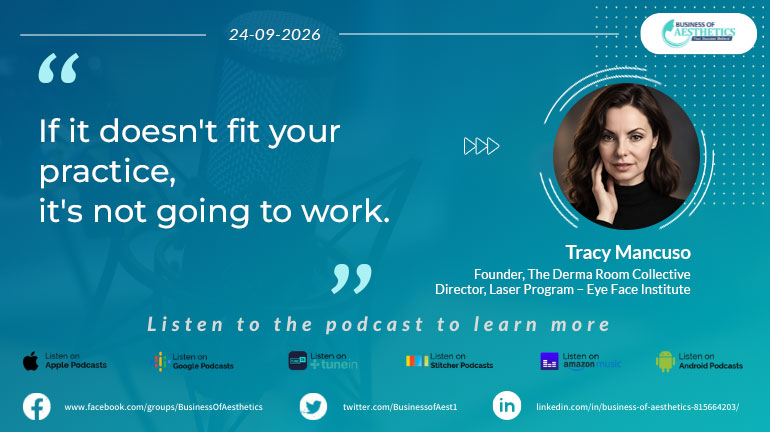
You can buy the best piece of equipment, and if it doesn’t fit your practice, it’s not going to work.
- 00:06:23 – Managing Patient Demand Without Reinforcing Social Media Hype
- Practitioners should respond to patient questions about trending treatments with curiosity rather than dismissal.
- The right approach is to review the claim with the patient and determine whether the technology and indication are appropriate.
- Referral is sometimes the best clinical decision when another trusted provider is better equipped.
- Safety and regulatory status should outweigh pricing or social media popularity.
View TranscriptDon: You talked about patient need being there first and foremost. All of their patients were women, but were they really looking for it?
What if there are patients who are looking for it, inspired by fantastic Instagram posts? How do you respond to those patients without dismissing what they’ve seen, but also without reinforcing the hype?
Tracy: A few things I do in practice. First of all, you can’t dismiss what they’ve seen. It’s very important that you go into it with an air of curiosity and not with, "Oh, that’s just garbage because it’s on Instagram," because we all post on Instagram.
It’s very important to say to your patient, "That’s great. Can I see the post? Can I take a look at it?"
Then you take a look at it with them, and that’s when you can decide whether or not this is something valid.
Sometimes I’ve seen posts where the technology is solid. I know of it, and I simply don’t have it in practice.
I say, "You know what? This actually is really good. I’m going to refer you to someone I trust. I want to make sure you’re taken really good care of."
Other times I’ll see it and say, "This technology might be great, and for this particular patient it was good. But for your indications and what you’re looking for, it’s not the right choice, and this is why."
Then other times it’s something completely different.
There was a girl around the corner from where I was practicing who was offering treatments at a very low cost with a device that wasn’t Health Canada cleared.
I said to the patient, "You’re certainly welcome to price shop. I understand that, and we’re all price sensitive. However, I just want you to know that this hasn’t been Health Canada cleared. Things that are Health Canada cleared have to go through the rigors of being allowed to be in Canada to treat humans and patients."
I was joking with her and said, "I absolutely forbid you to do this treatment."
She started laughing, and I said, "I’m serious. I don’t want you to get injured."
A couple of patients in, I noticed there was a post about this practitioner and somebody did get hurt.
It’s really important to decide with your patient: Is this a real thing? Can I send them out? Absolutely.
Don’t feel bad about sending them to another practitioner. You have a network, and that’s what we have networks for: to refer to people we trust and know will care for our patients.
It’s called continuity of care.
- 00:09:48 – Referral Networks, Competition, and Continuity of Care
- Tracy argues that strong practitioners should not fear referring patients to trusted competitors or colleagues.
- Confidence in patient relationships makes it easier to prioritize the patient’s best interest.
- A collaborative referral ecosystem strengthens aesthetic medicine as a whole.
- The bigger risk to the profession comes from unsafe or poorly performed treatments, not reputable competitors.
View TranscriptDon: Can you talk to us about that network? Many practitioners do want to be the person who refers out and to be part of the aesthetics community, maybe even their local aesthetics community.
But there’s something within them, usually competitiveness, that might hinder that pathway. How are you thinking about it? Why are you so free with it? Do you worry, "Am I going to get patients back in return?"
Tracy: I don’t. The reason is because I’m very confident that my patients are with me for a reason.
They’re with me because I care about them, I treat them, and I have treatment capabilities that allow me to address their needs.
But if there comes a time that a patient wants something and I can’t address it, I want them to be confident that I can send them to someone else and that person is going to take care of them.
That person, in turn, when they have something like that, will feel comfortable sending them to me.
Is there a chance that patient will leave me and stay with that other practitioner? Sure.
But in a city of millions of people, I’m not worried. There are enough patients to go around.
It’s more important to me to provide that continuity of care than to worry and say, "I might be in competition with this person."
I never worry about the people in my area. At my current practice, I have an incredible number of people around me doing very similar treatments, and I don’t worry about them.
In fact, I’m more than happy to train with them, work with them, have them in the Derma Room, all of that.
What I do worry about is people who aren’t doing things properly. When they’re doing things off-label, things that are bad, not permitted, or dangerous, that’s what I worry about.
If patients have a complication, that gets out, and now all of us are lumped into, "These aesthetic practitioners don’t know what they’re doing," or, "Aesthetic medicine doesn’t work."
Those are the people I worry about. I don’t worry about the people who are doing everything right.
- 00:12:27 – Continuity of Care Beyond the Transaction
- Continuity of care applies even when a consultation produces no immediate revenue.
- Tracy describes referring a patient with a vascular concern to someone who had the correct equipment and expertise.
- She made a direct introduction instead of leaving the patient to navigate the referral alone.
- Strong referral experiences can increase trust in the wider aesthetic community.
View TranscriptDon: Can you speak to us about continuity of care? Does it only apply to patients who pay?
Tracy: No, definitely not.
I often have consults where I’ll see a patient and know that I can’t treat them.
About two weeks ago, I had a consult with a patient who had a vascular concern that I don’t have the right laser to address.
It’s not just the laser, but also the skill. I have the skill, but I needed to match the skill and the laser to this particular patient.
I explained all of that to her.
I said, "I can send you on your way and say I don’t have anything for you. But the last thing I want is for you to go somewhere and get injured, or go somewhere and not have a result."
So I recommended somebody from my network that I felt really comfortable sending her to.
I gave her all of his information. I gave her the website. I gave her everything.
Then I said, "I’m going to do a soft introduction and send you by email, if that works for you."
That’s exactly what I did.
I introduced them by email so there was that soft connection where she didn’t have to call the office herself and say she was referred.
She didn’t pay me anything to do that.
That’s called continuity of care.
It’s not necessarily that I need her to remember, "Tracy did this for me."
What I need her to remember is that, as a community of aesthetic providers, we work together. As a community, we help with care and we look after our patients.
That’s what I instill with Derma Room Collective. I really want that seamless continuity of care between providers, rather than thinking about competition or worrying about sending a patient away.
Sometimes it’s the best thing you can do.
- 00:14:27 – Stop Creating "Buttonologists"
- Manufacturer training teaches basic device operation but does not automatically create clinical mastery.
- Teams need to understand tissue interaction and the scientific principles behind treatment settings.
- Tracy recommends follow-up education after initial cases, followed by refreshers every six to twelve months.
- Practitioner-led education can fill the gap between basic manufacturer training and real-world expertise.
View TranscriptDon: Once a practice buys the technology, what separates a team that genuinely becomes excellent with it from a team that simply learns which buttons to push?
Tracy: I call those buttonologists.
They memorize the buttons on the machine and say, "Okay, I have to press this, this, and this to produce this result."
They don’t really understand in depth what’s happening to the tissue. What is the interaction with the tissue?
It’s not the responsibility of the manufacturer to train you on tissue interaction.
It is their responsibility to train you on the buttons and show you how to operate the system.
Many manufacturers do more, but they don’t have to.
There’s also a period in time when you stop absorbing.
When you purchase a new piece of equipment, you’re so excited, and you need to learn all the basics. You get that manufacturer training, but some of it won’t stick.
That’s normal. It’s perfectly normal.
You need to have more training after that.
I usually recommend having your manufacturer training, doing a few patients, and then having a little bit more training, whether that’s advanced training through an academy or advanced training through the manufacturer.
Then have refreshers every six months or every year on the technology, because we all develop our own bad habits.
As you start developing your own bad habits, you need to go back to the basics and say, "Oh, that’s right, I’m supposed to do this," or, "I’m not supposed to do that."
Manufacturers also often develop new protocols or investigate new indications.
If you don’t get updated training every six months to a year, you might be behind on new things that can be offered in your clinic with that particular piece of equipment.
Finding other trainers can help as well.
When you’re in practice, how you learn to use the equipment changes when you deeply understand tissue interaction.
That changes how you use the settings, and when you start changing those settings, you start getting better outcomes.
You don’t learn all of that just through manufacturers. Oftentimes, you learn it from practitioners.
That’s why with the Derma Room, we have practitioner training outside the manufacturer setting that gives you real-world applications.
What’s really important is understanding it, learning it, getting in depth with it, and being curious.
- 00:17:40 – Testing Whether Your Team Actually Understands the Technology
- Practice owners can use simple questions to expose gaps in clinical understanding.
- Staff should be able to explain tissue interaction, scientific mechanisms, and why specific settings are selected.
- Declining or plateauing outcomes can indicate complacency or training drift.
- Regular retraining protects both clinical quality and the return on the technology investment.
View TranscriptDon: How would a practice owner know whether the team truly understands the technology?
Tracy: I like to do little quizzes on the team.
Ask them, "Can you explain to me again how this interacts with the tissue? Can you explain what it’s actually doing on a scientific level? Can you explain why I’m choosing this button over that button?"
As you’re moving through using the technology, people can get complacent and just press the buttons they need to.
When you start asking those questions, they start thinking.
They’ll say, "Oh, I forgot about that," or, "I didn’t remember that. I need to refresh that."
Or they’ll come up with the answer, and you’re like, "Wow, this person really understands."
There’s also a time when you’ll start noticing your results plateau.
If you had this piece of equipment and it was doing really well at the start, and six or eight months in you suddenly see a plateau, ask what’s going on.
Why are patients not seeing the same results?
I guarantee that people got complacent and need more training.
They need to go back and see, "What am I doing now? Why am I not getting the same results?"
That’s often when you need somebody to come in and do some extra training.
- 00:19:04 – Why Scientific Knowledge Changes Outcomes
- Knowing the science behind a device allows clinicians to progress from good outcomes to excellent ones.
- Deeper understanding helps practitioners identify the cause of complications and respond appropriately.
- Device settings should be connected to tissue response rather than followed mechanically.
- Manufacturer protocols are designed around safety, but clinical expertise determines how effectively the technology is used.
View TranscriptDon: When you mentioned that scientific level, I can already feel the eyes rolling of some of our listeners because they think, "My outcomes are great. I know the basics. I can do things safely."
Why is it important to really get that deep into the knowledge behind aesthetics?
Tracy: If you don’t understand tissue interaction, you’ll get your patients just so far.
You might get good results. You’re not going to get great results. You’re not going to get excellent results.
The other thing is that we all get ourselves into hot water. It happens. You’re dealing with patients.
When I say hot water, I mean a complication.
When you get a complication, if you don’t understand the science of it, you’re not going to understand why that happened. You might not even be able to solve the problem because you don’t know why it happened.
It’s really important to understand how this is working on a scientific level in the skin.
Then you can see how it can go wrong and how it can go right.
You’ll know exactly how you’re treating and understand how you’re treating.
You’ll also be able to push the limits of the machine a little bit further when you understand it.
If you don’t understand it and simply look at an IPL device and say, "It says here to use a range between 5 and 15 joules and a setting between 5 and 10 milliseconds, so I’m going to stay within that," you’re never going to progress with your patients.
You’ll just get so far.
But if you understand what’s actually happening in the tissue, you’ll say, "I can go a little bit beyond that in joules. I understand why I need to put more energy in, or why I need to shorten or lengthen my milliseconds."
You understand more and can attenuate depending on what you’re looking at in the skin and what the patient presents with.
Don: That’s all the more reason to really know the anatomy of the patient in depth because the tool can go beyond what the manufacturer may be letting you on.
Tracy: Absolutely.
Manufacturers provide you with very safe settings. That’s their responsibility.
It doesn’t mean those are the only settings you can use.
They give you a range so you can figure out what works best for your patient population and attenuate things appropriately.
- 00:22:30 – The Next Opportunity: Skin Tightening
- Tracy sees skin tightening as an area experiencing renewed innovation.
- GLP-1-driven weight loss has increased demand for solutions addressing skin laxity.
- Greater patient demand is pushing manufacturers to invest more heavily in tightening technologies.
- Effective treatments may extend the period before some patients consider surgical intervention.
View TranscriptDon: Looking at technologies and developments you’re seeing right now, what’s one advancement you’re genuinely excited about?
Tracy: Something I’m really excited about is skin tightening.
Being in this industry for 30-plus years, I’ve seen it evolve.
I’ve seen it evolve from topical application of energy all the way to having cannulas inserted and radiofrequency delivered internally.
We’ve seen all sorts of things for skin tightening. Everything has been good, but nothing has been great.
Now you’re seeing a lot more research going into skin tightening because of the big push for GLP-1s.
All these people are losing weight, and many are starting to see laxity in their skin.
Because you have this big population experiencing advanced laxity, manufacturers say, "We need to create something that works."
We’re seeing more technology being applied to skin tightening, and that’s really exciting to me.
It allows us to tighten the envelope on the surface of the skin, make it appear better for patients, and give them more longevity before they require surgery.
Before that surgical intervention, we may be able to give them another couple of years in their own skin and feel comfortable with what they see in the mirror.
- 00:24:21 – Validate Patient Demand Before You Buy
- Tracy recommends surveying existing patients before purchasing new equipment.
- Practices should test interest in the treatment category, expected price, downtime, comfort level, and realistic outcomes.
- Running the survey for roughly a month produces a clearer picture of actual demand.
- The same survey creates a soft lead list that can support the eventual launch.
- Tracy considers very strong patient interest a signal to begin evaluating devices rather than purchasing based on hype alone.
View TranscriptDon: What would you want to see before telling an owner, "Yes, now is the time to invest in skin tightening for that particular practice"?
Tracy: What are your patients asking for?
People usually look at me quite blank when I ask that.
I’ve developed this one-pager. You literally hand it to every patient who comes into your practice.
It asks: Do you want this type of treatment? Would you be willing to invest, say, $1,500 a treatment? Are you willing to have three or five days of downtime? What about comfort? Would you feel comfortable having topical anesthetic?
Then you show them realistic pictures of results.
Not the ones some manufacturers show you that are unrealistic. I’m not talking about home runs. Realistic results.
Run this for about a month.
After a month, collect all those papers.
If 80% of your patients said they want to do this, that’s great. Go ahead and buy it.
If 20% said they want to do this, don’t buy it. They’re not interested.
When you have that 80% saying they want to do it, you now also have a soft lead list of people who actually want this treatment.
You can call them and say, "Guess what? I’m getting this tomorrow. I’m going to start my wait list."
It gives you a way to soft launch the product and assess whether this is the right treatment for your practice and whether it’s the right time to purchase it.
Your patients tell you because they’re ultimately the ones who are going to pay for it.
- 00:26:16 – Spotting Overhyped Technology
- Heavy promotion and prominent KOL endorsement are not substitutes for product-specific evidence.
- Tracy becomes skeptical when extraordinary before-and-after results are not backed by credible research.
- Feedback from actual purchasers can reveal whether a technology performs as advertised in real practice.
- Marketing excitement should trigger deeper due diligence rather than faster purchasing.
View TranscriptDon: On the other side of that question, what’s getting a lot of attention right now that you’re much more cautious about?
Tracy: There are a couple of devices I’m really cautious about.
One in particular is causing a lot of discussion in the industry.
I’m sure it’s good technology. I’ve tried it myself, and it was okay.
But what really makes me concerned is that they have a lot of the big-name doctors behind them who are always the same KOLs for different products.
They’re saying the same things over and over again on the podiums.
There are no actual research papers on this product. They’re basing it all on predicate information from other products.
I know something worked in the past on different products, but I don’t know if it works on your product.
That really concerns me.
There’s a lot of hype around it and they’re making it very glamorous.
The before-and-afters are incredible. I think I would be very happy if some of those were surgical results.
When I see that, it makes me wonder what’s going on.
I’ve talked to a few practitioners who purchased the device and told me it didn’t really measure up to what they thought.
That makes me very skeptical.
- 00:28:12 – Choose Your Own References Before Purchasing
- Do not rely exclusively on manufacturer-selected customer references.
- Find practitioners in your own network who already own the technology and ask them directly about real-world performance.
- Evaluate reliability, service quality, number of treatments required, operating economics, and clinical outcomes.
- Give the representative an opportunity to explain negative experiences before you make the calls.
- Triangulate multiple independent data points before committing capital.
View TranscriptDon: That’s another great use for your network: getting a second opinion.
Tracy: Always. Always, always.
One thing I do when I’m going to purchase a piece of equipment is this: reps are always happy to give you the names of references, which is great.
But it’s just like a work reference.
If I was applying for a job, I’m not going to give you all the people who don’t like me or thought I didn’t do a good job. I’m going to give you the people who like me and who I know will say good things.
Instead, I look up that piece of technology.
We have so much access to everything now.
I look up who has it and who I might know in my network.
Then I say to the rep, "I’m going to call the following people. Tell me before I do: Is there anything I should know that these people will tell me?"
I want to know if they’re going to be straight up with me.
Maybe Jennifer says her device breaks down quite a bit. Maybe Louise says she doesn’t see results.
Tell me from the start, and I’ll respect that.
I know some practitioners don’t get good results with great technology for a myriad of reasons.
I’d rather hear it honestly from the start.
Then I call those people.
I don’t ask them for references. I choose my references.
Don: You’re using your judgment based on a lot more data points.
Tracy: Yes.
Does it actually work in practice?
Do you have to have multiple treatments instead of just one like they promise?
Is it really as cost-effective as they say?
Is the machine breaking down all the time?
What’s the service like?
All of those things matter.
- 00:32:05 – The First Question Every Practice Owner Should Ask
- Start with patient problems and desired services, not specific devices.
- Organize possible services into broad treatment categories and ask existing patients what they want.
- Low demand should eliminate certain investment categories before owners spend time evaluating individual technologies.
- High demand gives the practice a rational reason to begin product research.
View TranscriptDon: Imagine a practice owner is listening to us on the way to work tomorrow. If they do only one thing this week to make a smarter decision about technology in their own practice, what should they do?
Tracy: The very first thing they should do is ask their patients what they want.
Even if they’re not looking for a particular piece of equipment, and they’re just trying to figure out what they should offer next, there are broad buckets we work within.
Skin tightening.
Focal fat reduction.
Resurfacing.
Pigment.
Rosacea or redness.
You can put things into buckets and say, "These are the services I currently offer, and these are the services I’m thinking of offering."
Now you’re not talking about a device. You’re talking about services.
If I start asking my patients about female rejuvenation and find out they’re not interested, I’m not even going to go down that road of looking at all that technology.
Or maybe I offer all of these services, but I have nothing for vascular concerns such as leg veins and facial veins.
I can ask my patients, "Is this a concern of yours?"
Then take a look at the response.
If it’s 70% or less, why am I doing this?
I’m not going to make any money on this. I’m not going to pay off my device.
When you’re hitting 80% and 90%, then it becomes a strong signal to go ahead, look at the devices that offer that service, and start making your decision.
- 00:33:49 – The Power of "Phoning a Friend"
- Tracy says one of the most valuable lessons from three decades in aesthetics is learning to ask peers for help.
- Collaborative networks give practitioners access to troubleshooting, referrals, experience, and institutional knowledge.
- The strongest professional networks are relationship-based rather than transactional.
- Practice owners do not need to network with everyone; they need trusted people covering the needs their patients may encounter.
View TranscriptDon: After 30-plus years in the field, what do you understand about technology today that you wish you’d understood much earlier in your career?
Tracy: I wish I understood that I could pick up the phone and phone a friend.
I really felt like I was on my own.
Even working in very large surgical practices, I felt that because at the time it was very competitive.
We didn’t feel like we could call somebody and say, "Hey, I’m having this issue," or, "I’m not seeing results with this. Can you tell me what you’re doing?"
Being able to do that now has made a world of difference.
Just having that network and being open to that network.
That’s something I wish I had when I was starting out.
Don: There’s another angle that might dissuade a person from phoning a friend: feeling like you owe a favor.
You got input from them, and now you owe something. What are your thoughts?
Tracy: There are definitely people who count the number of times you text them and they text you.
You’re never going to get around that.
That might not be somebody you necessarily want in your network unless they’re a real specialist.
The people who are in my network aren’t counting.
I’m going to call them my peeps. We’re not counting.
I don’t care if they message me 10 times in one day.
I’ll do the same back at some point, but we don’t keep track.
Build your network around people where you don’t feel like, "I owe you a patient because you sent me a patient," or, "I owe you problem-solving because you did it for me."
You don’t want that.
Choose your network really well.
You don’t have to network with everyone. That’s the beauty of it.
I have a list of people throughout the city, and now across Canada, because I have patients who travel.
Grow your network so it covers what your patients are asking for.
- 00:37:08 – Derma Room Collective and Collaborative Education
- Tracy explains that the Derma Room Collective is built around collective learning and peer connection.
- The network is open to different types of aesthetic practitioners.
- Its model encourages practitioners to learn from instructors and from each other.
- Tracy sees knowledge sharing as a professional service rather than something practitioners should hoard.
View TranscriptDon: That shifted the perspective from "phoning a friend" being a transactional situation to something more relationship-like: nurturing relationships that last a lifetime.
Tracy: Absolutely.
Don: Tracy, where can people find you and the work you do?
Tracy: They can find me at thedermaroomcollective.com.
That is our group and our network.
It’s open to all aesthetic practitioners, whether you’re an esthetician, a nurse, or a doctor.
The idea is collective learning.
You’re not just learning from me. You’re learning from a group of instructors and from each other.
You can connect at events, through our social channels, Instagram, Facebook, and other ways through the network.
You can always reach out to me. I’m happy to help.
My phone is always going off with text messages, and I love it.
I love being part of a network. I love being able to help.
That’s what we’re here for.
We’re here for service. We’re not here just to hoard all our knowledge and keep it to ourselves.
- 00:38:39 – Launching The Practice Lounge Podcast
- Tracy shares that she is launching her own podcast with support from Ekwa Marketing.
- The partnership allows her to focus on the conversations while receiving help with production, distribution, and marketing.
- The Practice Lounge will cover both clinical and practice-management topics.
- Her first episode continues the conversation about the costly mistakes practitioners can make when buying devices.
View TranscriptDon: I heard you’ve got a podcast launching soon.
Tracy: I’m so excited.
I just started. It’s with Ekwa, actually.
Everyone kept saying to me, because I have a blog, "Tracy, you should have a podcast."
I said, "I just don’t have time. I don’t know where to start."
When you look at it, it’s overwhelming.
I started looking at different programs, setting up a room, figuring out how to do everything, and I got so frustrated.
Then Ekwa reached out to me and said, "We have this new program. Would you be interested?"
I said, "I would love to do this."
It would be incredible to have help creating this podcast.
I still have to do the podcast, of course. This is me.
But Ekwa can handle a lot of the heavy lifting, including marketing it, getting it onto the right channels, and producing it.
Production takes forever.
I imagined trying to do all of this between patients and the business, and it was overwhelming.
I’m really excited.
I signed the paperwork and we’re starting now.
I did my first podcast, and it’s in production.
It’s going to be on Spotify and Apple, and I think a couple of other places.
It’s called The Practice Lounge by the Derma Room.
It’s going to have an abundance of information, not just clinical information but practice information as well.
My first guest is Alicia Yap from Claraderma Plus, and we’re talking about buying devices because this keeps coming up.
We’re all terrified.
I’ve made so many mistakes, and they’re costly.
So has she.
We’re talking about it and saying, "Let’s normalize this conversation about buying devices amongst practitioners."
I can’t wait for you to hear it.
Don: I love that name, Practice Lounge. It’s so soothing.
Tracy: It is. I’m really excited.
Don: I can’t wait to hear these conversations.
Tracy Mancuso, thank you.
Tracy: Thank you so much for having me.
I really hope this was beneficial to everybody who’s listening.
Always feel free to reach out to me if you’re worried about buying that piece of equipment.
I’m not going to talk you in or out of it, but I’m going to talk you through it.
Don: Thank you.
GUEST – Tracey Mancuso

Tracey Mancuso is the Founder of The Derma Room Collective and the Director of the Laser Program at the Eye Face Institute. With over 30 years of experience in the aesthetics industry, she has built a career bridging the gap between clinical practice, business leadership, and global education.
As a Certified Medical Laser Safety Officer (BLS), Tracey is a recognized authority on laser physics and energy-based technologies. She has managed numerous clinical research projects, collaborated with R&D teams to optimize cutting-edge devices, and lectured internationally to elevate safety standards.
Currently, Tracey blends hands-on patient care with strategic leadership, working closely with manufacturers to develop world-class training programs. Her mission is to replace ‘patchwork learning’ with rigorous academic standards, empowering practitioners to build defensible, high-quality practices in an increasingly unregulated market.
www.traceymancuso.comHOST – Don Adeesha

A seasoned marketing professional and a natural on-camera presence, Adeesha Pemananda is a skilled virtual event host and presenter. His extensive experience in brand building and project management provides a unique strategic advantage, allowing him to not only facilitate but also elevate virtual events.
Adeesha is known for his ability to captivate digital audiences, foster interaction, and ensure that the event’s core message resonates with every attendee. Whether you’re planning a global webinar, an interactive workshop, or a multi-session virtual conference, Adeesha brings the perfect blend of professionalism, energy, and technical savvy to guarantee a successful and impactful event.
Connect with Us:
Category: Business of Aesthetics Podcast