In this episode of the Business of Aesthetics Podcast, host Don Adeesha sits down with Morgan Curry, CEO and founder of Refine Aesthetics, to explore the pivotal transition every founder must face: evolving from a solo “artisan” to a scalable “architect”. A former cardiac ICU nurse, Morgan shares her journey of rebuilding her career in a new city where she knew no one, transforming her practice into a trusted name in natural, regenerative aesthetics. She challenges the common founder trap of thinking “it’s easier if I do it myself,” arguing instead that true growth begins when you codify your personal authenticity into systems that allow your brand’s soul to thrive without your presence in every room.
A key focus of the conversation is Morgan’s counterintuitive approach to leadership and retention. Rather than fearing that training staff will lead them to leave, she views deep mentorship as the ultimate retention strategy, noting that “people don’t leave when you pour into them”. She details how she operates with transparency to turn employees into collaborators and hires for shared values and personality over just resume credentials. Morgan also breaks down her “education over sales” philosophy, explaining how using storytelling to lower patient guards and focusing on restoration rather than alteration builds implicit trust, allowing her to command loyalty in a conservative market without ever feeling “salesy”.
Looking ahead, Morgan discusses the industry’s shift away from “filler-heavy” approaches toward regenerative aesthetics and functional medicine, which requires “intentionality” and deep education. She advises practice owners to “nail down their niche” and invest heavily in their team to pivot effectively for the future. The episode serves as a masterclass for any aesthetic leader ready to stop relying on personal grit and start building a business designed to endure.
Key Takeaways
- Evolve from Artisan to Architect Stop thinking “it’s easier if I do it myself” and start building scalable systems. To build an enduring practice, you must codify your intuition into infrastructure, allowing the brand’s “soul” to thrive without your physical presence in every room.
- Turn Mentorship into Retention Don’t fear that training staff will make them leave; recognize that “people don’t leave when you pour into them”. By offering radical transparency and involving your team in the business, you transform them into loyal collaborators rather than temporary employees.
- Systematize Authenticity Scale your personal brand by breaking down intangible rapport-building skills into teachable protocols. Hire for shared values and train your team to replicate your specific ethos, ensuring the patient experience remains authentic and non-robotic across all providers.
- Educate Instead of Selling Shift your mindset from selling to “educating them on why they need what they need”. Use storytelling to restore confidence rather than just changing features, creating implicit trust where patients accept recommendations without feeling sold to.
- Pivot to Regenerative Aesthetics Move away from “filler heavy” models toward natural, regenerative results to meet future demand. Future-proof your clinic by investing in deep education and functional medicine to heal patients from the inside out and enhance long-term outcomes.
Podcast: Play in new window | Download
You’ve learned that relying on personal grit alone eventually becomes the biggest bottleneck to your clinic’s success. Let’s break through that ceiling by mapping out a 12-month digital roadmap that brings systems and strategy to your patient acquisition.

- Get a 1-on-1 diagnosis of your online presence & patient acquisition funnel
- Identify critical, untapped growth levers (SEO, Social, Referrals)
- Define a clear action plan to attract and convert your ideal patients
- Receive expert solutions for your most pressing marketing challenges
Subscribe To Our Podcast



Key Highlights:
- 00:00:12 – Introduction & From Artisan to Architect
- Host Don Adeesha introduces Morgan Curry, discussing the shift from artisan to architect.
- The conversation covers codifying authenticity and training teams to deliver "soul at scale".
- Sponsor Ekwa Marketing offers a free strategy session for a patient acquisition roadmap.
View TranscriptDon Adeesha: Welcome back to the Business of Aesthetics podcast. I’m Don Adeesha and today’s episode is for every founder who’s ever said, it’s easier if I do it myself. Because that moment when your personal grit becomes your biggest bottleneck is where the real growth begins. Our guest today, Morgan Curry, CEO and founder of Refine Aesthetics in… Bluffton, South Carolina, knows that moment better than anyone. A former cardiac ICU nurse turned certified aesthetic nurse specialist, Morgan built her practice on a simple philosophy. Refinement isn’t reinvention, it’s restoration. She’s rebuilt her clinic from the ground up, transforming it into one of South East’s most trusted names in natural regenerative aesthetics. And along the way, she’s discovered what it truly means to evolve from artisan to architect. Today, we are unpacking how she codified authenticity into systems, trained her team to deliver soul at scale, and built a business designed not just to grow, but to endure. Before we jump in, a quick thank you to our sponsor, Ekwa Marketing, the team behind this podcast and one of the most trusted names in digital growth for aesthetic practices. They’re offering listeners a complimentary 60-minute digital strategy session, a one-on-one consultation with a senior strategist to help you map your 12-month high-value patient acquisition roadmap. You’ll get a personal diagnosis of your online presence and patient funnel, uncover untapped growth, across SEO, social and referrals and walk away with a clear actionable plan tailored just for your practice. It’s designed to give you clarity and direction from people who work exclusively with aesthetic leaders every day. You can check availability and reserve your spot in under two minutes at www.businessofaesthetics.org/msm. Now, with that being said, Morgan, lovely to have you here on the Business of Aesthetics podcast. Morgan, can you actually, before we dive into the topic, can you actually, you know, it’s best if you give any self-introduction, if you don’t mind, because I feel like that’s where the soul of our co-host comes into play.
Morgan Curry: Absolutely. Well, first of all, thank you so much for having me. It’s such an honor. I’ve been listening to this podcast myself as a clinician turned business owner, and I know that it’s helped me so much as I’ve built my practice along the way. But I have been in the aesthetics industry for almost a decade, and I started out in cardiac ICU in a trauma one level hospital, and it led to a lot of burnout and Then I moved into private practice plastic surgery, where I really developed my foundations of assessing an aesthetic patient, learning that type of a patient. Then I transitioned into just strictly advanced metastetics, non-surgical. That’s where I got my foundation. And then I took a huge leap of faith. Left Kentucky, where I was from, moved to Bluffton, South Carolina to open up a med spa here with someone in the industry that knew that wasn’t in the industry. They knew nothing about it. And I said, you know, why are you doing this? And they said, well, because we have you. So I helped to build that brand, scale that brand, all the operation procedural things there. It was a large staff. We had a bit of a falling out. I resigned and I said, you know what? I have helped build multiple practices in this industry. I’m really great at what I do from a clinician standpoint, skill level standpoint. And I can do this myself. And so because I essentially just did it with someone that knew business, but didn’t know the aesthetics industry. And so that’s where refined aesthetics was born. And now when I moved to this area, I didn’t know a single person. And I’ve grown a very large following in a short period of time. And now, you know, building a med spa, scaling a med spa and growing a team and doing something that I love and I’m super passionate about. So really, really excited to be in this industry and do what I’m doing every day.
Don Adeesha: Wonderful. So that was your moment, was it when you decided that moment of burnout? Was it your moment of defining you from an artisan to an architect, perhaps?
Morgan Curry: You know, I think that… I had two two turning points and it was working for other people in the industry. You know, those people taught me a lot and I wouldn’t be where I am in the position to be doing what I’m doing right now without those people and experiences. And if you speak to any founder, they would probably say the same. But I am a very ambitious person and I know what I want. And I’ve worked for people that have not recognized my talent, my ambition. And they I was building someone else’s dream. Right. And so when I realized that. All of my hard work was for someone else and it wasn’t being reciprocated. It wasn’t being acknowledged. And I wasn’t a part of what they were doing. And the pay was a whole nother aspect of it. Right. I wasn’t being compensated for those extra things that I was doing. That was a defining moment where I just said, you know what? I can do this myself and I’m going to build this myself.
Don Adeesha: Wow. Okay. And, you know, not being appreciated seems to be a part of it because you are already appreciating yourself. You see what you’re doing. You see the hard work that you’re putting into, right? So what was the first step? Take us through that. What was the first step like going out of a toxic system per se and then rebuilding and refining your own practice?
- 00:06:45 – The First Step: Accountability & Confidence
- Morgan’s turning point came from realizing she was building someone else’s dream without appreciation.
- She took a leap of faith, relying on self-accountability and her track record of breaking records.
- In Bluffton, she differentiated herself with niche credentials and a natural, regenerative approach.
View TranscriptMorgan Curry: Yeah. So, you know, I feel like I hear this a lot where there’s many brilliant minds in this industry and they’re really good at what they do, but they’re scared and it’s the fear factor, right? took a leap both times. I jumped and left leaving Kentucky, everything that we know, our family. I had a great husband that has a flexibility in his job where he can work from anywhere. And so we left and moved here and then that didn’t pan out. So I left again and I am like, You know, I don’t know if it comes from being a fiery redhead and an only child and an ambitious person, but I was just like, you know what, I’m going to do it. I have no other option other than to make it happen. And I’m really hardworking, so I’m going to do whatever it takes to make it happen. And that was there’s no other option. And I’m going to figure it out until I do. If I don’t know how to do it, I’m going to figure it out.
Don Adeesha: Okay, so the first step is to actually take self accountability very seriously. And just do it yourself, figure it out. Okay, believe in yourself.
Morgan Curry: That was another thing is just confidence that you can do this, you can do hard things.
Don Adeesha: And that confidence came in from where exactly? I mean, you spoke a little bit about perhaps your own personal traits, but what about something skill based or something our listeners, our future practice growth or future practice owners can aspire to build in themselves?
Morgan Curry: The first thing was when I was at my practice in Kentucky, it was a very established practice, multimillion dollar practice, multi provider practice. You know, I went through an orientation phase and then I came off that orientation and flew. I broke every record in that practice. And then I cut my hours because I was a mom of young children and no one had ever done that before. And they said, oh, well, you can’t cut your hours and still be the top provider. And I proved them wrong. And then I hit a million and then I hit 1.2. And then I was scaling in a multi-provider practice in a very flooded marketed area. And, um, so that was one of the things is, Hey, like I have a connection to my patients and I do this differently. I’ve built this, you know, a lot of following. Um, so that was one of the things. The second thing was when I moved to Bluffton, I built this brand, not knowing a single person. I moved to an area where no one had the credentials that I have. There’s only three can certified injectors in the state of South Carolina. Um, The closest one is like three hours away. Um, and no one else takes the approach that I take. I’m very niched. So I, you know, um, I’m known for very natural undetectable results and I’m kind of leading the path of regenerative aesthetics and bluffed in. So it’s not a flooded area, but it’s very affluent area. So if I decided, Hey, I can come here to this city and do something different that no one’s done based on what I’ve been through, I can make a difference and I can make a huge impact.
Don Adeesha: Wow. I love that. And I think the key takeaway over there for our future practice owners is really wherever you’re at right now, whether if you’re under someone else’s practice, really hone in to your own skill set and uh drive results because uh that’s what i understood you know drive those results because you can’t be taking any leaps of faith if you’re not actually getting results wherever you’re at currently um i i feel like that that might be uh you know a common denominator over there morgan um maybe i’m wrong but you know you had that result first and foremost and then you went to the next level um So once you step into this architect sort of role, right, the challenge becomes translating your intuition into this infrastructure. How do you codify something as deeply personal as authenticity and emotional intelligence into systems that scale without losing that soul?
- 00:11:22 – Codifying Authenticity & The "Refine" Brand
- Morgan translated her personal reputation into the "Refine Brand" to allow for scaling.
- She systematized natural behaviors and relationship-building for her staff to replicate.
- To avoid a robotic feel, she hires for personality and values that align with the practice.
View TranscriptMorgan Curry: Absolutely. So when I moved here, like I’ve spoken about before, I didn’t know anyone. No one took the approach that I took. So my name caught on. So people would know Morgan Curry. People would say, oh, she’s the injector at this medical spa. And now when I went out on my own, people relate those attributes of natural undetectable results, very personalized care, super skilled credentialed provider who really knows what she’s doing, but they related it to my name. So now that I’m building this brand, I’m like, okay, how do I get people to relate all of those things? Natural results, education, personalized care, regenerative aesthetics with Refine, which is my brand, rather than with my name.
Don Adeesha: So you’re thinking about this, right? Building your brand as you go along, is it?
Morgan Curry: Yes, absolutely. It’s not like organic. It’s not something that just appeared out of nowhere. You’re genuinely thinking about this as you go through your process. Yeah, you have to, right? Because you have to make something that’s replicable and scalable because I have my hand in a lot of different things. Not only am I the owner of this practice, building this brand, I am also in nurse practitioner school. I am a mother of two young children under the age of 10. I’m a wife and I still travel back to Kentucky to see patients and maintain a practice there. So I have so much going on in my day to day that, yes, refined aesthetics is my baby. It is my my number one other than my family. But how can I scale this for future? You know, I am a doer. I am very type A. I am very. Alpha. Right. So turning intuition to infrastructure. How do I replicate myself? OK, so then I have to translate that onto my team. And I know that we’re going to potentially talk about that in the future of building a team and what goes into that. But I have to break down what makes me me. That’s my authenticity. That’s my education. So you have to break down the things that I do naturally that sets me apart that my patients love about me because you have injectors. Right. I’m a very skilled injector, but I think I relate to my patients in a way because I know I’m kind of like that hairstylist vibe. You know, I know what my patients’ husbands do for a living. Or I know what they do for a living. I know where they’re going on Christmas vacation or where they’re going on summer vacation. I know where their kids go to college. You know, I know what’s happening in their lives. And I remember that. I think that’s a gift that I’ve been given. I don’t write it down. I remember sometimes I write it down, but I relate to them on that level. Right. And then you have to break down. OK, how do I explain safety? Why do I take this approach? Why do I not let the patient come in and drive their care? And they say, hey, Morgan, I don’t like my nasolabial folds. Well, I understand. I don’t, you know, I don’t like them either, but I’m not going to just put filler in your nasolabial folds because you don’t like them. I’m going to work from the top down. I’m going to explain to them. So, you know, how I make someone feel, how I build that rapport before I start their treatment. Those are all the things that I had to break down, you know. turning my my brand my me brand my morgan brand into the refined brand without making it robotic.
Don Adeesha: Wow. Okay. Let’s get into that. How how did you make like how did you balance that without making it robotic? What was like the key factor in ensuring that it didn’t become too robotic?
Morgan Curry: one it comes down to like who i hire right so i have to hire right people. I have to hire the right people that, and I’ve been very intentional about that as well, that have my same mindset. But, you know, breaking them down into protocols, systems, expectations, and having them learn from me, having them absorb me and how I interact with my patients, whether it’s on the phone. whether it’s over text, and obviously, definitely when it’s in the room. It’s a full relationship. I have a relationship with my patients. I have a relationship with my partners too, right? Because that’s a huge thing. If your suppliers hate you, they’re not going to want to do business with you. They’re a lifeline, right? They can help you so much in marketing and branding, and that’s a whole other. But it’s all about being super kind, knowing your stuff, knowing what you want, and then translating that onto your team and breaking that down so that when you’re not there and when you’re not in the room, they replicate what you’ve built.
Don Adeesha: Okay. Like that. So even if Morgan Curry is not in the room, people do feel the brand of Morgan Curry in the room itself.
Morgan Curry: Absolutely. Absolutely. And it should extend into everything. Your front desk, when the patient calls in, it should emulate me and what I want for this brand. My esthetician doing facials, my nurse practitioner doing functional medicine. They should all embody the same brand, the same value, the same integrity, the same authenticity. Being able to tell people no and not being salesy. I don’t I’m not that I’m known for that. That has to emulate throughout. It’s not about the number. It’s not about their commission structure. It is about the patient, their safety and instilling confidence in them and their their outcome.
Don Adeesha: OK, OK. I like this. Actually, can you get into how are you identifying perhaps even training and empowering this team so that they can embody your ethos?
- 00:17:43 – Hiring for Value & Potential
- Morgan prioritizes hiring for shared values and personality over just resume credentials.
- She seeks staff who can cover her weaknesses and elevate the practice’s capabilities.
- Candidates are selected for their potential and desire to grow with the brand long-term.
View TranscriptMorgan Curry: So you can’t hire personality on a resume. You can’t write that on a resume. And I think personality is a huge one when I go into hiring. But a wonderful, close person to me and mentor in this industry has reminded me that not everyone can be Morgan and you can’t always hire Morgan because then like, it would be crazy, right? Like I’m a lot, you know what I mean? You have to have the calm, steady people as well that balance your craziness. And then you have to, to build on what you’re not in your team. So like, obviously everyone has strengths and weaknesses. So how do I hire somebody that is a weakness of mine that can lift me in that way and carry that pillar? I’m carrying this pillar. I’m carrying this pillar. They need to carry this pillar. And then maybe they can teach me and I can teach them. And then we’re like both elevated.
Don Adeesha: Is this something you do or are you hiring someone else like an HR consultant to help you out with the hiring part?
Morgan Curry: Um, this is some, I have someone in my team operationally that helps me with those things, but we are very similar and very much aligned, um, with that and on the same page, but I do not outsource that because that’s really, really difficult. Um, I think it’s a desire to grow with you, right? They’re not out to be number one. They’re out to be a part of the team and the brand for the long haul. And making sure you’re not just a stepping stone to another job or, you know, because I’m teaching something that is so I’m differentiating the experience within this industry. I’m not an ideal image. I’m not a 50 location replicated, you know, VC overtaken med spa. I am a need. niche boutique patient-centered experience and up level of care and aesthetics. So I have to make sure that those people that I hire are on that same level and want the same thing that I want.
Don Adeesha: Wow. I really like that. So you’re hiring based on value, is it? Because I mean, not everyone can be, as you mentioned, be Morgan, but You know, everyone can have that value, that niche value, that desire to deliver nothing but excellence.
Morgan Curry: Absolutely. You know, I had somebody take a chance on me once upon a time. You know, ideally, you see all these things on, you know, the Facebook groups and the platforms that says, hey, I need an experienced injector right now. Yeah, the owner, the practice owner wants that, right? Because that’s automatic, you know, ROI. I don’t have to train them there to know what they’re doing. And yes, I would be lying to you if I said I didn’t want the same thing that brought their own book of business where I don’t have to do anything, right? Because I already have too much going on. That shouldn’t be the mindset. I was smart. I was a trained ICU nurse. I’m ambitious. I have a personality that I can talk to a wall and make a friend with a tree. So that’s check, check, right? And then I had a background in aesthetics, not physically injecting, but how to assess a face. So I had a pretty decent background, I would say, to go into injecting, if we’re talking about injecting specifically.
Don Adeesha: Absolutely.
Morgan Curry: Someone took a chance on me and said, hey, I’m going to instill everything I know into them. I’m going to have them watch me and absorb everything I have. I’m going to teach them the skill. I’m going to teach them the protocols, the processes, the procedures, my nuggets of knowledge. And then I’m going to let them and the brand, because we all want to be similar. Right. But then I’m going to let them transform and I’m going to let them do their thing and send them off to fly within my practice, not elsewhere. Right. So that was the experience that I had getting into this. And I had other people come in that were on my same playing field. I think I did. I scaled a little quicker than some, but everyone’s at their own pace. Right. But sometimes you have to take a chance on that person that has really good bones and really good. What’s the word that I’m looking for? Potential. Even if they don’t have the resume yet. If they have those attributes, that’s what you’re looking for.
Don Adeesha: Okay. Okay. And it seems to me that your mentor was very generous in their ways because they wanted you to fly, right? They didn’t mind teaching you how to. They really wanted to see you
Morgan Curry: In a way, yes. In a way.
Don Adeesha: In a way, because after I flew, they were almost, and this kind of leads into the toxicity part, they were almost offended that I was scaling quicker and hitting those numbers and breaking these records and being put up for awards that didn’t, you know, that they were not. So then it became a, you know, but… But yes, I’m very thankful for the experience that I had and the knowledge I was able to learn in that role.
Don Adeesha: You know what, Morgan? Just going along with that analogy, there’s another quote that really resonated, which is, If you’re sure about your wings, why would you be afraid of where you’re going to land, right? So I was just playing along with that analogy right there. And going on to exactly what you were just saying, if I teach them everything, they’ll leave. Perhaps, you know, this was kind of the final sentiment of your previous mentor. Yeah. How have you used mentorship and transparency to flip that narrative, right? Turning potential turnover into long-term partnerships.
- 00:23:46 – Mentorship & Transparency as Retention
- Morgan views mentorship as a retention strategy, believing poured-into staff rarely leave.
- She uses full transparency to make the team feel like collaborators rather than employees.
- Empowering staff is a priority, even if they eventually leave to start their own ventures.
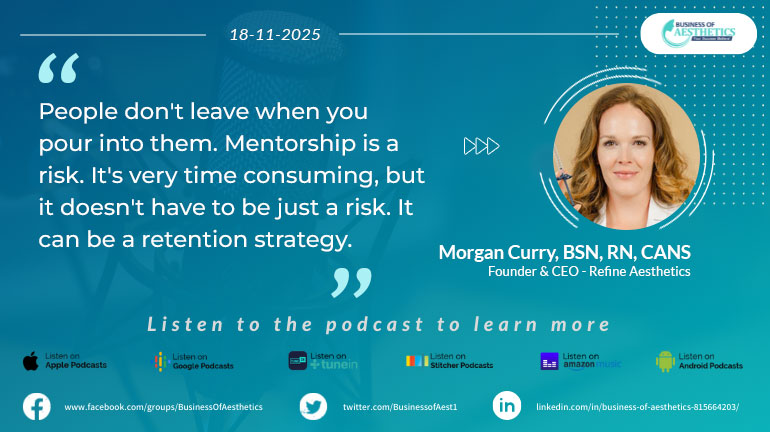
View TranscriptMorgan Curry: Yeah. People don’t leave when you pour into them. They just don’t. When they feel seen, when they feel supported and maybe even for some challenge like me, I love a challenge. You give me a challenge. I’m going to hit that mark every single time. Um, Yes, mentorship is a risk. It’s very time consuming, but it doesn’t have to be just a risk. It can be a retention strategy. Okay. So I think that being super transparent is huge. And I want to empower everyone that I’m with. And because I’ve worked for multiple different practices and that have not seen me in that way, and I have been pushed down by those leaders, I have learned to never want to be like that. So people say, are you going to have a non-compete? You have such a huge, strong, solid brand. You have such a massive reputation. What if you bring on this person and you pour into them and then they turn around and they walk out the door and they go down the street? I truly believe, and this may be like super unpopular opinion. If you are the leader and the role model within your practice to your team and you do all of those things like supporting them, making them feel seen, helping them learn and grow. They will never want to leave you. Why would they? And you know what? If they do and there’s somebody like Morgan that just wants to own their own practice, which I had other factors. I was I was not in that same situation, but I’m going to be proud because I hope one day they turn around and say, hey, this girl poured into me. She gave me every tool in her toolbox to go out there and freaking kill it just like she did. And I’m going to be like, that’s going to be like a badge of honor that I wear because I’ve lifted her up or him or whoever I’ve lifted them up. I have empowered them to do what, what I always wanted to do when your staff or when people on your team feel invested in a part of what you’re building, it stops making them feel like temporary employees and start thinking like they’re collaborating with you. So rather than just being like a narcissistic leader, that is like a dictator. That’s like, we’re going to do this. And it’s my way. Like I have things to learn from my team. I don’t know at all. I want to surround myself with people that do things better than I do to elevate me. You know what I mean? I’m not an esthetician. I’m not good at giving facials. I hate taking money from people. I hate it. And I’ve had to do that in building my brand because I’ve worn all the hats, front desk, IT, you know what I mean? But people, you know, are good at those things. So that was, I just, I remember just thinking in my head, man, if they just included me in this, I would be in it with him for the long haul. You know what I mean?
Don Adeesha: Absolutely. Absolutely. And I just want you to clarify a little bit over here. You mentioned being super transparent. In what way?
Morgan Curry: I have worked for leaders that did not include me in the business workings. Oh, You know what I mean? And I would ask and I would say, Hey, how can I help? Like, I’m happy to do this outside of my, my job role, my job description. And I communicate with my nurse practitioner. She’s been a founding member. She does currently does not have any ownership in the company, any equity in the company, but she’s truly like in it to win it with me and build it with me as a foundational member. And, As a result, I feel the loyalty there. And so I will call her or text her and ask her questions. Hey, do you think we should do this? Not because I have to. I’m the owner. I get to make the call. She’s new to this industry. But because I value her opinion and I know that she values me and she’s in this for the long haul and not just for herself.
Don Adeesha: Okay. I mean, I really appreciate this retention strategy. And, you know, it’s not every day practice owners really look into that pouring everything into their trainee, their staff as a way of retention. They always think the other way around, right? Really appreciate that perspective there, Morgan.
Morgan Curry: Yeah. And that comes, unfortunately, from being on the other end of it, right? And so it’s kind of like, You know, see, I’m trying to give an analogy here. If you grow up in a house where your parents fight and argue or in a divorced home, you learn from that and you learn that that’s not something that you want in your life. So you’re going to do everything you possibly can to make that not happen in your life. life same goes here i have been through some hell you know what i mean and with previous employers great things have come of it but i have learned what i don’t want to do with my staff into my staff so you know hindsight education Education, hindsight, a bit expensive of a tuition for that education.
Don Adeesha: So the architect model demands patience, right? But leadership often tests it. How do you personally manage the setbacks, pressures and politics that tempt you into slipping back into the I’ll just do it myself kind of mindset?
- 00:30:25 – Leadership, Patience & Delegation
- Leadership requires patience to build systems rather than succumbing to the "do it yourself" urge.
- Delegation is essential for scaling, giving the team purpose and freeing up the founder.
- The goal is ensuring patients trust the entire brand and team, not just the founder.
View TranscriptMorgan Curry: Leadership humbles you. Um, systems take time to build and people require patience. So I am, again, I’ve already said it. I’m very alpha, very type a, and I, it is so much easier to just do it myself. If you, if, if I’m resonating with any like hardworking boss, babe, women, or men that are just super high functioning, um, We’re speedy. Like I haven’t met a successful person that isn’t really good at making quick decisions and, you know, and the busiest people take phone calls right then and respond to texts and emails, not because they have time, but because they’re just on it. I have learned this and it is, I am still learning this, but it’s a lot easier to just do it myself, especially when you’re really good at it. But when you’re training your injector, You have to take time to sit there and mark. I don’t mark as an injector and also unpopular opinion, but I don’t mark a forehead when I treat for neurotoxin. I have to slow that down. I have to break that down for my injector, my, my trainee that I’m telling them, Hey, this is why I’m doing what I’m doing. Hey, if you do this, it could lead to this. Um, delegation is huge too when you’re building a practice. If we’re not just talking about the injection skill, we’re talking about the whole thing, right? The business aspect of it. Delegating things and taking things off your plate with umbrella oversight will help you scale as well because it frees something off of your plate. It gives that person purpose. It ties back into having them be involved, right? Right. Um, but you know, I have to stop and think, okay, am I really like solving a problem or am I just feeding my control to do everything myself? So, um, I am building a brand where patients trust the team. Patients trust refine aesthetics. They don’t just trust Morgan. They’re used to trusting Morgan. But I want it to resonate just as much when my front desk calls them and says, hey, you know, I see that you canceled your appointment or I see that, you know, you rescheduled your appointment. it’s going to have the same weight as if Morgan is reaching out on her personal cell phone number because they’ve, you know, I need to give that same experience. So I have to, I have to slow down and teach that.
Don Adeesha: For our listeners out there, Morgan is very expressive with her expressions as we go along over here. And it begged, it came to me as a question, you know, you’re so passionate, you’re, you know, a type A personality, as you mentioned, and And you’re also patient. What are some of the, like, you know, recent… Are you evolving still or do you feel have you plateaued?
Morgan Curry: Oh gosh, I am still so very much evolving. I evolve every single day. The girl that I was six months ago is not the same girl that I am now. That’s not the same girl. The same girl that I was six months ago was not the same girl that I was two years ago. I am constantly evolving and learning. And I have been, not only have I been intentional in building this brand, But I have been intentional with surrounding people that are better at what they do than I am. Picking those people to be involved in whatever I’m working on and learning from them and having them become a part of the team and not trying to micromanage them.
Don Adeesha: Okay. So Morgan, beyond marketing, storytelling and community can act as brand’s defense. How do you use that narrative and connection to build loyalty to your purpose and not just procedures?
- 00:35:01 – Storytelling, Connection & Education
- Morgan uses storytelling to lower patient guards and build authentic connections.
- Her philosophy focuses on educating rather than selling to build implicit trust.
- The brand meets patients where they are, focusing on restoration rather than alteration.
View TranscriptMorgan Curry: Yeah. So I love this question so much because I think that it is part of my brand. We already talked about how I relate to every patient and I have a very personal relationship with every patient. When a patient comes to me, say they’re brand new, after my team gets their pictures and all of their consents are signed and the nurse practitioner does the good faith exam, I sit down and I say, what brings you in? And I let them open the narrative and they say whatever they say. And then I, before I go at them, I say, well, you know what? Here’s a little bit about me. And for the people that are nervous, it kind of lowers their guard. And for the people that if they’re not nervous, they want to know their injector. They want to know that they’re competent and they also, they want to know that like they can relate to them. And I feel like that is what separates me from a lot of people. And, and I, I don’t just say that lightly. I say that because my patients have said that to me. My patients have said, hey, it’s a huge part of my brand as well on Instagram. People come to me and they say, I feel like I already know you. I’ve literally never met you, but I feel like I already know you. And it’s not that I’m sharing intimate details about my personal life and that my kids are all over. Like, that’s not what it’s about. It’s about explaining my journey. So I sit down and I tell them, you know, Hey, you know, I’ve been in this industry for almost 10 years. I’m from Kentucky. Um, and then sometimes, you know, people will say, Oh, I have that connection. Maybe they don’t. Yeah. Um, I moved to Bluffton. My husband and I have two kids. We’ve been here for a couple of years. And I tell the story of how because a lot of people in this town know me from building the other practice. And a lot of them have followed me very organically. And so or they’ve they’ve known someone. A lot of my referral is word of mouth. So when they come, they said I tell them, you know, hey, I left this practice. Now I’m I’m building my own. This is my expertise. This is what we offer. And it gets them to drop their guard and feel connected to something real, not that it’s transactional. And I’m saying, okay, we’re going to do this today and I’m going to sell you five syringes of filler and you need 120 units of Botox. And then they’re like, oh. You know, it’s conversational. I use storytelling to tell my patients it’s not about changing you. It’s about restoring your confidence. So also something I tell patients and maybe I’m giving away like my golden nugget of knowledge here. But my target demographic where I live is. We’re in the Bible Belt. It’s very conservative. It’s the South. But my target demographic is my 38 to 75. You’re either a young family or you’re a retiree in my community. And so what I tell people, and I truly believe this, a lot of people come to me because I have a very natural approach. I explain that in my storytelling too. And people say, I followed you on Instagram. And one of the reasons I came to you is because you don’t look overdone. And that’s my niche here. But that’s not the niche in Miami, is it? So you have to relate to your brand and your area too. But I say, you know… I understand that, say I have a patient that’s 62 years old sitting in my chair. They’ve never touched a needle in their life. Their husband doesn’t really want them coming in, but their confidence is low because they feel like they’re aging. And I say, you know, I meet you where you are in your stage of aging, whether you’ve done injectables for 30 years and used tretinoin or whether it’s that patient I just gave you. And I say, you know what? I’m not here to change your face. I’m here to meet you where you are. And I understand that you’re not 30, but I want to keep you and your amazing features. I just want to elevate them. I want to refine them. That’s how I came up with the brand refine and meet you where you are. And I understand that you don’t want to look like you’re 30 anymore, but we’re going to make you look a little bit better for your age. That’s when they’re just like, she can do whatever she wants to me. Most, I mean, literally like 98%. When they hear that you’re not in it for the money, you’re not in it to make them look crazy and ridiculous because that’s not the MO here in Blopton. And when they under, you relate to how they’re feeling, they trust you implicitly. And that is my approach every single time. The other thing I’ll say before we move on is I never want to be salesy. Because let’s be honest, in this industry, I may be talking to some patients, but mostly entrepreneurial people and injectors. I never want to sell anything. I want patients to listen to me because I’m educating them on why they need what they need. Not, you know, because I need to sell five syringes of filler. So… Educating and not selling is another huge part of my brand and my story. Because if you’re confident and your patient trusts you and it makes sense to them, they’re a lot of times going to do whatever you tell them.
Don Adeesha: This is a really interesting mindset shift. I mean, it allows a practitioner to really feel empowered because a lot of people, they don’t want to be salesy, right? But they don’t know how to think about it. They have to, you know, run their business, but at the same time, they don’t want to be salesy. So they’re going to run their business down into the, you know, ground if they keep on going about it like that. But, you know, Adopting your way of thinking. And I heard this quote earlier today, actually, from another very interesting person that selling is educating. So really appreciate your outlook on that, Morgan, because I think a lot of practice owners and aspiring practice owners can take a lot from that. Now, can we delve into the future of aesthetics a little bit? You know, because it does seem to be regenerative. It does. The numbers of fillers are going down. But restoring that natural function and trust over quick fixes seems to be the way to go. So why do you believe the artisan to architect evolution is essential for founders who want to truly deliver for that future?
- 00:42:23 – Future of Aesthetics & Conclusion
- The future lies in regenerative aesthetics, requiring practices to pivot beyond just fillers.
- Founders must invest in team education and new service branches like functional medicine.
- Success comes from nailing a specific niche and pouring into the team to scale authentically.
View TranscriptMorgan Curry: like you said, regenerative aesthetics is the future. It requires intentionality. It requires education. It requires continuity, long-term planning and being able to pivot. So if you’re a practice that has been filler heavy, say Juvederm only, I think they’re, they’re going to struggle a little bit because of the trend. Um, If you are someone that can pivot and integrate with the change of the industry, I think you’re going to do a lot better. And so then how do you do that? It’s having all of your processes in place, systems, standards. educational pathways. We’re diving into functional medicine at Refine. So I’m investing a lot of money in proper education of my providers, including myself, because I’m never going to ask my team to do something that I can’t or don’t know how to do. I’m spending a lot of money to invest in them so that we can give exceptional care and in that area of expertise. So does that mean bring on a new branch of your practice? For us, it does. We’re bringing on functional medicine. Well, how does functional medicine help injectables? Well, when you heal your body from the inside, your injectables are going to last longer. You’re going to look better. I use a ton of biostimulation in my practice, a lot of radius, hyperdulate radius. You’re only getting better outcomes with time. And it’s also a very natural thing. And then going back to mentorship from the architect, you know, mentoring people, paying it forward to people, pouring into your staff. Don’t, you know, if you’re still operating as that one man show, doing everything yourself, you can’t deliver consistency and long term model of care.
Don Adeesha: Right. And I just wanted to know real quickly, because you mentioned earlier that you really know your demographic, right? Where you’re operating, who you’re talking to and what their needs are. If you were to practice somewhere else, would that be different or a bit the same? Because how are you balancing the needs and the demands of your demographic versus what you want to do?
Morgan Curry: I think fortunately for me, when I moved here, I had a blank slate on what kind of a provider I wanted to be and the kind of niche I wanted to develop for myself. It has evolved based on that patient demographic, but the values hold the same. I personally, and this is not a knock to any injector in this industry, because I truly understand, and there is a a physician that gave a talk on understanding the culture and your demographic. It’s totally different in different regions of the world. It’s different in regions of the United States, LA and Miami have a far different aesthetic outcome than bluffed in South Carolina or Lexington, Kentucky, which is where I am. It bluffed. And I think is a little bit more conservative than, than Lexington, but even then, but to answer your question, I think for the providers and business owners listening, you really need to find your niche, whatever that niche is. If that niche is Miami and you’re building booties with Radiesse, go for it. I love that. I’m trying to bring more of that to Bluffton. It doesn’t have to be big booties, but it can be regenerative aesthetics and hip dips and cellulite. But just understanding that, but keeping at your core, what are your values? What are you going for? Are you going for building it yourself? Are you going and building a silo? Are you going for building a team and not followers on Instagram and chasing trends, sticking to what you know and what you’re really, really good at? I think that that’s the best thing. And just building a brand that reflects who that patient is, and who that provider is on their best day, even when you’re not in the room.
Don Adeesha: Love that. Just as we wrap up the podcast session, what’s one key takeaway our audience can have from this whole discussion if they were to have just one?
Morgan Curry: I think the key takeaway is understanding your brand, really nailing down your brand, really nailing down your niche, what makes you individual and what makes you special as a provider and then pouring into your team so that you can scale effectively while maintaining authenticity and individuality within your brand.
Don Adeesha: Well, that was an incredible conversation with Morgan Curry, exploring what it truly means to evolve from artisan to architect. Her insights on leadership, authenticity, and building a regenerative, purpose-driven brand reminds us that success in aesthetics isn’t just about results. It’s about resilience, mentorship, as well as vision. So if today’s conversation resonated with you, share it with a colleague or a fellow founder who’s ready to build that brand which lasts. and if you haven’t already followed the business of aesthetics podcast on your favorite platform it helps more aesthetic professionals discover conversations like this one before we wrap up a quick reminder eco marketing is offering a complimentary 60-minute digital strategy session a one-on-one consultation with a senior strategist to help you create that 12-month high value patient acquisition roadmap You’ll gain clarity, direction, and personalized plan designed for aesthetic practices just like yours. You can check the availability and reserve your spot at www.businessofaesthetics.org/msm. With that being said, I’m Don Adeesha, and this has been the Business of Aesthetics podcast. Until next time, keep refining your craft, leading with purpose, and building a practice that truly endures.
GUEST – Morgan Curry, BSN, RN, CANS
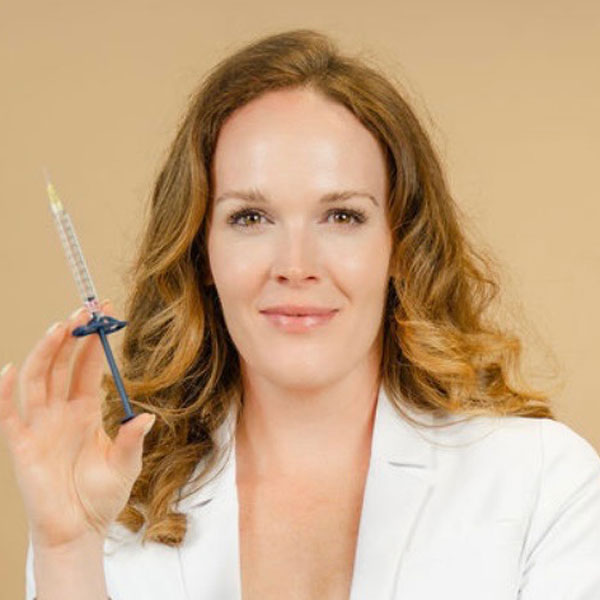
Morgan Curry, RN, BSN, CANS, is an accomplished aesthetic nurse and entrepreneur known for her natural, regenerative approach to beauty and her commitment to education and authenticity in aesthetics. With more than a decade of nursing experience, beginning in Cardiac ICU and later working in Plastic Surgery, Morgan developed a strong foundation in anatomy, precision, and patient care before bridging into advanced aesthetics. She is the founder and owner of Refine Aesthetics in Bluffton, South Carolina, where her philosophy centers on enhancing natural features and achieving undetectable, lasting results through evidence-based injectables and regenerative treatments. As a Certified Aesthetic Nurse Specialist (CANS), Morgan is among a select group of providers in the Southeast to hold this national certification. Currently pursuing her Family Nurse Practitioner (FNP) degree, Morgan continues to expand her clinical expertise while mentoring other injectors and entrepreneurs in the field. Her journey of rebuilding and launching Refine Aesthetics from the ground up embodies confidence, resilience, and vision, inspiring others to break the mold, trust their instincts, and build something of their own.
HOST – Adeesha Pemananda
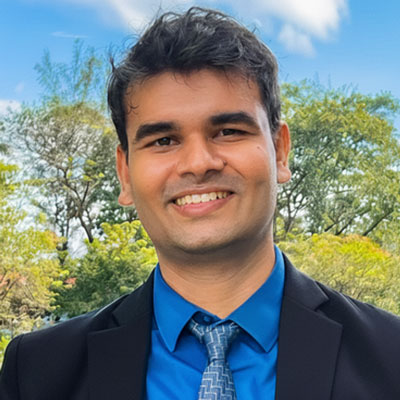
A seasoned marketing professional and a natural on-camera presence, Adeesha Pemananda is a skilled virtual event host and presenter. His extensive experience in brand building and project management provides a unique strategic advantage, allowing him to not only facilitate but also elevate virtual events.
Adeesha is known for his ability to captivate digital audiences, foster interaction, and ensure that the event’s core message resonates with every attendee. Whether you’re planning a global webinar, an interactive workshop, or a multi-session virtual conference, Adeesha brings the perfect blend of professionalism, energy, and technical savvy to guarantee a successful and impactful event.
Resources


Connect with Us:
Category: Business of Aesthetics Podcast