In this episode of the Business of Aesthetics Podcast, host Adeesha is joined by Dr. Gregory Buford, a nationally recognized board-certified plastic surgeon, author, and speaker known for his forward-thinking business strategy and entrepreneurial approach to practice management. The discussion, titled “The Entrepreneurial Edge in Aesthetic Medicine,” tackles a critical vulnerability in the industry: the fact that most highly-trained medical professionals are never taught how to actually run a business. Dr. Buford warns that in a field changing at a “logarithmic” pace, a static, “business as usual” approach is a recipe for failure, and provides an essential blueprint for why cultivating an entrepreneurial mindset is the single most critical factor for success in the modern aesthetics market.
Dr. Buford defines this essential mindset as a “constant strival for growth, change, and evolution” that “never accepts the word no”. He outlines practical strategies for sharpening this skill, emphasizing “constant education” not just in medicine, but voraciously across disparate fields like philosophy, art, and business to develop the ability to “think out of the box”. He explains that entrepreneurs must be receptive, know how to pivot, and actively create opportunities rather than waiting for them. This relentless drive for learning is captured in his core belief, which he once shared with a patient: “The day that in any profession that you think you know it all, hang up your hat because you don’t”.
From a practice management perspective, Dr. Buford identifies professional relationships as one of the most “underappreciated aspects” of success, noting “it’s not about always what you know, it’s who you know”. He shares his strategy for building this network by “paying it forward” and offers a key negotiation tactic from his time at Kellogg: always “leave a few crumbs behind for your opponent”, as it’s a small world and you will likely work with them again. Looking to the future, he demystifies AI, advising practitioners to use it as an “assistant” to augment their work, not a “crutch” that replaces critical thinking.
Finally, Dr. Buford tackles the biggest hurdle for high-achievers: the fear of failure. He reframes failure not as an endpoint, but as a “call to action and… a pivot point”, revealing that his own biggest early mistake was “the arrogance of thinking that I could do it all by myself”. He makes a powerful case that true success comes from humility, the ability to “ask for help”, and the wisdom to “put your ego on the shelf”. His key takeaway is that in the rapidly evolving world of aesthetics, the greatest risk isn’t failing, but becoming complacent.
Key Takeaways
- Adopt an Entrepreneurial Mindset as a Non-Negotiable.
The aesthetics field is changing at a “logarithmic” rate, and your medical degree did not teach you how to run a business. Success now requires a constant “strival for growth, change, and evolution” to meet the demands of the modern “serious consumer”. - Educate Yourself Voraciously Beyond Medicine.
Sharpen your entrepreneurial mindset with “constant education”. Read broadly across science, business, philosophy, and even fiction to find the “universality of themes”, develop new solutions, and master critical “lost arts” like communication. - Build Your Network by Giving, Not Taking.
Recognize that “it’s not always about what you know, it’s who you know”. Build this critical network by “paying it forward” and always being “on the giving end”. In a small industry, never burn a bridge; always “leave a few crumbs behind” for the other side in a negotiation. - Use AI as an Assistant, Not a Crutch.
AI is “already here” and is a powerful tool, but it must be used as an “assistant” or “enabler,” not a replacement for your own mind. Use it to “sharpen the edges and refine” your work, but never let it “replace your creativity” or critical thinking. - Embrace Failure and “Fail Forward.”
Shift your perspective to see failure not as an endpoint, but as a “call to action and… a pivot point”. The biggest blind spot is “the arrogance of thinking that I could do it all by myself”. To succeed, you must “put your ego on the shelf”, ask for help, and have the courage to “fail forward”.
Podcast: Play in new window | Download

- Get a 1-on-1 diagnosis of your online presence & patient acquisition funnel
- Identify critical, untapped growth levers (SEO, Social, Referrals)
- Define a clear action plan to attract and convert your ideal patients
- Receive expert solutions for your most pressing marketing challenges
Subscribe To Our Podcast



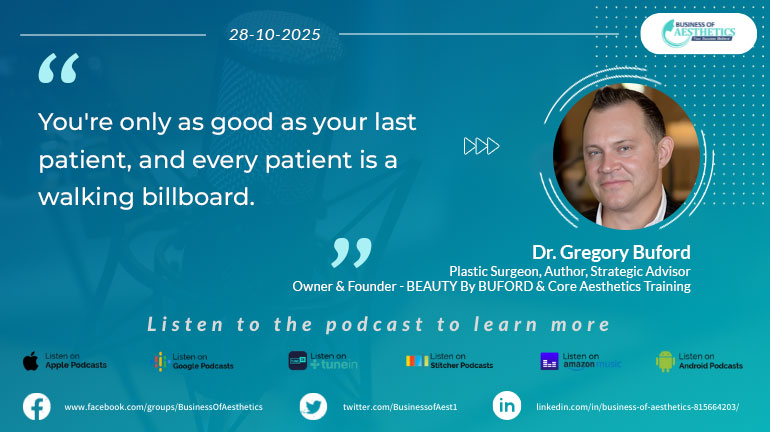
Key Highlights:
- 00:00:11 – Introduction & Speaker/Topic Setup
- Host Adeesha welcomes listeners and introduces the episode topic: "The Entrepreneurial Edge in Aesthetic Medicine."
- A special thank you is given to the sponsor, Ekwa Marketing, for offering a complimentary digital marketing consultation.
- Listeners are directed to www.businessofaesthetics.org/msm to book their session.
- Adeesha introduces the guest, Dr. Gregory Buford, a nationally recognized board-certified plastic surgeon, author, and speaker.
View TranscriptAdeesha: Welcome to another episode of the Business of Aesthetics podcast. I’m Adeesha, your host for today’s conversation. A warm thank you to our listeners tuning in from across the United States and around the world. We truly value your continued support. A special thank you also goes out to our sponsor for this episode, Ekwa Marketing. With nearly 20 years of experience, Ekwa is a leader in digital marketing services for aesthetics practices. They’re offering our listeners a complimentary digital marketing consultation complete with the custom 12-month growth strategy tailored to your practice. Just head on over to www.businessofaesthetics.org/msm to book your session today. Now, let’s get into today’s episode, The Entrepreneurial Edge in Aesthetic Medicine with Dr. Gregory Buford. I’m honored to welcome Dr. Gregory Buford, a nationally recognized board-certified plastic surgeon, speaker, and author. In addition to his surgical expertise, Dr. Buford is known for his forward-thinking, business strategy, and entrepreneurial approach to practice management. He has helped shape conversations around leadership, innovation, and the future of aesthetics while mentoring countless professionals along the way. In today’s conversation, we’ll explore why entrepreneurship matters more than ever in aesthetics and how to cultivate the right mindset. Dr. Buford, it’s such a pleasure to have you with us today.
Dr. Gregory Buford: Thank you, Adeesha. It’s my honor. My honor. Thanks for having me on here. All right.
- 00:02:18 – Why the Entrepreneurial Mindset is Critical
- Dr. Buford argues the mindset is critical because the aesthetics field is changing at a "logarithmic" rate, not a linear one.
- He notes that most medical professionals are not taught business, and an entrepreneur must have a mindset of "constant strival for growth, change, and evolution."
- The modern patient has changed into a "serious consumer" who expects cutting-edge providers, meaning "you’re only as good as your last patient."
- He defines an entrepreneur as someone who knows how to pivot, creates opportunities instead of waiting for them, and constantly sets "stretch goals" to avoid complacency.
View TranscriptAdeesha: Now, to begin with, why is the entrepreneurial mindset so critical for success in aesthetic medicine?
Dr. Gregory Buford: I think that’s a great foundational question and really something to lead off this conversation. And I’ll just answer that with kind of a short, concise answer. And that’s the field is changing. And the field is changing very, very rapidly. It’s not changing, I would say, in a linear manner. It’s changing in a logarithmic manner. I’ve been in this field for about 25 years. And what I have to say is, It’s matured, it continues to mature, and it continues to evolve. And an entrepreneurial mindset is critical. Without an entrepreneurial mindset, you’re dead in the water. Why is that? Because business is usual as usual business. Most of us as physicians, as medical professionals, whether you’re an RN, PA, NP, esthetician, what have you, we’re not taught how to run a business. And I think that ultimately leads to disaster in many cases. Why is that? Because we are very highly trained professionals. We have the ego enough to drive us forward, but we also have the arrogance sometimes enough to hold us back. And what I mean by that is that Too often, we don’t know what we don’t know. And the entrepreneurial mindset is critical because the entrepreneurial mindset never accepts the word no. It never accepts the word no. And it’s a constant strival for growth, change, and evolution within any field. within the aesthetic marketplace what we do who we work with and how we work with these clients has completely changed for me in the last two and a half decades it’s completely changed and it’s evolved it’s become more fun but it’s also become more challenging why is that for it’s it’s because of that for a number of reasons one Your patient has changed. Your patient is a serious consumer. In the past, patients would go to med spas. They might go to plastic surgery offices to get a little line or wrinkle erased here and there. Now they’re getting way more than that. They’re getting body contouring. They’re getting regenerative medicine. They’re having their hormones adjusted. They’re having a whole slew of things being addressed. And they want more. They don’t just want a fancy name on the front door. They don’t just want some nice magazines in the lobby or some nice music playing and perhaps some nice snacks. They want you to be on the cutting edge. They want you to be up on what is going on. They want you to know what’s being circulated around social media, right or wrong. And so it’s really inherent. to have a, to accept the responsibility that as entrepreneurs in this new age, that we need to evolve. And the entrepreneurial mindset, I think it’s well phrased up in one of my favorite sayings, which I’ve heard is, was accounted for, was supposedly given to Ray Bradbury, but I’ve heard a lot of people kind of say this, is that being an entrepreneur is like jumping off a cliff and building your wings on the way down. And I think that very adequately sums up the experience of the entrepreneur. It’s 5% exhilaration. It’s 95% sheer terror. There’s so many things lurking that can bring you down, that can break down your business. But they can also build your business. And so you have to understand where to look, why to look and what to look for. But you have to have the receptive mindset of an entrepreneur, which, again, you know, we’ll get into that a little bit more. Exactly. What is that? But I think what it is, is an entrepreneur is has an open mind. An entrepreneur knows how to pivot. An entrepreneur knows how to not wait for opportunities, but instead to create them. And in my two and a half decades of being an entrepreneur in this space, I’ve seen people do it really well, and I’ve seen people don’t do it very well. And I’ve seen people with sheer arrogance that figure that just because of who they are five years ago, that they’ll still be that in five years. Well, guess what, guys? Your seat, your title, your throne, whatever you want to call it, is up for grabs. It really is. It’s up for grabs. You’re only as good as your last patient, and every patient is a walking billboard. Those are two things that I tell any entrepreneur. You have to understand that your pants are down half the time. You’re exposed. The curtain’s pulled back. The wizard is who the wizard is. And if you’re someone that’s flimsy without a lot of good ideas, people are going to see through that. But in and of itself, though, inherently, being an entrepreneur is also a lot of fun. One of the things that really brings me joy is working with a lot of new companies, for example, in industry. So I work with an organization called Octane. It’s an early tech accelerator out in Southern California. And I really enjoy it. And why do I enjoy it? Because I get a hint at what’s coming, whether that’s coming from the European marketplace, from South Korea, from South America, what have you. These are all ideas that are on the forefront. Some of them good, some of them not so good. And some of them that are going to go on to do great things and others that are going to falter. But the great thing is, is it keeps me on my toes. And being able to identify the trends and the trend D, because there are two different things. The trend D comes and goes. Trends are what are shaping and will ultimately define and refine the aesthetic space. And it’s important to keep an open mindset so that you’re receptive to that and you’re willing to change your business model in light of that. And I can tell you how I practice as a physician, as an entrepreneur, as a strategic advisor now is so different than how I practiced You know, 10 years ago and even more one year ago, two years ago. I mean, it really it’s a constant evolution and being able to work with young companies and being able to impart some of my knowledge. I mean, I’m not I’m not the smartest guy in the room, but I what I would say, though, is I’ve made a ton of mistakes. And anyone that’s successful will tell you that to be successful, you have to make mistakes. You have to. I mean, anyone, no one became successful from A to B. No one. Life is a series of pivots, and it’s a dance. It really is. And so you have to be nimble, you have to be facile, and you have to be receptive. So you have to understand that it’s this ever-changing environment that you need to learn to tap dance fast. And you need to learn to be able to absorb information quickly. And you need to be able to respond in a fast and effective manner. And so I think when people ask me about what an entrepreneur is, I mean, that’s all of that combined. I don’t have a… quick and easy chat GPT definition or anything like that. And I think honestly, it wouldn’t do justice to it. Because I think trying to define what an entrepreneur is by a single tagline really doesn’t do entrepreneurship or the spirit of entrepreneurship justice. And the other thing, too, is I think for those of us who are entrepreneurs, we have a lot of ADD. We can’t sit still for very long. We want to constantly be moving. We want to be constantly changing, shape-shifting, and becoming better. Because again, I’ll give you a good example. I had a patient at the start of my career that was sitting with her very confident, and I mean that interestingly, boyfriend across the table from me when I was doing a consult. And I was talking to her about breast enhancement and blah, blah, blah. And I looked a lot younger than I look now. Well, this young gentleman, I use that term loosely, looked at me and said, hey doc, when are you going to finish your education? And I don’t know where I pulled this out of, but I think it was a very good statement and a good rebuttal. I said, you know, that’s a great question. Never. I said, the day that I finished my education is the day that I stopped practicing. And he just didn’t know what to say because I slammed him down right there. And it’s true. It is absolutely 100% true. The day that in any profession that you think you know it all, hang up your hat because you don’t. And someone is right behind you or some people, there’s a whole line of people waiting behind you to take over your position. So if you think you are so good that no one else can take you over, good luck. Wake up, open your eyes, open your ears. There’s chatter all around you. There’s a lot of people that are waiting to assume your role and assume your position. So it’s a constant. I don’t want to say it’s a constant struggle because that makes it sound so negative. But it’s a constant journey. Let’s just say that. And there is no end point. There really is no end point. People talk about the journey being the… The thrill, the journey being the root of the journey or the meaning of the journey. And I think many ways that’s what it is. I set stretch goals for myself all the time. I mean, whether it’s on a yearly basis or a quarterly basis. But I set them for myself and I set them for my team. And the reason I do that is complacency. If you sit around and you talk about how much money you make, how smart you are, and what you’ve accomplished, you’re looking in the rearview mirror, okay? You’re looking in the rearview mirror. In auto racing, there’s a term or a saying that you’re always looking two car lengths ahead. So you’re never looking in the rearview mirror. You know what’s going on around you, but you’re looking ahead. And so those who sit and talk about their old glories, the high school quarterback that hasn’t really, when you see him at the reunion and he’s talking about all his glory days, I really don’t care. That was 20, 30, 40 years ago. And what I do care about is what am I going to be doing in the next week? What am I going to be doing in the next month, the next year, the next five years? That’s what I care about. And those end goals, those targets are constantly changing based upon what I accomplish. I may accomplish my goals faster than I thought I would accomplish them, but… you know, ultimately it’s constantly setting those stretch goals and understanding why I’m doing it and understanding how to execute that. And that’s, I think, ultimately important. So that’s a, I said it was gonna be a short answer. It’s not a short answer. It’s a very long winded, but that would be my answer that kind of that starting opening question.
- 00:14:08 – How to Sharpen the Entrepreneurial Mindset
- Dr. Buford’s primary advice is "constant education" and reading voraciously across multiple, disparate fields—not just medicine.
- This broad knowledge allows you to "think out of the box" and see the "universality of themes" when approaching problems.
- He emphasizes that communication is a "lost art" and a critical skill, noting the saying, "there’s a reason why you have two ears and one mouth… listen twice as much as you speak."
- He views the brain as a muscle: "the more you use it the more it grows and the more it strengthens."
View TranscriptAdeesha: Fantastic, Dr. Buford. I mean, it’s super comprehensive and it just goes to show the critical nature of the entrepreneurial mindset and how important it is for aesthetic medicine, especially with regards to success. So moving on to how can professionals sharpen this mindset, right? And develop it throughout their careers. Can you give us some advice on that?
Dr. Gregory Buford: Yeah, and that’s really, really important. I talked about the evolution of the entrepreneur because an entrepreneur is constantly reinventing themselves. They’re constantly changing. I mean, there’s no one that looks back and said, well, you know what, as an entrepreneur, I’m always going to do it the same way. I mean, that is a sure sign of failure. So one of the ways that I’ve I’vefound is, is, you know, is very, very important is constant education. OK, constant education. I’m constantly reading and reading from different sources. You know, Elon Musk has gotten he’s gotten a little bit of a black eye recently because of his comments and so forth. So I’m going to forgive him for some of those things right now. But one thing that I mentioned, and I said this in a college commencement. In 2018, I was the UCSD College, Revell College commencement speaker. And in that presentation, I mentioned that one of the strengths of Elon Musk is his ability, and it’s always been, his ability to read voraciously, but not just in one area, in multiple different areas. I think that’s critical. And I do the same thing. I read a lot of science books. I read a lot of business books. I read some philosophy. I read fiction, nonfiction. Why? Because you can learn something new from all walks of life. And you’d be very, very surprised. You can learn from poetry. You can learn from a horror book. You can read from all kinds of different things. And I think having been able to reference those areas, those very seemingly disparate areas, strengthens your character. And I think it really strengthens your resolve to become more of the, quote, well-rounded, I’ll say person, not man, but person. And I think that’s really critical. Why? In approaching a problem, okay, so if I’m approaching a problem within a certain space, the standard way that I would approach it is I would approach it, I would read about it in my space as a physician and say, well, this is how physicians have always done it, and this is the best way to do it. That’s a bunch of hogwash. Why? Because if they always done it that way, obviously, it probably didn’t work. It didn’t work, because I’m thinking now about the fact that I need to approach a problem. So I need to think out of the box. I need to think outside of the profession. And that’s what good thinkers do. They look at outside the profession, and they look at universality of themes. They look at how did people approach something from a whole different angle. To that as well, too, I work with a number of companies on their advisory boards. And some companies, I’ve said I don’t have a lot of experience in this area. But you know what? A lot of times I’m able to give really good information to them because I come with a very open mindset. I don’t come with this is the way it’s always been done. I don’t come with this is the way you should do it. I come with more of a child’s eye. And it’s that naivety and that freshness that you come to it and you say, well, why haven’t people done it this way? And so that’s why education from all aspects of culture being able to review works that are not necessarily seemingly supportive of what you’re doing, for example, as a physician, as a lawyer, as a stockbroker, what have you, it gives you the ability to stretch your noodle, ability to stretch this, and really, really… emphasize the plasticity of your brain because your brain is a muscle and just like any other muscle the more you use it the more it grows and the more it strengthens the less you use it and unfortunately there’s a lot of people that haven’t gone to the uh the the brain gym recently and they do the same thing the same way over and over and over and over and i just i think to me that would be absolutely boring So again, being able to know, understand things. I’ll give you a good example of my background. When I went to UCSD, a big shout out for UC San Diego, I’m a Revelle College grad, which I think is the best college there. It was a humanities college. Now, I was an English major. Why in the world would I get an English degree? I mean, people would look at me and go, You’re a doctor. Why the heck would you do that? What are you going to do with an English? Are you going to teach English? No, I’m actually going to be able to speak. I’m going to be able to communicate. And that is a lost art. I will tell you, unfortunately, with all the emojis and all that kind of nonsense that I see and all the bastardization of the English language, I mean, we’re losing that ability. People are not understanding how to communicate. And once we lose that ability to communicate with those around us, we’re losing a basic skill that is critical. Communication is everything. And the lack of communication is probably one of the biggest reasons why we have so many problems in society nowadays. We don’t know how to communicate and we don’t want to communicate. We want everybody to listen to our viewpoint. There’s a saying in Asian culture that there’s a reason why you have two ears and one mouth. can listen twice as much as you speak and i think that’s critical so communication is really really key but when i was at ucsd i saw this as an opportunity to uh to learn and to transform myself in an area that would be completely different than medicine. I knew that I’d be spending the rest of my life or most of the rest of my life in medicine, but I wanted something that would really stretch myself. So I studied ancient cultures. I studied art. I studied literature. I studied a lot of things that people would say, well, that has nothing to do with medicine. Yes, it does. It has everything to do with medicine because what is medicine? Medicine is composed of people. And if you can’t communicate with people, it doesn’t matter how good you are as a physician or a nurse or an NP or a PA or what have you, you’re not gonna be very good. You’re not gonna get that point across. Communication is essential and being able to adequately and optimally communicate with your patients and with those around you as an educator, a teacher and what have you, It really, really is important. So again, I guess another very long-winded answer to your question.
Adeesha: It’s long-winded, perhaps, but it definitely double downs on the answer of things you know the more you use your brain the more it grows and the best way to go about doing that is continued education being open-minded and improving your communication skills along the way as well and of course education in all different fields and not just the one that you perhaps specialize in already so fantastic Thank you very much for that, doctor.
- 00:21:52 – The Importance of Professional Relationships
- Dr. Buford calls relationships one of the "most underappreciated aspects" of entrepreneurship, stating, "it’s not about always what you know, it’s who you know."
- He stresses the importance of delegation and a strong support team, which was fundamental to the success of his Core Mastery Summit.
- He advises building networks by "paying it forward" and following the golden rule: "If you’re gonna ask someone for one favor, give them two."
- A key negotiation lesson from Kellogg was to "leave a few crumbs behind for your opponent" because "it’s a small world" and you will likely work with them again.
View TranscriptAdeesha: Now, do professional relationships really matter in aesthetics? And if so, why?
Dr. Gregory Buford: Yeah, I think that’s one of the most underappreciated aspects of the entrepreneur is the ability to interact, to create networks, to create webs of spheres of influence. um i’m not i’m where i am today not because of what i did okay and i’ll state that i’m where i am right now because i’ve had people support me i’ve had people that have given me feedback that if people have given me a hand up not a handout but a hand up that’s critical and i i will tell you um About two years ago, I started a meeting called the Core Mastery Summit. The Core Mastery Summit is a entrepreneurship meeting for med spas with the tagline that to be the best, you train with the best. And that’s the truth. I mean, if you want to be the best, you don’t need to reinvent the wheel. I mean, a lot of these things that we’re doing, there’s a lot of universality, as I mentioned. And so if you want to learn how to be the best, you find the people that are already doing it and you figure out what they’re doing and you do it better. And that’s what I did. I put together this meeting. I mean, it was a huge success. Not the entire time. I mean, last minute we had to kind of scramble to, you know, kind of get the word out. But the first one we sold out, the second one we oversold. But what I will say about the meeting, though, is I was able to provide a heavy-duty sponsorship support for that because without our sponsors, we would have never, never been able to do this. I had more sponsorship, I think, than most people have seen. And we had about, for the second year, we had a 98% sponsorship return. And we’re probably putting the meeting on hold this year just because of the economy and so forth. But we’ll return in the following year. But we have all of our sponsors keep asking us, are you coming back? Are you coming back? Are you coming back? Why was that? Well, it comes back to it’s not about always what you know, it’s who you know. And cultivating these relationships is really, really critical. Why? Because these are the relationships that are going to help you out in the long run. They’re the ones that when you need to ask a favor, you know who to call. When you need to ask advice on something, I’m constantly asking my colleagues, what would you do with this case? What would you do in this? What would you do in this business aspect, in this scenario? Yeah. And knowing who to call is critical. Now, I’d say in this day and age, everyone thinks you can go on chat GPT because it’s the suddenly now has become the Oracle of Delphi. And, you know, and you can learn everything from it. And honestly, I use chat GPT on a daily basis. I really do. I mean, I think it’s I mean, it’s. And embarrassingly, sometimes it rewrites some of the stuff that I write because it does it in such a more succinct manner. But it doesn’t tell you everything, you know. And so those out there that think you’re suddenly become an attorney or suddenly become a doctor, whatever, just because you have chat GPT, think again. There’s a lot more in between the lines that is essential to success than just ChatGPT. But it’s kind of it’s the cliff notes of today’s generation. But I think to that, though, one thing that I will say In addition to relationships, because, and I’ll kind of go back to that, having something, though, that knowing how to work with artificial intelligence, and this is a very interesting field, because, you know, when people hear about artificial intelligence, they think of Terminator, they think of, you know, all these nefarious things, the age of the machine, all that, you know, job loss, is it going to happen? Yes, some of that stuff is going to happen. I mean, some of it’s going to happen. In the 1920s, or around that time, Henry Ford launched something called the automobile. And all the people were thinking, oh my god, horse and buggy days are gone and so forth. Yeah, they were. And guess what? Good. We wouldn’t be able to be trucking things across country on a horse and buggy, right? We wouldn’t be able to become as globally interactive and interconnected Without the automobile, okay? Did that change the world? Absolutely, 100%. Same thing as the internet. I remember the early days of the internet. People laughed at me because I was an early adopter. I was booking plane tickets. I worked with this little company called E-Trade for my banking. People thought I was nuts. And I told them, I said, I think this internet thing is legs. I think someday it’s going to be something big. And I was right. I mean, I’m not always right, but I was right about that. But what the internet did is, did it replace some jobs? Absolutely. Absolutely. I mean, I remember as a kid going to the card catalog in the library and looking up books and using the Encyclopedia Britannica to do my reports. Well, nowadays, you could put all that stuff in chat GPT, ask for references, and it’ll write the paper for you. Now, I think there’s good and bad about that, but it’s necessary. Why? Because the flow of information now is so rapid that you can’t do it manually. And it’s the same way coming back, circling back to relationships. You can’t do it all by yourself. One thing that I learned early on is delegation. And I think that’s really, really critical. I talked a little bit about my meeting at Core Mastery Summit. I could not have done that without my support team. They were amazing. They were fundamental in its success. It was my idea. It was my brainchild. But doing it alone would have been, one, an arduous process. Two, I don’t quite honestly think that I would have been as successful. I think that there was a certain flavor that that my team members gave that they lent to this organization that made it help to become much more than it would have ever become with myself alone so i think that anyone that that is in the aesthetic space and that wants to consider themselves an entrepreneur needs to look at their support circles around them. They need to figure out, if you have them, how can you grow them? If you don’t have them, how can you get one? How can you build them? And I think the simple answer on that, and it’s not always so simple, but the simple answer is the golden rule, do unto others. And what that means is that if you’re going to ask others for help, If you’re gonna ask someone for one favor, give them two. If they ask for two, give them four, okay? Always be on the giving end. And I will tell you for me in life, that is paid off in spades. I’ve tried to really help out and it sounds a little bit corny, but when you have an organization, say you have some of that, or actually I’ll go to even a simpler example. On the way up, I asked a lot of people that were more mature, much smarter, and had failed more than me because they had been in their practice for longer. I asked them for advice. Now I get people asking me for advice. And for the most part, I try to answer every single one of their emails. And I do that because it’s what I should do. It’s called paying it forward. And paying it forward is critical in this space. The more that you’re seen as a giver than a taker, the more successful you’ll be within the space. People don’t want people that are just using what’s called the WIFM. The WIFM is what’s in it for me. But unfortunately, a lot of people are just, what’s in it for me? What’s in it for me? I just want this. You’re not paying me. I’m not going to get this. And that’s one thing I think… Certain people that I’ve worked with in the last few years, I figured out have been enormous, tremendous energy vampires. And what I mean by that is they’ll suck the energy out of you and they don’t give anything back. And what I learned from that is you have to shed those people. And it’s not all about me, but there has to be reciprocity. There has to be, when you’re working with people, there has to be the understanding that, you know, there’s got to be a little bit in it for me, right? I mean, when I go into a relationship, I want a little bit for me. But I also, too, I want to make the other person feel like they’re getting a great deal. One thing that I spent some time at… doing a mini MBA up at Kellogg, which I have to say, for anyone wanting to learn business acumen, I can’t say enough nice things about Kellogg. Their business school is just unbelievable. It’s school management, I guess, if you want to call it. But one thing that I learned in one of my classes is there was a course on negotiation. It was very interesting because I went into that course thinking, this is awesome. I’m going to learn how to execute and destroy my opponent. I am going to be because I am uber competitive. You know, it’s the keep your enemies close, your friends close, your enemies closer. I’m like, I’m going to learn how to do that. And I’m going to be so great. But guess what? That wasn’t the takeaway from the course at all. The takeaway from the course was if you’re in a negotiation and you’re on the winning side and you have a chance to leave a few crumbs behind for your opponent, do it. Don’t always try to take all of it for you. Give a little bit over. Because the reality is, chances are it’s a small world and you’re going to be working with that person again. And they’re never going to forget the fact that you had a time that you could have taken complete advantage of them and you could have skewed the deal so far to your side, but you didn’t. You made sure that they had a few things left on their side. They won’t forget that. And I guarantee you, in this day of stalwart, one-upmanship or whatever you want to call it where everybody is kind of out for themselves and you know damn the torpedoes it’s all about me i i think that’s a very lonely world to live in it really is now i’m not saying that you don’t have to look out for your own in your own best interest you do i mean you can’t be stupid but at the same time it’s more fun if you go back and you look and you say you know what It’s kind of like I started playing pickleball and I’m uber competitive in it. Not great, but I’m uber competitive. You know, one thing that I realize is that, you know, you can go in there, you can just bash your opponent, you can try to kill them and so forth, or you can compliment them when they have really good, you know, moves and hits and so forth. It’s the same thing. I mean, when you recognize the strength of another person on the other side, Maybe you could actually convert them from a foe to a colleague. Crazy thought there. And I would add to it that no one has too many colleagues. Anybody that says, I’ve got way too many friends. This is really bad. I need to get some enemies. No one’s ever going to say that. So creating people, helping people, it pays off in spades. but i think that’s something again that the the newer generations are kind of all about it’s all about me i need you to focus on me because i’m the most important person in the room well guess what no you’re not everybody thinks you’re the most important person in the room you know but ultimately if you become that person that actually is uh humble enough to say, maybe I’m not the most important thing, person in the world, you know, I’m going to get what I need, but maybe I’m going to give a little bit over to the other side. I will tell you that will pay off in the long run. So it really, it really does make a huge difference. So I think I beat that question. So. Yeah.
Adeesha: I mean, so. professional relationships really do matter in aesthetics as far as success is concerned, because your network is what makes you and how you make your network really depends on how you deal with or support the people around you and in your network. So thank you, Dr. Buford, for bringing us back to a ground level. where reminding us again, relationships, that’s where it’s at. And you spoke a little bit on ChatGPT and even before ChatGPT, how you were an early adapter of the internet and And you spoke a bit earlier during the conversation about staying on top of trends, continued education. And I saw a very interesting connection over there. It was completely out of your scope of medicine, but you were still on top of it. And you had taken the opportunity and have done really well for yourself.
- 00:36:02 – The Future of Aesthetic Medicine & AI
- Dr. Buford states that AI is "already here" (e.g., Waze) and that the key is to "learn to play ball with AI," viewing it as an "assistant" or "enabler," not a threat.
- He warns professionals not to use AI as a "crutch" or to "replace" their own critical thinking, but rather to "augment" their work.
- He argues that true innovation comes from "breaking the rules" and making mistakes, which is a uniquely human element, as AI’s goal is "to not be fallible."
- The future of aesthetics will be a "union between the human element and the generative intelligence element together."
View TranscriptAdeesha: Now, when we look at the future of aesthetic medicines, how does that look like from your perspective?
Dr. Gregory Buford: Yeah, it’s, you know, so again, I mentioned I played in this sandbox for about 25 years. We’ve changed dramatically. I mean, you know, it’s in a very, very, very good way. I mean, I think when I first started out, it was, you know, there was definitely science in it, but it was less art. I think now there’s even more science and there’s even more art, more artistry in the aesthetic space. And what I mean by that is the creativity has absolutely blossomed. In the past, when I first started out doing, for example, facial injectables, fillers, I was squirting it in lines and wrinkles and You know, I was kind of a, no offense to monkeys, but I was just a monkey. I was like, you know, doing this all here, you know, very kind of reactive. Now I see my colleagues doing just amazing things. I mean, just amazing things and getting results that are so far above and beyond what we achieved, you know, a couple of decades ago, which is the way it should be. I mean, you should, technology should always proceed in a, you know, in a forward direction. To answer your question, you know, where do I see things going? I will tell you, you know, it’s funny because I talk to people about, you know, artificial intelligence. And again, you know, I’ve had these conversations where people go, you know, oh, Terminator, it’s machines. I mean, it’s going to be the… I forgot the term where everything comes together, where the machines are smarter than us and not conversions, but I’m drawing a blank. Singularity. Singularity. Thank you. Exactly. Singularity. Yeah. That day when it comes, oh, my God, everything is over. Well, here’s the thing. The reality is AI is already here. I mean, people are so naive to think that AI is coming. No, it’s already here. I mean, it’s already here, and it’s helping you do everything you’re already doing in a day. If you’re driving down the freeway, I use Waze every single day when I go home so that I know if there’s a traffic pile up in front of me so I can start slowing down before the fact. Well, what is Waze? It’s AI. It’s AI. It’s not a bunch of people typing stuff in. It’s a bunch of cars being tracked and predictive analytics saying that this is the speed at this point, blah, blah, blah, blah. It’s already there. So it’s interesting because the other day, again, I do a lot of consulting. And I actually asked ChatGPT. With the advent of AI taking over, especially I do some legal consulting, for example, as an expert witness and so forth. You know, is AI ever going to take over in that field? And the comment by AI was no. Because there’s a lot of areas where the human touch can never be mimicked by a machine. where AI or whatever you want to call it, predictive analytics or generative, I guess it is, analytics can identify, it can look at a certain amount of information and predict what should happen and so forth. But there’s a lot of other things in between there that the human touch needs to guide that along. And so it gave me some very interesting insights in terms of how to be a better consultant. And one of the things that it said is, learn to be the one that works with AI better than anyone else. Learn to play ball with AI. Don’t see AI as a threat. See AI as an assistant. See it as an enabler. See it as, in some ways, your concierge that is going to enable you to do things more quickly, more effectively, and with broader reach than you were able to do before. But also, too, Make AI your assistant. Don’t let AI completely take over. Let AI be something, a guiding force that guides you along. That’s what it said. And it was very interesting because I didn’t know what kind of response I was going to get from chat GPT. But I think it was very insightful. And I think it was almost a very human response. But I think that within the field, you asked how aesthetic medicine is going to change. Aesthetic medicine is evolving rapidly. and you know being able to do tasks faster being able to uh plan out anything a good example i’ll give you some examples um social media I’ve designed social media campaigns based on AI. I’ve said, I want to design a campaign that shows XYZ for a plastic surgery practice or for a med spa. I want a very professional tone, but I want it somewhat cheeky. What are your thoughts on this? And the more information you can give, the better. And I say that because a lot of people use AI, think about it like a car. If you say, if you tell the car, drive down the street. What does that mean? What does that mean? Does that mean to go straight, left, right, to pause when it comes to the end of the street or just to keep driving? What does that mean? But if you say, can you drive down the street and find the best ice cream store that has been open for at least 10 years, that is open until at least 10 p.m. at night, and that has a very positive reputation on yelp all that information you use you’re going to find the right thing versus just saying drive down the street right so it’s the same thing with artificial intelligence but it’s even the same thing i would say with working with people as well too it all comes down to communication you know you’ve got to have open lines of communication But within the emergence, I would say the injection, and pun intended, of artificial intelligence into the aesthetic marketplace, it really can be a very helpful thing, a very, very helpful thing. I think as an educational resource, I think it’s going to become a very, very powerful tool for us, you know, people are already using it. I was at a recent meeting where someone showed a video answering FAQs and it was of the surgeon. The surgeon that was talking about the video was up on stage and said, this is actually not even me. They filmed a video and just from this, Right here, you could actually generate an AI version of me, and then you just feed it a script, and you can say whatever, you know, it’ll say whatever you want it to say. Now, that’s pretty scary. They talk about, you know, well, I’m drawing a blank on terms here, but, you know, these dark videos and so forth, you know, where you could potentially have people saying things that they never said. That could be dangerous. So is there a dark side of it? Yeah. just like there’s a dark side of the web, right? There’s a dark side of the web. I mean, you can find a lot of stuff on the web that, you know, you can learn how to hurt people. You can learn how to do all kinds of stuff that you shouldn’t be learning how to do. That’s a dark web, you know, but there’s also opportunities on the web that can really, really help you. I mean, I think anybody in business that says that they don’t use the internet at least once a day is absolutely full of it. I mean, I’m on the internet continuously during the day, checking email, referencing things, using either Google AI or ChatGPT to ask a question. I think it’s very, very, very powerful. Now, one thing that I will say, though, and I read a recent study that I think is a warning on this, is it was talking about the use of AI to write things. And it made a very good point that if you, for example, I do use it to write, and I was an English major, but I use it to sometimes soften. So, for example, if I have an email that I need to send out that maybe is a little, it needs to be a little pointed, but I need to do it in a professional manner, I’ll write what I think I need to write, and then I’ll say, I’ll ask chat GPT, can you rewrite this? And rewrite this in an empathetic tone, but, you know, forceful, but in an empathetic tone. And nine times out of 10, it’ll write something in a way I’m like, okay, I didn’t think about, you know, expressing it that way. Now, what this paper said is, that they looked at, they were looking at, for example, I believe it was like test scores, okay? And test scores had actually gone down and reading literacy had gone down in people that were consistently using a source such as ChatGPT. Why? Because they were using it to replace their own analytics. When you do it and you replace what you’re doing on the daily basis and not augmenting it, there’s a big difference between this. There’s a big difference between this. It’s like the people that go on Facebook and get all their news, God forbid, because most of it’s nonsense, Versus the people who go on Facebook and say, you know what? Okay, I see this article on this. I’m gonna reference this and I’m gonna research this. I’m gonna look at the article and really see what this said. Because we all know the term clickbait. And clickbait is, it’s all over the place. I mean, again, as an English major, I took journalism classes. And, you know, shame on a lot of the reporters nowadays because the headlines are not supposed to tell you the end result of the article. It’s not supposed to do that. The end result of the article is supposed to be what you determine after you’ve actually read the article, not the conclusion being, this candidate does this, and they’re so bad. But that’s what we’re saying all the time now. And it’s really sad because I think it’s replaced a lot of our critical thinking. And that’s where I could see AI actually becoming a very negative thing in the sense that we all tend to get a little bit more lazy. So again, I guess my recommendation, my ask for anybody watching this is don’t use it as a crutch. Use it as an assistant. Use it as something to augment what you’re doing, not to replace what you’re doing. In other words, if you need to write a campaign out, come up with most of the ideas on your own. But sharpen. Sharpen the edges and refine what you’re doing using AI. But don’t use it to completely replace your creativity. Because once you do that, I mean, I think there is going to be a move towards, you know, I’ve got to write an essay or I’ve got to write a poem or something like that. Oh, just go to AI and use that to, you know, I want a poem about someone losing their dog or something like that or the first kiss or whatever. Use your own noodle because it’s, again, the brain is a muscle and it’s only as strong as it’s exercised. Exercise it all the time. But use this as a means to exercise it even more and to stretch. And that’s, again, what I think it’s I think that’s probably the best way of saying it is it increases your ability to stretch, to really refine what you’re doing. It should not replace what you’re doing, but it should help you stretch.
Adeesha: Wow. A lot to take from that one. And definitely augmenting AI into what we do and using it as an assistant. And it just saddens me so much when you say getting a poem written by an AI because that is such a human thing to do. And yeah, that’s almost a little bit… unbelievable right uh right yeah if you lose that human touch what do you have to do i agree
Dr. Gregory Buford: well we also too i mean you know if you look at for example when i one of the things that i really enjoyed when i was when i was in college is um is studying art and what’s what i find very very powerful in art whether it’s you know written art painted art photography what have you or the people who broke the rules. Okay. There were, there were a bunch of people that there’s always generational people that follow the trends. And so there’s landscapes. They, and they paint the lands, the landscapes, the way that everybody else paints the landscapes or they, you know, they write the books or, or write the movie, the screenplays, the way that everybody writes it. But then comes along someone that actually breaks the rules, and they break the rules. That’s the only way that you get ahead. That’s the only way you get ahead. If you look at an art, I mean, look at studying art, Turner. I mean, Turner was one of the most amazing people as a, I believe, an English painter that looked at how light, the interplay of light, he really tried to capture that. Then you have people like Van Gogh and all the impressionists that built upon that. But Turner’s paintings were revolutionary. I mean, they were incredibly different. Salvador Dali, I mean, my god, he threw a bomb into modern art. And he created this, he and others, he wasn’t the only one by any stretch, but created the world of surrealism and in a beautiful way and challenged you to look at things like you’ve never looked at before. And that’s the thing that I see. AI is only as good as the information that it gets. And AI isn’t necessarily going to branch above and beyond that. It might. But that’s a realm of, I think, the human spirit not trying to be fluffy right now. But that’s a room where I think AI is trying not to make mistakes. You only get ahead by making mistakes. And that’s the human element of it. That’s the human element of it. Think about a child walking. You don’t go from not walking to walking. You just all of a sudden, the kid just stands up and walks. It doesn’t happen. Instead, there’s a progression of teetering, falling, teetering, falling. Same as riding a bike. You get on, you fall. And eventually, you’re able to ride it. But you only do it by making a bunch of mistakes. And I think that’s where AI may have a shortcoming. in that ai its goal is to not be fallible okay the whole nation notion of a of of the human state is being fallible is having that weakness of having that that failure whether it’s you know the the the grand failure of adam and eve or you know the fall from grace blah blah blah you know It’s all about being able to fail. And perhaps maybe that’s the one strength that we have that AI doesn’t have. But it’s, you know, I think that it’ll be exciting to see what happens within the aesthetic space within the next, you know, I’d say the next couple of years, I would say five to 10 years, but things are changing so quickly that it’ll be very interesting to see what happens in the next couple of years, because the creativity I think that we’re seeing is, is, Amazing. It’s amazing. And again, that’s why I see it as a union between the human element and the generative intelligence element together, being able to create great things, not one over the other, but actually more in tandem.
- 00:52:54 – Biggest Mistakes and Lessons on Humility
- Dr. Buford’s biggest early mistake or "blind spot" was "the arrogance of thinking that I could do it all by myself."
- He learned humility with maturity, realizing he could get farther "on the shoulders of giants" by asking for help.
- He encourages people to "fail forward," viewing failure not as an endpoint but as a "call to action and it’s a pivot point."
- His advice is to "put your ego on the shelf" and, most importantly, "to have fun" in whatever industry you are in.
View TranscriptAdeesha: Wow. And that perfectly segues into our final question here, Dr. Buford. Looking back, what were some of the biggest mistakes you made along the way and what did you learn from them?
Dr. Gregory Buford: That’s a hard question to answer because I’ve made so many mistakes. I think anyone that has any degree of success needs to be humble enough to admit that they’ve made mistakes. You know, I think probably one of my early mistakes was probably the arrogance of thinking that I could do it all by myself. That, you know, you come out of, I trained at some phenomenal training programs and, you know, you come out all fired up and You think that you’re so smart, you’ve got all the newest ideas and so forth, only to recognize that you get farther by, and I hate the term synergy, but by creating relationships that actually foster growth, you know? And so I think one of my biggest blind spots, and I think I use that as more the term than a mistake, but my biggest blind spots was not recognizing the capacity and the… the leverage that I would have to be successful once I actually asked for help. Because as a surgeon, you never want to ask for help. I mean, you’re tough. You’re the leader. You’re the captain of the ship, whatever you want to call it. But actually doing this crazy thing and asking people and fostering open lines of communication, I mean, I think that was probably one of the biggest aha moments that I had. and recognizing that I could get farther on the shoulders of giants, so to speak, than just hiking it alone.
Adeesha: Okay. And how do you come to that place of humbleness that you recognize, okay, I might need help with this particular thing. How do you come to that place of humbleness
Dr. Gregory Buford: You know, I think it’s funny. I think it comes with maturity. I mean, I certainly didn’t have that mindset early on. It was kind of all me, me, me, me, me. And, you know, I’m just going to blindly go forward because I’m so, so much smarter than the average person. What’s interesting is I think as you get as you get smarter, it’s, you know, you need early on in your career, you need that infallible sense of self. And what I mean by that is, is, you know, if you didn’t have that, you wouldn’t stand up. You wouldn’t you wouldn’t pull out your sword and fight. you would just be like, ooh, I’m not as great as that person. What’s funny is the older I get, the more I realize, oh, God, I really, I kind of know my weaknesses and so forth, much more so now than when I was early on, because I think my eyes are more wide open. So it’s really, I think it’s, you know, experience is a great teacher. And even better than experience is just your breadth of experience. I mean, you need, and that’s why I encourage people to, challenge yourself fail you know i i said that that was also one of the themes of my commencement address was the ability to fail forward and you know a number of authors have have talked to that in the past uh and so i’m not easily not the first one but i think people in this day and age are so so afraid of failure um so afraid of failure because they think of it as an endpoint. And if you fail, that you are a failure. Failing doesn’t make you a failure. Failure is a call to action and it’s a pivot point. And it’s just simply that. So if you look at it, whether it’s a failed career, a failed job, a failed job interview, a failed marriage, a failed whatever, I mean, look at it as a pivot point. Look at it as a learning point, okay? Because the greatest heroes in history have always been failures at heart. They really have. Always been failures at heart. The people that have been most successful have always had something they can pin their hat on and say, you know what? I really learned a big lesson in this. And it was really… This was a time of education for myself and more self-awareness and more insight. So I think that I would say it comes with age. And you can’t teach humility. I mean, you can tell someone to be humble, but… True humility comes from within. And it’s not associated with a prize. And I think that’s what people need to get over is a lot of times people will think, well, if I’m humble, I’m going to get something out of it. Well, that’s the complete antithesis of being humble. Being humble is being a servant. It’s saying, you know what, I’ll learn from other people, which is why I tell my patients that if I have hard cases, I call my colleagues. You know, you think at this point I would be like, nope, I know it all. No, I don’t know it all. In fact, if anything, the more I know, the more I realize, the less I know, you know, that there’s even more knowledge out there. And as things change at a very, very rapid rate in the society, being able to have the resources as well as the support. And that’s one thing that I didn’t talk about is the support network. Having the humility in that sense makes people actually want to be around you. Because if you don’t have the humility, people don’t want to spend time with you. Arrogance doesn’t foster friends. It really doesn’t. I mean, maybe one or two. But all they’re looking out for themselves or all they’re looking out for is really themselves, ultimately. And so that’s not a true relationship. So I would say that that’s probably… One of the biggest insights that I’ve identified over time is just the fact that You know, put your ego on the shelf. My team hears that all the time. Put your ego on the shelf and really try to look at why you’re doing what you’re doing and better understand yourself. Really understand yourself. I mean, great book. One of my favorite books, Ego is the Enemy, you know, is one of my favorites. And it talks about, it bases itself on the writings of Marcos Aurelius, who is, you know, an amazing, amazing thinker. it’s all about ego and it’s all about how ego really runs a lot of what we do a lot of our actions and once you understand that that monkey on your back it’s not so hard to ignore the monkey on your back and ignore all the voices but the first thing is understanding that you’ve got that the second thing is learning how to deal with that so ultimately i think it’s taken me you know a couple decades to figure it out i’m nowhere near Completing it. I mean, it’s going to be an evolution in process, which I guess every evolution is obviously something in process. But it’s also fun.
- 01:00:20 – Conclusion & Outro
- Dr. Buford’s final advice is "to have fun"; if you are only in it for the money, "get out."
- Adeesha thanks Dr. Gregory Buford for sharing his wisdom.
- A final thank you is given to the sponsor, Ekwa Marketing.
- Adeesha provides the corrected URL for the sponsor offer: www.businessofaesthetics.org/msm.
View TranscriptDr. Gregory Buford: And I would say the most important thing, I know we’re kind of coming up to the hour, but I would urge anyone as well, too, in whatever industry is, to have fun. Because ultimately, if you’re in it just for the money, get out. I mean, I could make a lot more money in a lot of other industries. And maybe I’m stupid for staying in this one. But I think I get a lot of joy, a lot of satisfaction, and a lot of just that, satisfaction from being in and growing things and really see this space evolving.
Adeesha: Wow. Thank you. Thank you so much for your time, Dr. Gregory Buford. And with that, we have come to the conclusion of our podcast here tonight. Thank you so much, Dr. Buford, for joining us today, sharing your wisdom on the entrepreneurial edge in aesthetic medicine, your insights into mindset, professional relationships and the future of aesthetic industry gave our listeners so much to think about definitely and we truly appreciate your time and candor and to our listeners thank you again for tuning in if you enjoyed today’s episode please share it with your friends and colleagues in the aesthetics community and don’t forget to leave us a review on your favorite podcast platform Your feedback helps more professionals discover our podcasts and benefit from these valuable discussions. Before we close, another special thank you for Ekwa Marketing, our sponsor of this episode. Remember, you can book your complimentary digital marketing consultation complete with a custom 12-month strategy for your practice at www.businessofaesthetics.org/msm so until next time keep building your mindset strengthening your relationships and shaping the future of aesthetics with entrepreneurial excellence wishing you all a fantastic week ahead until next time I’m Adeesha take care.
GUEST – Dr. Gregory Buford
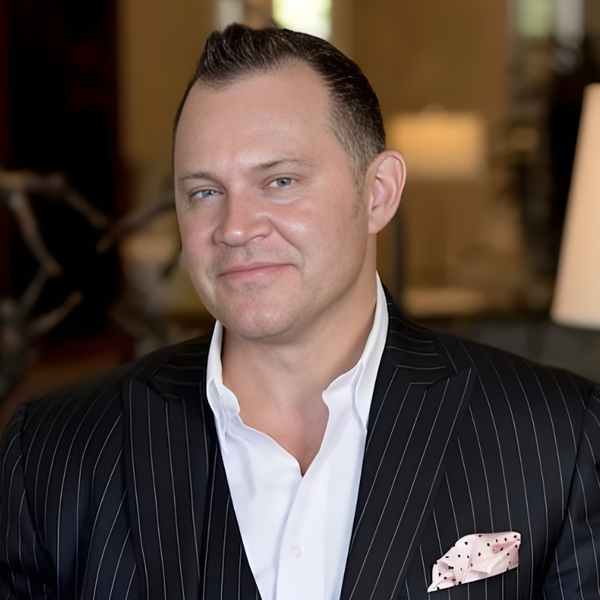
Dr. Gregory Buford is a nationally recognized, Board-Certified Plastic Surgeon and the Owner & Founder of BEAUTY By BUFORD in the Rocky Mountain Region. He is one of the few surgeons in his area to have completed a formal post-graduate cosmetic surgery fellowship, having trained at the prestigious Baker/Stuzin/Baker Fellowship in Miami. His aesthetic practice is highly specialized, limiting its focus to Breast Enhancement, Body Contouring, and Minimally Invasive Facial Rejuvenation.
Beyond his clinical work, Dr. Buford is a prominent author and strategic advisor, bridging the gap between surgical skill and business acumen. He is the lead author of the seminal book, “Beauty and the Business,” a critical text on medical practice management, as well as the author of “EAT DRINK HEAL: The Art and Science of Surgical Nutrition.” His expertise is sought by numerous Advisory Councils where he helps shape industry conversations.
As a dedicated educator, Dr. Buford is also the Founder of Core Aesthetics Training and a premier expert trainer responsible for leading CME courses and training seminars for his peers. He serves as a nationally recognized speaker and consultant for industry leaders like Lumenis and has acted as a co-director for a National Training Center for CO2 laser resurfacing.
Featured in Vogue Magazine and on ABCNews.com, Dr. Buford’s perspective is essential for any practitioner seeking to master the entrepreneurial side of aesthetics. He provides an invaluable blueprint for navigating practice management, social media, and strategic growth, proving that in modern medicine, business savvy is just as critical as clinical excellence.
HOST – Adeesha Pemananda
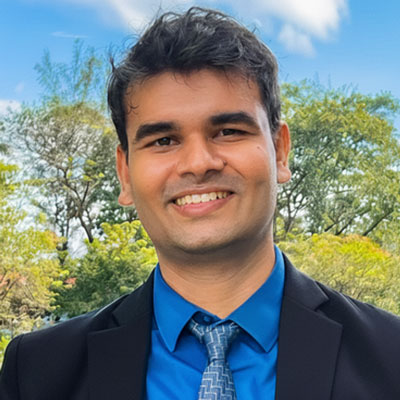
A seasoned marketing professional and a natural on-camera presence, Adeesha Pemananda is a skilled virtual event host and presenter. His extensive experience in brand building and project management provides a unique strategic advantage, allowing him to not only facilitate but also elevate virtual events.
Adeesha is known for his ability to captivate digital audiences, foster interaction, and ensure that the event’s core message resonates with every attendee. Whether you’re planning a global webinar, an interactive workshop, or a multi-session virtual conference, Adeesha brings the perfect blend of professionalism, energy, and technical savvy to guarantee a successful and impactful event.
Resources


Connect with Us:
Category: Business of Aesthetics Podcast