In this episode, host Don Adeesha joins Tracey Mancuso, a certified medical laser safety officer and founder of Dermaroom, to define what a true “safety culture” looks like in a modern aesthetic practice. Tracey argues that safety is not merely about avoiding adverse events but is a comprehensive mindset that must begin from the very first patient phone call, warning against the rising danger of “buttonology” – where providers memorize device settings without understanding the underlying physics or tissue interaction.
Tracey breaks down the critical flaws in “patchwork learning” derived from abbreviated weekend courses, explaining why holding a certificate does not automatically make one a specialist. She details how DermaRoom helps practitioners bridge the gap between basic manufacturer training and mastery, while also highlighting the vital importance of screening patients for psychological readiness during consultations.
Finally, Tracey shares why turning away the wrong patient is a profitability strategy that protects the business from the high costs of bad reviews and complications. She outlines the necessity of robust medical directives and Standard Operating Procedures (SOPs) to ensure defensibility, urging owners to audit their training logs and commit to safety as the ultimate competitive advantage for 2026 and beyond.
Key Takeaways
- Safety culture is not limited to the treatment room; it begins the moment a patient calls your clinic. Ensure your front desk staff prioritizes patient suitability and realistic scheduling over simply “squeezing someone in” for a sale.
- Stop practicing “buttonology” by blindly following manufacturer presets. To avoid preventable complications, you must understand the physics of how energy interacts with tissue rather than just memorizing which buttons to press.
- A weekend certification makes you a certificate holder, not a specialist. Avoid “patchwork learning” by strictly mastering the specific devices you own and understanding the underlying skin anatomy rather than collecting surface-level credentials.
- A patient’s psychological readiness is just as critical as their physical candidacy. Screen for red flags like major life crises or unrealistic timelines, and be willing to turn them away to protect your practice from inevitable dissatisfaction.
- Prioritizing ethics over immediate revenue is a long-term profitability strategy. Turning away a high-risk patient is far less costly than the cumulative damage of bad reviews, staff demoralization, and free corrective treatments.
- Medical directives and SOPs are your legal and operational safety net. Strictly define the scope of work and maintenance protocols for every device to ensure defensibility and consistent outcomes across your entire team.
Podcast: Play in new window | Download
Tracey highlighted that a robust safety culture is the ultimate competitive advantage for attracting discerning, long-term patients. This strategy session is your opportunity to build a precision roadmap that ensures your marketing attracts the specific high-value cases that align with your elevated standards of care.
- Get a 1-on-1 diagnosis of your online presence & patient acquisition funnel
- Identify critical, untapped growth levers (SEO, Social, Referrals)
- Define a clear action plan to attract and convert your ideal patients
- Receive expert solutions for your most pressing marketing challenges
Subscribe To Our Podcast



Key Highlights:
- 00:00:11 – Introduction & Defining Safety Culture
- The episode focuses on "safety culture", a phrase defining the difference between thriving clinics and those facing preventable complications.
- Host Don Adeesha introduces the guest, Tracey Mancuso, a certified medical laser safety officer with over 30 years of experience and founder of Dermaroom.
- The discussion begins by defining safety culture not just as avoiding bad outcomes, but as a mindset present from the first phone call to the patient’s home care.
- The episode’s sponsor, Ekwa Marketing, offers a complimentary 60-minute digital strategy session.
View TranscriptDon Adeesha: Welcome back to the Business of Aesthetics podcast. Today, we are digging into a phrase that’s becoming the difference between clinics that thrive and clinics that eventually face a preventable complication, the safety culture. The aesthetic industry is growing at a rapid pace. New devices are hitting the market constantly. New providers enter every day and the pressure to move quickly can push standards into the background. But safety isn’t just about avoiding burns or bad outcomes. It’s about building structure, consistency and defensibility as you grow. So, to help us define what safety culture really looks like in the real world, I’m joined by Tracey Mancuso, a certified medical laser safety officer with over 30 years of experience. And also, Tracey is the founder of Dermaroom. A space that is carving out for practitioners who want evidence, structures, and high-level mentorship, raising the bar instead of chasing trends. This episode is also brought to you by Ekwa Marketing, the digital growth partner behind this podcast and a trusted resource for aesthetic practices looking to dominate their local markets. Now, with that being said, I’m your host, Don Adeesha. Tracey, welcome to the Business of Aesthetics podcast. Welcome.
Tracey Mancuso: Thank you for having me. I’m so honored to be here today. I love the business of aesthetics. I love, I watch all the podcast, the webinars and podcasts. I think they’re great. They really add to my business as well as not just Dermaroom, but I’m also in practice. They really do help my practice. So I hope all of you out there will go back on all the old episodes and start watching them because they’re invaluable.
Don Adeesha: Wow. Thank you so much, Tracey, for that wonderful feedback and, you know, your lovely comments. Really can’t appreciate it enough. So, Tracey, let’s get into the conversation we got lined up for today. What does safety culture actually mean inside an aesthetic practice today?
Tracey Mancuso: So safety culture really starts from the start, the beginning of the patient experience and goes right through the patient’s entire lifetime with your practice. And so what does that mean? That’s like a big statement. And I really mean it in a big statement way is the minute that that patient calls in to book into your practice, All of your team have to have a safety culture mentality. The first person who talks to them needs to make sure that they’re not just booking a service that that person isn’t going to have the best outcomes or isn’t saved for, that they’re not just rushing in and squeezing someone in. They’re booking them the appropriate amount of time. They’re giving them the right information on the phone. On the phone is never a consult, of course, but it’s always the point where people get a little bit of a taste of what the clinic is about and what those services are about. And that first person has to have safety in mind when they talk to that patient. And then from there, when the patient enters your practice, it’s a safety of how that person is physically entering your practice. how the person is going to be greeted, how they’re going to be sat in the waiting room, how their confidentiality is going to be kept. All of those things lead to not only safety of the person themselves, but also their private information. And then going into the treatment room or the consult room is really that person has to have a safety mentality as well. to choose the right treatment programs, to educate the patient properly. And it’s their responsibility to know what tools they have and that they’re using and how those will interact with the tissue that they’re working with. And then when the patient departs from the consult or let’s say the treatment, It’s that continuity of care from home. So sending a patient home without having particular instructions that you’ve gone over very carefully with them with proper care is very irresponsible and really leads to having adverse events and issues down the line, as well as unhappy patients, of course. But It’s that safety mentality that says, I want this person to heal properly, to have a really, really good experience that matters and leads to that safety culture. So every single person on your team needs to have a safety culture mindset. And that includes also the managers who are going to be making sure that all of this happens and implementing it. So it’s everyone, it’s everyone’s responsibility.
- 00:05:37 – Why Safety is Critical Now & Common Blind Spots
- Safety is critical now due to the exponential growth of the field and the influx of providers taking short, "weekend" courses that don’t provide adequate training.
- Social media has made adverse events highly visible; patients share bad experiences publicly, which can damage a clinic’s reputation instantly.
- A major blind spot is "Buttonology", practitioners memorizing settings without understanding the "why" behind the parameters or the tissue interaction.
- Tracey highlights the danger of overconfidence, noting that true experts remain humble students of the craft.
View TranscriptDon Adeesha: Okay, Tracey, thank you very much for that introduction to the definition of what safety culture really is. Now, why has this become such a critical, important nuance in the practice life?
Tracey Mancuso: It’s really become prevalent for three things. So first is we have a lot of people entering the This field today is grown exponentially over the past five years. And with the surge of people entering into this field, We have a lot of people who are entering in quite quickly, which is my second point. Quite quickly, meaning that the courses now are very short. They’re teaching a compact set of information, which used to take a year to two years, and they’re doing it in a weekend or they’re doing it in a week. And it’s just not enough time to give someone a certificate and unleash them on patients. And that is a really big problem. And then the third that’s really top of mind and that that has made this come to fruition and people are saying, hey, we need a lot more safety out there is because it’s now prevalent on social media. So now we see people sharing their experiences, sharing how many adverse events they’ve had or bad things that they’ve seen in clinics. And that is really important because your patients are going to be all over social media if you don’t have a safety culture mindset. It’s very important.
Don Adeesha: So another part of it I’m curious about is are the number of devices entering the market also part of it?
Tracey Mancuso: Definitely. It’s the number of devices. And to some extent, the device manufacturers or distributors, depending on what their training programs are. So their responsibility is to train people on the basics. That’s what they need to train them on. What is the basic parameterization? How to use this safely? And how what indications it treats but a lot of times they’ll have very fast training sessions they’re cutting corners on things and the people who are ultimately at risk are the patients and also the practitioners who don’t want to hurt people and they just don’t have the knowledge behind them so if they’re coming to market too quickly with things and the people who are implementing them and selling them don’t have enough knowledge and the people who are training don’t have enough knowledge it’s it’s going to be a mess and it’s going to turn out to be a problem, a safety concern. So absolutely, the number of devices on the market is a problem.
Don Adeesha: And when you do visit clinics, what are the biggest safety blind spots that you see? Pardon me? Sorry. When you do visit the clinics or, you know, train teams, what are the biggest safety blind spots that you see?
Tracey Mancuso: So the blind spots really come with training. So when I go into a clinic, and they’ve been trained on, let’s say another device, and I asked them about it. And I noticed that they just become really good buttonologists. And this is a term that I made up is they know all the buttons to press. So if I press this, I can treat this. And I’ll say to them, well, that’s great that you’ve memorized all of that. That shows me that you have recollection. But can you tell me why you’re pressing that? Can you tell me what it does? What, if I changed one or two of those parameters, what impact does it have on the tissue? They have to understand that. And there’s this huge gap in understanding that about all of their devices, about the energy themselves. And that’s really where I created DermaRoom is because I wanted a place where people could go from the basic to come in and be able to learn what happens to tissue, what happens to the skin. And also to learn about the skin, because I realized with these shorter classes that people are having, they’re coming out and they don’t know the skin as intimately as they should. People will ask me very basic questions about it. What is the epidermal dermal junction? I’ll look at them and I’ll say, this is one of the most important things that you need to know if you’re dealing with pigment, let’s say. And things like that, when they’re rushing through to get them out in a weekend course, to give them a certificate and say that they’re an aesthetic practitioner, that’s the problem that I see in clinics, is this rush to get everything out and not really being the master of your devices and of your craft.
Don Adeesha: what’s one of the most common false confidence you hear something people say that instantly tells you that they’re exposed
Tracey Mancuso: oh that’s a really good one actually so i have people i go into a clinic and they’ll say i am a laser master And I’ll say, okay, that’s great. And after 30 years, I still don’t call myself a master. I humbly call myself a student of aesthetic medicine. I’ve learned every single day. And I even learned from some of my students who are just starting in aesthetics. They’ll ask me a question and I’m learning from that because it’s a question I would have never thought of and I’ve never looked into. And so I find the biggest pitfall is people who have overconfidence and they’ll say, I’m a laser expert. I know exactly what I’m doing. And I’ll say you might know, but every device is different. And every patient that walks in your door is different. And you’re learning every single time a patient comes in. Right.
Don Adeesha: Maybe they’re really a good buttonologist, but. It’s a new title you can put on a business card. Yeah. Wow. Wow. Well, something to get trademarked, I suppose. Maybe.
- 00:11:38 – DermaRoom & Avoiding "Patchwork Learning"
- Tracey defines "patchwork learning" as taking brief courses on specific tools and claiming specialization without deep foundational knowledge.
- DermaRoom was created to extend knowledge beyond the basics, teaching practitioners exactly what specific energy (like Nd:YAG) does to tissue.
- Courses range from online sessions to full-day mentorships, allowing practitioners to master the specific equipment they own rather than just learning general concepts.
View TranscriptDon Adeesha: And how does DermaRoom really help practitioners build a real safety framework instead of patchwork learning?
Tracey Mancuso: So patchwork learning is those things that people do in a weekend course. They’ll learn lasers and they’ll say, oh, I went to a laser course this weekend and now I’m a laser specialist. You’re not a laser specialist. You learned a specific thing about lasers, but you’re not a laser specialist. And so what DermaRoom does is it’s an extension of what you already know. The assumption, if you’re part of DermaRoom, is that you’re already trained as an esthetician, or perhaps you’re a nurse that’s taken an aesthetic course, or even I have a few physicians that have joined who have taken aesthetic courses and want to learn more about aesthetic medicine. And DermaRoom really was that extension. Do you want to learn more about lasers? Yes. Okay, great. Then what we’re going to do is we’re going to teach you exactly what an NDAG is going to do to tissue. It doesn’t matter what the device is, but this is the NDAG. This is what it does for tissue. And this is what you’re looking for for clinical responses. These are the indications and treats. These are the safety initiatives that you need to take when using an NDAG. And these are the patient populations you really want to look at.
Don Adeesha: Okay, and can you tell me how long does a session or a course at DermaRoom really last for?
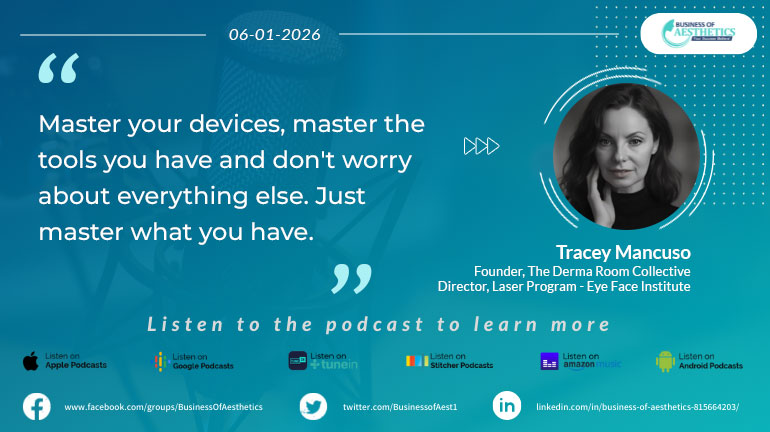
Tracey Mancuso: It depends. So some of them are as long as three hours, some of them online and some of them are as short as an hour. However, there’s also mentorship times which are going to be, you know, a half day or can even be a full day. Like this weekend, I’m doing a full weekend with someone the coming weekend. So it depends on what you’re doing. If it’s online, it’s usually up to three hours. But if it’s going to be something that’s in person, it’s usually either a half day or a full day, depending on what they want to do. And the nice thing is, is you can choose when you want to learn about a specific type of equipment as well, which is really important because oftentimes we teach concept. of you know an erbium this is what an erbium will do however i get in front of my erbium and i don’t know what i’m doing because everything is different and so you can learn on your particular piece of equipment and that’s really what i mentioned earlier was master your devices master the tools you have and don’t worry about everything else just master what you have
- 00:14:09 – Complications, Safety Checks & Psychological Readiness
- Complications often arise from overconfidence or relying solely on manufacturer’s "basic parameters" without accounting for individual patient variables.
- Tracey advises a "two-minute safety check" that differs between consults (psychological readiness) and treatments (physical room safety).
- Screening for "psychological readiness" is crucial; patients seeking major changes due to life trauma (like divorce) or those unrealistic about downtime are high-risk.
- Ethically turning away a patient who isn’t a good fit is ultimately more profitable than dealing with the costs of bad reviews, free repair treatments, and low staff morale.
View TranscriptDon Adeesha: okay okay and where do these complications really come from
Tracey Mancuso: So complications come from number one, like I said, overconfidence. So you really think that you know what you’re doing and you go ahead and do it and you end up with a complication. The other time that I see it quite often is when you’re using just the basic parameters of the devices that device companies give you, but they don’t give you patient scenarios. So they’ll just say, this type of patient, Fitzpatrick type, is the type that you want to treat with these parameters. And it doesn’t go beyond what you need to ask each single time that you see a patient. You know, what are the different indications in your skin? How is your skin presenting? Are there things that are new in your medical history that I need to know about? All of these things, they don’t tell you to go through all of that. And so if you’re just following basic parameters, you can end up in hot water. And then if you don’t understand the skin, you don’t understand the energy, it’s really hard to get out of it because you can’t guide your patient properly out of an adverse event if you don’t really know what caused it to begin with. And that’s the problem is really trying to figure out and getting that, again, safety culture mentality of I need to be the expert here to really help my patient out if something goes wrong. Because even if you have 30 years, I have 30 years under my belt and I still get sometimes complications because it happens. We’re dealing with humans. It’s going to happen. But I know how to get out of it. And I know how to help my patient through it and get them to the finish line. So that’s what’s really important is understanding how did it happen? Why did it happen? And how do I get this person out of this?
Don Adeesha: Right. And Tracey, what’s your two minute safety check before energy based treatments, you know, that might prevent a lot of these problems?
Tracey Mancuso: Absolutely. So it depends on whether or not I’m in a treatment or in a consult. If I’ll say, let’s say in a consult, in a consult, I will go through a full questionnaire with my patients and I sit down and it’s actually, it’s a download that people can get off my Derma Room Patreon. They can go there and download it. It’s for free. But it actually has in it my questionnaire that I give my patients when I’m going through my consult. It also screens them for psychological readiness for treatment. And believe it or not, that is a thing. And it’s part of safety to make sure that they are ready to have treatment. If I’m in a treatment room, a safety check is completely different. There’s a physical safety check of the room itself. And being a certified medical laser safety officer, I really have a responsibility to make sure I uphold all of my standards that I’m held to from the board of laser safety. But I make sure that my room is completely secure and safe. And then I also make sure my patient is safe and myself, I’m safe. And those are the safety parameters that I’m going to put in check. There’s all sorts of little checks that you go through and it’s actually a physical checklist of, you know, where my pedals are, where my glasses are, where my signage is. Do I have shiny things in the room? Do I have water available? You know, there is a safety check that I go through. But it’s really to make sure those broad titles that I just gave you are in space. And I know everything’s okay. The main thing is, though, is at the start of every day to make sure my equipment is okay. So you can get yourself in a lot of trouble if your equipment is not okay. You haven’t done a safety check on it, make sure that it’s not misaligned, make sure that it’s not working out of spec. So if you have to do any calibration or anything like that, you really want to make sure that you have all of that done before you get a patient on the table and you find that out because that again will get you in a little bit of hot water.
Don Adeesha: So you mentioned it briefly earlier that you look at the psychological safety of a patient during a consult. Can you break that down a little bit? How does that look different as compared to a regular consultation where you might not necessarily think a lot about the psychological aspect of things from the patient’s side? How are you seeing that different as a certified medical laser safety officer?
Tracey Mancuso: When I’m talking to a patient, the safety side and the psychological side is delving into, number one, what is their real reason for coming in to see me? Are they coming in because it’s something that is aesthetically or health-wise unpleasing to them and they want me to address it? Or is there a psychological reason that I’m not able to address? So… If somebody, let’s say, is going through a horrible divorce and, you know, they just want a big change, this is not the time to make a big change. And I’m not here to make a big change for you. I’m here to… you know, help you look and feel better. If it’s also somebody who isn’t realistic about their timelines, what they can get accomplished, what the treatments can do for them. Again, that’s a really big safety concern because this person might go ahead and do things at home or at other clinics. If they don’t see the results fast enough or as pronounced enough as they were expecting, and then I’m suddenly dealing with something that I’m unaware of what’s happening. And then also there’s a component of how long downtime can be. So if you are screening your patients and you find out that this person really doesn’t have the patience or the time to have downtime, they might be rushing their healing. So it’s not so much that you don’t want to give them downtime is that they might be rushing their healing to get to whatever they want to do. And if they start rushing their healing, they’re not going to heal properly. And again, you can get yourself into a lot of trouble with this type of patient and you want to make sure that you either screen them out or you screen them for a treatment that will give them that, that will match what they need. So it’s not so much that I’m screening patients to send them all away. I’m screening them. So then I make sure that, okay, this patient is psychologically not ready for a treatment that is a lot of downtime, that has a lot of potential side effects that take time to resolve, where I might have them do something else that is a little bit more subdued, let’s say with downtime and with also side effects.
Don Adeesha: okay um a question that came around uh arise where as you were explaining this is you’re big on ethics it seems right um and really taking care of the patient uh from an ethical standpoint right but then what about the business profitability tracy i mean you’ve got a patient in front of you that wants to get this huge treatment down done right there and then you know and you can do it too um as you said you know they might be rushing the down time but they don’t care you explained it to them they don’t care uh where are you at
Tracey Mancuso: so i would actually steer them to another treatment that would match what they are capable of handling or i would let them walk. And that’s a big statement, but I’m going to tell you that I have, you know, been in practice for 30 years and I, whenever my gut feeling tells me this was not the right patient for me and this person was not right for this treatment and I went ahead with it, I always regretted it. It turned out to be way more costly for my business at the end of the day, free treatments, bad reviews, a lot of bad morale with staff, people feeling bad. I didn’t want this person to feel this way, blah, blah, blah, all these things. So it’s really at the end of the day, it’s better for your business. For the few people that you’ll turn away, it’s better to turn them away if they’re not right for you and it’s not going to be safe. And I’m actually all about, you know, referring out to friends and other colleagues for treatments that I might not necessarily offer. So if it’s a treatment, let’s say right now I don’t offer tattoo removal. And even though I love doing it, I don’t offer it. But I’m more than happy to refer out to my friends rather than try and use something I have and get by with it and try and figure it out. I would rather not do that. I’d rather send them out to somebody who would be able to address their problem effectively, their indication effectively. And that’s more important to me than at the end of the day, the dollar that you’re going to bring in. It’s really going to affect your business if you don’t think about that.
- 00:23:16 – Sponsor Message & Medical Standards
- Sponsor Ekwa Marketing offers a complimentary 60-minute digital strategy session to help clinics map out a 12-month patient acquisition roadmap.
- Medical directives and standards provide the essential framework for what practitioners can treat, ensuring a collaborative approach between the medical director and the team.
- Standard Operating Procedures (SOPs) are critical for every new technology, defining who uses it, when, and how it is maintained.
View TranscriptDon Adeesha: Okay. Okay. Now, Tracey, before we continue, a quick message from our sponsor. Yes. Okay. Our sponsor of this podcast, Ekwa Marketing, are offering our listeners a complimentary 60-minute digital strategy session. This is a one-on-one consultation with the senior strategist to help you map out 12-month high-value patient acquisition roadmap. You will get a personal diagnosis of your online presence and patient funnel, uncover untapped growth levers across SEO, socials, as well as AI search, and walk away with a clear, actionable plan tailored to your practice. You can check availability and reserve your spot in under two minutes at www.businessofaesthetics.org/msm. Okay.
Tracey Mancuso: That’s fantastic. And I hope a lot of people take advantage of that because in today’s world, we think we know how to market. And I’ve got to tell you that we don’t. We don’t know how to do it. And having somebody professionally be able to sit down and tell you this is how. to do this is really important, especially as things change and social media continues to change just from year to year. And you have a plan and you think you’re going to do this and it just kind of goes sideways if you don’t have somebody professional doing that. So I really hope that people who are listening to this podcast will take advantage of that.
Don Adeesha: Fantastic. Thank you very much for that, Tracey. Now. You also teach medical directives and practical standards. How do these elevate safety and business outcomes?
Tracey Mancuso: When I go into a clinic, the first thing I ask them is I’ll say to teach. Who’s your medical director? Do you have any medical directives in place? How does that work? Do you all understand what the medical directives are? And medical directives are very important because they give the framework to the practitioner of what they can treat, when they can treat, so the conditions that they can treat under and the patients that they can treat. So scope of work. And this is very important because it’s part of a collaborative approach when you’re working with, I’m blessed to be working with an amazing plastic surgeon who is my medical director. And when I’m seeing a patient, I have already spoken to him and figured out what the plan is. And I’ll go back and forth with him. And we’ll say, well, how about this? And how about that? And we go back and forth. We pick a plan for the patient. And that produces not only the safest outcome, because both of us are looking at this, Two eyes are always better than one, right? And it’s also because we have a more comprehensive plan when you have both the surgical approach and the non-surgical approach working together to collaborate and come up with the best plan for that patient. That’s really what is important about medical directives. And of course, medical directives come into play if there is an adverse event. So if something did happen, your medical director is right there to help you and say, okay, this is the next step. This is how we plan to proceed with this patient to get them through this process and finally have them healed and be on their, their healing journey. Now, when it comes to protocols and processes in place and procedures, having those in place like SOPs are really important. And anytime I introduce a new piece of technology into a practice, I always tell them you need an SOP. You need a process in place. Who can use this? When can they use it? How do they use it? What parameters can they use? What patients can they treat? All of these things. Who maintains it? Who’s checking it all the time? Who are the people who are responsible for it being cleaned? What is the disinfection process? All of that has to be in place for safety, but also just for good patient care. So it’s both of those things that really those SOPs will protect as well as a practitioner. They protect the practitioner.
Don Adeesha: Okay. And, uh, I was just curious, where do clinics, uh, Where do clinics mess up the most with regards to this? You know, is it delegation language, perhaps escalation triggers, training proof or supervision reality?
Tracey Mancuso: It’s kind of a little combination of all of that, because a lot of times people will get very excited. They’ll say, you know, let’s get this new piece of equipment. They think it’s an ATM. They’ll bring it in. They’re going to make tons of money with this thing. And they rush their training. they have no direction whatsoever, no idea of who’s going to be in charge of this piece of equipment and really taking the protocols to the next level and making sure that they’re applying them to the patients. And then at that point, there’s people deploying treatments to the patients without having any practice, without having any direction. And they’re not really well-versed in the skin. They’re not really well-versed in that technology. And now they’re deploying it to patients. That is a recipe for disaster. And certainly somebody is going to get hurt at some point.
- 00:29:02 – The Future & Practical Steps
- Clinics that commit to safety culture will thrive and attract the next generation of patients who look for safety indicators; those who don’t face legal issues and closure.
- The first practical step is to audit your treatment list, pick one to focus on, and deeply educate yourself on that specific technology and indication (e.g., melasma or tattoos).
- Tracey recommends joining organizations like ASLMS for free resources to help build a safety program.
- The episode concludes with a positive example of a clinic with a "closed door vs. open door" policy that signals cleanliness and care to patients.
View TranscriptDon Adeesha: And Tracey, let’s talk about the future here real quickly. What does the future look like for clinics that commit to a safety culture and for those who ignore it?
Tracey Mancuso: Well, those who commit to a safety culture are really the next generation of who patients are planning to seek out. So when they’re looking at social media, when they’re looking at websites and they see all of these things that demonstrate that this is a safe place to go to, that the utmost care is being taken for them to go through a process and heal properly and achieve their goals. Those are the people that are going to thrive in business. The people who don’t do that, who rush the finish line, who don’t take the time to learn, who are not interested in learning or just interested in a fast dollar are the ones who you’re going to see close very quickly. They’re going to have legal issues because patients are going to have issues that are going to arise. And also word spreads fast. On social media, it’s so fast. And I can’t tell you, like today I was scrolling through and I saw… three or four different adverse events of people posting, patients posting from different clinics. And it’s just terrible because it will destroy your business. So it’s not worth it.
Don Adeesha: Absolutely. And Tracey, if an owner wants to shift their trajectory starting this week, what’s the first practical step you would recommend?
Tracey Mancuso: The first practical step is to sit down, make a list of all the treatments you do and say, which ones do I know that I really need to focus on more right now today? Because you can’t focus on all of them at once. It’s not going to happen. It’s not realistic. So which ones do I really need to focus on today? And those ones, that’s where you start. You start to educate yourself more on the actual technology itself. on the indications that you’re treating. So if you have a piece of technology that is treating tattoos, start to know about tattoos, start to get to learn about tattoos and understand it. If you’re treating melasma, you wanna start learning about melasma. Don’t just start thinking it’s pigment. These things are all very important to start learning. And how do you do that? You do that through courses, you do that through webinars, you do that from advanced training. Those are all things that are very important. Then the next thing is to take a look around and say, do I actually have a safety culture mindset here at work? Do we take safety as number one? And I’ll tell you that I’m part of ASLMS, which is one of the oldest organizations. boards for laser safety and also for laser education and I’m sitting on the laser safety board and that’s one thing that we do is we take it very seriously and we have lots of resources for our members and they’re free it’s free resources and why wouldn’t people do that that’s what I always say why wouldn’t you do it it’s It’s right there for you. So start taking a look. Do I have a safety mindset? I don’t think so. We need to start. How do I start? I’m going to join something like ASLMS. I’m going to start going there. I’m going to start using these free resources. I’m going to start trying to get a laser safety program in. I’m going to start training my front desk staff that they have to understand how to treat patients the minute they answer the phone and carry that journey all the way through. That’s what’s really important. That’s how they start. from a clinic that’s maybe not a safety mindset to one that will be a safety mindset and one of those thriving clinics in the future.
Don Adeesha: Love it. And Tracey, just to wrap things up, is there a question that you wish I had asked?
Tracey Mancuso: The question I wish you had asked would probably be, I guess, what is the worst thing that I’ve seen? in a practice or the best thing that I’ve seen in a practice. I’m going to tell you, I’m going to end on a positive note. So I can tell you that one of the nicest things I’ve seen in a practice. So it was about three weeks ago, I was at a clinic and I was so impressed because when I walked in, everything was immaculate. But the staff were very friendly. They walked me through. As I walked through, I noticed that they had about eight or nine treatment rooms. Some of the room doors were closed, but some of them were open. The ones that were open were perfect. And they had signs on the bed. So I went in and looked at the treatment loungers and they said, this room has been sanitized for you. And I thought, brilliant. And so when I came out, I made a comment about it. And I said, this is beautiful. I love this, this idea, because this really makes me feel like this place is so clean. First of all, when I walked in, it was beautiful, but it also made me feel so cared for and, and that my treatment would be safe and I would be taken care of there. And they said, yes, one of our mandates here is that when we finish a treatment and we’re leaving the treatment room with our patient, we close the door. So you’ll never walk into a dirty room or you’ll never see a dirty room in here. And then we come back after we’ve delivered our patient to the area where they’re going to be checking out. And we come back and clean the room and sanitize it. And then we open the door, we leave the door open. And I said, this is brilliant because I really have such a sense about your clinic and it gives me such a nice feeling. And they said, well, that’s part of our consult as we walk our patients through and we tell them that as well.
Don Adeesha: That’s amazing. And thank you so much, Tracey. Really appreciate you being here on the podcast and sharing your experience and insights with regards to the safety culture.
Tracey Mancuso: Thank you so much for having me. I very much appreciate it. And I hope everybody after this adapts safety culture.
Don Adeesha: Absolutely. And if this episode made you question the protocols inside your own treatment rooms, take a hard look at your training logs or treatment protocols, escalation triggers this week, and share this episode with your lead provider or clinical manager. This is a conversation that needs to happen before a complication occurs, not after. So before we sign off, a quick reminder, Ekwa Marketing is offering their complimentary 60-minute digital strategy session. Make good use of that. Check the show notes below this episode to find out more. And with that being said, I’m Don Adeesha, and this has been the Business of Aesthetics podcast. Thanks for listening. And here’s to setting the standard, not just meeting it.
GUEST – Tracey Mancuso

Tracey Mancuso is the Founder of The Derma Room Collective and the Director of the Laser Program at the Eye Face Institute. With over 30 years of experience in the aesthetics industry, she has built a career bridging the gap between clinical practice, business leadership, and global education.
As a Certified Medical Laser Safety Officer (BLS), Tracey is a recognized authority on laser physics and energy-based technologies. She has managed numerous clinical research projects, collaborated with R&D teams to optimize cutting-edge devices, and lectured internationally to elevate safety standards.
Currently, Tracey blends hands-on patient care with strategic leadership, working closely with manufacturers to develop world-class training programs. Her mission is to replace ‘patchwork learning’ with rigorous academic standards, empowering practitioners to build defensible, high-quality practices in an increasingly unregulated market.
HOST – Adeesha Pemananda
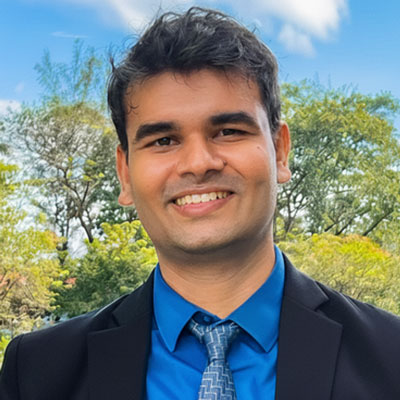
A seasoned marketing professional and a natural on-camera presence, Adeesha Pemananda is a skilled virtual event host and presenter. His extensive experience in brand building and project management provides a unique strategic advantage, allowing him to not only facilitate but also elevate virtual events.
Adeesha is known for his ability to captivate digital audiences, foster interaction, and ensure that the event’s core message resonates with every attendee. Whether you’re planning a global webinar, an interactive workshop, or a multi-session virtual conference, Adeesha brings the perfect blend of professionalism, energy, and technical savvy to guarantee a successful and impactful event.
Resources


Connect with Us:
Category: Business of Aesthetics Podcast