In this episode, host Don Adeesha sits down with Sonja Landtrachtinger, CEO of Beauty Zentrum Group, to address the frustration of the “non-responder” – the patient who undergoes treatments but fails to see results. Sonja argues that clinics typically blame the device when they should be blaming the biology, specifically the gut-skin connection. She details her business model based on neuroaesthetics, where she treats the nervous system, gut microbiome, and microcirculation to resolve internal bottlenecks before attempting to fix external beauty.
Sonja breaks down her “Skin Proof Method,” a system that combines AI skin analysis with dried blood microbiome testing to generate hyper-personalized treatment plans. She explains how this data-driven approach operationalizes the sales process, empowering her staff to sell complex, invisible treatments without feeling “pushy” because the AI provides the prescription. This rigorous diagnostic process allows her to offer a money-back guarantee on results – a rarity in the industry – while commanding prices between €800 and €2,500 for six-month transformation packages.
Finally, Sonja explores the rising phenomenon of “Cortisol Face,” explaining how chronic stress physically blocks aesthetic efficacy and how her clinic uses sensory cues like sound and lighting to shift patients out of fight-or-flight mode. She advocates for “Honest Aesthetics,” sharing why she refuses service to clients seeking unrealistic, filter-based results, and urges clinic owners to trust their gut instinct to innovate, even when the industry says it cannot be done.
Key Takeaways
- Stop blaming devices for non-responders.
Treat internal bottlenecks like gut health to unlock results for patients failing standard treatments. - Offer results-based guarantees protected by compliance.
Mitigate risk by requiring strict adherence to protocols like mandatory microbiome testing before validating warranties. - Remove sales hesitation with AI diagnostics.
Use objective data to generate prescriptions so staff fulfill medical needs rather than pushing products. - Address the “Cortisol Face” phenomenon.
Use sensory cues like lighting and sound to shift patients out of fight-or-flight mode and ensure efficacy. - Practice “Honest Aesthetics” to build trust.
Refuse unrealistic filter-based requests to attract high-value clients who prioritize longevity. - Combat price dumping with hyper-personalization.
Charge a premium for comprehensive health programs that local competitors cannot copy. - Sell through curiosity rather than pitching.
Introduce concepts like neuroaesthetics during appointments to naturally upgrade patients without a hard sell.
Podcast: Play in new window | Download
Sonja demonstrated that attracting high-end clientele requires a sophisticated business model built on trust and guaranteed results rather than commodity pricing. This session is your opportunity to architect a digital roadmap that targets those specific, health-focused patients who are ready to invest in your premium protocols.

- Get a 1-on-1 diagnosis of your online presence & patient acquisition funnel
- Identify critical, untapped growth levers (SEO, Social, Referrals)
- Define a clear action plan to attract and convert your ideal patients
- Receive expert solutions for your most pressing marketing challenges
Resources

Live Webinar: Enhancing Modern Aesthetic Practices in 2026
Join industry experts to modernize operations, enhance patient experience, and drive sustainable growth.
Wednesday, January 21, 2026 @ 8:00 PM EST.

Are you ready for the “GLP-1 Body” Era?
Download the 2026 Aesthetic Patient Behavior Model to see the numbers driving decisions this year:
- Why 73% of patients now define beauty by “individuality” over transformation.
- The shift away from non-invasive fat reduction (down ~40%).
- Real data on the rise of the male aesthetic patient.
Subscribe To Our Podcast



Key Highlights:
- 00:00:01 – Introduction & Guest Setup
- Host Don Adeesha introduces the episode’s focus: moving beyond "quick fix" injectables to long-term, biology-based skin healing.
- The guest, Sonja Landtrachtinger, CEO of Beauty Zentrum Group, is introduced as an expert in neuroaesthetics who treats the nervous system, gut, and microcirculation to improve skin health.
- Sonja’s "Skin Proof Method" is highlighted as a system that allows her to offer guaranteed results for high-end clients, a rarity in the aesthetic industry.
- The episode is sponsored by Ekwa Marketing, offering a digital growth strategy session for clinics.
View TranscriptDon Adeesha: Welcome back to the Business of Aesthetics Podcast. I’m your host, Don Adeesha. And for every factory owner that knows the frustration of a non-responder, the patient who gets the laser, gets the facial, and uses the cream, but still looks inflamed and tired. We usually blame the device, but today, our guest argues that we should be blaming the biology. We’re joined by Sonja Landtrachtinger, the CEO of Beauty Zentrum Group. With over two decades of experience, Sonja has built a successful business model around neuroaesthetics. She doesn’t just treat the skin, she treats the nervous system, the gut, and the microcirculation that feeds the skin. So this really isn’t just about wellness, it’s about business. Sonja has also developed the Skin Proof Method, a system that helps her staff recommend complex treatment plans and allow her to offer something almost unheard of in the aesthetic industry, which is guaranteed results for her high-end clients. So today we are going to be discussing how to systemize the gut-skin connection, how to structure performance guarantees without breaking the bank, and why the future of our industry might be less about filling and more about healing. This episode is brought to you by Ekwa Marketing, the digital growth partner behind this podcast and a trusted resource for aesthetic practices looking to dominate their local markets. With that being said, Sonja, welcome to the Business of Aesthetics podcast.
Sonja Landtrachtinger: Thank you, Don. Nice to be here.
Don Adeesha: I’m very, very excited. All right, let’s get into this conversation. So, Sonja, you have specialized in non-invasive aesthetics for 22 years. Many practice owners struggle to sell invisible treatments like gut health because patients really just want that quick fix of a needle. So how do you structure your consultation to convince high-end clients that their internal ecosystem is the actual bottleneck for their external beauty?
Sonja Landtrachtinger: Well, say this way, I was actually confronted with two problems, employees that didn’t want to upsell or sell things to customers. And the other one was in the last about year to year and a half from ago, customers and patients and clients came in and said, I want to have long lasting match results, but without having filler Botox and all of the other lovely laser procedures. So I don’t look like crap once I leave. So I had two problems and I needed to find a way to fix them both. Basically come up with a system where I can have my employees satisfied and also my clients, but give them something that hasn’t been seen in the area, a money back guarantee. So we change your skin carefully. With a guarantee. And if we don’t, you get a guarantee back. But there are a couple of little catches. It isn’t just like, okay, we’re going to do a little bit of CO2 and then you go and you get your money back. No, no, no. I’ve made it a little, how you would say, complicated. But yeah, so say about two years ago, customers started coming in, clients coming in. Oh, I don’t want to be looking like Sylvester Stallone or Tom Cruise. Yeah. You know, we’ve seen the whole pillow phase and thing going on. So, and a couple months later, you would see them without it. So they had everything, everybody’s having it removed. And also the whole, like the studies coming out where hyaluronic acid does not leave your body, which has gotten a lot of people scared. You know, we’ve seen that very famous CT scan of all the hyaluronic acid in the faces and stuff. And plus what happens, it sucks blood. water, so later on it will become bigger. We don’t want that. So my problem was, what am I going to offer these customers and patients and clients of ours, especially the high-end ones, because I haven’t heard of anything. It’s like, you know your CO2 laser, you know your thread lifts, you know your boat, you know everything, you know the injectors, everybody knows what to do for a quick fix. Now we’re talking about long-term, long-lasting results without the quick fixers. I did a lot of research, a lot of study. What actually happens? Is it the collagen? Is it the fat that actually deteriorates? No, it’s not. It’s your muscle that decides to break down because you’re not activating as much as you had in your younger years. Once your muscle deteriorates, your bone mass deteriorates. Crap, how am I going to get into that? I don’t know of anything that can actually activate that again. Then I found a study and a small, yeah, it was like a little, it was like an online video from Dr. Ilan Karavani, who had one of the biggest skin clinics in Belgium. He was like the master koryphé for Botox and hyaluronic acid way back when. And he sold it and everything because, of course, he started seeing the problems as well that the face mutated automatically. In once getting older, it wasn’t, you know, when you get your facelifts, it’s going to look good for about 10 years. But after that, you’re going to have to redo a whole lot of things. But we know the technology is changing every day. So who knows what will happen in 10 years? He came up with the system in neuroaesthetics, as you would call it. It’s basically you get your nerves. You’re thinking, okay, well, my nerves work every day. Yes, but the older you get, the more your nerves concentrate on your most important organs, your liver, your lungs, your heart. They don’t care about what your nails look like. They don’t care about what your face looks like. So how can I activate that again, which I have found, but not only that, we’re missing a whole bunch of things like your gut, your gut health, your microbiome, what’s going on in there. That is one of the biggest things that reflects on your skin. If that’s not working well, then we can just forget about all the rest because it’s basically you’re fighting against two different compounds that if the one isn’t good, the other one isn’t going to be good. We can do whatever we want. Those pimples aren’t going to disappear. Your dry skin is not going to disappear. We got to figure out what’s going in there. So found a company there who does dry blood tests. It tells you what’s going on in there. Very simple, very easy to use. They’re from Norway, I believe, up there from one of the Nordic countries. And they also, of course, offer probiotics, all of the things that actually to get your gut back rolling. So we have now… multiple different systems of non-invasive procedures. We are able to check out the whole gut and the whole system working and also offer you the nutrients to go along with it to up everything back up to like a green system. And then the third one is actually offering… real cosmetic products that work. So now you’re thinking, how can us, how can we actually see that? We work with a new AI-based skin analysis program and also the new cosmetic series is also, we take the data that we get from the customer, we type it into the computer. The computer now tells us, the system tells us what exactly the customer and client needs. I don’t say that anymore. My employees don’t. They have no more problem with upselling things or selling products. So it’s like a whole all-in-one based system, which I then combined to how a customer definitely within six months, we will be able to change your skin guaranteed. That’s everything in like a little bit of a nutshell.
- 00:07:53 – Pricing the Invisible & AI Integration
- Sonja explains the pricing model for her comprehensive programs, which range from €800 to €2,500 over a six-month period.
- To combat price dumping in the local market, she focuses on personalized, data-driven prescriptions rather than mass-market products.
- The clinic uses an AI-based skin analysis tool (Skinalize) combined with ChatGPT to generate hyper-personalized treatment plans.
- This system shifts the sales dynamic: employees aren’t "pushing" products; they are simply delivering the AI’s objective recommendations, which increases trust and conversion.
View TranscriptDon Adeesha: Okay. I would like to get to know, how about the pricing of this? You know, how do you price the invisible portion?
Sonja Landtrachtinger: So that is what comes in with, it’s a little, it’s not, so it can go anywhere from 800 to two and a half thousand over a six month period. So it’s depending, that’s where we’re at at the moment, but it’s still a little bit in the test phase. So we, the areas around here where you do your basic aesthetics, the prices have been dumped really, really low. So how do you fight against that? But how do you also tell your client, hey, you’re going to be needing good products. You can’t just go to the local drugstore, you know, get a test, local drugstore, you know, L’Oreal and whatever other name is. It’s made for the masses. You want it specifically made for you. Nobody else is getting this exact program. So I’ve taken[/skipto] – all of the procedures that we have, everything that we do, and good old ChatGPT helps me. And we can take the information. I built like a little tiny program. I’m not very good at coding and all this. It’s basically, it’s within ChatGPT. You put in the information from the AI system. Skin Analysis, which is the company Skinalize. You don’t even need the big devices. You need an app, you need a good light, and you need your phone. That’s it. It’ll do the analysis. And as far as I know, they’re also coming up with a B2B system as well. B2B and B2C, sorry. B2C, yes. So customers, your clients, will also be able to do at-home analysis. So we take that, we take the information that we’ve written down, we plop that into the system, every type it in there real quick while they’re laying, you know, and getting their PDT light therapy. And after that, it spits out everything that this client needs. And we tell them, hey, it’s not us telling you what you need. We’re not the one trying to convince you to buy all these products. It’s your 100% skin analysis and it’s AI based. People now trust AI more than they do a human. So that’s how I form that.
Don Adeesha: Right. So is it part of a package or do you, you know, sell it like an upsell?
Sonja Landtrachtinger: So add on any new patient that comes in or any new client that comes in basically they have to go through that whole process they have to go through the the skin analysis we they have to answer all the questions with us because we want to guarantee results if they you know even if they decide hey no i don’t don’t want to participate in the program, but I’ll still take another facial or whatever. We still have the data. And that’s where we then in the background, it’s like, hey, by the way, your skin was looking like this, so probably it’s deteriorated a little bit more, so how about we get you back in and we actually really talk about it. So we have the data, and then we can just go ahead and use it. We don’t have the customer… Plus the clients will start thinking about it like, okay, yeah, I’ve actually seen my skin. I see the wrinkles. I see the dryness. And also the microbiome test, we do that twice in a system. So if they decide, hey, I’ll take the six-month package, you know, let’s do this. everything gets tested and noted. Okay, we don’t do like blood pressure or anything like that, but just the microbiome and your AI, I always say KI because that’s German, the AI skin analysis, those two together, It’s amazing what the results are. They will see it. We can actually guarantee that if you take the nutrients and you do the process, whichever one it is, because everybody’s different. We can’t say there’s a standard package for everyone. You know, the one might have the thermal mesotix procedure. The other one might get to the polynucleotides because the skin around the eyes, you know, it’s so individual. It’s a lot of work for us, but it is so individual because everybody is so different. There is not just one package for everyone.
- 00:12:05 – Empowering Staff & Operationalizing the System
- Sonja discusses overcoming staff resistance to sales by using the AI system as the authority. Staff feel they are fulfilling a prescription rather than pushing "snake oil."
- The training process is streamlined; new estheticians don’t need to master every complex procedure immediately. They focus on data entry and basic diagnostics, while specialist treatments are routed to experts within the team.
- This "expert" model builds client confidence, as they see specialists for different parts of their treatment plan rather than one generalist.
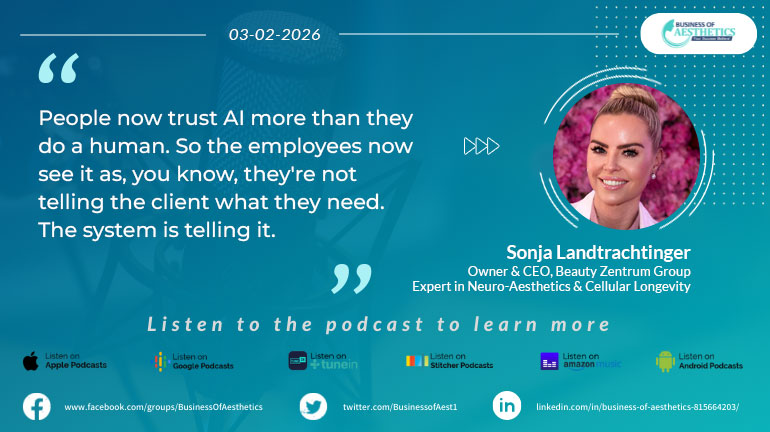
View TranscriptDon Adeesha: Right on. And let’s talk about how you, you know, managed to come up with this method for selling and getting your staff to sell confidently at that, you know, and these are complex treatment plans and you want to address it without being… you know pushy so exactly develop the skin method right uh how does this system operationalize the diagnostic process so your team has a clear data-driven roadmap to follow exactly so the main problem was for the employee side they didn’t want to sell excuse my language they don’t want to sell shit that nobody needs so Nobody likes that. You don’t want to even… I mean, if you look at the economic system at the moment, everybody is looking where to save their euro or their dollar. They don’t want to be spending 300, 400 euros on products that don’t work or procedures that don’t work. And employees know that, but they don’t want to sell stuff, especially them not knowing 100. Because we change things rapidly in here. I get a new procedure. Okay, we’ll put that one in here. But by the time everybody knows how to do it, the next new procedure comes in. So… How can I bring everything together so everybody’s on the same standard, clients, customers, and employees, without being too much? Just plop it all into the AI system. So the employees now see it as, you know, they’re not telling the client what they need. The system is telling it. They feel better because they’re not pushing the client into a direction that might not be necessary or where they think it might not be necessary. The AI program has developed the whole package to make the results 100% optimal, say about 90% optimal to actually change. So the client is like, hey, okay, you’re not wanting to sell me stuff that I don’t need. And the employee is like, hey, I am not selling things that I might have to. It’s an AI program that’s doing it. So both sides are trusting something that I developed so that they don’t have to have the bad feelings.
Don Adeesha: Okay. And how long does it take to train a new esthetician on this method before they are allowed to issue a treatment plan?
Sonja Landtrachtinger: Probably, I would say, well, they have to know how each procedure works, of course. So, but the good thing is a beginner can do the new registration because there’s nothing much there. The AI program tells you what’s wrong with the skin. They note everything down. They answer a whole bunch of questions. They type everything in the computer, and you have everything come out. So they don’t need to know how each individual procedure works. It then gets taken to a skin expert or dermatologist, whoever we have here at the moment, who will then do the procedures. So basically, you don’t really need to learn much. You can divide it up into, you know, if somebody has questions for the cosmetic products, We have a person that can be responsible for that or who’s really good at it. Or if you need, I don’t know, microneedling with polynucleotides or exosomes, then we have someone who’s really good at that and who loves doing that. Employees, not everybody likes doing every procedure. So you have your different experts on the different areas. And when they come in to do the procedure, it just gets put into that person who is the expert for that. So basically, you can start out with someone who has not really much of an idea of aesthetics. And you have a lot, you have your expert, expert assistant. So you can mix it and basically use every employee that you have.
Don Adeesha: Okay. You just need to figure out where they’re going to play their part at.
Sonja Landtrachtinger: Exactly. Who does what, who, who can do what the best. And that’s what you, you just need a good, how would I say receptionist or even just to set up a little AI program probably can spread it around there. But you know, if you know your employees, you know, who does what the best and you just, you know, let the customer also know where the client know, Hey, You know, we’ve got our expert for the polynucleotides. You’ll be with so-and-so. And then after that, your next procedure will be mesotix. And, you know, so I don’t know, Barbara is the best one for that. So, you know, they feel confident because not one person is doing everything, but you have your little experts in there for the different procedures. I was also another little clue where some of them got a little bit… skeptical because you know she knows how to do everything no of course not we you know you have your people who like to do certain things of course they should know how to do everything but you know you’ve got your heart and other procedures and you know than some of other ones do
- 00:16:51 – Ethical Aesthetics & The Power of "No"
- Sonja emphasizes honesty in consultation. If the data shows a treatment won’t work, or if a client requests an unnatural look (like overfilled lips), the clinic refuses the service.
- This "honest aesthetics" approach builds long-term reputation, even if it means losing a sale in the short term.
- Sponsor Message: Ekwa Marketing offers a free 60-minute digital strategy session to help practices map their 12-month patient acquisition roadmap.
View TranscriptDon Adeesha: Right. And like what happens when the data contradicts the client’s wishes perhaps you know if the skin proof data says no laser does your staff have the authority to veto the client’s credit card
Sonja Landtrachtinger: We are honest. That is, I think I would rather have a client, customer, patient walk out and tell everybody they did not do the procedure that I wanted rather than, yeah, they did it and it turned out like crap. So if we see literally it is not going to help you and it is against what we believe in, we don’t do it. You know, it’s the thing, I want two milliliters of hyaluronic acid in my lips. Sorry, we don’t do that. It’s because you’re running around with something that everybody else can see that’s going to look horrible. So we’re honest and we just don’t do it.
Don Adeesha: Got it. Right. So before we continue, a quick message from our sponsor, Ekwa Marketing. Ekwa Marketing are offering our listeners a complimentary 60-minute digital strategy session. This is a one-on-one consultation with the senior strategist to help you map your 12-month high-value patient acquisition roadmap. You will get a personal diagnosis of your online presence and patient funnel, uncover untapped growth levers across SEO and social, and walk away with a clear, actionable plan tailored just for your practice. You can check the availability and reserve your spot in under two minutes at www.businessofaesthetics.org/msm. Right.
- 00:18:18 – The Financial Structure of the Guarantee
- The "money-back guarantee" is legally structured around compliance. Patients must follow the prescribed regimen (nutrients, products, microbiome tests) for the guarantee to be valid.
- The clinic tracks product usage and appointments to ensure compliance.
- Sonja notes that despite offering this bold guarantee, they have rarely had disputes because the results, verified by objective AI analysis, speak for themselves.
View TranscriptDon Adeesha: So, Sonja, in medical aesthetics, you are usually taught never to use the word guarantee because biology is unpredictable. So yet your business model for high end clients is built around results guaranteed. How do you really structure that financial terms of that guarantee to protect the business if a patient’s biology simply doesn’t cooperate?
Sonja Landtrachtinger: So it’s a little bit tricky, but legally it works very well. So it’s so intertwined with everything that we do. We see if you’ve been taking your, I don’t know, nutrients or, you know, depending on your package, let’s say, okay, you want to get your gut health up and running because you have pimples and you have, I don’t know, a little bit You’re swollen and you’re just stressed from the day. So probably the program will spit out, okay, so you need to do your[/skipto] – you have to do the micro-BM test, you know, your gut health test. You have to do that. That is part of it, which you have to do two of within six months. And we basically[/skipto] – also can see if you’ve been taking your cosmetic products because we know how long they last within six months. So we know like the facial cream, it’ll be like one month and they should be coming back for the, for the next round. But since they’re coming every month, one to two, one to twice, twice a month, we actually can talk with them and make sure that everything has been going on routine. If you know, they don’t, they take their hyaluronic acid shots that we have, um, then we know, okay, within two and a half months, they should be coming for refill because we know how many packets are in there. We’re not, so it’s like, it’s all, 100% controlled and we know if you take it exactly according to date and time and how we tell you to do it and come in for your procedures it will work and the gut test we haven’t had one person yet knock on wood where we haven’t got it into the green area so and we’re not saying that we will make your face tight and you won’t have any wrinkles. We’re saying that we will change your skin. But how we change it, that’s still up to us. We will see it through the AI skin analysis. It will change. Even just taking the hyaluronic acid shots that we have, the product from Norway, just doing that for two months, three months, It’s changed. We can make the wrinkles less dry, less deep, just with those. It’s proven. We’ve done it without any procedures, without anything. Just taking that and making sure that the gut health is on top, we can get results down with that. With just the smallest things, we can change your skin. But putting it into a big package where you have the microneedling with, I don’t know, like biorepion acid, one procedure, your skin is going to change after that. Like saying it hardcore now, burning the skin with a CO2, with mesotex, with texel, whatever. You’re going to get immediate results. You’re going to have results no matter what. As much as that you can see them with the naked eye is a different question. But the AI skin analysis will pick up every single minute little change. So that’s how we can guarantee it.
Don Adeesha: Have you ever had a payout?
Sonja Landtrachtinger: No. We’ve had, not yet, I don’t want to jinx anything, but we had one dispute, one dispute, The person, but she came back because she’s noticed that she can’t get the results that she was having anywhere else, and there wasn’t a guarantee. She didn’t want to do the second micro-BM test. I said, it’s part, you signed the contract. It’s in there. You have to do it. So we have to see the results, and that wasn’t it. And also the AI, we didn’t have to say anything. It’s like she’s not… it was week, it was month three, three into four. So it was like, she was getting a little impatient. Like, I’m not seeing any results. It’s like, your results are right here. It’s like, this is you before, this is you after. This is just three months. It’s like, where can you get these results without like making yourself look like poo because you’ve had just a carbon or a CO2 laser done or a major facelift? Where are you going to get those results with the minimal invasive procedures that we have done? And we’re looking from inside to outside. So we’re, making you healthier, you know, in, in, in prostitutes and getting your skin to boost. And she had a glow and everything, but she was like, you know, everybody else was seeing the results, but she wasn’t. So it was, we could have, we could have, yeah, we could have danced on our head and I don’t know what it would have been. Nothing would have changed her mind, but she came back. So pretty lucky. Yeah.
Don Adeesha: Absolutely. I mean, you know, you’re dealing with the psychology of people, right? The way they perceive themselves and the result.
Sonja Landtrachtinger: Yes, yes, yes, yes. Pretty subjective at times. But yeah, very interesting way to go about doing it, really. It helps both sides. It gives confidence. It gives confidence for clients and it gives confidence for the employees. So both are, I try to keep the scale even.
Don Adeesha: Okay, gotcha. Because the employees really do want to guarantee those results.
Sonja Landtrachtinger: Exactly.
- 00:24:06 – Neuroaesthetics & Managing Stress
- Sonja explains the "Cortisol Face" phenomenon and how chronic stress blocks aesthetic results.
- Her clinic employs neuroaesthetics, using specific lighting, sound, and scent, to shift patients out of "fight or flight" mode.
- Staff are trained to trust their "gut feeling." If a patient is too psychologically stressed or unstable, the clinic may pause treatment or refer them to a professional before proceeding with aesthetic procedures.
View TranscriptDon Adeesha: Right. So Sonja, we’re seeing a rise in patients with, as you mentioned, the cortisol phase. Inflammation driven by chronic stress. You focus heavily on neuroesthetics. From a clinical standpoint, if a patient is stuck in flight or fight mode, does that physically block the efficacy of standard aesthetic treatments like lasers or facials or anything else in between?
Sonja Landtrachtinger: Cortisol phase, pillow phase, there are very… you have to, it’s hard, it’s hard just to put them all into one category. I’ve noticed that, you know, you’ve got your, like your little teenager youngsters where you say, Oh God, they’ve got cortisol phase stress in school. They’ve got the acne. They’ve got, you know, um, all of the technical, technological things around them. It’s like, I think, plus the stress of the fitting in. And, um, to be honest, I don’t want to be growing up in this time zone as it is at the moment. I like, I like, I like the nineties. They were a lot better, but, um, It is, there is a rise in unhealthiness, I would say also, if, to the microbiome and back to all of that, that I think it’s a big main cause in a lot of people with the result of the cortisol phase. If that thing is not working and ticking correctly, then you’re going to have to forget the rest because it’s basically you’re fighting against two different compounds that if the one isn’t good, the other one isn’t going to be good. We can do whatever we want. Those pimples aren’t going to disappear. Your dry skin is not going to disappear. We got to figure out what’s going in there. So found a company there. It tells you what’s going on in there. And that’s also the reason why we did the skin proof method is you got to fight the demons on the inside before you can fight things on the outside. So yeah, if that’s not, but the neuro aesthetic part is also the nice side effect. It brings you down, you know, it’s an automatic, it’s from like the lighting in the rooms to the music in the rooms to the temperature in the rooms. It’s all part of the psychological, even the smell that we have. It’s all part of like all senses get, so they just basically shut off and you get, you’re just put into the moment to calm down, just to calm down. And that helps a lot. And they understand that. And they truly feel that as well, huh? It can get stressy in here at times. And also the color pink that we have at this practice. But like the rooms are like little, I would call them like little pods, you know, especially like some of them are even soundproof. So you don’t hear what’s going on. You basically just go into a world and you’re just like all your sensitivity. It just like it makes you feel. calm down. And if that’s not given where somebody’s constantly knocking on the door or employees are running in asking you questions, I’ve just said, no, stop. Like the sign on the outside goes from red to green, stop out. The customer needs to calm down. If we can’t get that done, It doesn’t matter what we’re going to do. The results aren’t going to come. So it’s inside, outside, and it starts basically in the practice itself to get the customer to calm the, as I always say in my vulgar English, to calm the F down.
Don Adeesha: Done. Yeah, yeah. I’ve known for that. I mean, OK, so, you know, take us through this, like if an inflammation blocks laser efficacy, you have a mandatory cooling off period where you treat the nervous system for, I don’t know, is it weeks, days before you ever touch the face with the device? Does it get that drastic?
Sonja Landtrachtinger: We haven’t had that per se happen where it’s gotten to that. I mean, of course, if you have a teenager, mostly the teenagers are with the nice cortisol face at the moment. But the big pimples, the redness, well, actually the cortisol face actually can result into redness and also the acne. If we have the feeling, that’s where we go after our gut feeling, where we don’t really rely on AI or any of those programs. If we see that patient or customer or client it’s not working up there really, but there’s like a major stress where she actually really needs help. We will, we will suggest them to go and talk to a really high professional before they come back to us because it’s not going, we’re going to, it doesn’t matter what we do. We’re not, we’re not going to be able to help her if it’s not, somehow a little balance if we notice that someone’s completely out of whack we don’t even start like we some of the requests when they come in here i want you to burn my face i want to see results results there’s something not right there you know so we tell them you know why don’t you you know go to the dermatologist over there have a quick talk with him and then come back to us then we’ll help you so we go after our gut feeling on a lot of things
Don Adeesha: Okay. Okay. So it’s not necessarily AI running the show, is it?
Sonja Landtrachtinger: No. It’s also, you know, it’s like… employees will come and be like, I don’t have a good feeling with her. Sometimes they’ll even get calls when I’m out in one of my other practices. Like, Sonja, I got a problem here. My gut feeling, it’s just like she’s a little, you know, I think she needs help. I don’t think I’ll be able to help her. And I think she needs to have someone talk. So they’ll call me and it’s like, is it okay if I do that? It’s like, yes, if your gut feeling tells you that, Then tell the patient nicely that, you know, we won’t be able to help her today, but in the future after she’s had a talk with someone, absolutely no problem. It has happened. Last year, I think we had two or three times.
Don Adeesha: Oh, really?
Sonja Landtrachtinger: Yeah. If we see a need that our procedures will not help in any way possible at the status that she is at the moment, or he is, then we’ll just say, sorry, not today. Today is not the day.
Don Adeesha: Because perhaps what you’re alluding to right there is, It’s not necessarily a physical problem, but perhaps it’s a psychological or emotional. And even if you have that, it’s just not, it’s, it’s, I always say don’t, don’t, you know, yeah, yeah. Don’t, don’t, don’t do it.
Sonja Landtrachtinger: It’s like, but the girls are really good. My employees are really good with, with noticing things. Where problems could turn up, say it that way, because those are the clients that are going to cause you big problems down the road. We want to avoid those.
- 00:30:19 – Social Media, Filters & Reality
- The conversation shifts to the impact of social media filters on patient expectations.
- Sonja advises strict honesty: telling patients directly when their reference photos are fake or AI-generated.
- While some patients may leave, this approach filters for high-value clients who value realistic, long-term health over impossible perfection.
- Sonja suggests using curiosity to "sell without selling," educating patients on new concepts like neuroaesthetics to pique their interest naturally.
View TranscriptDon Adeesha: Do you think like, you know, since y’all are practicing really, you know, neuroaesthetics as well as you’re pretty well in tune with, you know, gut health access as well. Do you think that… Bridges the gap between some sort of decision-making and, you know, keeps you more aware of your surrounding and people around you. Do you think that really has an effect there?
Sonja Landtrachtinger: I think yes, because there are not very many practices or estheticians around that actually do that, but it was a growing factor of, you know, people, they’re getting younger. I mean, we have, we have the classic, we have the Botox, we have the hyaluronic acid. We still have all of that, uh, running. No problem. You know, you just have the clientele that’s just going to be like, I’m not interested in waiting. I want it now, you know, so, you know, and then we’ve noticed that they’re getting a lot younger, 16, 17, even 15 year olds wanting, you know, the Botox where you don’t even see a need for it, but it’s from the outside. You know, you’ve got your Instagram, you’ve got your TikTok, you’ve got these unreal pictures and videos of people, you know, this is perfectionism. This is what it is. So it’s, It’s messing people up. Even I myself was social media addicted. I really have to take myself off of it. Seeing these unreal things where I myself then start to think like, oh, God, the skin’s starting to hang a little bit here on my neck. And what am I going to do? And I was looking at having facelifts done.
Don Adeesha: Right.
Sonja Landtrachtinger: constantly get pounded with is like, what is beauty now? And that’s where you have to be careful. It’s like, what is too much? What am I telling my clients? Like, even for myself, it’s like, I don’t want to look unnatural. I don’t want to, it’s like my employees is like, don’t put on too much makeup. Don’t look unrealistic. You know, let the clients and customers feel natural. You know, it’s like, and it’s that the whole trend is going back. This is two big lips and two big butts and all that stuff. It’s the trend is slow, slowly, very slowly. It’s starting to go back. Thank God.
Don Adeesha: Right. right right perhaps you know um we’re although we’re looking at social media and thinking that’s real a lot of times it’ll be a combination of those filters and then enhanced images right yeah so what you’re seeing is unrealistic from the get-go and you’re comparing yourself to that and you want to get those results and how are you going to achieve that
Sonja Landtrachtinger: I mean, they, they come, they actually literally come in and they show you pictures like, Hey, I want to look like that. And we’ll just be like, sorry, no can do. That’s a filter. That’s fake. That’s, I mean, it, it started even with nails, like crystal nails. It’s like, that is an AI generated picture. There’s no way in heck we are going to get that done for you. So forget it. You know, it’s like, stay realistic. And, and yeah, It has paid off just saying, you know, it’s not going to work. This is fake. You know, your skin has pores. You know, your lips have little lines on them. It’s like what you’re seeing there, it’s fake. It’s not real. Like if you want to look like that, put a filter over your picture. Then you look like that. It’s being it’s brutally honest. That’s what I think gotten us. Of course, you lose customers that way. You’ve got to, you know, if you be too honest, they don’t want to hear that. But better to say, OK, how do you balance that? How are you balancing that?
Don Adeesha: You know, like, say, when a patient says, I have the money, just give me the Botox. I don’t want supplements. Are you turning them away or are you treating them knowing the results will be subpar?
Sonja Landtrachtinger: But if she, if it’s a person that says, I have money, I’ve always had Botox and I want to stick with Botox and then she’ll stick with Botox. You know, that’s, it’s like, you’re not going to be able to change her or him, you know, or, you know, whatever. But you can always, you know, while you’re doing this, like, oh yeah, by the way, he’s like, you know, if you want to help the rest of the, you know, we can near the little bit of sagginess in here. And do you know what neuroaesthetics is? You can talk. to the patient while you’re doing the procedure. And some will actually, which we have had, which we have seen will actually come and try because curious, you know, we always say curiosity killed the cat. I love it. He’s like, you make them curious about things. You know, you put up before and after pictures, you know, put it, put them in the, in the rooms and like, okay, what’s that? What did she do there? Oh, that’s our, that’s our six months skin proof method that we have. Oh, okay. Okay. Okay. How do I get that? You know, make them curious, make them want to know what you’re doing. Give them the basics. If they’ve had it for a while, they’ll stick to it. They do it every three to four months. But make them curious. Tell them about things. They don’t know about most of the things that you have in your practice. Inform them. Let them know. It’s not what they… Most things they don’t even know that they need them yet because they only know the simple things like Botox or hyaluronic acid. They only know this. They don’t know about Ryu. They don’t know about neuroaesthetics. Make them curious. Let them know about it. But without them knowing that they get to know about it.
Don Adeesha: Right. Right. Be very tactical about it.
Sonja Landtrachtinger: There you go. Always think of a way to inform the client, even though he or she doesn’t know that they’re being informed or that you’re actually trying to sell something. Car salesmen are really good at doing that. You know, insurance salesmen, they’re really good at doing that. You know, they’re really good at selling. It’s like one of the biggest industries still insurance. And so, you know, learn from them.
- 00:36:26 – Biohacking & The Future of Longevity
- Sonja discusses the influence of biohackers like Bryan Johnson, noting that while not everyone has $2.3 million, the principles of biological reversal are accessible.
- The trend is moving towards "naturally younger," which requires time and patience, something the modern consumer lacks but must relearn.
- Key Takeaway: Trust your gut. If you have a business idea, just do it. Don’t let the fear of a "no" stop you from innovating.
View TranscriptDon Adeesha: Learn from them indeed. Now your brand is built on honest aesthetics, right? So telling patients what works versus what is just a trend as we just discussed. So do you believe, Sonja, that the high-end consumer is finally ready to pay a premium for health over instant correction?
Sonja Landtrachtinger: Oh, I like to use good old Bryan Johnson as my biggest example. What if he give out a year like 2.3 million to be young biologically again? So it’s like, you know, you might not have the 2.3 million, but, you know, two and a half thousand is going to get you pretty far, you know. Yeah. It’s a, it’s extreme what he does, you know, but you know, he’s got the time. He definitely has the money, but he’s the best example. It’s like, look, you can reverse. There’s also a couple of other ones who can do it with, without all the high end technology and stuff. But it’s like, it works. It’s like, you just have to stay at it. And, you know, we use that information there. The internet is a lovely thing. ChatGPT is a lovely, lovely thing if you know how to use it. So yeah, Inform your client and say, hey, look, it is possible without having all of the major surgeries and facelifts and things like that. You will look naturally younger, but you have to give it time. Nobody has time anymore. And it is possible. So it is possible to reverse it. But you can’t just do the outside. You got to get to the inside. And Bryan Johnson there, sorry, he is the best exam. Some of the things I don’t agree with, I don’t. But, you know, heck, if it works for him, why not? There might be a different little smaller solution for other practices. But, yeah. Use the examples there. There’s a couple of other ones. I can’t think of the names at the moment, but yeah, I follow them on Instagram and TikTok or just Instagram to see, you know, what’s the newest thing. Red light therapy is actually good for your eyes. Green light therapy, fantastic for migraines. It seems to help there some way. Plus, you know, the millions of bits of data that, you know, AI gets fed with every day. There’s who knows what they’ll come up with tomorrow. And, you know, Maybe there’s just going to be a pill pretty soon that’ll just make you healthy in a snap. We don’t know. But for now, it’s a little bit of a process, but it is possible. Okay.
Don Adeesha: So Sonja, as we wrap up this podcast, I want you to let our listeners know what is one key takeaway that you would recommend to them if they could only take away one from this whole conversation we had.
Sonja Landtrachtinger: One thing. For me, I had an idea. Everybody laughed at me. You can’t do that is what was told for me. I would say if you have an idea, just go for it. Do it. Try it out. And if your customers, if you have a food client that say no[/skipto] – the next ones will say yes. So just have the guts. There we go. Your gut, just have the guts to try and to do it. You know, it just go for it is that you basically have nothing to lose anyway. So just go for it. Just try it more than a no. And more than a couple of clients being unhappy might be the problem, but you might, you know, you’re, you’re, you’re trying something that you love or that you, that you know, that will work go after your gut feeling.
Don Adeesha: And with that being said, thank you so much, Sonja, for your very refreshing perspective. And before we sign off, don’t miss the chance to sit down with the strategist from Ekwa Marketing for free. If you want a personal diagnosis of your patient funnel, that 60-minute session is a game changer. The link to book is www.businessofaesthetics.org/msm. You can also check the show notes of this episode for the link. With that being said, I’m Don Adeesha, and this has been the Business of Aesthetics podcast. Thanks for listening in, and here’s to honest beauty.
GUEST – Sonja Landtrachtinger
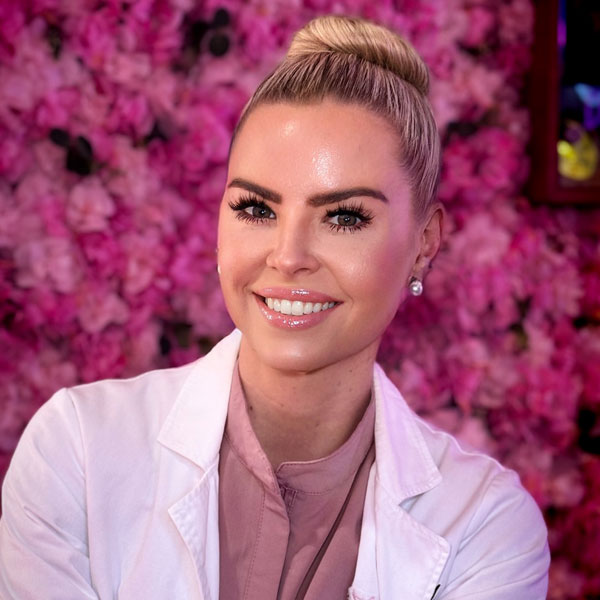
Sonja Landtrachtinger is a 22-year veteran of the aesthetic industry and the CEO of Beauty Zentrum Group. Standing at the forefront of the ‘Neuro-Aesthetic’ movement, Sonja has pioneered a business model that merges advanced non-invasive technology with internal biological optimization.
She is the creator of the ‘Skin Proof Methode,’ a proprietary system designed to diagnose and treat the root causes of aging, including gut health, microcirculation, and nervous system regulation. Sonja focuses on ‘Honest Aesthetics,’ helping high-end clients achieve guaranteed, long-term results by treating the body as a cohesive ecosystem rather than a collection of isolated symptoms.
HOST – Adeesha Pemananda

A seasoned marketing professional and a natural on-camera presence, Adeesha Pemananda is a skilled virtual event host and presenter. His extensive experience in brand building and project management provides a unique strategic advantage, allowing him to not only facilitate but also elevate virtual events.
Adeesha is known for his ability to captivate digital audiences, foster interaction, and ensure that the event’s core message resonates with every attendee. Whether you’re planning a global webinar, an interactive workshop, or a multi-session virtual conference, Adeesha brings the perfect blend of professionalism, energy, and technical savvy to guarantee a successful and impactful event.
Connect with Us:
Category: Business of Aesthetics Podcast