In this powerful episode of the Business of Aesthetics podcast, host Lester is joined by a panel of industry titans including Dr. Michael Salzhauer, Dr. Johnny Franco, Naren Arulrajah, and Chad Sawyer. Together, they deliver a masterclass on scaling the modern plastic surgery practice. This comprehensive discussion provides a roadmap for practitioners looking to grow efficiently, build an authentic brand, and navigate the competitive aesthetics landscape.
The episode kicks off with Dr. Salzhauer’s hard-hitting advice on establishing data-driven systems from day one, emphasizing the need to track practice “vital signs” like leads and conversions while building a brand that is unapologetically authentic. Dr. Franco then shares his firsthand journey of explosive growth, offering practical lessons on creating scalable operating procedures and expanding a brand’s identity beyond a single surgeon. Throughout the conversation, marketing expert Naren Arulrajah provides critical insights, breaking down the ROI of different channels and explaining why mastering fundamentals like SEO is crucial for sustainable growth. Finally, Chad Sawyer demystifies the integration of weight and wellness programs, exploring how technology like asynchronous consultations and strategic pharmacy partnerships can create new, scalable revenue streams. This is an essential listen for any surgeon or practice owner aiming to build a resilient, profitable, and future-proof business.
Key Takeaways
- Your Practice is a Machine, Not a Person
To scale effectively, practices must be data-driven and process-driven. Build repeatable systems for everything from daily lead tracking to patient follow-up, creating a resilient operation that doesn’t depend on specific individuals. - Authenticity is Your Best Marketing Filter
Build a personal brand that is true to yourself. This approach will naturally attract patients who resonate with your style and filter out those who would be a poor fit, preventing future challenges. - Master Organic Channels Before Paying for Ads
Paid ads are expensive and convert low-trust leads who require a sophisticated follow-up system. Practices should first focus on building a dominant presence through more cost-effective organic channels like SEO to attract high-intent patients. - Your Front Desk is a Major Profit Leak
A significant and often untracked issue is poor call conversion; the average practice books less than one in three new patient calls. Tracking and training staff on converting inquiries into appointments is a critical area for growth. - Wellness Programs are a Gateway to New Growth
Integrating services like weight loss and hormone therapy creates a recurring revenue stream that isn’t tied directly to the surgeon’s time in the OR. These programs can also attract a new patient demographic to the practice. - Leverage Technology to Scale Patient Care
Use modern tools like asynchronous consultations to offer the convenience of large direct-to-consumer platforms but with superior provider-led care. Automating complex billing and compliance is also critical for running these programs efficiently.
Podcast: Play in new window | Download
Subscribe To Our Podcast



Key Highlights:
- 00:00:00 – Introduction
Host Lester welcomes attendees to the Business of Aesthetics Summit, outlining the goal of providing strategies for scaling a modern plastic surgery practice. He introduces the event sponsor, Ekwa Marketing, which is offering a free 60-minute marketing strategy session.
View TranscriptLester: Welcome to the Business of Aesthetics Summit on Scaling the Modern Plastic Surgery Practice, Business Branding and Beyond. I am Lester, your host for tonight’s webinar. This empowering discussion is designed to help you navigate challenges, leverage opportunities and build a thriving career in aesthetics. Welcome everyone, we’re thrilled to have you with us today. This session is all about giving you forward thinking strategies to scale and future-proof your practice from branding and digital presence to operations, staffing and patient experience. We’ll cover the full spectrum of what it takes to stand out, grow sustainably and thrive in today’s competitive market. By the end of this summit, you’ll walk away with actionable ideas to attract ideal patients, boost visibility and lead your practice with confidence in a high-demand environment. This event is proudly sponsored by Ekwa Marketing, a leader in helping practices grow by bringing in new patients at the lowest possible cost. Ekwa clients rank for hundreds of keywords among the top 10 clients on Google and they’ve been doing this for nearly two decades. If you ever wondered how to get found online, they’re the thing to talk to. As a gift for attending this session, Ekwa is offering a free 60-minute marketing strategy meeting for everyone here tonight. You can scan the QR code on your screen or go to this link in the chat to grab your free session. Again, appointments will fill quickly, so don’t wait too long to book. Again, this is a complimentary strategy session by the sponsors of this event.
- 00:01:54 – Meet the Panel
Lester introduces the panelists. Naren Arulrajah, CEO of Ekwa Marketing, gives opening remarks. Dr. Johnny Franco, a board-certified plastic surgeon, shares his experience of rapidly growing his practice. Chad Sawyer, COO of Dr. Well, explains his company’s role in helping providers launch and grow wellness programs. Finally, Dr. Michael Salzhauer, the board-certified plastic surgeon known as "The Real Dr. Miami," introduces himself.
View TranscriptLester: Before we dive into today’s discussion, I would like to introduce someone very special and that is Naren Arulrajah. Naren is the founder of the Business of Aesthetics community, the CEO of Ekwa Marketing and someone who spent over 18 years helping aesthetic practices grow. Naren, I’d love you to join us throughout tonight’s session and chime in with your thoughts as we go. To start off, would you mind saying a few words?
Naren Arulrajah: Yeah, I mean, first of all, I want to thank everyone here. We have been, we created this community, the Business of Aesthetics community, almost five years ago and many of our members happen to be plastic surgeons and people who run plastic surgery practices. So really appreciate all of you. We appreciate you being here. And I also want to take a minute to thank our panelists, you know, without you we wouldn’t be able to do what we are doing. So thank you for being part of our community and helping our community. And Lester, great job, our team. So I want to be very grateful for everyone here who worked behind the scenes to make it all happen. So thank you. Thank you, everyone.
Lester: Thank you, Naren… So with that said, let me introduce our speakers tonight. We have Dr. Michael Salzhauer with us who will be joining us in a bit. He’s not here at the moment. Until he joins, I will also give the room to welcome Dr. Johnny Franco, who is our second speaker tonight. Dr. Johnny Franco, please welcome to the panel. Thanks for being here. Can you take a moment to introduce yourself to the audience?
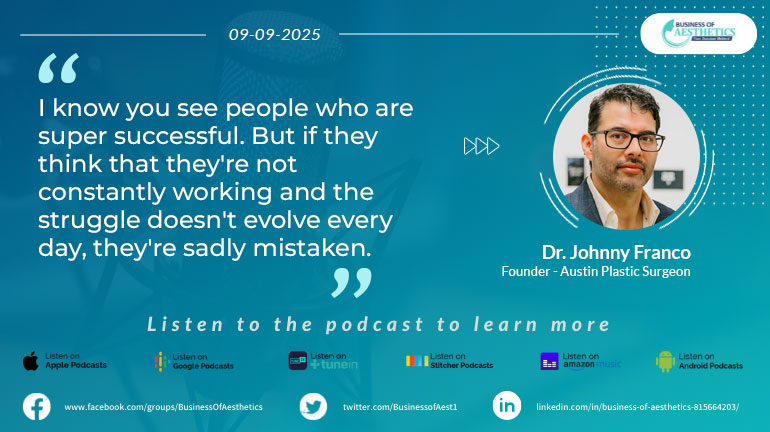
Dr. Johnny Franco: Yeah, I’m Dr. Johnny Franco here in Austin, Texas, board certified plastic surgeon. And over the last five, three or four years, we’ve grown from three employees to just under 90. We just hired our fourth plastic surgeon. We got three wellness providers, five injectors, an esthetician. So definitely been a process over the time and now expanded to three locations. So super excited to share a few tidbits, struggles, and hopefully maybe pick a chat and Michael’s brain on some tidbits for them because I think one thing that’s super important for all your listeners to hear is that the struggle is real. And I know you see people like Chad and Dr. Miami who are super successful. But if they think that they’re not constantly working and the struggle doesn’t evolve every day, they’re sadly mistaken. So they’re not alone in the struggle.
Lester: So we have we have Chad Sawyer joining in next… Thank you for being with us tonight. Can you take a minute to tell us about your background?
Chad Sawyer: Yeah. So my name is Chad Sawyer. I’m the chief operating officer for Dr. Well. Basically, Dr. Well was started by another plastic surgeon, Dr. Jonathan Kaplan, and he had started doing weight loss in his practice. And one thing really led to another where that became an increasingly bigger part of what he was doing. And so as that grew, providers were asking, hey, how how can I replicate some of that success? And so Dr. Well created a platform to help providers grow their weight and wellness programs. And so my job and responsibility is working with all the individual practices to help them either start and get up and running or take what they have. And big successful practices who are looking for maybe a different way to go about that and make it a little bit simpler on themselves.
Lester: Thanks, Chad. With that said, I would also like to give the room to welcome Dr. Michael Salzhauer. Dr. Michael, thank you for joining us tonight. Would you mind telling us a bit about yourself as well?
Dr. Michael Salzhauer: Sure, I’m a board certified plastic surgeon practicing in Miami and on social media, they know me as the real Dr. Miami. I’ve been heavily involved in marketing and social media since I started my practice, but certainly the last 10 years. I’m happy to give you my insights into how to grow practices and how to handle big practices, busy practices.
- 00:07:42 – Building Data-Driven Systems
Dr. Salzhauer explains the importance of establishing data-driven systems early to scale efficiently. He details his practice’s "vital signs"—daily metrics tracking leads, conversions, bookings, and cancellations. He also stresses the need for a systematic approach to patient follow-up, especially for unhappy patients, to prevent issues from escalating.
View TranscriptLester: So Dr. Michael Salzhauer, let’s start with you. And so one of the biggest challenges for any surgeon is finding the right structure early on. So Dr. Salzhauer, what are the most important business systems or processes a plastic surgeon should put in place early on to scale efficiently without burning out?
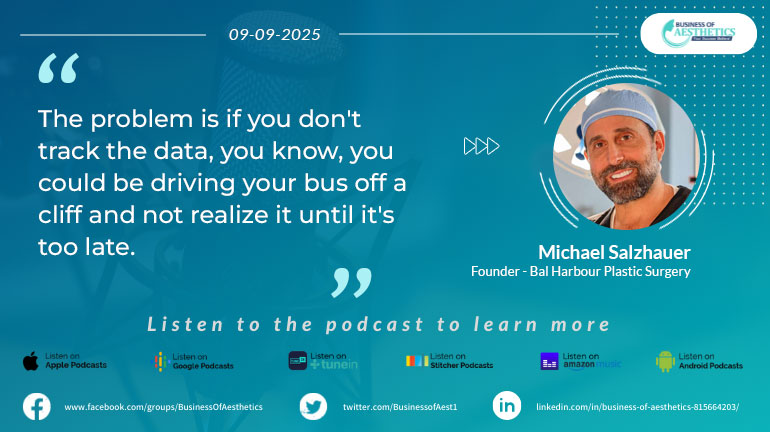
Dr. Michael Salzhauer: I can’t speak about how to do it without burning out. I don’t know if you can do it without burning out. That part is, you know, you’re going to have to leave for somebody else to answer. On a scale, I think the main thing is that you need to be data driven and process driven. You have to create this, you have to actually sit down, take a weekend or two, and think about every aspect of your practice from a systems perspective. Because you know, if people are failing, it’s because your systems are not, you know, thought through and made foolproof. So data-wise, you know, we have in our practice something I call vital signs, which we track every day, which is, you know, number of leads, number of leads that are converted into appointments, number of appointments that show up, number of appointments that show up that are completed as consultations, the number that book, and we also track the number that cancel. And so for me, those are the main data points I like to look at every single day. The problem is if you don’t track the data, you know, you could be driving your bus off a cliff and not realize it until it’s too late. So for example, even like, let’s say you’re tracking a number of web visits or leads that come in, if those start to dip down, you know, you want to know that within a day or two so you can find out what’s the problem. Is the website down? Is there a server issue? Did somebody mess with a form that’s not working properly? If you let that go a week or two, that’s going to affect your business at some point in the future. You’ll have a bad week or two and then you’ll be behind the eight ball. So I think being data driven is really, really important. And I think what a lot of people don’t realize is you need to track your cancellations just as well as you can track your number of surgeries booked. And so at the end of each week, everybody on my team knows what our differential is. So if we booked 20 surgeries and five cancelled, we didn’t book 20 surgeries. We booked 15 surgeries, right? So yeah, to me, those are the most important numbers you need to track. And then, of course, you need to have a system in place to get good reviews and to follow up on your happy patients. And even more importantly, even more importantly, you need to have a system to follow up on your unhappy patients. So in our practice, we have something we call the, we call it the CUPS system, or Continuously Updated Post-Op Surgery. It’s basically just a spreadsheet that makes sure that every single surgical patient gets a follow up call. You know, the day after surgery, you know, five days, seven days, one week, two weeks, three weeks, four weeks, one month, three months, six months, one year, because the last thing you want is an unhappy patient out there that you don’t know about. You’re going to have unhappy patients. You don’t want those five unhappy patients, you don’t want them not on your radar screen. You want to do everything that’s possible to keep communication going to, you know, so they don’t kind of go off the rails. It’s better to know about them than to not know about them. So in order to identify these patients, you need to have a system of some kind that’s reaching out and calling every single patient.
- 00:12:42 – Creating Resilient Operations
Dr. Salzhauer discusses social media strategy, emphasizing daily posting and two-way engagement. He stresses the importance of creating a practice that operates like a hospital—resilient and not dependent on any single person. Dr. Franco and Naren agree, highlighting that modern patients expect 24/7 accessibility and that a failure to adapt means losing business.
View TranscriptDr. Michael Salzhauer: Obviously, you know, your marketing when it comes to social media, again, you have to have a system, which means that you’re consistently posting on all your on all your platforms. I insist we do it every single day on every platform, at least once. It can be more than once, but at least once on every platform. And so you need to take advantage of that when patients, when people are commenting or sending you DMs, you have somebody monitoring that so that you can grab the ones that are good and put them into your funnel. All I can say is, you know, incentivize them and be on top of them as much as you can. I have not yet reached the level in my practice where I can say it runs like a hospital. And what I mean by that is if you go to a hospital any day, any time… there’ll be somebody there to give you an X-ray… And too often in practices, you know, there are critical roles that are given to one or two people. If those one or two people are out that day or have a bad day or, you know, are on vacation, then like the whole system suffers… you need to have in some ways interchangeable pieces. And there needs to be a manager that knows which pieces are missing and who can slot in to do those jobs because it is a flywheel. And if you don’t have somebody answering the phones, following up on the leads… if that one person is out and that’s their role, your whole practice is screwed if nobody’s filling in that role that that day. And that’s not acceptable. That’s not how real businesses run. You know, Elon Musk’s business is, you know, Tesla runs 24-7. You have to think about your practice a little bit like that.
Dr. Johnny Franco: Mike, can I just echo one of the things that I thought is so critical for people listening is I have so many friends that they notice a problem when they’re not busy and they have open days in their surgery, but the problem probably started six months ago and it took six months to have the problem show up. It’s going to take six months to course correct. The other point you mentioned that I thought is so critical and I see so many people do this is like, we do the same as you. We have somebody, you know, outside of Texas, so the hours are different. So we take phone calls until 8 p.m. We follow up with leads after hours because, you know, nine to four is easy and convenient banker hours, but that’s when other people are busy so they don’t answer the phone.
Naren Arulrajah: Yeah, I really appreciate you being here, Dr. Salzhauer, and of course, Dr. Franco, as the founder of the community. I mean, I run a company with 300 people. At the end of the day, it’s a machine, right? Your business is a machine and your job is to make sure the machine is running, like you said, 24-7. And it keeps improving. It’s not like a stagnant machine because maybe 10 years ago, nine to four worked. You know what I mean? But it doesn’t work in 2025.
- 00:19:48 – Authentic Branding and Finding Your Niche
Dr. Salzhauer advises surgeons to build a personal brand by being their authentic selves. He explains that this approach will naturally attract the right kind of patients and filter out those who aren’t a good fit. He also cautions against overly technical marketing, as it can attract difficult, hard-to-please patients.
View TranscriptLester: In your view, how can a surgeon build a personal brand that truly differentiates them from competitors while still remaining authentic?
Dr. Michael Salzhauer: I mean, you said it, it’s a personal authentic brand. You be yourself, you know, there’s a patient, you know, every surgeon will appeal to a certain demographic of people or, you know, be yourself. You will attract, you know, you’ll attract the kind of people that you like to be with usually… You can’t be afraid of turning off… if you’re going to create a unique, you know, profile or you’re going to be yourself, just be yourself. You’re going to turn off some people and you’ve got to let your ego get bruised a little bit. It’s fine. You know, chances are the people who you turn off, you probably wouldn’t like them as patients anyway. They don’t get your humor. They don’t get your style. We have a saying here called we let the garden weed itself. The other thing is when you’re building your brand and you’re thinking about, you know, who you want to attract, you should really sit down and think to yourself, who are the types of patients I like operating on the most? And what are the types of surgeries I like doing the most? What brings me the most joy, you know? And if you think about that and you think about the type of person… you target your marketing towards those people, chances are you’ll start to get those people that you like and your life will be happier and better. If you get too technical with your marketing, for example, if you spend half an hour describing the technical difficulties and ins and outs of breast augmentation or whatever operation you’re trying to promote, you’re going to lose most of your audience right away… And the problem is that people that do sit through to the end of that lecture are probably not the kinds of patients you want to have because they’re like the engineering type minds that have a checklist and a notebook. Trust me, I learned all this the hard way. But if you talk like an engineer, you’re going to attract engineers and they can be very hard to please.
- 00:24:25 – Marketing ROI: SEO vs. Social vs. Paid Ads
The panel discusses which marketing channels offer the best ROI. Naren explains that while organic social media works for established influencers like Dr. Salzhauer, SEO is a more reliable path for most surgeons. The group agrees that paid ads are challenging because they attract low-trust leads and require a sophisticated CRM and follow-up system to be profitable. Naren highlights that a major failure point for practices is poor call conversion, with many booking less than one in three new patient inquiries.
View TranscriptLester: Which marketing channels, social media, SEO, referrals, or partnerships are giving the best ROI for plastic surgery practices in 2025? And how should practices think about allocating their budgets?
Dr. Michael Salzhauer: The answer is, it depends. I mean, it depends at the stage of your practices. It depends on your social media following. I’ve never really used ads on social media. So I don’t know what the ROI is on those.
Naren Arulrajah: You are a unique conductor. You have 1.4 million followers on Instagram, right? So for every one of you, there are a thousand people who don’t even have one hundredth of your success you have on Instagram. So what I find is when somebody leans into something they hate, they don’t do a good job. I think if you are in your group… I would recommend organic social media… But what I have found working with, you know, dozens and dozens of plastic surgeons, it’s a very rare personality type. It’s like one in five hundred, one in a thousand. They just don’t like it. They like surgery. They like being behind the scenes. So I think for them, I think SEO can be powerful because people are looking for whatever they’re looking for.
Chad Sawyer: You can spend a lot of money in ads, but Michael said this right at the very beginning. If you don’t have a good system to funnel these leads, you’re going to waste money endlessly. You’re going to be mad at your marketing team… I have so many friends that are spending this money on marketing stuff. They don’t have a CRM. They’re tracking them maybe a spreadsheet… People that come in from an ad, you really one have to answer quickly. You have to answer with confidence. You have to be educated with your response and you have to be repetitive. So maybe they’re not ready right then and there. And again, that depends on where the lead’s coming from.
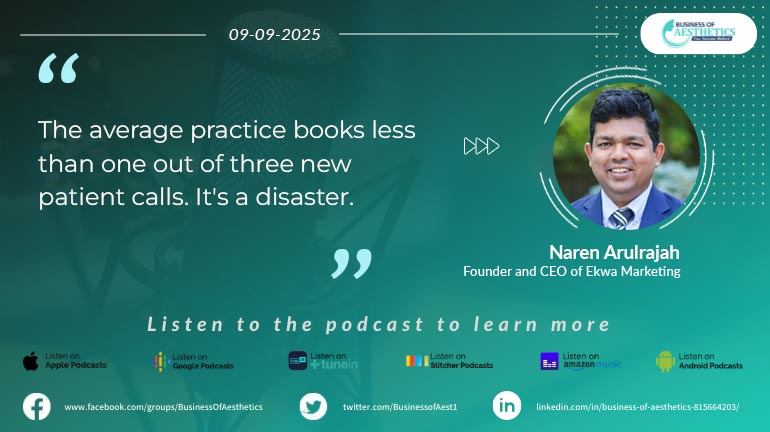
Naren Arulrajah: I’ll give you some facts. So we track calls and we listen to calls. The average practice books less than one out of three new patient calls. It’s a disaster. And if you talk to the owner doctor, they think their people walk on water. They think they’re amazing. But you listen to the phone call, people will strangle somebody. They get so upset. But the thing is they don’t know. Because nobody’s tracking conversion rate.
- 00:43:00 – Laying the Foundation for Growth
Dr. Franco reflects on his practice’s rapid growth, admitting he wishes he had built a stronger operational foundation from the start. He now focuses on creating Standard Operating Procedures (SOPs) for every process to ensure consistency. He also emphasizes the importance of defining a clear end goal, as aggressive scaling isn’t the right path for every surgeon.
View TranscriptLester: So Dr. Franco, let’s dive in. So when we think about growth, everything really starts with a foundation. So let me ask you, how did you build a strong foundation to support long-term practice growth?
Dr. Johnny Franco: I’ll tell you, if I could go back in time, I would have done it differently. I don’t think that I built a good operating system from the very beginning. When you first start out, you just are hoping a patient, a single patient walks through the door, you know, and I definitely didn’t spend enough time kind of writing out all my standing operating procedures, kind of making every every step methodical. So one of the things that it’s honestly been over the last probably year and a half, it’s been the biggest focus of our practice is actually every process that goes through the office, we’ve been scripting out every, every single thing. So, you know, the call center, you know, what is that script like, you know, our cancellations, what is that protocol, you know, refunds, what is that protocol so that you could do anything and, you know, like, you go to it, and then there’s a basically a sheet that people have. And for the team, it’s honestly better, right? Because they’re never going to be in trouble or misspeak, right? Oh, if I’m rescheduling somebody, I can pull it in. Here’s our policy. Here’s exactly what’s expected… Well, I think number one, you have to decide what is your end goal. Because what does scaling or what does success mean to you? And not everybody wants a practice of 15 positions and 20 locations and so forth. So if that’s not your goal, then don’t be making moves toward that. And if you say, here’s where my goal, then you can map out, create your roadmap.
- 01:02:37 – Integrating Weight & Wellness Programs
Chad Sawyer discusses the challenges and opportunities in adding weight and wellness services. He advises practices not to pause these programs due to regulatory news, but instead to partner with vetted compounding pharmacies that offer compliant medication formulations. Dr. Franco adds that this is a rapidly growing market, and practices that ignore it risk being left behind, similar to those who ignored med spas a decade ago.
View TranscriptLester: What are some of the biggest challenges you see practices face when it comes to growing their weight wellness programs?
Chad Sawyer: The first challenge that I’m finding people having right now is getting information that might not be exactly the best information. And what I mean by that is people who have practices who have big robust weight and wellness programs… have decided to put a pause on that. And I don’t think that that’s something that really needs to happen. And the reason is you can find compound pharmacies right now who are able to produce alternate formulations of these medications… you need to vet those compound pharmacies, obviously. And so if you’re someone who had a program that was doing well, and information came in that said, Hey, I have to stop. I don’t think that’s right. And I think there’s a lot and there’s people on here who are continuing to do weight loss at a very high level…
Dr. Johnny Franco: Hormones has exploded for us. I think you got to see it more than just the weight loss medications. I also think that there’s a lot of places to be involved in this wellness space and I think wellness is going to explode. If you go back 10, 15 years ago at plastic surgery meetings, it’s like, why are we talking about lasers? Why are we talking about med spas? And I feel like now it’s the same thing with wellness and you’re going to miss some of the boat in terms of that.
- 01:29:24 – Technology and the Future of Wellness Care
Chad explains how technology like asynchronous consultations allows independent practices to compete with large, direct-to-consumer telehealth companies. This technology enables patients to complete their intake on their own time while still receiving high-quality provider oversight. He also covers the critical need for automation in billing and compliance, especially using high-risk payment processors to avoid having accounts shut down.
View TranscriptLester: Chad, how does technology like asynchronous consultations change the way practices can deliver care efficiently?
Chad Sawyer: An asynchronous consultation is essentially a really detailed patient questionnaire that you can put within your website even or your social media and actually allow patients on their own time to go online and fill out their intake, their medical history, their goals, their medications of interest. And a provider is able to review that on the back end and actually approve patients. So if you look at… the Hims and Hers, and you think to yourself, well, how are they able to see all these patients and convert people so quickly? They’re using these asynchronous consultations. And so in 32 states, the standard of care can be met just simply by reviewing a patient questionnaire. And so these asynchronous consultations are really an opportunity for you to arm yourself with the same technology that these publicly traded direct consumer companies… have proven that that’s how patients want to receive these medications. The first part, when you start dealing with medications, especially if you start shipping medications to patients’ homes, you have to align yourself with a high risk payment processor. And so if you’re processing payments through a system that’s not categorized as a high risk, you’re actually putting yourself where there’s an opportunity where if a patient filed a charge back… there’s a chance that they’re going to do an audit on your entire business and see that you’re doing medications and call you the next day and say, hey, we’re going to put you on hold.
- 01:43:52 – Final Takeaways & Conclusion
Each panelist offers one final piece of advice. Dr. Franco advises defining your end goal and avoiding overthinking. Naren reiterates the marketing fundamentals: help patients find you, like you, and trust you. Chad highlights wellness programs as a way to create recurring revenue that isn’t tied to the surgeon’s own hands, preventing burnout. Lester concludes the webinar, thanking the panelists and reminding attendees of the sponsor’s offer.
View TranscriptLester: If there’s one advice or one thing that the audience could take away from this conversation tonight, what would that be?
Dr. Johnny Franco: I think first tip is figure out what your end goal is because I think that’ll help guide you… Just find a way to get started. People tend to overthink it and then they get so self-absorbed like, oh, I misspept, I’m not this, I’m not that, and they get in their own way. So I think one, just get started. Two, don’t over overthink it. Figure out a goal and definitely, definitely map out where you want to be because I think that’s going to make life a lot easier as you’re building your structure.
Naren Arulrajah: I learned a ton and I love learning about people and business and what works and what doesn’t. Just remember what marketing is, helping people find you, like you and trust you. What are you doing to help people find you? Make sure you’re getting a good ROI on that.
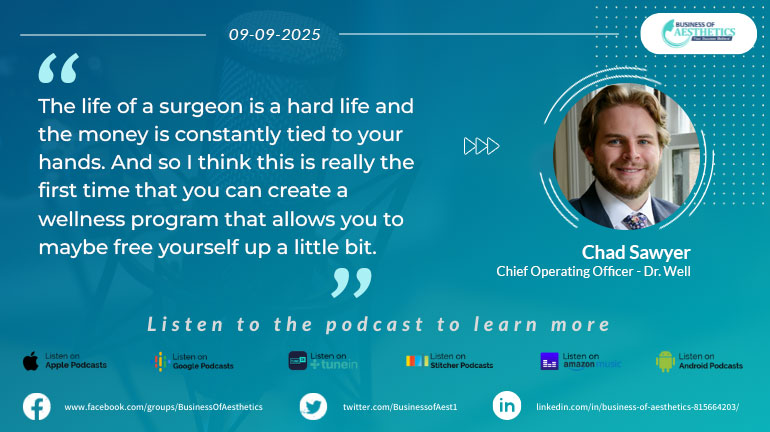
Chad Sawyer: Yeah, I think the thing I would say, if you’re thinking about weight and wellness and is this for me, is this not for me? Or if you’re doing it, why should you put more time into it? Just think about yourself. The life of a surgeon is a hard life and the money is constantly tied to your hands. And so I think this is really the first time that you can create a program that allows you to maybe free yourself up a little bit. And if that’s something that you want in life to where you want to avoid burnout, but you don’t want to let the revenue drop in the practice, these medications, patients can do most of this stuff on their own.
Lester: A huge thank you to our panelists, Dr. Michael Salzhauer, Dr. Johnny Franco, Naren Arulrajah, and Chad Sawyer. You all were amazing… If I were to sum it up, I’d say collectively, you made the complex simple, the hidden visible, and the difficult easy. Secondly, thank you to all of our attendees for the privilege of your time and participation… So as a thank you for joining us, Ekwa Marketing is offering you a complimentary 60 minutes practice growth session customized just for your practice. You’ll meet with Laila Stone, a senior advisor who’s helped hundreds of aesthetic business practice owners improve their visibility, SEO rankings, and patient flow… Until next time, on behalf of our panelists, keep striving for excellence and exceptional patient care. Thank you again for being with us tonight. We’ll see you at the next Business of Aesthetic Summit. Until then, take care and good night.
GUEST – Dr. Michael Salzhauer
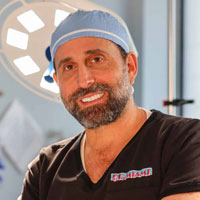
Dr. Michael Salzhauer, globally recognized as Dr. Miami, is a board-certified plastic surgeon who revolutionized medical marketing through his pioneering use of social media. As a guest on the summit, he shares the foundational principles that drive his successful practice, emphasizing a disciplined, data-driven approach to operations by tracking daily “vital signs”. Dr. Salzhauer champions the power of authentic branding, advising surgeons to “be yourself” to attract their ideal patients, and stresses the importance of building robust, scalable systems that allow a practice to function seamlessly, independent of any one individual.
GUEST – Naren Arulrajah
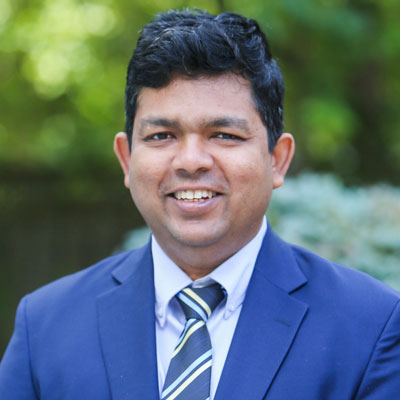
Naren Arulrajah is the President and CEO of Ekwa Marketing, a leading digital marketing agency serving medical, dental, and aesthetic practices. With more than 15 years of experience, he has helped thousands of doctors and practice owners build thriving businesses through customized strategies in SEO, social media, online reputation management, and content marketing. Leading a team of over 180 full-time marketers, Naren has become a trusted authority in practice growth and has spoken extensively on marketing trends and business development. His passion lies in helping practitioners focus on patient care while his team drives sustainable growth in an increasingly digital marketplace.
GUEST – Chad Sawyer
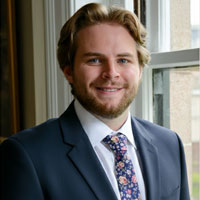
Chad Sawyer is the Chief Operating Officer at Dr. Well. With a strong background in medical software and business development, Chad specializes in arming providers with the tools to compete in the modern healthcare landscape. In the discussion, he demystifies the integration of wellness services, covering everything from compliance and pharmacy partnerships to leveraging technology like asynchronous consultations. He makes a compelling case for wellness as a key strategy for creating recurring revenue and reducing surgeon burnout.
GUEST – Dr. Johnny Franco
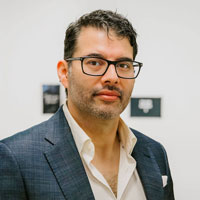
Dr. Johnny Franco is a board-certified plastic surgeon and the owner of Austin Plastic Surgeon. He brings a firsthand perspective on rapid practice growth, having scaled his business from three employees to nearly 90 across multiple locations. During the summit, Dr. Franco offers practical insights into the “real struggle” of scaling, stressing the critical need for establishing robust operating systems and scripting every process to ensure consistency. He advises fellow practitioners to clearly define their end goals to build a business that aligns with their personal vision of success.
HOST – Lester De Alwis

Lester De Alwis, the host of this Business of Aesthetics Summit, is the Partnerships Manager at Ekwa Marketing. In his role, he specializes in building strategic alliances within the aesthetics industry and bringing together leaders to share their expertise on practice growth and innovation.
Resources


Connect with Us:
Category: Business of Aesthetics Podcast