In this episode, Michael Walker speaks with aesthetics industry expert Rebecca Landriault about the keys to operational excellence in running a successful aesthetic practice. With nearly two decades of experience spanning clinical aesthetics, laser technology, practice management, and vendor negotiations, Rebecca offers invaluable advice for providers at all stages of growth, from solo entrepreneurs to multi-location empires. The conversation focuses on building strong operational foundations before diving into marketing, avoiding predatory laser sales, crafting a clear vision and internal culture, and moving away from transactional aesthetics to long-term client relationships.
Key Takeaways
- Build Before You Market: Marketing is the “penthouse,” and operations are the “basement.” Without a solid foundation of SOPs, compliance, team training, and client experience, marketing investments won’t yield sustainable results.
- Be Wary of Laser Sales Tactics: Don’t buy lasers based on sales pitches. Identify treatment gaps, verify licensing laws in your state, and ensure clinical and financial fit before investing.
- Create Standard Operating Procedures: SOPs should be used, not shelved. Practices must establish and enforce policies consistently to avoid operational breakdown.
- Hire for Culture, Not Convenience: Build a team based on roles and strengths rather than expecting “unicorn” staff who can do everything.
- Client Journey Over Transaction: Transition from transactional treatments to building long-term patient value through educational, lifetime treatment planning.
- Watch Out for Hidden Costs: Calculate total cost of ownership for equipment;warranties, disposables, training, and maintenance matter.
- Leadership Requires Clarity and Consistency: Use policies to guide leadership conversations, set expectations early, and enforce them fairly.
Podcast: Play in new window | Download
Subscribe To Our Podcast



Key Highlights:
- 00:00:07 – Introduction & Sponsor Message
- Ekwa Marketing offers a free 12-month digital marketing strategy consultation (businessofaesthetics.org/msm).
- Meet Rebecca Landriault, an aesthetics expert with diverse experience.
View TranscriptMichael Walker: Welcome to another episode of The Business of Aesthetics podcast. I’m Michael Walker, your host for this episode. Before we get started, I want to thank all our incredible listeners from the United States, Canada, and around the globe. Your continuous support means everything to us.
A special thank you also goes out to our sponsor for this episode, Ekwa Marketing. With nearly 20 years of experience, Ekwa Marketing is a leader in digital marketing services for aesthetic practices. They are offering our listeners—that’s you—uh, today, a complimentary digital marketing consultation, which will include a tailor-made 12-month digital strategy for your practice.
You’ll be able to head over to businessofaesthetics.org/msm to book your consultation today. You’ll also find, where you’re picking up this podcast, that the link should be available for you there as well.
But let’s go ahead, and let’s jump into today’s topic: operational excellence in aesthetics, practice management, laser surgery, and client experience with Rebecca Landriault. And today, I am thrilled to welcome Rebecca to the podcast. Thank you for taking the time today.
Rebecca Landriault: I’m so honored to be here, Michael. Thank you.
Michael Walker: Uh, Rebecca is a seasoned expert in the aesthetics industry with nearly two decades of hands-on experience. Her background spans practice management, operational efficiency, clinical laser expertise, and vendor negotiations, making her a powerhouse resource. I like that phrase, Rebecca—a powerhouse resource for practices looking to grow and thrive.
Rebecca has helped numerous clients streamline their workflows, enhance the patient experience, and make smarter decisions when it comes to high-stakes investments like laser devices. Whether you’re running a single-location med spa or scaling to multiple sites, her insights into business operations and client relations are invaluable.
Rebecca, as I said, it’s a pleasure to have you, and let’s kind of—let’s start at the beginning. Well, not right at the beginning, but we’ll roll back a little bit. What brought you into the world of aesthetics, and how has your experience shaped the way you support practices today?
- 00:02:20 – Rebecca’s Entry Into Aesthetics
- How a corporate pivot led Rebecca to aesthetics during the 2008 recession.
- Launching one of Chicago’s first non-core medical spas.
View TranscriptRebecca Landriault: So, you know, going in the way-back machine a couple of decades ago, I did start out as just a baby aesthetician. Um, it was a bit of a career refocus after some time in corporate America and, um, just a little bit of a tough time around that first, uh, crash of the economy in 2008, and had to kind of look at reinventing myself a little bit. And I took the time to go back to aesthetic school, and I was lucky enough to land, uh, at a—one of the first really kind of non-core medical spas in the city of Chicago.
So, you know, back in that 2008–2009 timeframe, there weren’t medical spas on every corner. There were a handful of dermatologists and plastic surgeons who may have been doing some injectables, but there really wasn’t as much in the way of skin procedures and laser procedures, um, you know, back when I started.
Rebecca Landriault: And so I kind of had the opportunity to launch one of those first locations in Chicago with an ER physician. Um, and we really grew from, um, renting a space in a dentist’s office with just one suite or one room that he and I shared, um, all the way up to, you know, a multi—uh, multi-treatment room, larger facility, and grew to quite a few, um, quite a few patients and five-star reviews. And that was really, again, kind of before some of the marketing strategies that we have today. It was really largely word of mouth.
Um, and so, you know, one of the things that I think is really important is taking a look at your operations and taking a look at what your day-to-day, you know, client experience and what your—and the treatments and the service that your staff are performing.
Rebecca Landriault: Because ultimately, the referral is the name of the game, right? So, uh, after I left that practice, I have spent then the last, gosh, almost 15 years, um, in sales for a number of different organizations. So I started off kind of in that post-sale realm with lasers, where I was helping, uh, practices who had purchased a device then kind of work through their consumable and grow that business.
And from there I went and, uh, started in capital device equipment sales. So I sold lasers for many years for three different companies—three of the really larger companies in the space. And I also spent time selling injectables and regenerative medicine products.
So I’ve kind of done a little bit of it all. You know, I’ve been on the practice management side. I was an aesthetician, I was a laser technician, I’ve done some clinical training, um, and I’ve worked in skincare sales, injectable sales, laser sales.
- 00:04:50 – Career Journey in Sales and Practice Support
- Rebecca’s transition from esthetician to laser and injectable sales.
- Founding her consulting business to address holistic practice needs.
View TranscriptRebecca Landriault: And then, of course, even, you know, with that—kind of that practice development post-laser role I had in doing client events, selling packages, kind of a little bit of everything. And that was really what drove me then to start this business a year ago, was to say, I just think there are so many excellent providers out there that are giving wonderful treatments to their patients who just ask me every day, "Why is it that I can’t grow?" or "How do I grow?"
And there’s just—in that clinical proficiency—that piece where the provider is providing an excellent treatment is just a small portion of the overall success of a practice. And so, while I always say, you know, I’m not a doctor, nor am I a clinical trainer anymore for any company—so I am not one to give you clinical guidance—really every other piece of your business, I feel as if there’s probably nobody out there that is as, um, experienced as I am in terms of kind of every other little piece of the practice.
Michael Walker: Well, that certainly rings true from what you just shared. And what is it, with this new focus you have, what is it that you’re most passionate about with it?
Rebecca Landriault: So I think what I’m most passionate about is a practice’s success. So I think—and that, for me, this is a beautiful thing that we’re doing in this industry, right? And maybe not everybody has that opinion globally, but when you really think about it, providing an excellent treatment, whether it’s a cosmetic enhancement or a treatment—like maybe we’re doing some lip filler—or we’re providing a laser treatment and we’re helping a patient who’s getting rid of their acne scars, or we’re doing hair restoration on somebody, we are often offering these patients kind of a renewed look on life.
And they’re really, you know, uh, we’re correcting things that may have been an issue with their self-esteem. And so for me, I want practices to thrive because I do think we’re doing a beautiful thing in this business.
And unfortunately, there isn’t a lot of resources out there that can provide our—my clinical providers, my MDs, my NPs, my PAs, the people with independent practice authority, my RN injectors, my non-medical entrepreneurs—
Rebecca Landriault: There’s not much resource out there to talk to you about how to provide an excellent experience in cash-based medicine. So many providers come from an insurance-based, you know, um, practice where, you know, whatever the EMR that they’ve chosen is, or the EMR that they’re using is the one that that company has chosen.
We don’t—so we don’t know which one to pick. The treatments that we’re doing are dictated by, you know, largely the—whoever it is that I work for. And then we leave that setting and we go into private practice, and it’s mostly cash-based medicine, and suddenly we’re having to make a lot of business decisions.
And there’s really nobody there to support people. And I find it especially—and maybe it’s because I came from laser sales, and I consistently tell people that the reason why I’m so passionate about practice success is that I have to do some penance for my peers in the laser sales industry, because it’s so predatory.
- 00:07:59 – Passion for Practice Success
- Aesthetic practices often lack reliable business resources.
- Rebecca’s mission: help providers build sustainable, ethical practices.
View TranscriptRebecca Landriault: And I know that I can confidently say that I was able to sleep at night whenever I sold a device to a practice because it was the right device. Um, that isn’t the case in a lot of situations. So I’m doing some penance in this industry for those—like I said—those kind of, those predatory practices.
But—and that’s what I found—I mean, a lot of people come to me and say, “Well, I bought this device prior to talking to you. Now I have this massive payment. How do I recoup my investment?” Or, “I’ve started this practice and I’ve hired a bunch of people, but I have no people management background. I don’t have leadership skills. How can you help me with that?”
Or, “I’ve started this practice and I don’t even know where to begin from a compliance and regulatory standpoint.” You know, so it—we rush in with just a hope and a prayer. There really is a very succinct process we have to go through to make sure that this is successful.
And to me, it’s a ladder, and it’s helping these providers go rung by rung, really diligently, to make sure that each part of it is where it’s supposed to be before we’re doing things like investing in marketing and turning on a funnel—you know, a flood of marketing.
So that’s—I mean, that’s really why I do this.
Michael Walker: It’s, uh, as I’m thinking about what you’re saying, Sharon, I’m thinking about medical professionals kind of as a whole. I cover a pretty wide gamut in communication—from vets to dentists to aesthetic professionals, plastic surgeons—and there’s this common denominator that most of them are, arguably, accidental entrepreneurs.
And so, you don’t—you were never expected to have skill sets on what you trained for. That’s not what you’re passionate about. And it’s not—but it becomes a critical function of the success of you and your, and your—your brand and your practice.
I was thinking—I talk a lot about the idea of influential leadership, giving someone something they don’t even know they need or want. Once they have it, they can’t imagine life without it, and then they can’t wait to give it away.
And I love that you just said it—like your passion is helping practices thrive so that their patients can thrive and so that they can give it away—meaning referrals and building. Does that make sense to you, Rebecca?
Rebecca Landriault: Yeah. And I think the thing—again, when I say that there aren’t a lot of resources—unfortunately, there are just so many of these other predatory companies out there as well.
They may be pitching their marketing resource to a provider—it’s not really a marketing resource, right? They’re not actually providing any marketing for you. They’re having you buy a software that may create some lead generation. How warm are those leads? How good are those leads? Arguably, you know.
But you’re locked into a year-long contract, and you’re like, “But I thought they were doing my marketing,” and they’re not. You know?
So, um, what I like to do—and the thing that, again, that I’m passionate about—is in speaking to this individual provider or this individual practice owner and saying, for your life, what is it that you’re looking for?
Rebecca Landriault: Do you want to see just enough patients that you don’t have to be there 60 hours a week, and this is profitable enough for you to be doing this—and not just be a hobby, it be profitable?
Or are you looking like, “I want to build an empire. I want to have multiple locations. I want to have multiple employees.”
I mean, I have clients who—their next step is setting up training centers, or their next step is opening up other locations. And I have some providers who say, “I am perfectly happy being in this salon suite and being a solo provider. But how can you help me be better at what I’m doing? How can you help me increase my revenue without maybe increasing my footprint or increasing my time that I’m in the practice?”
And often the people do come to me, and the first question they ask is, “How do I get more patients?”
- 00:11:50 – Marketing is Not the First Step
- Marketing only works when operational readiness is in place.
- Importance of answering phones well and managing patient flow before launching campaigns.
View TranscriptRebecca Landriault: What do I need to do to market myself? And as I mentioned with those, you know, the rungs of the ladder—marketing is at the top. Marketing’s the penthouse. If things are not secure, if the foundation is not secure in the basement, and we start doing things up in the penthouse…
And I always say, marketing is the tree that fell in the forest that no one heard. If we don’t have a strong base, especially operational efficacy within our own practice—because then it will be maybe we’re putting a bunch of money into, say, you know, social media ads or SEO, and now our phone is ringing and we’re getting all of these inbound patient inquiries—
Is our front desk equipped to answer these questions? Do we have someone at the front desk equipped or even able to answer these questions in some cases? You know? Or, you know, people sometimes choose to do like these daily deals, like a Groupon or something like that, and then they sell a ton. And do they even have the space and number of hours available to see this many patients?
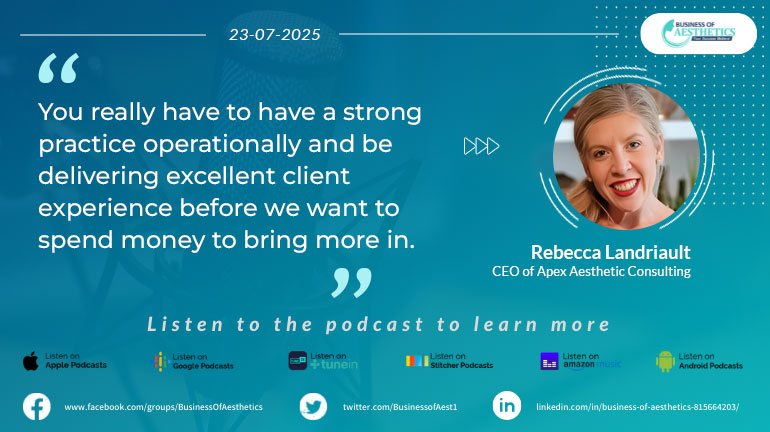
So we can’t do those things in the penthouse until we’ve really worked hard at, um, at kind of the foundation. So when I onboard my clients, I make it very clear that marketing is generally not a conversation we’re having for at least six months—if not more, in some cases—because you really have to have a strong practice operationally and be delivering excellent client experience before we want to spend money to bring more in.
Michael Walker: Yeah. Yeah. And very—I love the, I love the, uh, the penthouse analogy. That’s a good way to put it, Rebecca.
It’s interesting—I mentioned at the top of the, uh, podcast that Ekwa Marketing is offering a marketing consultation. And it’s—it’s interesting. It’s exactly that. It’s not to sell something, to have to go and buy a laser machine or something.
It’s simply, “Hey, here’s some great information that can—based on a study of your digital footprint—what you might want to think about doing differently.” And so it’s a great asset.
We’ll talk about that later, but something I was thinking when you were talking about, you know, when we talk about that passion—what are you passionate about, I mean, in this field? And then what do you want your story to be in one, two, five years, or ten years from now?
Michael Walker: And then—how do we reverse engineer that? Which is what you’re talking about. And in that, how do we then plant the right people, places, resources to get to that story?
And I think so often we just go in and, “Well, we’ll just go in and start a business and buy this equipment and—Bob’s your uncle—and off we go.” And then we know what that looks like and what happens.
And so, I love the way you’re just breaking this down and making it—I think the other thing is that sometimes, you know, how do you eat an elephant, right?
Rebecca Landriault: Piece by piece.
Michael Walker: One bite at a time. So, I mean, it’s—the people that are selling you stuff aren’t going to say… They’re going to say, “Now, if you have this, this’ll just be it.”
And you’re—what’s that saying? It’s the cat’s pajamas? I’m not even sure what that means—
Rebecca Landriault: Mm-hmm.
Michael Walker: But it’s like, “This is it, and you’ll be a rock star, and life will go great.” And it doesn’t materialize that way because you—as you said—you haven’t kind of done that heavy lifting of the foundation, of really laying a good operational, both transactional—what you do and how you do it—and relationally about who you are and why you matter.
And I love the way you put that.
But let’s talk a bit about practice management. And from a practice management perspective, what are some of the most common operational gaps you see in aesthetic clinics, and how can they be addressed?
- 00:15:14 – Common Operational Gaps
- Lack of accessible and enforced SOPs.
- Not onboarding and training staff to follow protocols correctly.
View TranscriptRebecca Landriault: So in some cases, I see offices operating without even the basic kind of standard operating procedures. That would be the first thing that I would say. If you do not have a printed binder of standard operating procedures for every single one of your treatments that you’re providing, every single process you’re going through—opening checklists, closing checklists, things that OSHA require like bloodborne pathogen or chemical spill—if you don’t have all of those things concisely done, drafted in a binder in your front office, that’s the very first step. I mean, that’s really a compliance argument.
But also, the next step then is you have to follow that by the book. So where I see the biggest gap happen is providers will go and they’ll spend a ton of money with a law firm to get all these standard operating procedures written, or they’ll take the time to do it all.
Rebecca Landriault: Then that binder never leaves that very spot that they put it. And every employee that they’ve brought on doesn’t know how to do each of these things. Maybe they are forgetting certain things in the opening and closing checklist. And immediately, right there—you spent all the time, we built up the bricks, and then we’re just letting them crumble.
And there are certain things that are very important. You know, if we’re not properly, um, tracking inventory, we might now down the line find out that a product’s missing or a patient wasn’t rung out for something. And so these very foundational things—these are very easy checklists and procedures to do—but the idea is that you have to draft them and then you have to use them.
So I think that’s the most important part: really knowing what is the correct way to do each and everything for every facet of your business—
Rebecca Landriault: And then doing it and holding your team accountable to doing it. And that’s where, you know, often in conversations—kind of about the people management and leadership, which again, a medical provider may not have a ton of training or experience in—if they’ve worked for somebody before or they’ve been in bedside, you know, they’re not necessarily used to managing a team of people and saying, “This is how we’re going to do it,” and then following up and making sure that those processes are happening.
Because ideally, I do want you in the treatment room, treating patients all the time. So you shouldn’t have to be over the shoulder of your support staff making sure that they’re doing the things that are on those lists. But the best way to do that then is onboarding and training and making sure that the absolute set standard is—this isn’t a bare minimum, this is a requirement of the job.
Rebecca Landriault: We are doing this checklist every day. We are doing these things this way every day. That’s often where I find, really early on, where that gap is—just that we’ve taken all the time to come up with these policies, procedures, handbooks, SOPs, protocols—and then nobody’s ever reviewing them or utilizing them.
So I think if you’re going to take the time to do that, then you need to use it.
And then the next step really just is, again, I think sometimes we bring a lot of people on and we’re really hoping that the staff member that we have is a unicorn. And they can answer the phone, and they can room the patient, and they can perform the consultation, they can make retail recommendations. Then we’re passing them to the provider, the provider’s doing the treatment, we’ve got them rebooking—
Rebecca Landriault: And unfortunately, you know, the phrase is “a jack of all trades, a master of none.” We really need to have people that work for us that are experts at what they’re doing. So we have a front desk person who’s really excellent on the phone, who is a bright face when a client walks in the door, who’s greeting the client or the patient, who is able to be the face of your business, and who maybe is the person calling and following up:
“How was your experience?” “Could you leave us a five-star review?” Or, “Oh, I see you’re coming in for your Botox follow-up in a week. I noticed that our aesthetician has an opening at the same time—could I offer you 20% off to add a HydraFacial treatment?”
That’s the role we want those people to have.
Rebecca Landriault: But that’s it. We need to segment that role. And then maybe we have a medical assistant or an aesthetician whose job is to bring the patient back, do a quick evaluation, maybe offer some light treatment recommendations, and then the provider’s coming in and doing treatment.
Somebody else is the person who may be making the retail recommendations and trying to kind of close that sale.
But we can’t have one person doing everything, because then again, these systems will—
A) that client or that employee will get burned out,
and B) we’ll start cutting corners in a lot of different places. And those foundational pieces fall apart again.
So, you know, for me, if you’re a practice starting out, I don’t expect you to have five team members—I mean, no one can start like that. But at the very minimum, I would say doctor, provider, NP, aesthetician—person who’s going to be providing the treatment—that’s your goal.
And you just need somebody who can help assist you with some of the other things. Because not everybody can be everything all at once.
- 00:20:27 – Building Team Structure
- Practices should avoid “jack of all trades” hires.
- Roles should be defined for front desk, support, and clinical staff.
View TranscriptMichael Walker: Yeah. Absolutely. You’re—you’re in my neighborhood for sure in that world. But I gotta go back to the manual. I see this all the time. You know, we create this manual—and it just becomes a good book, a shelf-sitter and paper, right?
And, you know, I think what I—my experience has been is that we—it’s mostly because we didn’t cast a vision for it, and we didn’t—
Rebecca Landriault: Mm-hmm.
Michael Walker: We didn’t set it up. And so in our conversation, we were talking about practices thrive so patients thrive, so they—you know—sets them up for success and want to share with others.
So to me, it’s actually not a procedure manual. I want to cast a vision for our Thriving Root Blueprint. And so suddenly that creates—and so how are we creating that ownership? It’s no longer following rules and procedures.
So therefore, you as the practice owner, you’re not mom and dad now—
Rebecca Landriault: Mm-hmm.
Michael Walker: It’s—you’ve given them the space to be the best version of them within the guidelines. They’re there. And I think that’s the—I see that a lot in medical practices because it’s so medical, it’s so structured. And I—nothing wrong with that.
I understand you need protocol.
Rebecca Landriault: Yeah.
Michael Walker: Otherwise, you’re dealing with—you’re putting needles in people’s faces, for goodness’ sake. I mean, there’s some real stuff going on here, so I understand that.
But I think it’s finding—my background is heavily in the hospitality industry. And so, for instance, when you’re talking about the personality types, you know, we spend a lot of time understanding our people to place them in the position where they can shine—to be the best version of them.
So we—you know, somebody who just loves spreadsheets and details and attention to detail and all that, they’re awesome in certain areas, but generally not front-facing with a guest.
Rebecca Landriault: Correct.
Michael Walker: Um, unless the person across from them is the very same personality type, then they’ll have a blast. But that’s—and so I think it’s about being—we spend a lot of time introducing people, onboarding people with personality profiles, preferences, appreciation languages, compliance managers, so that we have an understanding—and they have an understanding—of where their strengths are and how we build them.
And I think it speaks exactly to what you’re talking about, Rebecca—that it’s about being intentional with that. And, you know, just ’cause it’s your cousin, that doesn’t make them a great person with people.
Rebecca Landriault: Correct.
Michael Walker: You know, and it’s that. And so—
Rebecca Landriault: I think to that point too—I mean, and that’s something, again, with a lot of my providers who are coming from a managed care setting, they sometimes forget that we should be considering coming up with a mission statement, a value statement—something that’s external facing to our patients about why we’re doing this thing that we’re doing.
But something that’s also internal to our fellow coworkers and our team members about why we’re doing what we’re doing.
And I just had a conversation with a client last week—there’s just been some issues with some of her support staff not always charting. And I said, well, the conversation that needs to be had with your team is:
“Remember how our mission statement is to provide the best clinical outcome for our patients because we want to be the best at what we do in our area?”
- 00:23:28 – Value of Mission and Internal Culture
- Charting, compliance, and client care should align with internal values.
- Use values like “excellence” and “integrity” to guide staff behavior.
View TranscriptRebecca Landriault: If we don’t chart what we’ve done for the patient—if that patient comes back and we haven’t seen the best clinical outcome—how can I then review what was done in the past to course correct, to make a new clinical judgment, if it’s not charted?
So, employee, this isn’t about me making you do these things that seem like busy work. It is about our value and our mission, which is to provide these excellent clinical outcomes for our patients.
And so we do have to take a look at that—what do you want your brand to be out in the marketplace? But then also, what value do you want to bring to your clients as a team?
And so that’s one of the first things—especially if I’m lucky enough to get to somebody before they’ve launched their business—if I could do step one, it would be brainstorming: what is your external vision and what is your internal messaging, so that we can build all of these operating procedures, all of these checklists, all of these marketing strategies, picking the treatments that you’re going to perform, based on that.
Michael Walker: Yeah.
Rebecca Landriault: And that’s beautiful. And unfortunately, I think we just—again, as we talked about—those providers are putting the plane together in the air. They’re like, “Oh, I took a Botox course, and I’m going to get a salon suite, and I’m going to do this, and I’m sure I can figure it out along the way.”
And unfortunately, it is putting the plane together in the air. And, um, a lot of mistakes can be made if we’re not kind of parsing this piece by piece and doing it step by step.
Michael Walker: Yeah. Thank you. And even in those situations where—it’s awesome if we get them when they’re first starting, ’cause it’s—
Rebecca Landriault: Mm-hmm.
Michael Walker: You don’t have to peel the layers of the onion off to get to what you need to, right?
But there’s this—you know, even in that, there’s still—and it’s this idea: if we think of vision as being what you’re passionate about in terms of who you are and why you matter, and then what are the non-negotiable values that sit underneath that and hold that.
And then further along the journey, our mission is what we do and how we do it, and what are the executables to achieve that.
And ultimately, the KPIs and the wins—not just transactionally, what we do and how we do it—but also about who we are and why we matter.
And we lose that. And that’s the part that gets lost. We’re really good at the transactional stuff. But it’s about the people stuff—that’s the challenge.
And it’s exactly what you’re saying—it’s about being intentional again, with recognizing that if you focus—as you say—
“Rebecca, I know we’re talking here, I know that some of your details haven’t been charted and stuff like that. I just want to share with you—here’s our vision statement. One or two of our core values are integrity and excellence. And I’m just curious: how do you see those two values lining up to the situation we’re talking about?”
I don’t try and solve it. I don’t want to be their parent. I want them to find the solutions.
“Say, well, when you put it that way, I probably am not measuring up.”
“Well, how can I help?”
“Yeah, absolutely.”
And I think that’s the thing—it’s that we don’t have to get overwhelmed. As a parent, you know, you’re always with your kids, trying to say, “Okay, you gotta do this…”
But these are employees. And we’ve hired them. They’ve got skill sets. Are we empowering that capacity in them?
Sometimes—I don’t know if that makes sense to you, but I see that. I’m a mediator in a lot of my work in the veterinary field, so I’m always dealing with people that just want—
They want—people really don’t want to be told what to do. There are some. But generally, people want to be empowered and given space to be the best version of themselves.
Rebecca Landriault: Well, and I think that again, kind of the foundation is also about your team. And you know, we’ve all been in a situation where an employee has left unexpectedly and we have to fill that spot, or an employee hasn’t worked out and we have to let them go and we have to fill that spot.
But, you know, I don’t like hiring or bringing people on as a reactive measure.
It would be a really good idea for everyone out there to consistently be reviewing resumes—to not wait for that moment where we have to fill a position. Kind of have a group of candidates that we like, that we can call on if we need to.
Because you have to hire to that vision. If you’re the kind of practice where every single employee is going to be responsible for cleaning bathrooms and doing laundry and cleaning and stocking and doing all of these things outside of just the actual, you know, clinical providing that they’re doing,
Then we need to make sure that people are going to do that. That that’s a part of both the interview questions and the onboarding.
We need to be very clear—and I think this is where the integrity piece comes in—very clear about what our expectations are of the people that we’re interviewing and hiring, and then making those steps.
Rebecca Landriault: Again, it comes back to these operating procedures. If it is your role to do this every single day, then from the day that training starts, we’re doing this every single day. And we’re keeping that policy the same—not that one person doesn’t have to do it but that person does.
You know, we have to hire for our culture, hire for our brand, train for our culture, train for our brand, and then continue those standard procedures day in and day out. Otherwise, it starts to crumble.
I’ve had situations where I hear, “How do I handle this employee? They’ve been with me a long time. I really like them, but they just keep not doing this thing that is my policy.”
Okay. Maybe it’s how they’re dressed. Maybe it’s the way they’re asking for time off—not within the time that they’re supposed to be doing it. Or maybe they’re calling off more frequently than normal.
You know, if you have set the standard of what the policies and procedures are within your practice, then you have every right to sit down and have a leadership conversation that says:
“We’ve discussed that this is the policy. This is kind of falling off. Here is your warning. Here’s how I would like you to correct it.”
Whatever that conversation is, it’s a lot harder to have that conversation as a leader if you’ve let things slide.
So—and that applies across anything. Whether it’s charting, or it’s your time-off policies, or whatever it might be.
So again, having those things written, and having those things set there as you’re onboarding your new employees—or as you’re retraining quarterly employees—and making sure we’re following these things. That just makes every conversation after that so much easier.
Michael Walker: Yeah. That’s really well put. I always say—it’s principles before personalities. You know, if you’ve got a framework that you’re working from and can point to, then you can keep personalities separated from people taking things personally.
And it helps keep the focus on what you’re trying to achieve.
Michael Walker: So, let’s shift gears a bit. Let’s talk about lasers.
Not the Star Wars version—
Rebecca Landriault: (laughs)
Michael Walker: —but I’d be up for a conversation on that.
But, um, lasers are obviously a big investment for many practices. So, what should owners consider—both clinically and financially—before making a purchase?
- 00:30:52 – Buying Lasers: Do’s and Don’ts
- Don’t buy based on hype or pushy reps.
- Validate treatment gaps, clinical need, state laws, and long-term costs.
View TranscriptRebecca Landriault: So, I think first things first—the thing that I would tell every single person who has reps banging down their door—is you really have to separate yourself from what it is that they’re pitching you. Because every single rep’s singular role is to sell whatever that device is or whatever that company offers, and they’re gonna try to fit a square peg into a round hole.
They’re going to tell you why it works in your practice, and that square peg may not fit into that round hole.
For me, I would never advise anyone to decide to purchase a laser just because a rep came in and told them it was the next big thing. An investment like an energy-based device needs to be the right fit for your practice. Because it’s a treatment that you will feel clinically confident performing. It’s a treatment that is missing within your practice.
Rebecca Landriault: So, if there’s a treatment gap—like, “I don’t have any way to treat reds and browns”—well, that’s a foundational type of treatment in aesthetic medicine. You need to get your hands on an IPL. Really know where your treatment gaps are and seek out the devices that are clinically proven to fix those treatment gaps—not the most popular, not the most name-worthy, not the most persistent rep.
So, I would say: don’t ever make a decision because a rep has come in and said, “This is the brand-new device.”
Listen, I can tell you—I was trained by some of the best laser salespeople in the industry. But we were all told the same thing: “This is the device. You can be first to market. Be the first one to do it.”
When there isn’t necessarily social proof that these things work.
Rebecca Landriault: So, I would argue that the investment needs to be in a technology that’s proven to work for a treatment gap that you have in your practice.
That would be the first thing, right? Make sure that you need this laser. Don’t buy a laser you don’t need.
Two: make sure—and I see this happen a lot, and I think even on our webinar that you and I were on before, Michael—there were a couple stories that came up of people who had purchased lasers because the rep had told them that they were going to be able to perform that treatment in their state.
And then the device is delivered, we’re going to do clinical training, and we find out that the person who bought that laser is not allowed to perform that treatment in their state. Or, an MD bought it and they were promised that their aesthetician could do that treatment—and aestheticians can’t run that device.
Rebecca Landriault: Now you’re stuck with a device that you thought you were delegating away, but you can’t delegate it. Because we didn’t do our due diligence to make sure that what the rep is telling us is accurate.
There are often a lot of claims made—“Oh, anyone can do that.” I’ve heard the phrase, “A monkey can run it.”
If I was told by a rep that a monkey could run it while they’re standing in front of a CO2 device, I would lose my wits.
No—a monkey cannot do it. These are ablative treatments. You need to be clinically proficient.
But it’s easy to be sold that, because they can say whatever they want. And it’s really on the providers to make sure that we’re vetting these erroneous claims.
So—no, not a monkey can do everything. No, not everything can be delegated. And no, not everything is safe for every skin type.
Rebecca Landriault: That’s the other thing that really kind of grinds my gears, if you will. I consistently hear, “Well, I bought that device because the rep said I can use that on all Fitzpatrick types.”
And then that device is a technology that, if you really dig deep, is not safe for certain skin types. But we’ve put a new name on it, so maybe it sounds like it’s safe for all skin types, but the wavelength—what that device is built on—isn’t.
And now you’re a provider who sees that half your population are people of color, and you’re unable to treat them because we’ve been told it was safe for all skin types—and it’s not.
Rebecca Landriault: So any of these claims—I would say, do your due diligence and make sure that you’re really looking at FDA clearances, 510(k) clearances. Make sure that they are doing what they’re supposed to do.
And don’t hesitate—go online. See who has the device. Reach out to someone and ask them about their actual opinion on it.
The laser reps don’t want you to do that—because they don’t know if you’re going to find an unhappy customer.
But it’s your due diligence to sometimes talk to an unhappy customer, not just the doctor that they give you the number to—because that doctor is being paid by that laser company to provide a great review of that device.
Reach out in these forums, like the Business of Aesthetics forum, the Facebook page. That’s where I see all the time: “What’s your opinion on this device?”
And providers are giving very truthful feedback about these devices—because they want their peers to either be successful or be warned if something isn’t great.
Rebecca Landriault: So again, make sure that whatever device it is that you are looking at is really the right fit for your practice and a true treatment gap.
And make sure that any claims that the rep or the company is telling you—about clinical efficacy, safety, compliance, regulatory requirements, whether or not you can delegate the treatment in your state—all of those things need to be vetted before you sign on the dotted line.
Michael Walker: Yeah. Well, thank you, Rebecca. You speak to a couple of things that are pretty critical these days, with the complexity of not only the equipment, but the applicability, the licensable nature of it, the regulatory aspects of it.
In my world, when I look at something like that—I mean, I don’t know anything about that machine—but for me to do due diligence on it, I can only go a certain distance. I can ask questions, I can research.
But this is really where—in this world—due diligence with a coach is very different than due diligence on your own.
And that’s exactly what Apex Aesthetic Consulting—that’s what Rebecca’s company does. That’s where you need to be thinking about: what are you really great at? And if you’re not great at it, then who are you going to bring alongside you to support you in that?
Michael Walker: And I think this is an area that’s just really challenging.
You know, if somebody comes in to me and says, “I’ve got this thing that’s going to solve all your problems,” I say, “Okay, well just give me a list of the gaps you identified in my company.”
“Well, what do you mean?”
“Well, we’re not talking about water and where you store it. What do you got?”
Call their bluff.
And to my opinion, I think, Rebecca, when I do the best practices testing with other users, it’s about being very intentional with the questions.
Like: “What gaps had you identified, and how were they being filled?” “What things happened that you didn’t expect?”
People want to tell a story—especially if they’ve paid a lot of money—they want to have a success story.
But you want to get to those truths of what really happened:
“Well, they told me it would do sliced bread, but it doesn’t…”
Michael Walker: I really think this is a due diligence conversation. You nailed it at the end there.
In my realm, it’s like with marketing with a coach, or with leadership with a coach, or in training and courses with trainers—you recognize, “I was trying to take 80% of my clients and focus on the 20% of what they’re great at, and build everything around that.”
And I think that’s exactly what I hear you doing in this industry.
Any thoughts just on tips for getting best value for purchases? We’ve touched on some of the potential mistakes—but just from your experience, kind of like a go-to mindset in that space?
Rebecca Landriault: Yeah. I think first things first, in terms of how easily you’re going to recoup your investment, is being very careful about the equipment financing.
That’s just something else that—unfortunately—it’s really tough in this industry right now. Interest rates are high, and there are a lot of predatory lenders out there.
And again, a lot of times, the laser company—the lender that they’re recommending to you, you know, “You’ve been pre-approved,” “We can get your payment down to this amount…”
If you really take the time to review these financing contracts—have a lawyer look over it, have your CPA look over it—you’re going to find a lot of really predatory terms.
And, you know, I always say: if it sounds too good to be true, that’s because it is.
We all know that. But we might fall victim to a laser rep saying, “For today only…” or “We’ll get you three months deferred with this,” or whatever it might be.
- 00:39:53 – Equipment Financing and Ownership Costs
- Avoid predatory lenders and inflated interest rates.
- Don’t equate brand names with clinical effectiveness—wavelength matters more.
View TranscriptRebecca Landriault: And the financing terms—in the end, when you look at it—you’ve spent, you know, you might have paid 25% interest. And that by no means is a good business investment. If you looked at anything else in the world and said you’re going to pay 25% interest on it, we would say no.
So don’t let the excitement of a device make you—or allow you—to make poor decisions about the financing.
So I would say, shop your lender. That’s the number one thing.
And two, a device having a name brand or a household name does not mean that it is the best device out there.
You know, we know by now—just because something’s been in the marketplace a long time or it has a household name—doesn’t mean it’s clinically the best out there.
So I also would argue that, you know, for some lasers, a wavelength is a wavelength is a wavelength. You can get a device that’s less expensive, that maybe doesn’t have the shiny name on the box, but is going to clinically provide exactly what it is that you’re looking to provide for your patients.
Rebecca Landriault: So don’t be sold on the glitz and glamour and the razzle-dazzle, and be very wary of the financing terms. Make sure to really shop that out.
Michael Walker: Yeah. Those—I, a couple of thoughts I have—well, Rebecca, just wondering on this: what about the maintenance of the equipment?
Rebecca Landriault: Mm-hmm.
Michael Walker: And what that looks like? And the updates—whether it’s hardware or software—would imagine that’s gonna be a factor?
Rebecca Landriault: And actually, thank you so much—because the overall cost of ownership is something that a lot of reps are not going to automatically tell you about, right?
Your lifetime cost of ownership.
What is the cost to maintain a service agreement? Another year of warranty?
Does a device time out or pulse out, where I have to replace a handpiece yearly—but that wasn’t mentioned?
And that does happen sometimes.
And these handpieces could be $15,000.
So you’re buying a $150,000 piece of equipment, and then you’re buying a $15,000 warranty, and then you’re buying a $15,000 handpiece—and that’s in year one.
Rebecca Landriault: Is there a consumable or disposable associated with it? So every time I turn this device on, do I need a card to plug in? Do I need a tip to put on?
Those things are all important.
If you hire a new team member and they’re going to be clinically trained, do we have to pay to get a trainer to come back out again?
Or are they going to support me through making sure that I’m clinically proficient at this type of procedure?
So—you know—am I going to find out after clinical training that this treatment can’t be performed without a Zimmer device because it’s too painful? Or now I need to invest in Pro-Nox because it’s too painful?
All of those questions need to be answered, because all of those will play into that overall cost of ownership.
And I would encourage everyone to make sure you’re reaching out to your medical malpractice and your business insurance—because there could be increased costs in providing a new treatment with that as well.
And I think people forget about that.
Michael Walker: Yeah. Yeah. That’s—I kind of figured that was… When you think about all that cost, that’s also bringing all the factors in when you do your forecast of what the payback on this thing is.
You need to know those costs as well. Otherwise, your numbers are just not fairly representing—
Rebecca Landriault: Correct.
Michael Walker: —what this thing looks like.
Let’s shift—we’re kind of watching our time—but I really want to jump back into client relationships a bit.
I think that’s where we started, and I’d like to kind of end there.
What are some best practices you’ve found, Rebecca, for building long-term trust—which is such a huge factor in this industry and obviously also enhances the overall patient experience?
- 00:43:16 – Lifetime Client Value vs. Transactions
- Shift to comprehensive intake and treatment planning from the start.
- Offer “value add” services to show your expertise and build trust.
View TranscriptRebecca Landriault: You know, I’m so glad you asked that because this has been a little bit of the focus of what my education is going to bring to my clients coming into third quarter. I think there needs to be a shift outside of transactional aesthetics.
And what I mean by transactional aesthetics is: I’m a provider, somebody books online for a lip filler, they come in, I give them their lip filler, they leave.
You know, that’s the general aesthetic model. And transactional aesthetics—that’s fine—but that patient may then, the next time lip filler’s on special or somebody’s on TikTok down the street, now the next time they’re going to that person.
So for me, I think the way that you really set yourself apart is: from the minute a client or patient enters your practice the first time, the conversation is about lifetime treatment planning and a really comprehensive consultation—but doing it in a way that is really approachable, and that you are showing you’re educating the client or patient.
Rebecca Landriault: It’s not always about sales.
So what I mean by that is having a really great intake form that has lots of questions—not just medical—but also:
Do you see yourself as being a surgical candidate in 5 years? Yes or no.
Do you see yourself as a surgical candidate in 10 years? Yes or no.
And this isn’t about whether you offer surgery. This is to know—if the patient is going to have surgery in five years, maybe they’re planning a facelift in five—then what am I doing between now and the facelift to keep the client happy?
If facelift is a “no,” ever, then how am I tailoring my treatment plan? Because this patient isn’t going to ever have surgical intervention.
You know, asking lifestyle questions:
Are you going to upkeep with regular maintenance treatments?
Or are you looking for a one-and-done?
Rebecca Landriault: So just really, really comprehensive questions.
And then addressing every one of those in the consultation. Because when we ask more questions, the patients drive us down the right lane to the treatment that’s the right fit for them.
Especially in those offices that might have every tool in the toolbox—“I can offer really anything”—so now how do I figure out what’s the right thing for my patient?
If you ask all the right questions—
How much downtime can you take?
What does your budget look like?
You’re going to provide the most excellent treatment for them.
But ultimately, what I would do that very first time is say,
“Michael, I understand that maybe you came today to talk a little bit about Botox in these three areas. But in the future, what would you like to correct? What is your ultimate aesthetic goal if budget was limitless and time was limitless?”
And then, Michael, you might say, “Really, this bothers me”—you know, they’re lifting their jowls—“or I would consider, you know, I wish that there was an option for my eyelids that wasn’t surgical,” or “I’m wearing a lot of makeup so you can’t see it right now, but I have a bunch of brown spots.”
And I’d say, “We’re certainly not going to do everything today, Michael. I wish I could wave a magic wand, but I can’t. But here’s what I would say: let’s do the thing that’s going to offer you the best and fastest result so you see that I can provide you with a great treatment—and you’re going to trust me moving forward.”
“So Michael, I think, yeah, we could do a little Botox in your forehead and around your eyes, but I’d also really love to just do the first IPL on the house so you can see how well it’s going to lift your brown spots and know that I’m here to provide you with excellent treatment.”
Rebecca Landriault: “And then let’s talk about what the next 6, 9, 12 months, one year, five years looks like. Based on all the things I have, I’d suggest you do a few vials of Sculptra, Michael…”
And at that point, we’ve now shown: we have all the things to provide you with your ultimate, your lifetime goal of what you’d like your skin and your aesthetic result to be.
But it’s not saying, “So here’s your package for $15,000—would you like to put that on CareCredit?”
Rebecca Landriault: No.
We’re saying, “I would really like to provide you with one extra value-added service so you can see what I have to offer.
And then I think down the line, you’re going to want to do these IPLs every three months.”
You know, whatever that might be.
And I’m not saying that’s the exact way to go about it, but just knowing that you’re educating the patient and showing them from the beginning:
“I’m here because I want to go on this journey with you, all the way through. I want to treat to complete.”
I talk about that a lot in my verbiage to my clients.
We’re not just doing transactions.
And I think that makes all the difference in the world from a client experience standpoint.
Because if they’ve now come to you for a bunch of different things—they’re getting their skin treatments from your aesthetician, they’re buying your home care, and they know that when their budget allows, they’re going to come to you for that injectable treatment or that laser treatment that costs more money—
They’re not going to go seek out a Groupon somewhere else.
Because they’re going to want to stay with the person who’s done their treatment plan.
Michael Walker: Well, I’m going to have to look in the mirror after that, aren’t I?
You—you said it twice.
No, you did what you did—it was—you eliminated the pain point I would have.
The first one would be: What’s this going to cost?
You took that out, really.
And then you reaffirmed the things that I was thinking of—but then you gave me, you introduced me…
And I think you just did a beautiful job.
You’ll probably want to re-listen to that—and listen to it as a receiver as well as a provider—and you’ll be amazed at how you hear that differently.
Because that was really well done.
Michael Walker: So Rebecca, our time is kind of wrapping up, and I’ve got to say—thank you so much for joining us today and sharing your experience on practice operations, laser investments, and client relationship strategies.
Your experience and insights offered a real behind-the-scenes look at what it takes to run an efficient and successful aesthetic practice.
We truly appreciate your time, your perspective, your insight, and your best practices.
Thank you.
- 00:49:01 – Final Thoughts and Resources
- Encourage listeners to share the episode and leave a review.
- Book your complimentary digital marketing consultation via businessofaesthetics.org/msm
View TranscriptRebecca Landriault: Thank you so much, Michael. It was an honor.
Michael Walker: And of course, a huge thank you to our amazing listeners. We’re grateful for your continued support and enthusiasm for our podcast.
If you found today’s podcast valuable, please share it with your friends, team members, or colleagues in the industry. Let’s keep the conversation going. Let’s set somebody else up for success, shall we?
So don’t forget to leave us a review on your favorite podcast platform. We love reviews—and so should you. Your feedback helps us and other practice owners, as well as aesthetic professionals, discover the show and learn from voices such as Rebecca’s, shaping the future of our industry.
And I want to make one last shout-out to our sponsor, Ekwa Marketing. As I mentioned, they’ve been in the aesthetic space for over 20 years, and Ekwa is offering—as we were talking about—a complimentary digital marketing consultation that includes a 12-month strategy tailored to your goals.
Again, this is not about trying to sell you something. I know that to do the one-hour session, they spend five or six hours looking at your digital footprint—seeing what’s working, what’s not, where there’s opportunity, looking at your rankings, all that kind of stuff.
So, super valuable. Highly recommend it. And you can go ahead—it’s free. There’s no hitch, no secret cost.
To book your session, you can visit businessofaesthetics.org/msm —and you’ll be able to get that booked.
There should also be a hot link where you picked up this podcast, so go ahead and grab that there as well.
So until next time—stay focused on excellence, streamline your operations, and continue creating outstanding experiences for your patients.
And on behalf of Rebecca and our whole team here, wishing you all an amazing week ahead.
Thanks, and until next time.
GUEST – REBECCA LANDRIAULT
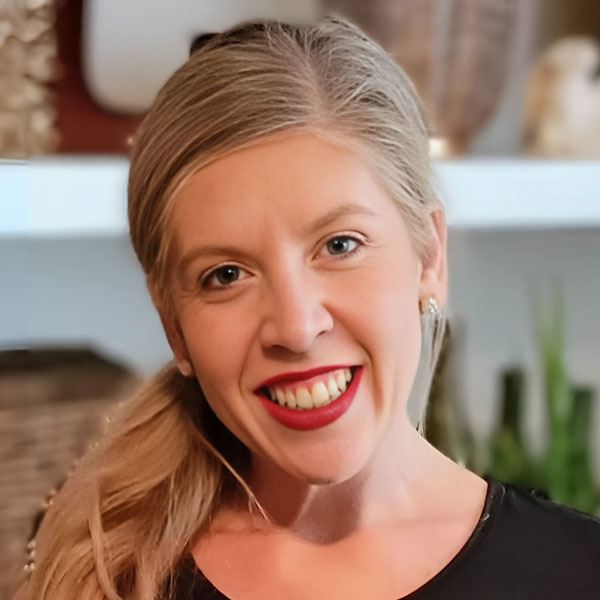
Rebecca Landriault is a results-driven senior executive with nearly two decades of specialized expertise in medical-aesthetic business strategy, practice operations, and revenue optimization. As CEO and Founder of Apex Aesthetic Consulting, Rebecca leads a team of advisors dedicated to elevating medspas and plastic surgery practices across North America, guiding clients through tailored business coaching, operational streamlining, and peak-profitability frameworks.
Before launching Apex Aesthetic Consulting, Rebecca served in pivotal leadership roles at top aesthetic practices and industry platforms, architecting high-impact initiatives in business development, client experience design, and laser equipment procurement. Her hands-on approach blends consumer-centric marketing with rigorous financial analysis, empowering practice owners to boost average treatment value, reduce overhead, and exceed industry benchmarks for client retention and lifetime value.
A graduate of Purdue University, Rebecca holds an MBA with a concentration in Health Care Management. She is a certified Lean Six Sigma Green Belt and a frequent keynote speaker at national aesthetic conferences. An advocate for women’s leadership in health care, she has joined expert panels on strategic shifts for scaling medspas, team-building in clinical settings, and pioneering innovation through data-driven decision-making. Rebecca’s published insights appear in leading industry blogs and professional journals, and she serves as CEO moderator for the “Women in Aesthetic Leadership” webinar series.
Committed to mentorship and community, Rebecca partners with emerging women leaders to break barriers and drive inclusive growth across the aesthetics industry. When she’s not consulting with practice owners, she volunteers with healthcare nonprofits focused on patient education and equitable access to aesthetic services.
HOST – MICHAEL WALKER

Michael Walker is a seasoned leadership coach and analyst (Q.MED) who is passionate about adding value to individuals and helping them unlock their untapped potential. With over 35 years of diverse business experience, he specializes in organizational development, succession planning, conflict resolution, and mediation.
As a Qualified (Q.MED) mediator with the ADR Institute of Canada and an Analyst (WFA) with the Workplace Fairness Institute, Michael has a strong foundation in conflict resolution and workplace dynamics.
His expertise extends to providing workshops and seminars that equip participants with practical tools to apply immediately for improved relationships, fairness, innovation, productivity, and profitability.
Michael is dedicated to supporting personal and professional transformations and is committed to helping individuals achieve greater financial, relational, physical, spiritual, and emotional prosperity through his coaching and advisory services.
Resources


Connect with Us:
Category: Business of Aesthetics Podcast