In this insightful episode of the Business of Aesthetics podcast, host Michael Walker sits down with highly respected aesthetics recruiter and talent strategist Heidi Dunavant to explore the shifting dynamics in aesthetics sales recruitment. Heidi brings clarity and candor to the evolving job market, recruitment challenges, and what truly drives top-performing sales reps.
With over 30,000 views on her recent viral LinkedIn article, Heidi shares the realities many aesthetic companies and sales professionals are navigating today, from misaligned expectations to cultural mismatches and the critical need for consultative selling. Whether you’re a practice owner, aspiring rep, or executive leader, this conversation offers practical takeaways on attracting, retaining, and empowering the best talent in the business.
Key Takeaways
- Market Saturation & Turnover
The aesthetics job market is saturated with reps and devices, leading to increased turnover and mass layoffs. - Sales Roles Are Evolving
Device reps are hired to sell and leave, relationship-building is more valued on the skincare/injectables side. - Common Hiring Mistakes
Aesthetic companies often prioritize brand prestige over adaptability or cultural fit, which leads to mismatches. - Top Rep Expectations
High performers seek strong brands, uncapped commissions, accelerators, growth potential, and solid leadership, especially women, who value culture more. - Role of Onboarding & Training
Weak onboarding and limited training prevent even seasoned reps from succeeding in new roles. - Data-Driven Selling is the Future
Digital fluency, CRM analytics, and personalized outreach will define the next generation of top reps.
Podcast: Play in new window | Download
Subscribe To Our Podcast



Key Highlights:
- 00:00:12 – Introduction & Episode Preview
- Host Michael introduces Heidi Dunavant.
- Message from sponsor:a free digital marketing consultation at www.businessofaesthetics.org/msm
View TranscriptMichael Walker: Welcome to another episode of The Business of Aesthetics podcast. I’m Michael Walker, your host for today’s conversation. Before we dive in, I want to thank all of our incredible listeners from the United States and around the globe. Your continued support means the world to us. A special thank you also goes out to our sponsor for this episode, Ekwa Marketing. With nearly 20 years of experience, Ekwa is a leader in digital marketing services for aesthetic practices.
They’re offering our listeners a complimentary digital marketing consultation complete with a tailor-made 12-month strategy for your practice. You’ll be able to head over to www.businessofaesthetics.org/msm to book your consultation. I can tell you from experience and from what I’ve heard of feedback, this consultation is amazing. There’s no hidden tricks or hooks to it. It’s just a great value that, uh, Ekwa Marketing cares that much about the aesthetics industry that wants to support it in that direction. So make sure you head over to that. But let’s go ahead and jump into today’s topic: inside the aesthetics talent market, recruitment realities, and future trends with Heidi Dunavant. Heidi, it is awesome to have you here with us today.
Heidi Dunavant: Well, thank you. I appreciate, uh, I appreciate being a guest on this.
Michael Walker: Well, we’re glad you said yes. So we, as I said, delighted to welcome her here. She’s a highly respected recruiter and talent strategist in the aesthetics industry. She specializes in recruiting top-performing sales representatives for aesthetic companies and has deep insights into what’s driving the talent market today. Her recent LinkedIn article, which has generated over 29,000 views—congratulations on that, Heidi.
Heidi Dunavant: Thank you.
Michael Walker: Sparked conversations across the industry about challenges, opportunities, and evolving dynamics of hiring in aesthetics. So she can bring us 29,000 views. That’s a good, that’s a good base database.
Heidi Dunavant: I’m actually up to 30,700.
Michael Walker: Awesome. So it keeps growing.
Heidi Dunavant: It’s got a life of its own.
Michael Walker: It’s like an annuity now. It’s just gonna be—it does—a returning investment. So in this episode then we’re gonna discuss what’s really happening in the aesthetics job market, the biggest hiring mistakes practices make, what top sales reps want from employers, and where this space is headed in the next five years. Like I say, Heidi, it’s a pleasure to have you with us. And so let’s start with this: based on your recent article that we were just talking about and conversations in the industry, what major shifts are you seeing right now in the aesthetics talent market, and how are they impacting both reps and practices?
- 00:03:01 – Talent Market Shifts
- COVID years were peak performance, but current oversaturation is leading to layoffs.
- Unrealistic expectations from boards are causing misalignment and excessive turnover.
View TranscriptHeidi Dunavant: So, the major shifts that I’m seeing are, um, I feel—and I wrote this in my article—I feel that the clients that I recruit for, which are primarily on the aesthetic device side, um, they’re just not realizing that the market is different today than it was in 2022, 2023. You know, COVID was probably one of my most successful years ever, which you wouldn’t think that that’s possible just due to everything that happened. But, um, COVID—the aesthetic industry—it launched. Uh, reps were doing great. Uh, and so based on that performance, I think a lot of the companies had set their goals based on the success that the reps had. And so they just kept going up, and they kept going up. And now the market has changed. Things have changed. So there’s too many devices out there in the market.
Heidi Dunavant: Too many sales reps, and the reps aren’t able to sell at the volume that they did during those successful years. And so the companies end up firing, uh, these reps—kind of, the grass is always greener on the other side. Um, I’m seeing a lot more turnover. Uh, I’m seeing a lot more mass layoffs just because a new brand will be launched and they think that, you know, they’re gonna be the latest, greatest skincare or the next new device. But the market is a bit saturated with reps and products right now. And so they’re not selling. Then they are having to answer to their board of directors, and they say, well, you know, we need to cut our overhead. So they’re doing mass layoffs. Um, these companies are thinking, well, maybe we can find someone better. You know, Joe wasn’t able to sell—maybe Bill can. Or Mandy isn’t doing very well—maybe Jill is better.
Heidi Dunavant: And it’s just this vicious cycle where, for me as a recruiter, to find somebody who’s been at the same job for two years is incredibly rare. So what is changing is too many products, too many reps, too much turnover. And, um, I don’t know how this is going to resolve itself. It’s almost like we need a cleansing. We need to go back to the beginning and start like it was in 2018. And I think there needs to be more time put forward in training. There needs to be more clinical training with the reps, and there needs to be more understanding of these hiring managers saying, you haven’t hit your goal. We’re not going to fire you. We’re gonna work with you. Or maybe we need to go to the board and we need to adjust. We need to adjust. We can’t say that we’re gonna do 200 million in revenue. Um, things are different. We are gonna do a projection of 150 and then adjust everybody’s quota and make everybody happy. Does that kind of answer what you’re looking for?
- 00:06:35 – Are Reps Selling Relationships or Results?
- Device reps are expected to sell and leave, not build lasting relationships.
- Skincare/injectable reps maintain face-of-brand roles with consultative engagement.
View TranscriptMichael Walker: Yeah, and I’m just thinking as you’re saying that, I’m just thinking, you know, my background is, is in, uh, sales as well—hospitality industry in particular. But, you know, there was always that philosophy, you know, you don’t sell the steak, you sell the sizzle.
Heidi Dunavant: Right?
Michael Walker: Yeah. In this case, you don’t sell the equipment, you sell what the equipment—how it’s gonna be magic for you. But I think what I’m hearing you say—and something that we in the hospitality industry recognized a long time ago—is that we’re actually not selling the steak, the hotel, or the sizzle, or the, the, the, um, the particular unique nuances of that product. We’re actually selling relationships.
Heidi Dunavant: Yes. However, in this industry, that’s one of the things that I kind of talk to the candidates about. Depending on what role they get hired for, if they say in an interview, um, "I’m really good at building relationships, I’m a, you know, a consultative sales rep," that is a no-go. Because these companies don’t want that. They don’t want these sales reps to build a relationship—at least not on the device side. The aesthetic, or the, uh, injectable, or the skincare side—absolutely. Because those reps are in the practices and they are kind of the face of that brand. Whereas on the device or laser side, it is sell and leave, sell and leave. And they don’t want you in there building a relationship, because once you sell, you aren’t going back. It’s a completely different rep that goes back and works with these practices.
Heidi Dunavant: So I would love to say you’re selling a relationship, but when it comes to the device reps—and I’m sure the practices can attest to this—the reps really have no mission to get to know you, understand your practice. They are there to sell a product, tell you whatever they need to tell you, hit their quota, and move on. And it’s sad, and it kind of makes sense why a lot of these practices are kind of burned out and frustrated and aren’t as welcoming to new reps that come in, because it’s probably the fourth rep they’ve seen that day. And there’s the old joke that says, "How do you get rid of a laser rep? Buy a laser—because you’ll never see ’em again." So I wish that it was more on the relationship side, yeah. But on the injectable and skincare—100%. But on the device capital equipment—they’re not there to make friends.
Michael Walker: So that’s good to know. I mean, I think that’s important. That’s a really good distinction and something to be thinking about for somebody. Our listeners will have listeners who are either already in business and they’re looking at how they deal with reps. Conversely, those that are people that are thinking about becoming a rep, or perhaps people that are looking to do more of what you’re doing. But I think it’s, I think it’s really important that, um, you know, we—as you say—it’s about just being really transparent. But people—being expeditious with one group and more relational with another—that actually speaks a lot to the type of people, as you said, you’re going to be recruiting. Because some personality types, like myself, would not be great at just selling a piece of equipment. That’s not me. Um, I could do it, but it’d be hard work. Where somebody else—they love it. That would just be their sweet spot.
Michael Walker: And so that’s really what—right. So that kind of takes me to the next question, which is: in your experience, what are the most common mistakes aesthetic companies make when hiring sales reps, and how can they avoid—? And we’re kind of just walking right into that one, aren’t we?
- 00:10:33 – Hiring Based on Prestige is Misleading
- Success at a well-known company doesn’t guarantee success elsewhere.
- Hiring processes often lack sufficient onboarding and training support.
View TranscriptHeidi Dunavant: We are. So the one that I am fully immersed in right now is, um, hiring based on company prestige—assuming success at a big name competitor equals that they will have success in their organization. And this happens to me all the time where a company says, "You know, Allergan just laid off 70 reps. Go and get me all of the Allergan reps." Um, you know, "Company X isn’t doing so well. I heard that their numbers are down. Go and find me the top rep at that company." And assuming that—they only want the President’s Club, um, successful top 10 reps in the company—and if they bring them over, they will perform. And that just doesn’t always happen.
Heidi Dunavant: If the leadership in this new team that they join isn’t cohesive, if the compensation doesn’t align like it did before, if they were in a leadership position before and they’re not now, or vice versa—now they’re in a leadership position, so they’re not really selling as much, they’re doing more coaching and training. There’s so many aspects that change. And I wish that my hiring managers at all of the companies I recruit for were a little bit more flexible on understanding that it doesn’t always have to be the top rep at a competitor that is going to bring you success into your organization. You know, there’s a lot more involved than just bringing over, you know, the top dog from your competitor.
Heidi Dunavant: And a lot of these times, the devices are completely different. The industry—you know, some of these companies focus on women’s wellness. Some of them are moving into the vision space. And so you may hire a rep that was used to doing sales for body contouring devices, and now you want them to be the top rep selling into OBGYNs or ophthalmologists, and they fail because they’re not used to that. They don’t understand that call point.
Heidi Dunavant: And so I do wish that they weren’t always looking at competitors’ top reps. There’s also a lot to be said for the onboarding process. I think a lot of these companies assume that the reps will figure it out. So they want somebody who already has experience that they don’t have to train. And they say, "Well, you know, they’ve been selling for Company A. They’re obviously gonna know how to sell capital equipment. We’ll just get ’em started. They’ll cold call, get in their car, and we’ll just give ’em a little talk track and a laminated sheet, and this is what they need to say."
Heidi Dunavant: Well, that doesn’t always produce a positive sale for your company. The rep goes in, doesn’t really know what they’re talking about. They didn’t have a strong onboarding. They didn’t do enough shadowing, they didn’t do enough ride-alongs. They only offer device training twice a year. They got hired at a time of the year where maybe the next training is five months away. And so the reps are selling, but they really don’t know everything that there is to know about this new device or technology.
Heidi Dunavant: I think the hiring managers many times feel that, you know, "Just sell on the ROI. You don’t really need to talk about it clinically. We have a clinical team that will come in and sell. You just need to tell them they need this device because it’s gonna make money." Well, this rep is brand new. They’ve hired them. They don’t know how to pitch ROI on that device. They’ve been pitching it on their previous company’s device, but they don’t necessarily know the return on investment pitch or sales speech for the new company.
Heidi Dunavant: So overall, I would say if they could stop only wanting reps from competitors and be willing to take on sales reps that have been successful from outside the industry—and be willing to put in the training to develop a strong rep versus stealing a strong rep.
- 00:15:12 – Investing in Growth vs. Stealing Talent
- Comparing aesthetics recruiting to grooming talent in the entertainment industry.
- Companies should consider shadowing and structured mentoring for new hires.
View TranscriptMichael Walker: Yeah, that’s—yeah, exactly. I mean, it’s about where you’re gonna make the investment really, isn’t it? I, um—as a leadership coach, I deal with some of my clients who are in the entertainment industry, and, um, like a traditional artist—you pick whoever your favorite artist or high profile, take somebody big, high profile like Taylor Swift. I mean, she produces her own events, but the next tier down—they don’t. And they book, but we know math, and we can do the math and figure out pretty much what their ticket sales generation will be as artists. And we have the ability to just know what to price them at.
Michael Walker: But what’s really interesting now with YouTube and all these, there’s these surprise people coming out of the woodwork that are generating big, huge numbers of followers, that are generating big, huge numbers of tickets. But they’re not polished. They’re not developed yet. And so some of the brands are now—some of the labels—are taking and bringing them in and having them shadow professional artists. So, "You just hang out with Blake Shelton for a couple of months. Here, go on tour. Just be and see what it looks like to be a country artist," or whatever. And they’re having huge success with some of these folks. And it sounds to me like the idea of shadowing and looking for the innovative person rather than the obvious is, uh, is really the paradigm shift that you’re advocating.
Heidi Dunavant: Yeah, absolutely. I get reached out to every day by, you know, candidates on LinkedIn—not from the industry—that say, "Oh, I saw a post that you had an opening in, you know, Michigan. What can I do to apply?" And I look at their background and I just say—there’s just, you know, I tell them as nicely as I can—there’s just no way. There’s absolutely no way I can get you an interview. And it has nothing to do with me not thinking that their experience is, you know, worthy of putting them forward. It’s a complete waste of time for the candidate, for me, for the hiring manager, because they won’t look at them. They say, "Oh, I don’t even know who this company is. I’m not interested. I don’t care that they did X amount of sales."
Heidi Dunavant: "It wasn’t in capital equipment," or, "They’re selling into the hospital and not selling to private practice physicians. They won’t understand our sales cycle." And so I am all day long just sending heartbreaking messages to these candidates that want to get into the space. And it’s the same thing—if you’re not already in it, chances are you’re not going to get an interview. And then they say, "Well, how do I get into it?" Well, you had to start when you were 25. You are now, you know, in your forties, you’ve had a successful career, you hear that aesthetic sales reps can make three, four hundred thousand—which technically isn’t really true anymore—but they hear about the compensation in this industry and they get excited about it, a little blinded by dollar signs. And it’s kind of crushing to have to say, "If I could have got you at 25 and where you worked your way up, but now there’s no way anybody’s gonna interview you." Right. So. Yeah. Yeah.
Michael Walker: Well, the next question kinda leads a bit into this, but, you know, we talked about top-performing sales reps. Obviously, they’re in high demand—for good or bad—and as you point out, whether they produced great numbers somewhere else, that doesn’t necessarily mean they’re gonna be top performers in another brand or situation. But they’re in high demand. So what do they look for in an employer, and how can practices position themselves to attract the best talent?
- 00:18:58 – What Top Performers Really Want
- Reps prioritize alignment with brand values, strong comp plans, and territory growth.
- Female reps care more about leadership and culture than their male counterparts.
View TranscriptHeidi Dunavant: So, you know, top-performing aesthetic sales reps are highly selective, and rightly so. Um, they’re not just looking for a paycheck. They’re looking for alignment with a brand that reflects their own standards of excellence, credibility, and long-term growth. When it comes to the brand, reps want to sell a product that stands out.
There are many times I have conversations with candidates where they say, "Oh, I don’t—yeah, it’s great that you’ve got an opening there, but I’m not proud to say I sell their devices. Their devices are, um, cheap," or, "They have no market differentiation," or, "They have a bad reputation." So the reps want to sell a product that stands out, and they gravitate toward companies with strong clinical data, branding, and a reputation they’re proud to join.
Compensation is huge for a top-performing aesthetic sales rep. They obviously want to make sure that they are joining a company that is going to have a strong compensation plan—a competitive base, uncapped commissions. Number one elite reps look for accelerators, equity options, protection of their territory. So money is obviously a huge, huge thing for these top-performing reps.
Practices that position themselves to attract the best talent—I can answer this for the companies; I can’t answer this for med spas, derms, plastic surgeons. So the companies that want to attract these top sales reps—whether they’re injectable, skincare, or device—base salaries have to come up. They really do.
I understand that this is a performance-based industry, but because of all of the struggles that are happening right now, sales reps are finding that they’re living off their base salary a lot more than this promised on-target earnings. So when a company is offering a $70k–$80k base but $350k at plan—well, those are great numbers, but if you’re not hitting plan, you’re not hitting that $350k. And so a lot of that happened on the injectable side as well. Injectable reps used to be making in the $300k’s—some in the $400k’s. Now, because the quotas are so high, they’re living off their base salary and maybe another $80,000 in commissions instead of $200,000 in commissions.
So companies are going to need to up their base salary to capture these number one elite reps, for sure. And they’re going to have to offer something—a great bonus structure, and these accelerators, and, you know, getting bonused when you hit certain platforms of your goals and your quotas.
Leadership and culture is important. It’s more important to females than it is to males. I think that’s just a given—just, you know, the way that we’re made up. Women want a good, strong leader and culture. They don’t want toxic leadership. They don’t want micromanagement. It seems that the male sales rep—it doesn’t really bother them about the leadership and culture. They just kind of deal with it. You know, if they don’t necessarily respect the board or the president or the CEO or the VP—it doesn’t really bother them, where it does bother female sales reps, for sure.
The territory and growth potential is also huge when attracting top talent. So if it’s a great opportunity, but you’re given a section of the U.S. that is really underdeveloped—like, I mean, Nebraska or Iowa—they may not want to leave, because now you’re asking them to come and join your company, but you’ve just launched in that section of the U.S., which means there’s no accounts, there’s nothing established.
That can be good and it can be bad. If it’s on the skincare or the injectable side, it’s definitely not going to be a positive for a rep to go in with zero accounts and start from ground zero. On the device side, it might be a benefit, because the rep says, “You know, maybe we’ll have more success because we’re new to the market. They haven’t seen our products, they don’t know about what we’re offering.”
But making sure that territory and the growth potential is—you know, that it’s ripe for expansion, that there’s room to grow, that if they develop it, they’ll get a leader or another rep under them—all of that is important.
So top talent—just kind of to recap—they want a good brand, they want good compensation, a majority want good leadership, and then they want territory strategy and growth potential.
Michael Walker: Yeah, very well summarized. And, you know, I think you’re—this, the Men Are from Mars, Women Are from Venus analogy—it’s very true. You know, as guys, we’re just more competitive. We just—we put the focus on “here’s what we’re gonna do,” and relationships are there, but they’re not the drivers. Where women—that’s much more of a factor. There’s more importance placed in that. And it just—it’s very different.
One question I had around that, though, was: as far as benefits are concerned, like—I’m thinking like health benefits, spa benefits—is there a trend towards offering kind of more unique bonus features that are connected to the industry or not?
- 00:25:34 – Unique Incentives & Perks
- Tangible rewards like designer items or sports tickets resonate more than standard benefits.
- Gender and role-specific incentives vary in appeal and effectiveness.
View TranscriptHeidi Dunavant: No, there really isn’t. I have never not placed a candidate based on the lack of what’s in the benefits package. I did recruit for a company who I thought was creative, and it was great—they would do contests every month. And I think they would give away like a Jimmy Choo bag or shoes, and that was exciting for the reps. They wanted something tangible. It wasn’t just money. They, you know, posted that you’d get this pair of shoes or this bag in a marketing email, and the top rep of the month would get that. I thought that was great. That was creative.
There really isn’t any benefit to any of the companies that I recruit for to offer a unique benefit to attract top talent. I feel like the only reps that would appreciate it—again, it goes back to a specific gender—those things just aren’t really important to male reps. You know, there’s a company that I recruit for, and when they have a successful quarter or mid-year, the hiring manager will take them all out and get them fitted for custom suits and buy them suits as a reward. They love that.
So, I guess, you know, benefits as far as health insurance and stock options and extra PTO and more paid holidays—isn’t a competitive add-on that’s going to attract talent. But suits, bags, shoes—things like that—that’s always a plus.
Michael Walker: Interesting. Well, I can tell you, if I was working in Dallas, I know that those 50-yard line, second row-in tickets at a Cowboys game—it would definitely be worth my joining that firm.
Heidi Dunavant: Absolutely. You know, sporting events—if they did that, I think that would also be. But again, it kind of comes back to, if that’s the prize of the month, is it gonna be as appealing for an injectable or a skincare rep to earn those? Maybe. Maybe. But I feel like you gotta look at the prize and decide—is it something that both genders would appreciate?
Michael Walker: That’s the thing, yeah. One-off, customized is just too expensive and too time-consuming. So, yeah. Another question for you—many, many practice owners say they struggle to find that quote-unquote “right fit” for their team. How can they refine the recruiting process to improve both short-term performance and—in such a big deal when it stabilizes—long-term retention?
- 00:28:32 – Finding the Right Fit for Teams
- Cultural mismatch is a major barrier in practices and companies alike.
- Practices need deep conversations and multiple touchpoints to assess fit beyond interviews.
View TranscriptHeidi Dunavant: Um, so I can kind of answer this for both sides, because I have been reached out to—and when I say both sides, I mean practices: derms, plastics, med spas, private practice physicians, even dentists now are getting into the med spa space. There are challenges to finding the right fit for the team, for sure.
The dynamics of the office—you know, some of the people that have been in the office may have been there for 10 years, and you bring somebody new in—generation gaps. “Well, we’ve always done it this way.” And then you come in and you’re tech-savvy, and, “We haven’t done that.” Or you come in and start wanting to push Instagram and TikTok—"We refined doing it the way we did it. We just don’t think you’re a good cultural fit because you’re shoving things down our throat. You’re trying to sell packages. We don’t need packages sold.”
I have seen that happen where reps have been released because they come in—they’re too aggressive with too many, and it’s not even new age ideas—it’s digital technology, which is where this industry is going. But if there’s a practice that hasn’t used it, and they hire somebody that is recommending all of these new marketing strategies, it can cause issues in the practice. And then they get released and say, “You know what? She just wasn’t the right fit. Can you help us find someone else?”
So what they can do to refine their recruiting process—on the practice side—I think that it really needs to have long conversations with a potential candidate. Getting to know them, understanding who they are—not just over the phone. Doing it on video. Meet them for coffee, take them out to lunch, learn about them, and kind of see if they’re the right fit outside of the interview process. Might determine if they’re gonna be a good fit inside the practice.
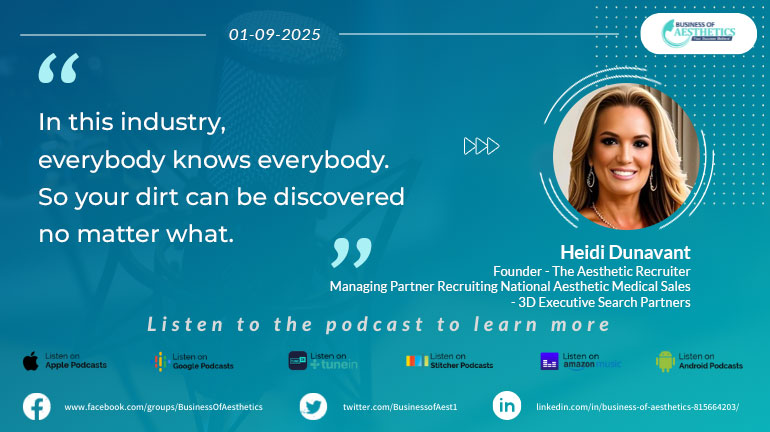
On the aesthetic device side, my companies struggle because their recruiting process is reactive, generic, and it overly focuses on surface-level traits. In this industry, everybody knows everybody. And so your dirt can be discovered no matter what. If I submit a high-level candidate to a company, you can bet the regional sales manager or the VP is gonna call another rep at a competitor and ask them, “What dirt do you have on that candidate?”
So in other industries, you may be able to tell the hiring manager, “You know what? It just wasn’t a good fit for me,” or, “I decided there wasn’t enough growth, and so I’m looking for other opportunities.” But in this industry, they’ll pick up the phone and they’ll call someone at the company you left, and they’ll say, “Tell me about John. Why isn’t he there anymore?” And then they’ll find out, “Well, John wasn’t performing. He was put on a performance improvement plan. He never left his house, he wasn’t selling. We had to let him go.”
So they’re always gonna find out in this space what you’ve done.
So to find the right fit, it again goes back to: does this rep care about our culture? Because maybe we don’t always have the best culture. We are not looking for a rep who cares about our culture. We are looking for a rep who is driven by numbers and sales and all they want to do is go out there and make money.
So I would say aesthetic practices are looking for the right fit. Aesthetic device, injectable, and skincare—it’s not always about the right fit. It’s who’s gonna sell the most, who’s gonna make the most money.
You gotta drink the Kool-Aid. You do—no matter where you go. You don’t want to come in and be disruptive. You don’t want to ask a lot of questions. You don’t want to say, “Well, my other company never did that.” If you took the risk of leaving your job and are now a new rep for a competitor, you just need to go in, put your head down, and work.
And also, making sure you’re not a job hopper—that’s going to make it very difficult in this industry, for sure. And they’ll say, “You know, we were looking at her résumé and we really like her background, but she’s worked at four companies in three years, which shows that she hasn’t even stayed 12 months. We just don’t think that that’s the right fit for our team.”
Well, again, it goes back to what I said earlier: trying to find someone in this industry that has been with their company for two-plus years is incredibly rare. So, you know, hoping that the right fit for us is a rep that has long-term employment at the last few companies that they have been at—that just doesn’t happen anymore.
If they could restructure their recruiting process and use more industry talent recruiters, executive search like me—I feel like I actually work as an employee for the companies that I place my candidates for. So I have really long conversations screening them well before I even submit them. And I explain all of the nuances of the job, the day-to-day, what they’re going to expect. I kind of do a deep dive into them, and I can tell if they’re going to be a fit.
- 00:34:51 – Role of a Skilled Recruiter
- A recruiter acts as an advocate for both client and candidate by filtering for fit.
- Heidi stresses the importance of honest, gritty job descriptions to improve retention.
View TranscriptHeidi Dunavant: I mean, I talk to candidates all day on the phone, and I can tell—just the cadence in the way that they answer—if the hiring manager is going to like them or not. And I won’t submit them if they’re not a good fit. So I do think that these companies should utilize a recruiter that screens the candidates for the cultural fit and kind of eliminate some of that, “We hired them and they weren’t what we thought.” Let me decide if they’re a good fit for you, and then I’ll present them to you.
Michael Walker: Yeah, that’s really good. I mean, that’s—as you say, you know, you—you need… I’m not an electrician, so if I need to rewire my house, it would not be wise for me to do that. I’m not a plumber. I’m a professional mediator, leadership coach, and in that area, I’m pretty darn good at those things, you know? And I think this is one area—in hiring—there was this, you know, the history of hiring has been very up and down and recruiter-driven. But these days really, if—it’s like being… if you don’t know it, do you really want to be an expert at it?
You hire somebody. That—Ekwa Marketing is an example. That’s what they do. They’re experts in digital footprints—putting your digital marketing footprint out in front of you in a way that nobody—you couldn’t do it yourself. And so I think what you’re saying for yourself, that’s—you’ve spent years preparing to be able to do that. You’ve positioned yourself in a way that you’re not only a recruiter for the firm, you’re an advocate for the brand, and your voice doesn’t have an agenda. And that’s—it’s a real gift.
So if you’re—you know, that’s the real value of bringing on a recruiter. In my world, I do a lot of—my clients, large companies—they’ll have me, I’ll do an interview. They’ve done the primary interviews on the tech. I do aircraft industry and stuff like that where there’s a lot of high-tech stuff. And they’ve already screened out for if someone knows how to actually fly the plane or build a plane—whatever it is. I’m not interviewing for that.
I’m interviewing just what you’re saying—for fit. I do some personality profile work. We actually—and I already have the snapshot of the team, so I can actually see how they’re going to drop in or not. And what that would look like if they’re not exactly a fit but we like the candidate—what’s going to be needed, how we’re going to move that and have a dialogue both ways, both with the client and with the candidate, to your point, and find out if there is a good fit or not.
And it really—we talk about retention. That’s when people… People, you know, choose to stay with a firm when—it’s not… People don’t care much—you know, they want to know how much you care. And that’s the value added to that culture where people stay for years and you become a first-choice employer sort of thing. So I love the way you’re putting that. And I am—I’m plugging Heidi right now, so make sure you…
Heidi Dunavant: Well, thank you. You know, I played around with AI a little bit this week, creating a job post, and it—it was great, but it was pathetic at the same time. I mean, it was so fluffy. You know, you’ve got great adjectives and descriptive words like, “Do you thrive in a fast-paced environment and love to build relationships? And are you digitally savvy?” But you don’t know anything about what you’re going to be doing at all.
So some of my job postings are very gritty. I’ve had a lot of comments on them—almost all positive—because I really say how it is. This is a hard job. You’ll be in your car from 8 to 5, answering texts, emails, phone calls, pulling over in parking lots, eating fast food in your vehicle, knocking on doors, getting doors slammed at you, with the expectation of setting three meetings a day—just hoping that someone’s going to let you come back in and do a presentation.
You need to have 15 presentations a week while you’re cold calling between all of those times and hoping that you get 15 more for the next week and the next week—while you’re taking a little bit of micromanaging calls from your boss: “Where are you? Where have you been? Where’d you go today? How many accounts have you hit?”
Coming home and working on your computer at night, filling out your CRM and figuring out: Which doctors are you going to go see? Who are you going to go see? Are you going to focus on a specific doctor? Are you going to hit every OB-GYN this, you know, on Tuesday? Or are you going to hit every doctor in a specific zip code?
Like, I really lay it out in my job postings. And sometimes I just wish they were more dirty, more in-your-face. Will you get the volume of résumés returned? No. But I gotta tell you, 90% of the people who apply for these jobs aren’t qualified anyways. So you might as well just weed it out and say exactly how hard and detailed these jobs are.
That can help eliminate you getting the wrong candidate. And that can help with retention—where they said, “I knew exactly what I was getting into when I applied for this, and I know exactly what the job entails. How you laid it out very specifically. There wasn’t just a bunch of fluffy adjectives about, you know, building trust and having a luxury brand and that we redefine excellence.” Who cares?
How about we tell you: You’re going to get an $80k base salary. It’s going to be incredibly hard. You may or may not hit quota. You’ve got a bulldog for a leader in the industry. And it’s going to be tough—but you know what? The reward is there if you can stick it out. I just wish more people talked like that.
Michael Walker: I feel like you’d be a great recruiter for a SEAL team candidate.
Heidi Dunavant: You know what? You’re probably right. You’re probably right. This next week—hell week—is going to be the worst thing you’ve ever done, so…
Michael Walker: But what’s interesting is, the people that rise to the top of that thrive through that kind of a conversation. No one expects to go in there and that it’s going to be a piece of cake. And I think you’re absolutely right.
I mean, there used to be a fear that, “We’re not going to get enough candidates.” That’s not a problem anymore. “We’re not going to get the best candidates”—well, that’s the problem, to find when you’ve got hundreds that are irrelevant just applying. So I really like what you’re saying there.
But as we kind of just looking at our time, I’ve got a question for you that really—I think—let’s go into your crystal ball. Let’s look a little bit more into the future. So, you know, given your insights—both from recruiting and obviously from industry observation—where do you see the role of sales reps in aesthetics evolving over the next five years?
- 00:42:04 – Future of Aesthetics Sales
- Data fluency, consultative selling, and AI tools are essential for future success.
- Reps must know their territory digitally and strategize lead generation in smarter ways.
View TranscriptHeidi Dunavant: Uh, 100%. And it’s interesting that you and I are talking about this because this has developed in my mind—it’s been brought to my attention—and it’s happened in the last seven days, that the direction for the need for data, a sales rep that will utilize CRM analytics, understanding how to source leads, data scraping tools, Google Analytics, search engine optimization, learning how to generate leads, upselling and cross-selling, has become a thing.
If you don’t know where you’re going tomorrow and the right doctor to go and visit, and you haven’t figured it out by digitally scraping basically the internet and saying, “Okay, is this a med spa owned by seven doctors? So if I go in there, all seven doctors have to say yes. That’s going to be risky—getting all seven on board. I need to find a practice that only has one decision-maker.” Right?
Well, how are you going to find that? You need to be digitally fluent. You need to be doing a lot of website investigating, going to their About Me section, their tabs, looking everybody up, seeing who the office manager is, finding out who’s the gal at the front desk, memorizing her picture so that when you walk in, you go, “Oh, that must be Stacy. Hey Stacy, this is Joe.”
So, a lot more data-driven territory management. There needs to be more consultative selling—not just selling the device, but making sure the reps are educating these practices on usage, on usage of whether it’s the injection, the skincare, or the device—making sure they use it. You don’t just sell and leave. You go back in. You are doing more consultative selling—asking them, “How many treatments did you do this week?” “Ooh, how come maybe not so many?” “What do we need to do to get that up?”
So—data, consultative selling, leaders that realize that you don’t need to have fear-based leadership. Sometimes it’s okay to build your team up with positive affirmation than threats. You know, and not so willing to fire and think that there is somebody better on the other side.
So just supporting. Supporting. Put these reps through a digital course. Teach them how to do data scraping, how to really do a course on their CRM. Hiring somebody that just does that and then submits all of those doctors’ names, addresses, phone numbers, who they’re calling on, who’s the decision-maker—and assign a person like that to upload that to the sales rep so that they know where they’re going and who they need to talk to.
But if you aren’t understanding digital technology, using AI, you are going to suffer. The days of just straight cold calling—driving by, seeing a strip mall with a practice on it and thinking you’re going to go and knock on the door—it’s not going to work. It’s just not going to work.
So a lot more digital selling, evolving with also in-person selling, is where I think that it’s going.
Michael Walker: Well, I think that’s a beautiful summary—data, consultative selling, and I think a passion for hard work with great potential. You know, it takes hard work—and it’s new work—and it requires having that, what I like to say, you need to have that what we call “unconditional curiosity”—curiosity without opinion, expectation, and judgment—starting with yourself. You gotta look in places you’ve never looked before.
That’s what I’m hearing Heidi saying, correct?
That will separate the men from the boys, the girls from the women, and set you up for success. Heidi, we have run out of time. Thank you so much for joining us today and sharing your expertise on Inside the Aesthetics Talent Market: Recruitment Realities and Future Trends. Boy, we sure have touched on that nicely today.
Your perspective on hiring, candidate expectations, and the future of sales roles in our industry has been incredibly insightful.
- 00:46:48 – Final Thoughts & Farewell
- Michael recaps key insights and thanks Heidi for her industry-leading perspective.
- Call to action: Book your free 12-month marketing strategy consultation with Ekwa Marketing at www.businessofaesthetics.org/msm
View TranscriptMichael Walker: And to our amazing listeners, thank you for tuning in. Thank you for the privilege of your time. We truly appreciate your continued support and love being able to bring you conversations that help you grow your business and navigate the evolving world of aesthetics.
If you enjoyed today’s episode, please share it with your colleagues and peers. And don’t forget to leave us a review on your favorite podcast platform. We love reviews—so should you. Your feedback helps other professionals discover the podcast and gain valuable industry insights.
Now, just before we wrap up, a special thank you again to our sponsor, Ekwa Marketing. And you remember I said that they’re offering our listeners a complimentary digital marketing consultation and a custom 12-month strategy designed for your practice. What I know that means is they’re going to spend an hour with you—based on six hours of looking at your digital footprint, looking at all the things you do digitally and how they work or don’t work for you—and come back to you with a custom 12-month strategy. How good is that?
If you’re already doing it, you’re the IT expert, then you probably don’t need that. But most of us do. So please visit www.businessofaesthetics.org/msm to book your session today.
So until next time—keep learning, keep growing, and keep building the kind of business that attracts the best talent in the industry. On behalf of Heidi, wishing you all an incredible week ahead. Thank you.
GUEST – HEIDI DUNAVANT
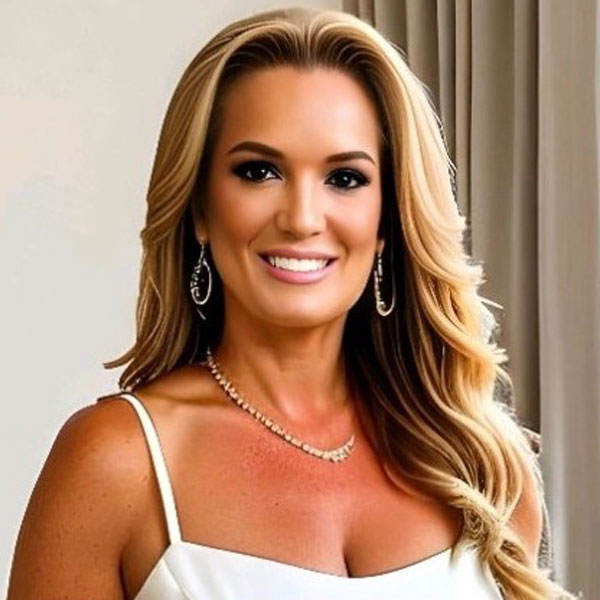
Heidi Dunavant is a highly respected recruiter and talent strategist with a specialized focus on the medical aesthetics and beauty industries. As the founder of The Aesthetic Recruiter, which operates under the umbrella of 3D Executive Search Partners, she provides a platform to connect top-tier professionals with leading companies in the space, including those in aesthetic devices, injectables, skincare, and marketing.
Heidi’s unique approach is rooted in her philosophy of “Real Expertise. Real Results.” She is known for going beyond standard recruitment practices to offer a higher level of service, personally investing in the professional connections she forges. She understands that a company’s hiring needs can change overnight and works to provide a confidential and professional path to high-target growth.
With over 30,000 followers and a ranking among the top 1% of viewed recruiters on LinkedIn, Heidi has a deep understanding of the industry’s evolving dynamics. Her insights have sparked significant conversations, and she is recognized for her ability to navigate the complexities of the market, including mass layoffs and rapid turnover. Her expertise lies in identifying and vetting candidates for cultural fit, performance, and long-term potential, ensuring that both companies and professionals find a valuable and lasting match.
HOST – MICHAEL WALKER

Michael Walker is a seasoned leadership coach and analyst (Q.MED) who is passionate about adding value to individuals and helping them unlock their untapped potential. With over 35 years of diverse business experience, he specializes in organizational development, succession planning, conflict resolution, and mediation.
As a Qualified (Q.MED) mediator with the ADR Institute of Canada and an Analyst (WFA) with the Workplace Fairness Institute, Michael has a strong foundation in conflict resolution and workplace dynamics.
His expertise extends to providing workshops and seminars that equip participants with practical tools to apply immediately for improved relationships, fairness, innovation, productivity, and profitability.
Michael is dedicated to supporting personal and professional transformations and is committed to helping individuals achieve greater financial, relational, physical, spiritual, and emotional prosperity through his coaching and advisory services.
Resources


Connect with Us:
Category: Business of Aesthetics Podcast