In this episode of the Business of Aesthetics Podcast, host Michael Walker sits down with Kara McClanahan, a trusted advisor in the world of aesthetic clinics.
Instead of spending tons of money chasing new clients, Kara explains how to build trust with the ones you already have. She talks about membership programs, long-term treatment plans, and how to turn happy clients into loyal fans who tell everyone about your practice.
Kara also shares real-life stories, helpful tips, and strategies that work—even if you’re a small med spa. If you want more revenue, better retention, and clients who keep coming back, this episode is for you.
Key Takeaways
- Focus on the clients you already have
Building stronger relationships with current clients brings in more money and trust than always chasing new ones. - Membership programs increase loyalty
A good membership plan can create steady income and keep patients coming back for more. - Treatment plans should be long-term
Don’t just treat the issue today—build a plan that supports your patient’s goals over time. - Trust is your secret weapon
People spend more and refer others when they trust your practice. That trust starts with caring and follow-up.
Podcast: Play in new window | Download
Subscribe To Our Podcast



Key Highlights:
- 00:00:00 – Welcome & Episode Introduction
- Michael introduces the episode and thanks Ekwa Marketing for sponsoring.
- Shares how listeners can get a free digital marketing consultation.
View TranscriptMichael Walker: Welcome to another episode of The Business of Aesthetics podcast. I’m Michael Walker, your host for this episode. Before we get started, I want to thank all of our incredible listeners from the United States, Canada, and around the globe. Your continuous support means everything to us.
A special thank you also goes out to our sponsor for this episode, Ekwa Marketing. With nearly 20 years of experience, Ekwa Marketing is a leader in digital marketing services for aesthetic practices. They are offering our listeners a complimentary digital marketing consultation, which includes a tailor-made 12-month digital strategy for your practice.
They say that’s a complimentary consultation they’re offering, and you’ll be able to head over to www.businessofaesthetics.org/msm/ — that’s where you can book your consultation. So I encourage you to have a look at that. It’s just a wonderful opportunity to get some great insight on the digital side of your operation and the marketing related to that.
But without further delay, let’s dive into our topic for today. And the title is From Clients to Champions: Boosting Retention and Revenue in Aesthetic Practices. And today we have with us Kara McClannahan. Welcome, Kara, it is great to have you here.
- 00:01:29 – Meet Kara McClanahan
- Kara is a retention and growth expert for aesthetic practices.
- She focuses on helping practices grow by loving their current clients.
View TranscriptKara McClanahan: I’m excited. Thank you for having me.
Michael Walker: Kara is a trusted advisor to aesthetic clinics and a strategic expert in client retention, revenue optimization, and sustainable growth. While many practices focus on acquiring new clients, Kara champions a smarter approach — and we’re gonna find out a lot more about that smarter approach — maximizing the value of your existing client base to create long-term success.
With her background in business development and network strategy, Kara has helped countless aesthetic practices increase lifetime client value. I love that term, Kara.
Kara McClanahan: I do too.
Michael Walker: Yeah. Unlock new revenue streams — and all by deepening existing relationships rather than constantly chasing new ones. So in today’s episode, we’ll explore how practices can nurture loyal client-patients — pardon me — build trust that leads to repeat business, and turn satisfied clients into brand champions.
Kara will also share real-world — pardon me — case studies, actionable tactics, and frameworks that work for practices of all sizes. So, Kara, it is great to have you here, and I always like to start out with a question that just kind of hits right to home. And one of my favorite words in set questions is: What are you passionate about? In this case, what sparked your passion for helping aesthetic practices grow by focusing on the clients they already have rather than the traditional way most organizations do?
- 00:02:59 – Kara’s Background & Passion
- Kara shares her 30+ years of experience in aesthetics.
- Talks about her move from hands-on work to business consulting.
View TranscriptKara McClanahan: Well, I think what sparked my interest in helping others is having gone through the trials and fires of managing medical aesthetics practices myself. I’ve been in aesthetics for over 30 years. I started, honestly, as an aesthetician myself and found that I really enjoyed the business-building side rather than treating patients. Not that I didn’t love treating patients, but I just had a knack for and really enjoyed the business side.
And I think passion drives performance, and so I found my passion really managing medical aesthetics practices. I did that for the first 15 years of my career. I was lucky enough to work in plastic surgery practices, cosmetic dermatology practices. I was the Vice President of Operations for a group that scaled from six to 60 locations, and we successfully sold to private equity. About the time we sold, I was kind of going back into private practice management, focusing on smaller locations versus the masses.
Kara McClanahan: While it was lots of fun, it was a lot of work, and I realized there weren’t a lot of resources out there for medical aesthetic practice managers. So I had started kind of just reaching out, trying to find my own network, if you will, and resources to help the practices that I was managing grow. Because there was such a lack of resources out there, I found myself educating and working with other practice managers and practice owners to kind of go through and untangle the business side of aesthetics, and apply some of the things that I had already learned — and by trial.
That’s really kind of what got me into consulting, if you will. It was a great pleasure of mine to see practices that were struggling, or were good but trying to figure out how to be great and more, and just really taking them through what I had learned.
Kara McClanahan: And so that sparked, again, this educational piece in me, which I probably always had. You know, I found myself — even when I was treating patients — educating my patients. And so I’m just kind of a natural educator, and I just really found that practices needed information. They needed to know, again, how to be great, not just good, and how to really scale and grow their practices.
And especially coming from the marketing side, you and I both know businesses of all kinds — not just medical aesthetics — focus on new clients, new clients, new clients. What can we do to market and get new clients in the door? How can we get more people into our system?
And what I had learned, particularly in scaling the medical aesthetics practices that we did — that eventually sold to private equity — is that we really needed to lean into the patients that we already had.
- 00:05:38 – The Power of Existing Clients
- Existing clients bring the most value and referrals.
- Happy clients spend more and help grow your practice through word-of-mouth.
View TranscriptKara McClanahan: Our model was a concierge wellness aesthetics practice. And so we were taking traditional practices and turning them into concierge practices. It was a very membership-based practice. And we learned that the value was in our existing patients. They’re already loving your practice, but if you can continue to build that — and not abandon the idea of bringing new patients into the practice — but really build on those that have already experienced your practice, not only can you really deepen that relationship, but those are also your marketers.
They become instant marketers for you. They share their experience, they are the highest referral. And we also know by data that patients referred by other happy patients have a 60% higher spend on their first visit because there’s some inherent trust because of that referral relationship. And for me, that’s always sparked, you know, where we need to go — especially in practices where recurring revenue from existing patients isn’t already inherent.
Kara McClanahan: Take, for example, a plastic surgery practice. Oftentimes, if you’re plastic surgery only, your patients are coming in for one procedure — they may never come back for another procedure. But they certainly were happy, they were referring their friends. So when we looked at the entire patient lifecycle or that patient journey through our practice, it really made sense to hone in and focus on those that were already there a little bit heavier than getting new patients in the door.
The cost for client acquisition is less, as well as that deepened relationship actually turning into much higher revenue for practices. So that’s really kind of, you know, my wheelhouse. And really, we’re focusing on getting patients to the practice — yes — but loving on the patients that we have to continue building that relationship. And we just see that being a much higher return. And that’s true today, particularly in the med spa setting.
Michael Walker: I love that term you just used — thank you, Kara — "loving on the patients." So what you just described really was a process. A lot of people say, "Well, loving on — well, that’s nice. That’s all soft and it’s pretty and it feels good, it’s a little kitten or puppy." But the reality is, you just explained it in a way — it’s a theory, it’s a process, it’s a science. There’s fundamentals to this.
It’s not just that — it becomes that at some level. And the gold in that, of course, is in what you just said: the trust.
Kara McClanahan: Absolutely.
Michael Walker: Really, if you think about it — if your practice is an engine, then trust is the lubricant. Without any trust, things are gonna grind to a halt.
Kara McClanahan: Right.
Michael Walker: And the best source of trust is gonna obviously be the folks that are already there. And just — it’s funny — I had, years ago… I’ve had a lot of different careers, but at one point, I tried out selling cars. A friend needed somebody, so I thought I’d give it a whirl. And I’m really good at selling and people — just like you — and I… I didn’t really like it at all. But what I discovered is that I knew a lot about communicating with people and connecting, but I had no idea how to ask for the sale.
And when I learned the art of that, it was a game changer. But just so you know, the point being — we’re not naturally all good at everything. And really what I’m hearing you say is that this is a process that you can be intentional with, that can actually take existing clients — and we’re gonna talk more about this — just totally transform the revenue opportunities, but the referral opportunities. It’s massive.
And it seems to me — the more I’ve seen in this industry — it’s becoming more competitive. There’s a lot more inventory out there, and some of it’s good, some of it’s not so good. But you need — I think it really is a good time to separate yourself from the pack, which is kind of, I think, what you’re leaning into here.
So having said that, I’ve got the first question I wanna put out to you: In today’s competitive med spa environment, why do you believe maximizing existing client relationships is more powerful than focusing solely on new client acquisition?
We talked a bit about that, but can we dig into that a little deeper?
- 00:09:46 – Why Retention Beats New Acquisition
- 80% of revenue often comes from current patients.
- New patients usually spend less on their first visit.
- Retention leads to more trust and more purchases.
View TranscriptKara McClanahan: Yeah. So analytically, it’s kind of that expanded 80/20 rule. When we deep dive into the financial analysis of most — not new practices, but take for example anything a year and greater — and the longer they’ve been in business, the higher this number changes. But we are seeing that it is true: about 80% of the revenue comes from existing patients.
So there’s a lot of work that goes into acquiring a new patient, but when we look at the data, we know that again, the highest revenue streams typically come from our existing patients. And we’ve said it before — it’s that trust factor. But it’s also, again, it’s easier to differentiate and build a relationship with somebody you know, right?
So a patient finds us from our friend Google — or even nowadays, social media — they have eyes on us, they can see what we say we’re about, they can see what potentially differentiates us. But until they’re in the doors and they’ve experienced your services, they don’t know that to be true.
Kara McClanahan: But the patients that are in your practice know that to be true — if you’re doing all of the things to nurture that relationship. And there is, again, a value placed on our patients. Currently, in the med spa world, data from AMPA tells us that the lifetime value of a med spa patient is somewhere around $6,500 to $10,500.
Now, I actually believe it should be quite a bit higher — and is, in most cases — but that’s an average. And the spend from the new patient is typically under $500 in a med spa. And if that new patient doesn’t come back, then we’ve lost the potential lifetime value of that patient.
So again, focusing on the patients that are already in our practice — we can not only differentiate ourselves, but continue to expand and really roll out, again, new programs, new products. They’re the ones that are most adaptable. When you’re bringing on a new service, they’re the ones that get excited about your membership plans.
Kara McClanahan: And so, statistically again, that higher spend also — as I said before — turns into higher referral rates. And that’s a real thing across every single practice. I’ve worked with thousands of medical aesthetics practices throughout my career, and we see it even from the industry side. Take, for example, a device company.
You know, when you have a relationship that you’re able to continue to build on with your customers — the customer in this particular case being the med spa, not the device company — but you build that relationship, you come in and you support their practice, they’re going to keep your service, your product, your skincare product, your device top of mind. That’s what they’re gonna promote to their own customers the most.
The analogy again works in spa — when you’re talking about your patients — whatever you have to offer, your new clients are less adaptable to taking on a new service. They have a little bit more risk in what they’re willing to do, because they don’t trust you yet.
It all comes back to that trust factor and that authenticity that you’re able to easily build with clients that have at least been in your door and started that relationship.
Michael Walker: Beautiful. I totally see that as — when we talk about if indeed there’s value in separating yourself from the pack. I like to always say, anybody can meet a customer’s needs. Just — you know, I want to buy a toothbrush? Sell them a toothbrush. It’s pretty straightforward.
But to exceed their needs, exceed their expectations, it requires us to know a little bit about them. And so now we have to — and of course, with an existing customer — we start to build that relationship, we have it. And if we have a good CRM in behind it — customer relationship module — that tracks all the things that are unique about that person, it gets really easy to be able to add value to the customer experience.
But I like to describe it as: What if the challenge isn’t just, “That was okay. That was good.” But what if the challenge was to unexpectedly delight the customer?
And that’s what I hear you saying.
Kara McClanahan: Absolutely. Every time.
- 00:14:04 – Building Trust & Unexpected Delight
- Going beyond the basics builds stronger emotional connections.
- Good providers learn to understand what clients truly need.
View TranscriptMichael Walker: And I look, I was looking at your website and, you know, you talked about your vision and how you position yourself. You say you help… you’re setting yourself up as a — not, I — you used the word “consultant,” Kara, and I don’t know, I don’t see you as a consultant. I see you as more of a coach.
Because you — absolutely — you have a passion for business, but you also have a passion for people. And you have a passion for the industry you’re in, and all of that. Consultants tend to be more just information-deliverers and strategies and all that. And I’ve been there. But I think the coaching side of this… because the gift of this business, and why people keep coming back, is because they believe in the passion you have for it — and they want more of what you have.
Kara McClanahan: Absolutely. I don’t love the word “consultant” either, right? Consultants are a dime a dozen, especially in this industry — just like med spas are a dime a dozen. It’s really about a partnership.
I strategically named my company Aesthetic Practice Partners because I want those that I work with to understand I’m a true partner with you — alongside you — when we work together in your practice.
I spoke at a conference over this last week and they asked me, “Well, what does that mean?” I mean, you can say that, but what does being a partner really mean?
And this is true — you can apply this in your clinic to your patients: a partner walks through the journey with you. A consultant, like you said, gives you information, tells you there’s a roadmap, gives recommendations, and these are the things that you should do.
Kara McClanahan: A partner walks you through that journey — shows you how to untangle the how-to and really fully execute. And I think that could be true also with clinicians and business owners and anyone in your med spa.
When you truly look at your relationship with your customer — who’s your patient, your client, whatever you’re calling them in your practice — when you’re truly invested in them and you’re not just there to deliver a service or provide a product, you’re there to help them with their journey. And that makes a huge difference.
And I think that’s a big differentiator in the practices that I work with. We’re so trained in this industry to sell, sell, sell — get that client acquisition cost down, get that client lifetime value up. And we’re gonna sell them this, and when they walk in the door we’re gonna do that. It’s all focused on our KPIs and getting those sales goals up.
Kara McClanahan: But if you partner with your clients and you really fully understand what their need is, then you can really prescribe all the amazing treatments, products, and services that you have — but you have to be invested in their journey. You have to be able to educate them, and not just on why you offer this service or why it’s good for them.
I’ve heard this quote so many times in the sales side — and this is so true in our client journey side — a good salesperson can sell a product based on its value. A great salesperson can sell a product based on the outcome. But an amazing, excellent salesperson can sell emotion.
And when our clients come to us — especially in a med spa world — it’s not just fluff and puff. They’re coming because there’s something they’re possibly insecure about. Whether it’s aging, whether it’s a condition like acne or melasma. But if you can sell the emotion of, “What I have to offer you is going to help resolve that. You’re going to feel different. You’re going to look different,” — that’s powerful.
Kara McClanahan: There is — again, I love stats — and AmSpa is one of our greatest sources. There’s another stat out there from AmSpa, and I believe it’s somewhere around 83% of women view aesthetic treatments as an investment in both their professional and personal lives.
So if you can really take: Why is this an investment in their professional life? Because scientifically, we know that we are going to perform better — if we look better, we feel better, and we just have a great outlook. It brings confidence to the table. We’re going to do better in our professional lives.
In our personal lives, how we feel — especially as women — is directly correlated to our performance in many different areas of our life. So this is an investment for them. You’re not selling them a neurotoxin. You’re not selling them a syringe of filler, biostimulator, or a product. You are giving them an emotional connection to their confidence.
And I think, again, if we can continue to convey that — and that builds over time — then you’re not selling your patients anything. You’re providing a solution, and you’re emotionally connected to their outcome.
Michael Walker: Yeah, absolutely. And I love the — you know — just “emotional connection to their confidence.” I mean, that’s the—
Kara McClanahan: Absolutely.
Michael Walker: I’ve heard about… You’re their coach.
Kara McClanahan: Yeah.
Michael Walker: There was a — like, it was on a podcast a while back — and one of the folks talking said, “There’s a moment sometimes in a woman’s life, or in a man’s for that matter — this is a predominantly female industry — but, that they look in the mirror and they say, ‘I’m not familiar with who that person is.’”
I love that. I thought that was so brilliant. I can identify with that. And I think that’s that confidence piece.
In my world — I focus on leadership development and coaching in that realm — we always talk about creating influential leaders. Influential leadership is what we talk about. We define influential leadership as giving someone something they don’t even know they need or want. Once they have it, they can’t imagine life without it.
And then they can’t wait to give it away.
That’s what we’re talking about today. That’s the… We’ve learned a long time ago that the greatest gift is a relationship. And the greatest activated relationship is trust. And everybody has a story — and everyone wants to tell a story.
So it’s… we know in marketing, for instance, reviews and likes and all that are powerful — but they just multiply in power when they become love letters.
Kara McClanahan: Mm-hmm.
Michael Walker: And that’s absolutely the paradigm shift. That’s where you separate the girls from the women, and the men from the boys.
Kara McClanahan: Right. Absolutely.
Michael Walker: Let me throw a question out to you here. So we’ve talked about, you know, “Okay, I’m excited about this Kara.” Some listeners are probably saying, “Okay, well… but how?”
So: What are some of the most effective strategies you’ve seen for increasing client lifetime value in aesthetic practices?
- 00:20:42 – Top Strategies for Increasing Lifetime Value
- Use memberships to build loyalty and reoccurring income.
- Create long-term treatment plans instead of one-time services.
- Educate patients and offer visuals like before-and-after photos.
View TranscriptKara McClanahan: Yeah. So we’ve all seen the big boom in things like membership programs. So I’d say, starting there — first off, it’s recurring revenue. And second, it’s building a relationship. It’s getting them to invest in you while, again, you’re continuing to invest in them.
So the easiest thing a practice can do is implement a proper membership program — some type of loyalty program, whether it’s a banking-type program, a points-type program, or just a monthly added-value program. And we can talk about what some of those look like. But number one: every med spa these days — an aesthetic practice — should have a membership program that rewards your patients, not just asks them to spend more dollars. Reward your patients for their loyalty.
And again, that keeps them coming back in — especially if it’s a monthly model. Maybe there’s a TIS treatment, or if it’s a banking model, they’re able to stack their dollars over time — maybe that’s their savings bank, right?
Kara McClanahan: A lot of these treatments can be quite expensive, so if you’re building out… this is my second one — build out long-term patient treatment plans and allow them to bank their dollars and then use them, getting a benefit.
Now, why I firmly believe every practice needs to have comprehensive treatment plans: if I walk into your clinic — I’m an almost 50-year-old woman, I have good skin, but it’s because I’m in the industry, right? — but you have to look and see, well, not only what is she coming in for today.
If I scheduled my appointment for a neurotoxin, and I’m a brand new neurotoxin patient, we can assume that 70% of the female population has probably had some type of neurotoxin if they’re over 30 years old. And I’m a new patient — are you just going to come in and treat me with a neurotoxin? Or are you going to ask me the right questions to really identify what are my long-term goals? What is my personal lifestyle? What are some of the things that I do on a day-to-day or ongoing basis?
And you build my treatment plan not around today’s treatment — a neurotoxin — but what I’m potentially going to do over time.
Kara McClanahan: You can build a comprehensive treatment plan that keeps me coming back through the door. If you just treat me with neurotoxin, you don’t know if I’m coming back. You’re not building that relationship.
So if I didn’t join your membership program, at the very least, you should have presented me with a comprehensive treatment plan. Every single new patient should have an in-depth consultation. I’m a huge fan of using skin visualizers — like a Visia or something similar — so you can show your patients where they are and then show them their journey, show them the story behind what’s going on underneath their skin — not just topically — and build a relationship.
Build a treatment plan. There’s so much value in that. Because if you just talk to me about what I’m coming in for, you lose the opportunity to talk to me about all the other different colors of the palette you have — or the tools in your toolbelt.
Kara McClanahan: Often, patients don’t even know all the tools. If I wasn’t in the industry, maybe I wouldn’t know what’s going on with more than just my skin. I’m almost 50 — is there hormonal stuff going on? Past acne? Melasma?
What are the things?
So really treating every patient individually and building a custom plan for them long term gets them now invested and excited. I thought I was coming in for neurotoxin, but I just got a full education on maybe why neurotoxin is only part of the plan I should be having.
Especially with the increase of things like energy-based devices, we look at some treatments as just treatments — they’re bandaids — or we could look at correction. If someone had told me years ago, “You’ve got great skin, great integrity. Why are you just doing neurotoxin to ‘diminish fine lines and wrinkles’? Why are you not using an energy-based device to actually correct?”
Mind-blown. It just increased my patient ticket — because an energy-based device is a significantly higher ticket price — but actually a better profit margin to the practice.
Kara McClanahan: Why would you just keep putting a bandaid on me and not create a comprehensive correction plan that keeps me coming back, and now I’m invested, now I see significant change?
So number one — have a good membership plan. Again, recurring dollars — that’s automatic. I have practices that have literally created hundreds of thousands of dollars just in their membership fees alone. Yes, they have to deliver services, and there’s something on the back end for that, but those patients weren’t spending money before.
And then, number two — adapt a philosophy in your practice where you look at total correction with every single patient, every single time. Build comprehensive treatment plans, and revisit your patients that are already coming in. You don’t just consult once and let them go. Every opportunity to touch your patient is a new opportunity to consult and continue to build your treatment plans.
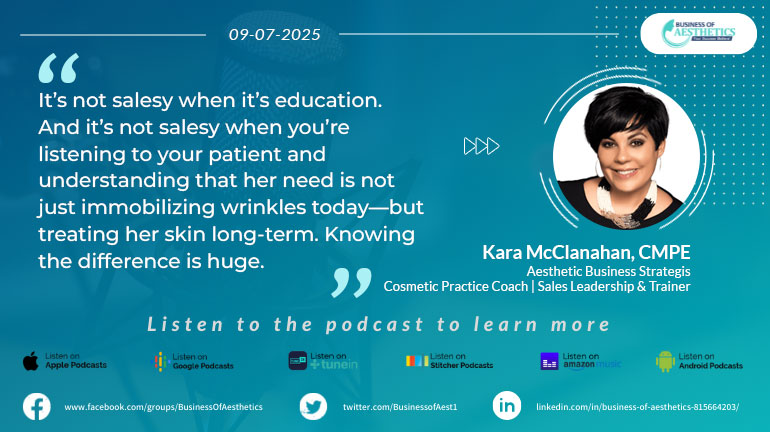
Kara McClanahan: I think that’s an art. A lot of providers feel like, “Well, that’s salesy. Now I’m pushing something beyond neurotoxin. She just scheduled for neurotoxin.” But it’s not salesy when it’s education. And it’s not salesy when you’re listening to your patient and understanding that her need is not just immobilizing wrinkles today — but treating her skin long-term. Knowing the difference is huge.
So those are the top two tactics I say every single practice needs to adapt to see almost immediate change in their patient retention and building that client lifetime value.
Michael Walker: Awesome, Kara. When you’re talking about that, I was thinking about… when we’re building this value, we’re creating this long stream — one of the things I’m curious for your feedback on — in my world, we’re really intent about focusing on celebrating the wins.
Really, what’s been most valuable in that experience, in that moment with people? I do a lot of work in traditional retail and other industries. But when I say “celebrate the wins,” it’s about celebrating the wins with the client — not just the transactional side (“I booked this,” “I got that shot,” whatever it was) — but how did it make you feel?
How did it play into who you are and why you matter? Not just what it did or how it did it.
And how do we capture that in a conversation that could be cumulative — that helps build this history?
Why would you not want to keep coming back when you can see your… “Wow, I can see the transformation”? Because I noticed it — obviously you look in the mirror, you see something different, that’s kind of the easy part — but it’s the emotions, the confidence.
Often, we get so busy in life. We come in, have a great moment, great experience, and then we’re back out, and the kids are screaming, and we forgot this and didn’t do that, and whatever’s going on — and we lose that. We just lose sight of it.
So do you have any thoughts on how an organization or a practice could actually capture that kind of information in a way that could make it value-added — not only to the continued lifecycle of that client — but to the growth of the client?
Does that make sense?
- 00:28:08 – Follow-Up and Rebooking Tips
- Do care calls and use CRM tools to keep in touch.
- Always rebook before the client leaves.
- Use small perks (not discounts) to encourage return visits.
View TranscriptKara McClanahan: Yeah, it does. I think that’s where things like your care calls come in — and how you follow up with clients. You had mentioned using a CRM earlier — what that continued communication looks like. Because again, I think a misstep for a lot of practices is once the patient leaves — like you said — they’re often running into their life, right? The kids and life and career and whatever’s going on. Then you, as a clinic, are often on to the next patient, on to the next goal.
You have to create intentional processes internally to make sure that the relationship doesn’t stop there.
So I had mentioned using things like skin visualizers. You’re bringing your patients in, and every single time they come in, if you’re snapping a photo, doing a scan with your skin visualizer, you can show them the journey in their skin. You can show them what’s happening. Be really good with before and after photos.
Kara McClanahan: It’s not just about marketing — it’s being able to show a patient side by side. Because we look at ourselves in the face every single day. I was the Vice President of Sales for a medical device company for years, and I had a client who had just purchased our device and treated several patients. She had one patient who wanted to cancel her future treatment — was unhappy with the money she spent — because this treatment doesn’t always give instant gratification, right?
So the device I sold was radiofrequency microneedling, and you don’t get instant results — you see them down the road. But we were able to turn this patient into an aha moment — both for the patient and the clinic — because we made sure they did before and after photos.
Kara McClanahan: We actually brought that client back in, had her look at her before and after photos together, looked at the Visia scan, and she said, “Oh my gosh, I do see a significant difference.”
She hadn’t before, because she looks in the mirror every single day. She still saw other imperfections that were bothering her and thought it wasn’t working. But when we were able to show her the before and afters — and show her areas where we saw improvement — and really educate her, she became a huge win.
She ended up buying five more packages on multiple different areas of her body, and left a glowing review. But if that practice hadn’t been intentional with their follow-up — hadn’t done the before and after photos — we wouldn’t have captured that.
That’s an extreme example, but the reality is the care calls — not just automated text messages — but how you actually reach back out to your patients.
“How are you feeling?”
“How are you doing?”
“How are you looking?”
Get those before and after photos. Even if it’s an automated text, it can still say, “Hey, how are you doing after your treatment? Are you starting to see results yet?”
Be very mindful about continuing that relationship — because everybody moves very fast. And if you don’t have systems and processes internally to continue that relationship and follow-up — and not wait for your patients to reach out — you’re going to miss them.
The other thing I always tell practices: do not let patients leave without having their next appointment on the schedule.
Kara McClanahan: Oftentimes the front desk says, “Hey, do you want to schedule your next appointment?” and the patient says, “Oh no, I’ll call.” And the front desk says, “Okay, see you later, Susie.”
Well — no. “Susie, let’s go ahead and get your appointment on the schedule. Our providers book up quickly. I know she wants to see you in two weeks so we can get those after photos. This series you purchased requires a treatment every four to six weeks. Let’s at least get you on the schedule.”
And as we get closer, if that appointment time doesn’t work, it’s easier to adjust than to try to get back on the calendar. So be very intentional about making sure your patients get on the schedule before they leave.
Kara McClanahan: Some practices like to use things like a pre-booking discount. I’m not a huge fan of discounts — but I don’t mind incentives.
So maybe it’s a bounce-back: if you schedule your next appointment before you leave today, maybe it’s not 10% off — or it could be — but maybe it’s a complimentary product, or a mini HydraFacial, or something that guarantees they want to come back.
Even if it’s a small investment from the practice — if you look at the return — I’d rather spend a couple extra dollars “loving on” my patient, getting them back in the door, than leaving it up to them.
Kara McClanahan: If they don’t schedule, you have to have a mechanism — a team member who follows up with those people.
You should always have a recommended follow-up from your providers. Your front desk should always know what that is for every treatment you offer.
So for example, in the practices I ran — if someone had a neurotoxin appointment, and they didn’t automatically schedule their next one for three to four months — someone from my team was calling them at two months, letting them know, “A month from now, your treatment is due — let’s get you on the schedule.”
If it’s a series or a package — when does that happen? There should always be an intentional follow-up. And it has to be very systematic — or things will fall off the schedule and fall through the cracks.
Kara McClanahan: The same is true for no-shows. We tend to roll our eyes when someone no-shows — but you don’t know what happened. Work meetings change, emergencies happen.
Life happens. If I get a flat tire on the way to your office, you’re probably not the first person I’m going to call.
But you should be following up with those patients — cancellations and no-shows that don’t reschedule. Again, you need a systematic approach to handle all the little things to make sure patients keep coming back.
And sometimes, just checking in shows them that you care.
Kara McClanahan: Going back to that term I keep saying — loving on your patients — just because a no-show or a cancellation happens, doesn’t mean they don’t want to come see you.
But you showing that you care can make the difference in whether they want to reschedule sometimes.
- 00:34:09 – Why Discounting Hurts Your Practice
- Discounting lowers trust and perceived value.
- Offer rewards or extras instead of cutting prices.
View TranscriptMichael Walker: Absolutely. There’s that saying, Kara — people don’t care how much you know until they know how much you care, right? That just plays right into this. So you said… I have to weigh in on that discounting.
In my world, you never discount. If I said, “Hey, let’s go buy a new television,” and we’re looking at the price and we say, “Is that your best price? Or is there a better price?” — we’ve all done it. And what happens when we do that and the business gives us a lower price?
They’ve just told us that they were overpriced to begin with.
Kara McClanahan: Right. And we’ve just told them that the first price we offered was unintentional pricing, right? So if we say, “Oh, don’t worry about it. You don’t want to pay $500? It’s okay, I’ll give it to you for $400,” — then you’ve just told them your service isn’t worth $500 and that your initial pricing wasn’t authentic.
So I’m also big on price transparency with practices. I always say, your prices are what they are — don’t change them. Keep them at market level.
For all of my consulting clients, I like them to be at about 80% of the market value. So when we look at something like neurotoxin — just as an example — let’s say the average price is $12 to $16 per unit. I want my clients at $14.50 to $15, because I want them to be seen as higher value, but not the most expensive.
Kara McClanahan: And here’s where your incentives come in: Membership packages.
If you want a lower price, I’ll extend you special pricing when you’re part of our membership program. It’s loyalty-based — I’m thanking you with added value, not offering you a “discount.”
There are other ways too — seasonal promotions, annual open houses — where you can offer incentive-based pricing without devaluing your brand.
But when you offer discounts, two things happen:
- You attract low-retention patients — the ones always chasing the cheapest option.
- Those patients are easily swayed. They’ll leave you the second they find a better deal.
Kara McClanahan: I use the analogy of my favorite shoe designer — Valentino. I could go to the Valentino store and pay $1,600 for a pair of shoes, or I could go to Nordstrom and pay $1,550. Why would I choose Nordstrom?
Because I have a Nordstrom card. I get Nordstrom Rewards, maybe a coupon back. So it’s not about the $50 — it’s about the value I get.
Same with Costco. Yes, you get bulk discounts, but what’s the real value? 2% cashback. Hassle-free returns. And now, they know me by name at the front door.
Kara McClanahan: Costco trains their employees to build relationships. It’s not about the 17-pound bag of rice for $5 — it’s the experience.
Your membership program should be the same. Not a discount, but a value experience.
And consultation fees — that’s another one. If you don’t charge a consultation fee, you’re telling the client your time has no value. Whether they buy something or not, the education you provide during that consult has value.
So really think about what your value is, and position yourself accordingly. And then sell it — not with a pitch, but with education. Convince them, share the why behind your pricing.
People will pay a premium for a premium product — just look at the luxury market. But you have to be able to validate that price. Is your injector a national trainer? Can you say you’ve injected nearly a million units of Botox?
Kara McClanahan: You have to be able to educate and validate. And all of that ties into trust — and building that long-term relationship without compromising your price point, your value, or your profit margin.
Michael Walker: Yeah. Beautiful. The whole idea of value-added — you know, if you say, “I got this treatment, and I got 10% off,” okay, fine. But the better story is: “I got this treatment, and when I bought three more, I got two extra.”
Which story are you going to tell? Everyone likes to be on the upside of the story.
It’s like the gambling principle — everyone tells you they won $150 at the casino. But no one ever tells you how much it cost them to win that.
Kara McClanahan: Right?
Michael Walker: So emotionally, we’re wired that way. It’s part of influential marketing. But this business — the aesthetics business — is not a commodity-based business. It’s not.
It should never be about price. It has to be relationship-driven.
Everything you’re talking about, Kara, feeds into that. Because without a long-term relationship where you’re investing and protecting that client — you’re just a price point.
Kara McClanahan: Absolutely.
Michael Walker: And now you’re competing with every Tom, Dick, and Harry in the marketplace. And if that’s what you want to be, then you better have volume — because you’re going to need major volume to make up for the tiny margin you’re working with at that price point.
Kara McClanahan: Right. And I hate having to explain why practices are discounting — because every consumer knows: if you’re discounting deeply, or offering super low prices, it’s just a way to get people in the door.
And that immediately raises questions: “Are your providers qualified?” “Are your products legitimate?”
So when you focus on relationships and retention through value-adds, you’re selling a story and building a connection — not just offering a low-cost, transactional service.
Michael Walker: Yeah, exactly.
So let’s keep going in the vein of relationships — but alongside that, we’ve also got the opportunity for additional revenue streams. I think that’s a good place to go next.
Would you be able to give us some creative or underutilized ways practices can generate more income from their existing client base? And in keeping with this conversation — we’re talking about not just transactions, but also relationship-driven approaches.
- 00:41:48 – Adding New Revenue Streams
- Expand your service menu to include wellness and regenerative options.
- Treat the whole person, not just their skin.
- Keep up with new treatments and stay passionate.
View TranscriptKara McClanahan: Yeah, so we’re seeing a lot of extra movement around what people are calling either wellness services or regenerative skincare. These things have really been in the marketplace for years, but now they’re becoming more of a priority, especially with the rise of things like GLP-1s.
People are really focusing on treating the whole person. As I mentioned before — if your patients or clients have a relationship with you, they’re people, and people matter. There’s not one solution for everyone. So your practice should have services to address the whole individual.
Kara McClanahan: When you think of regenerative medicine — we had this massive movement in medical weight loss. What that promoted for us in the industry is the need to treat the whole patient.
Everyone started getting on GLP-1s, and we saw massive weight loss affecting skin laxity, right? Now everyone’s asking: How do you address “Ozempic face”? Well, we need to get them on fillers or energy-based devices. But before, those patients were just weight loss patients. They came in for an injection once a week. We weren’t thinking far enough ahead about how to treat them entirely.
The practices that are doing well right now are integrating services that treat the whole patient — things like supplements, IV hydration, and looking at different revenue streams that align with total wellness.
Kara McClanahan: Don’t just be a med spa that does neurotoxin, dermal filler, laser hair removal, a couple of energy-based devices, and sells a few skincare lines.
We’re also seeing a rise in alternatives. Every patient is different. We used to have a one-size-fits-all solution, but now we need to focus on evidence-based medicine. We have to remember — we are medical practices.
Looking at patients holistically is crucial. What are we not offering in our clinics that our patients might need?
Women’s wellness is a big movement right now — everything from GLP-1s to sexual dysfunction to vaginal rejuvenation — things that weren’t part of the conversation before. It’s not just about lasers and Botox anymore.
Kara McClanahan: So the push is to bring in integrative medicine, rejuvenative aesthetics, and companion treatments, products, and services.
But it also comes back to: What are your providers passionate about?
I’ve said it before — passion drives performance. And your providers are the ones delivering treatments. So it has to be treatments they’re excited about, products they believe in.
Technology is always evolving — you don’t have to buy the next $200,000 machine, but you should be asking: Is there a gap in our offerings?
Kara McClanahan: I’d encourage every practice to go back and look at their service menu and ask: Are we missing something?
Are there conditions we aren’t addressing? Are we evolving with what’s happening in the aesthetic landscape today?
Look at your revenue drivers. Take neurotoxins and dermal fillers off the list. Now ask: What else is working?
Visualize a patient — can you address their needs head to toe? For every condition and skin type?
Put together bundles. If you have a medical weight loss patient, you should also be talking about skin laxity, supplementation, hair regeneration. Make sure all of these are integrated into your comprehensive treatment plans — or at the very least, that they’re available in your practice.
Because many practices lose out when patients come in regularly for things like neurotoxin or HydraFacial — but go down the street for other treatments you don’t offer.
Michael Walker: Kara, you have just — it’s like a firehose of value here, just pouring out great insights for our listeners. And as we’re looking at the time, I just want to remind everyone:
Kara is a coach — and her website is aestheticpracticepartners.com. APP is the acronym — and she could arguably say she’s got the best “app” in town.
Closing Thoughts
- 00:47:38 – Closing Thoughts & Final Advice
- Kara encourages practices to take action on one idea from the episode.
- Book a free marketing strategy meeting with Ekwa, our Marketing Partner: www.businessofaesthetics.org/msm/
View TranscriptKara McClanahan: There’s an app for that.
Michael Walker: There you go. Yeah. So again, a lot of the things you’re hearing — there’s a lot of information here — and you’ve probably heard something, you’ve captured some of it and thought, “Now what do I do with this?” or “How do I move that forward?”
Well, you’ve got access to Kara. You’ve now heard her, you’ve met her — arguably, there’s a level of trust established just by virtue of this conversation. So I encourage you to reach out to her and let her help you implement some of this.
It’s all good hearing something and filing it away — but what’s one thing you could do when you get off this podcast? What’s one thing you could be intentional with to start putting in motion, something you’ve heard today?
And if you need support and help, you can reach out to Kara for that.
Michael Walker: So Kara, I thank you so much for joining us today and sharing your expertise. I loved our title — From Clients to Champions: Boosting Retention and Revenue in Aesthetic Practices.
Thank you. It’s been a really marvelous day. Your insights on increasing client lifetime value, boosting retention, and creating new revenue streams — super valuable, and very helpful for us. So thank you very much.
Kara McClanahan: Thank you so much.
Michael Walker: I also want to take a moment to thank our amazing listeners. We appreciate each and every one of you — we couldn’t do what we do without your support.
If you enjoyed today’s episode, please share it with your colleagues and friends on social media and help us spread valuable knowledge throughout the aesthetics community.
We love likes, and we love reviews — so feel free to throw something up on our platform. We know the power of those — they help other aesthetic professionals and practice owners find us and gain actionable insights to grow and elevate their practices as well.
Before we wrap up, a special thank you to Ekwa Marketing, our sponsor for this episode.
As mentioned earlier, Ekwa has nearly 20 years of experience in digital marketing, specifically for aesthetic practices. And they’re offering you a complimentary digital marketing consultation, which includes a custom 12-month strategy tailored to your practice.
Michael Walker: Now, that sounds nice — and it is important — but if you’re already a marketing expert, maybe that’s not as valuable to you. But if you aren’t, this is a beautiful gift. And I can tell you — there are no strings attached. There’s no trick to this.
The company simply wants to give you value. And I know that Lila, who will be preparing the work, will do advanced research, look at what you’re doing, and come back to you with a tangible report — similar to what Kara just gave you in the realm of customer retention and revenue sources — but in the digital platform.
So I encourage you to take advantage of that. Just go to:
www.businessofaesthetics.org/msm/ — and you can go ahead and book that hour as soon as you’d like to.Michael Walker: So let me just park us here.
Until next time — keep nurturing client relationships, driving retention, and building long-term success for your practice.
And on behalf of Kara — wishing all of you an amazing week ahead.
Thank you.
GUEST – KARA MCCLANAHAN
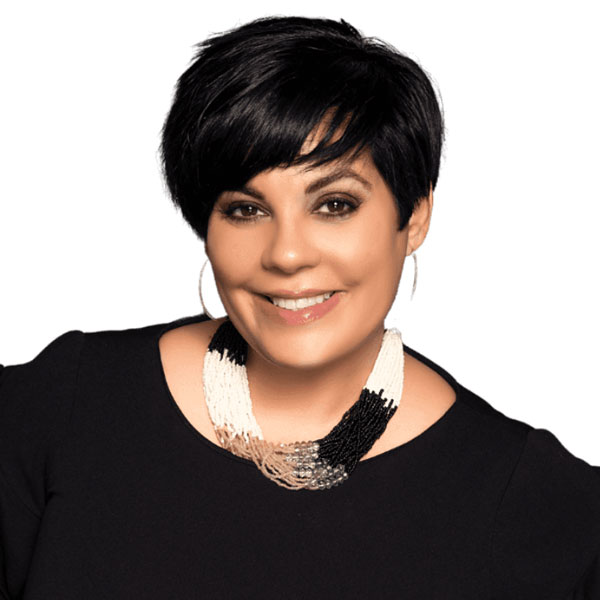
Kara McClanahan is the Managing Partner and Executive Business Consultant at Aesthetic Practice Partners, where she specializes in co-creating customized business strategies for cosmetic-based medical practices seeking next-level success. With over 27 years of experience in the aesthetics industry, Kara has partnered with physicians, practice leaders, private equity groups, medical device manufacturers, and skincare companies to drive strategic business change and differentiation in a highly competitive marketplace.
She is a Board Certified Medical Practice Executive (CMPE) through the American Medical Group Management Association and a certified Health and Wellness Coach by Wellcoaches, holding degrees in Business Administration, Healthcare Administration, and Marketing & Communications. Kara is recognized for her mastery in developing and implementing innovative strategies that enhance operational efficiency, business development, sales training, clinical support, practice growth, marketing, branding, technology, and service excellence. As a sought-after speaker and respected consultant, she is known for delivering actionable insights that elevate aesthetic businesses.
Kara is also the founder of Empower Esthetics, a non-profit organization dedicated to empowering women in industry leadership through mentorship, community service, and educational grants for individuals from low-income backgrounds, those with learning disabilities, and survivors of domestic abuse, helping them transform their lives and achieve self-sufficiency through careers in aesthetics. Her passion for elevating the aesthetic industry and helping her clients achieve their goals is evident in every aspect of her work.
HOST – MICHAEL WALKER

Michael Walker is a seasoned leadership coach and analyst (Q.MED) who is passionate about adding value to individuals and helping them unlock their untapped potential. With over 35 years of diverse business experience, he specializes in organizational development, succession planning, conflict resolution, and mediation.
As a Qualified (Q.MED) mediator with the ADR Institute of Canada and an Analyst (WFA) with the Workplace Fairness Institute, Michael has a strong foundation in conflict resolution and workplace dynamics.
His expertise extends to providing workshops and seminars that equip participants with practical tools to apply immediately for improved relationships, fairness, innovation, productivity, and profitability.
Michael is dedicated to supporting personal and professional transformations and is committed to helping individuals achieve greater financial, relational, physical, spiritual, and emotional prosperity through his coaching and advisory services.
Resources


Connect with Us:
Category: Business of Aesthetics Podcast