In this episode of the Business of Aesthetics Podcast, host Don Adeesha is joined by Sara Shikhman and Samara Bell of Langea Law to discuss the seismic shift in the regulatory landscape as we approach 2026. With the FDA moving from a reactive stance to proactive enforcement, the attorneys explain why compliance can no longer be an afterthought, specifically highlighting the new federal scrutiny on RF microneedling devices and compounded GLP-1 medications.
Sara and Samara break down the dangerous misconception that popular treatments like RF microneedling are merely “cosmetic add-ons”. They clarify that these are medical procedures requiring strict medical oversight and scope of practice, warning that the recent wave of FDA warning letters is a direct result of thousands of patient complaints regarding burns and scarring. They urge practice owners to abandon “one-size-fits-all” consent forms and manufacturer-provided protocols, advocating instead for procedure-specific legal documentation to protect against liability.
From a business perspective, the conversation frames compliance as a critical driver of valuation. Samara warns that in the world of mergers and acquisitions, buyers are increasingly walking away from “fixer-upper” practices with poor legal structures or unlicensed activity. The duo provides actionable advice on fortifying supply chains for biologics and hiring the correct talent, arguing that the cost difference between hiring an RN versus an esthetician is a small price to pay to avoid catastrophic legal exposure and ensure a “turnkey” exit.
Key Takeaways
- Turn Compliance into Capital
View regulatory adherence as a valuation driver, not a sunk cost. A “turnkey” practice with clean protocols commands a significantly higher acquisition price than a “fixer-upper” riddled with hidden regulatory risks. - Treat “Cosmetic” as Medical
Recognize that the FDA classifies devices like RF Microneedling as medical procedures requiring strict oversight. Protect your practice by ensuring delegation, training, and protocols reflect this medical reality rather than relying on cosmetic checklists. - Audit Your Supply Chain
Eliminate “gray market” risks by strictly verifying the provenance of every biologic and drug. You must be able to instantly produce a documented chain of custody to prove safety during a board inspection. - Ditch Generic Consents
Stop using “one-size-fits-all” forms for advanced treatments. Implement procedure-specific consents that explicitly outline the unique risks of services like weight loss or IV therapy to ensure you remain legally defensible. - Hire for Scope, Not Savings
Resist the urge to stretch the scope of lower-cost providers to save on payroll. Paying for the correct licensure (e.g., an RN instead of an esthetician) is a marginal cost that prevents catastrophic legal exposure.
Podcast: Play in new window | Download
Regulatory compliance protects the value you have built, but strategic marketing is what multiplies it. Now that you have fortified your legal defense, shift your focus to offense by mapping out a clear path to attract your ideal patients.

- Get a 1-on-1 diagnosis of your online presence & patient acquisition funnel
- Identify critical, untapped growth levers (SEO, Social, Referrals)
- Define a clear action plan to attract and convert your ideal patients
- Receive expert solutions for your most pressing marketing challenges
Subscribe To Our Podcast



Key Highlights:
- 00:00:11 – Introduction & The Shifting Regulatory Landscape
- The episode explores the critical regulatory shifts facing aesthetic practices heading into 2026, specifically regarding FDA attention on RF microneedling and compounded medications.
- Host Don Adeesha introduces guests Sara Shikhman and Samara Bell from Langea Law to discuss compliance and practice growth.
- Sponsor Ekwa Marketing offers a complimentary 60-minute digital strategy session to map out high-value patient acquisition.
View TranscriptDon Adeesha: Welcome back to the Business of Aesthetics podcast. Today we are diving into one of the most important conversations aesthetics practices need to hear before the new year. I’m your host Don Adeesha and it’s great to have you here. The regulatory landscape around aesthetics is changing quickly too. And with the new FDA attention on RF microneedling, increasing scrutiny on compounded GLP-1s and other compounded medications, a noticeable shift in enforcement priorities, 2026 is shaping up to be an year where compliance is no longer something you get to later. It’s something you have to understand now. So, to help us make sense of all of this, we are joined by Sara Shikhman and Samara Bell of Langea Law, two attorneys who work on the frontlines of healthcare regulation and practice growth. Sara brings a unique combination of legal expertise and real-world operational experience, scaling multi-million dollar aesthetic businesses. Samara specializes in the transactional and structural side of healthcare, guiding practices through partnerships, expansions, and acquisitions. Together, they’re breaking down what these FDA updates really mean, how enforcement is evolving, and the practical steps every aesthetic practice should take to protect itself clinically, legally, and financially, as we move on to 2026. Before we jump in, a quick thank you to our sponsor, Ekwa Marketing, the team behind this podcast and one of the most trusted names in digital growth for aesthetic practices. They’re offering our listeners a complimentary 60-minute digital strategy session, a one-on-one consultation with a senior strategist to help you map out 12-month high-value patient acquisition roadmap. You’ll get a personal diagnosis of your online presence and patient funnel, uncovering untapped growth levers across SEO, socials, and referrals. So you’ll be walking away with a clear, actionable plan tailored just for your practice. It’s designed to give you clarity and direction from people who work exclusively with aesthetic leaders every day. You can check the availability and reserve your spot in under two minutes at www.businessofaesthetics.org/msm. That’s businessofaesthetics, one word, dot org forward slash msm. Now, with that being said, Sara, Samara, pleasure to have you here.
Sara Shikhman: Happy to be here, Don. Thank you so much.
- 00:03:03 – The FDA’s Proactive Turn: Social Media & Safety
- The FDA is shifting from a reactive stance to a proactive one, specifically targeting treatments that penetrate the skin or alter tissue.
- Sara Shikhman explains that social media marketing claims are driving enforcement, as influencers often promise unproven "cures" without consequence.
- The combination of patient safety concerns regarding the industry’s growth and unchecked social media content has made compliance a priority.
View TranscriptDon Adeesha: Okay. So as we move into 2026, the FDA’s tone around aesthetic medicine, microneedling devices, compound medications, injectables feels a bit different. What’s actually changing at the federal level and why should every aesthetic practice view this as a critical turning point?
Sara Shikhman: Yeah, and that’s a great question. The FDA’s tone toward our industry has really been more reactive up until now. So things would happen and the FDA would be focused on completely different things. But now the FDA’s tone is definitely shifting to be more proactive. Right now, aesthetics has been a bit of a gray zone. They really didn’t know what to do with us in a sense where a lot of new regulations were passed, but they in a lot of warning issues, letters were issued, but they were more about insurance based practices. things that have to do with government money and the things that had to do with private payers and people just choosing to do different types of treatments were largely ignored. But now I think the FDA is sending a very clear message and they’re saying, if it’s a treatment and it penetrates the skin, If it alters tissue or it has systemic effects, they want to govern it and they want real oversight. And that’s why we’re seeing new warnings about RF microneedling. We’re seeing increased scrutiny of compounded drugs. We are looking into… where drugs are coming from and increased scrutiny about drugs coming from China and other places like that. And then exosomes are getting warning letters again. And there’s just a lot more enforcement about marketing claims. because of the world of social media and everyone being able to say whatever they want about anything saying, here’s my new device that I had today and it cured my whatever. The FDA is saying, well, like, you know, this is not okay. We need to step in. So I think it’s two reasons, patient safety concerns related to how big aesthetics has gotten. And now it’s really at the forefront. And then, um, social media where people are able to post whatever they want and then there’s really no enforcement on truth. And so where before someone can go on the news and the news would kind of vet the person and say, oh, like this person is biased and this in such a way and they’re an advisor and a consultant to X. On social media, someone can just say, I personally believe this is the greatest longevity treatment of my life. And, you know, if they have a billion followers, people will listen to them. So in summary, the FDA approach has completely changed to our industry.
Don Adeesha: Right. Right. And for some of our practice owners as well as listeners. Even with the regulation with TikTok, for example, right? I mean, I’m not sure if you’re aware of this, but if you were to make claims with regards to unachievable results or unproven results, those things get kind of shadow banned and your account also gets banned afterwards. So there is that happening. I don’t know if those two are related.
Sara Shikhman: Yeah, they’re supposed to be, they’re supposed to be, but there’s so much content being made that realistically it’s just not catching up. And is it, if a consumer themselves post something about, I had this treatment and it got rid of all the wrinkles on my face, is that really something that qualifies under TikTok’s policy? And do they have the algorithms tuned in so well that that’s gonna get removed? Not necessarily. So we can’t control the patient side of things, but definitely compliance with regards to a practice owners is put in purview.
- 00:07:21 – Structural Pitfalls: Scaling, Consent, & Scope of Practice
- Samara Bell warns against adding new services (like weight loss or IV therapy) without updating the underlying legal infrastructure and MSO agreements.
- Using generic or old consent forms for new procedures creates significant liability risks; consents must be procedure-specific and outline specific risks.
- Samara advises against relying on ChatGPT for legal compliance, as it often fails to account for specific state laws and nuances.
View TranscriptDon Adeesha: Okay. So Samara, my next question goes out to you. When a practice is adding new service lines, weight loss, IV therapy, regenerative treatments, or planning to scale to additional locations, what structural and contractual mistakes are you seeing most often? And how are these FDA shifts changing the way owners should think about MSOs, medical oversight, and pharmacy relationships?
Samara Bell: Yeah, it’s an important question. I think that the biggest issue is you know, people adding services faster, but to the same structure. And they’re not, you know, expanding the infrastructure. And it’s great to grow and add new services, but you have to have the right systems in place. And the services have to be in parallel with the systems to remain compliant. So new systems, new services, right? And You know, if you’re adding weight loss or IV therapy, you have to update current agreements. So if you have an MSO structure, your MSO agreements, you have to think about, you know, who can do each service. So scope of practice, scope of practice protocols, who’s supervising who, right? We want to look at delegation roles, pharmacy relationships, updating those for the new services. really important to have consent forms for the specific procedures. You don’t want to use a Botox consent and you’ve added some new type of regenerative medicine, right? We have to update those. And then making sure, you know, training for each person, each procedure, and everyone’s properly trained on those procedures. So as you grow compliance-wise, you’re growing in those new systems.
Don Adeesha: Right, Samara, but I really don’t want to invest in, you know, what if our practice owners are one of those people who don’t want to necessarily invest in getting all these different type of forms for each service they do. They feel, okay, you know, Botox, you know, maybe Morpheus 8, it’s, you know, it’s consent is consent. What happens if that, like, how can that go wrong? Can you give us an example, perhaps?
Samara Bell: Yeah, sure. You’re really putting yourself at risk for liability for a legal issue. So you have a patient who comes in, they have a new type of procedure that you’re offering, they sign an old consent, you know, for another procedure, they have some kind of adverse reaction. And now you’re saying, hey, they signed a consent, but the consent doesn’t have the risks and, you know, all of the issues that can happen with that treatment and you’re in trouble. That’s not going to work in court when you say, hey, they signed a consent. It can’t be a general consent. And that’s what we do. We help people. We have a whole list of consents that we’ve prepared that we know are legally compliant. And so we give those to our clients so they know they don’t have to worry, hey, does this old consent still work for the new ones and try and figure it out by reading the language. It’s really important for liability reasons that your consent is matching the procedure and those specific risks for that procedure.
Don Adeesha: Got it, got it. And what would the practical advice you would give to practice owners who want to take this next step, you know, for each of their new services or, you know, anything else for that matter? What is the first step they can take to ensuring that everything is compliant, safe?
Samara Bell: Yeah, I think it’s really connecting with an attorney and making sure that you’re updating your contracts, making sure you’re updating all of your paperwork. And as you grow, we’re here for you to make sure that you’re growing in the right direction. And it’s a lot harder to undo the bad stuff than to grow with you and keep you compliant as you grow than to come in because you had a mistake because it wasn’t set up properly.
Don Adeesha: Right, Samara, one last question. ChatGPT can also help me out with these things, can they?
Samara Bell: Yeah, I mean, we have a lot of people who use ChatGPT. I use ChatGPT for certain things. The issue with ChatGPT is it doesn’t always recognize what state you’re in. It doesn’t necessarily pull the right AI information because this is such a nuanced area. So, you know, if I’m in Missouri and I just are typing in laws, sometimes it pulls Massachusetts. It’s confusing for this part, chat GPT. I mean, I’ve tried it and typed in things and I’m not always getting the right answer. So it’s great for certain things. But for this, you definitely want to make sure you’re state specific, you know, when you’re updating these things.
- 00:12:40 – RF Microneedling: From Cosmetic to Medical Oversight
- Sara Shikhman emphasizes that RF microneedling is a medical treatment requiring proper oversight, training, and scope of practice, not just a cosmetic add-on.
- The FDA warning letters were triggered by thousands of patient complaints regarding burns, scarring, and fat loss.
- Documentation of training and custom protocols (not just manufacturer manuals) are the primary defense against potential lawsuits.
View TranscriptDon Adeesha: Right, got you. Thank you very much for that, Samara. Sara, moving back to you. For RF microneedling specifically, what does the FDA’s recent safety communication actually mean inside a practice? How should owners rethink delegation, consent, settings, trainings, and their malpractice exposure when they continue offering one of the industry’s most popular procedures after this warning?
Sara Shikhman: Well, for a long time, people thought of RF microneedling, both providers and consumers, as a cosmetic treatment. Yeah, like there was fancy machines and they could go quite deep and sometimes painful, but people still thought of it as something that you can just add to your treatment menu. No additional things needed. Maybe even if you don’t have any medical staff or medical director or medical oversight or protocols, people are still doing RF microneedling. And there’s so many different RF microneedling devices out there that can do lots of different things. And when they’re operated incorrectly, And at the incorrect depth or at the incorrect settings, bad things can happen. So I think the FDA didn’t say that RF microneedling is a bad treatment. No one should do it. The FDA said, hey, this treatment is a medical treatment. It needs proper medical oversight and scope of practice guidance. And your patients need to understand that this is a medical treatment too. And the person doing this treatment at your practice needs to be the right person, meaning being trained in the procedure, have the scope of practice to be able to perform this actual procedure, and Be knowledgeable in what happens and how to recognize like an adverse event. Because a lot of times there are these, you probably know as well as I do, there are these huge Facebook groups full of people with microneedling problems. And they’re posting all these pictures saying, well, My eyes started hurting and then the person didn’t stop and look at these marks I have in my skin. So people sometimes people make mistakes, but it’s very important for them to have the training to be able to know, oh, a mistake just happened. Let me stop.
Don Adeesha: So that’s it, right? Proper training, is it?
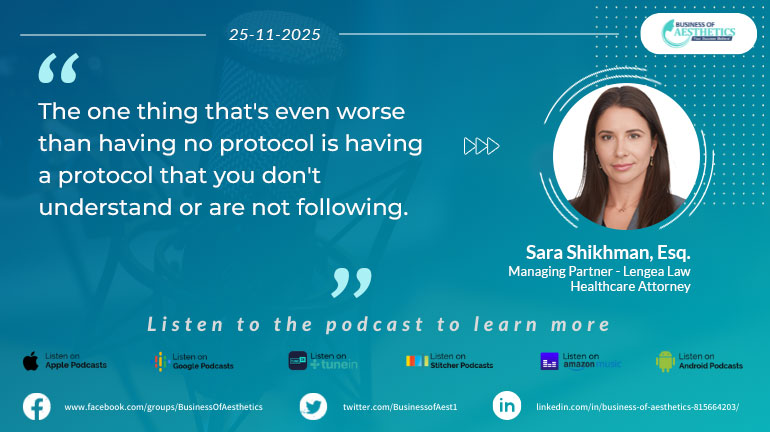
Sara Shikhman: Yeah, I think proper training, proper scope of practice, and proper documentation and insurance. So it’s not that RF microneedium needs to stop. It’s more that we should expect to get more of these kind of warning letters about other treatments too. And the FDA is paying attention because they’re saying like, hey, we probably got thousands of complaints about this from patients. And so when they get that number of complaints, they issue a warning letter. That’s what I think happened here as a result of lots of patients getting vaccinated. fat loss, scarring, all the things, the FDA said, okay, we can’t just stay silent here. We have to issue a warning. And I do think more warnings are coming for other treatments. So what people need to do to prepare is, first of all, now that there’s a warning letter, that means that the attorneys that represent patients are going to be looking for patients to… kind of classic cases so that they can sue practices. So to prepare for potential lawsuits, I would say that your number one preparation is really paperwork. So having strong consents, having documented training, having protocols, and not the ones that you got from the manufacturer, but the actual ones that were written for your practice, right? Because the one thing that’s even worse than having no protocol is having a protocol that you don’t understand or are not following that you got from ChatGPT or some random place where you just put it away on the shelf. That negates the whole premise and the whole reason of having a protocol. So I think, yeah, people need to have consents. People need to have training. You need to make sure that if in your state, for example, unlicensed people or estheticians can’t do RF microneedling, you really should not have those people doing it. Because now, especially, if there’s an issue, the number one thing the lawyer for the patient is going to say, well, this was outside this person’s scope of practice. And saying I didn’t know or I didn’t understand or it was vague is not a defense. Or saying everyone in my community does this is also not a defense. So it’s really important now more than ever to follow the strict guidelines of who can do what in your practice.
Don Adeesha: Okay. So you mentioned over there, the training given or the protocols given by the providers is also not sufficient, right? So for our practice owners and listeners in general, who have already invested into, you know, a lot of these instruments and what can they do right now? Like if they don’t have the budget for that training, what can they do? Should they be reducing their services until they can get the correct?
Sara Shikhman: Yeah, good question. I think one thing they can do is speak to their attorneys. They don’t have to pay a lot of money, right? They can just do a half an hour consultation or an hour consultation and say, look, look, this is the treatment that we’re doing. This is the paperwork that we have. This is who we’re doing it. What are the biggest risks here? How can we help mitigate the risks? So I think that the consents need to be reviewed because the consents need to mention this new FDA warning. and the fact that the FDA issued this so that you could show that you told the patient that potentially these risky things can happen. And then in terms of who’s doing what in your practice, yeah, you may not know who should be doing it, but that’s going to be worth the quick attorney phone call to do that. And a lot of firms like ours would do like a one hour consultation or whatever is needed to do it. So you don’t have to spend $20,000 to do get to the bottom of this, right? It’s not that expensive.
- 00:18:57 – Navigating Compounded Medications & Biologics
- Samara Bell outlines three pillars of compliance: Sourcing, Prescribing Protocols, and Supply Chain Documentation.
- Practices must verify sourcing to avoid "research only" products and ensure a documented, established patient relationship exists.
- Supply chain documentation must be organized and readily accessible (preferably electronic) to prove chain of custody during inspections.
View TranscriptDon Adeesha: Got you. So Samara, when you evaluate a practices, say GLP-1 program, peptide offerings, IV therapy protocols, or even some exosome services, what separates a compliant, defensible setup from one that’s legally risky?
Samara Bell: Yeah, so we usually look at, you know, three main things. The first one is sourcing. So really important, you want to know where your medications, you know, exosomes, where everything’s coming from, right? There are some red flags that stand out to us. You know, are the, are exosomes labeled research only? Are you know, peptides coming from overseas vendors. You need to, you know, you can’t kind of put your head in the sand and say, it’s fine, you know, they came here and all looks good. You have to really take the time to figure out, you know, the sourcing. Second thing we look for is prescribing protocol, right? So we want to see, you know, first there’s an established patient relationship, you know, in person, it can be telehealth, you know, proper intake, proper good faith exam. We wanna see that lab work is all documented. For these types of treatments, we wanna see medical necessity and that that’s documented in there. And then we wanna see what happens if a patient has a reaction or emergency. We need to see the emergency protocols, really important when you’re working with these type of medications. And the third one would be supply chain documentation. So if a board comes in, you need to be ready and have your documentation to say, this is where I got this. It came from here. It went through this chain. It was stored properly. And showing how it’s logged, showing your tracking sheet, showing how it’s administered. And you want to have this easily accessible. You don’t want to say, hang on, and then disappear in the back for two hours and come back. This has to be really readily available information. And so you can show that chain of custody and that you’re doing so compliantly when working with these certain medications or biologics.
Don Adeesha: Right. Now you mentioned right there, having it readily accessible. What’s the ideal readily accessible way that you have found practice owners do this?
Samara Bell: Yeah, You know, having everything electronic, right? So you can have everything electronically, set up protocols in there, press a button, pull it up right that way. You know, some people have binders. That’s fine if you’re a binder person, but it has to be, you know, something organized and able to get. We don’t want to see boxes and boxes of paper. That’s not efficient. And, you know, most importantly, just organize. You know, here’s this medication. Here’s where it came from. and not different medications all in one kind of file where it’s confusing to say what came from where.
Don Adeesha: Right. And Samara, you know, our practice owners are not necessarily expecting, I mean, until this recent change of tone from the FDA, they weren’t necessarily expecting a bang on their door, checking like the compliance with regards to microneedling, right? RF microneedling, it’s very simple process, very simple treatment. How can they establish that expectation, right, of someone coming in to check? And what kind of frequency could they expect that to occur? Do we know?
Samara Bell: Yeah, I mean, it’s… you know, like we’re seeing with microneedling, it’s, it’s hard to predict what the next thing will be. Right. So it’s, the idea is just kind of staying compliant with everything. And so that way there’s, you know, if the board or the FDA is targeting a different procedure, whatever the next microneeding will be, it’s, you know, having that ready, being compliant again, you know, back to scope or procedures who can do what delegation paperwork, all that stuff, because, you We don’t know what they’re going to focus on next. And if a board comes in, which hopefully will not happen to any of the listeners, but it’s being prepared and having everything in order. So there’s nothing to worry about if that happens.
- 00:23:04 – Injectable Liabilities & Impact on Practice Valuation
- Major injectable risks include counterfeit products (gray market Botox), storage failures, and delegation violations.
- Compliance is a major factor in practice acquisition; buyers avoid "fixer-upper" practices with poor legal structures or unlicensed activity.
- A compliant setup serves as a "turnkey" asset, significantly improving valuation and deal success.
View TranscriptDon Adeesha: And then with the recent enforcements against even gray market Botox, counterfeit toxins, delegation violations and complications around fillers, what are the biggest injectable related liabilities that you’re seeing right now?
Samara Bell: Yeah. So there are five big ones. You mentioned the counterfeiter or gray market Botox fillers. We’re seeing FDAs seizing products from warehouses and kind of going back to, we have to know where products are coming from and buying it legally. Another piece I touched on before is the storage, right? So we want to make sure temperature sensitive products have proper storage, all the way from producer to patient, really important the whole way. You know, delegation violations would be the third piece. You know, making sure there’s there’s supervision, you know, making sure we have that paperwork in place and the right people are doing the right things with the right supervision. And then emergencies, you know, again, we want to have proper protocols, you know, emergency kits on hand, what to do in the event of emergency, who to call. those kinds of things. And then the final one is, again, the documentation. If you have poor documentation, that’s an issue. We need to show what’s used, how much, where we, for our firm, we actually have a checklist that we provide clients. And so it’s an inspection checklist. So when you were asking before what to do if they come, it’s, hey, we have this checklist so you can be prepared. And these are the things you want to make sure you have in place And these are things we know inspectors just from handling different board inspections are looking for. And so just making sure, you know, all of those things are lining up for you as you grow and as you continue to practice.
Don Adeesha: Got it. And why is it so important that practice owners, especially in the aesthetic space, consult with Langea Law, you know, a law firm that specializes in these kind of healthcare related issues rather than a more general practice?
Samara Bell: So, I mean, the reason is because this law is so ever evolving and there are a lot of gray areas and, you know, we we work nationwide. So we’re up to date and we follow these things so closely because what’s the law today might not be the law tomorrow. And, you know, this is what we’re staying on top of. And it’s. Really important. I know a lot of people, you know, go on different groups and then they ask a friend and they say, hey, my friend’s doing this. But, you know, we know the law and we’re here to tell you, we know there are people, there are always going to be people who aren’t doing what they should. And maybe that’s your friend, maybe it’s not. But, you know, what we do is help people with that peace of mind and tell you, hey, this is how you can do it legally. We understand what you want to do and we’ll help you get there. But here’s, you know, what needs to happen here. Like when Sara was talking before about microneedling, that’s something you want to add or make sure you’re compliant with microneedling. It’s talking about, hey, do you have estheticians or what in your state and making you comfortable with who can do what.
Don Adeesha: Got it. And for practices planning to scale or participate in acquisitions, how should these new FDA and compliance dynamics influence deal structure, partnership agreements, or due diligence?
Samara Bell: Yeah, I mean, compliance can really affect valuation. So it’s kind of like a house, right? want to buy a turnkey house because the renovation is going to be really overwhelming. And so if you have your choice of practices that you can buy, you know, watch HDTV and a lot of people are like, oh, it’s fine. I want to knock it down. You don’t want to do that with the practice that you’re buying. It’s so much money. It’s so much work. And they’ll they’ll find another buyer, you know, where that practice is ready to go and they don’t have to undo all this bad compliance and worry about liability. So we’ve done hundreds of these acquisitions and sales, and there are some red flags that we’re seeing where people are walking away when they’re looking at valuations and practices. Again, it could be a legal ownership if you’re in a corporate practice of medicine state and the right people aren’t owning it, the right entities and structures, that’s an issue. If, you know, certain providers are doing services that they shouldn’t be doing in that state, that’s an issue because then, you know, the buyer comes on and they can’t employ those people doing those services to be compliant. You know, if there’s unlicensed telehealth or pharmacy activity, you know, just kind of looking at the way that you’re set up. And if you are set up compliantly, then it’s great. You’ll have a great valuation and you can show, hey, here, I’m set up perfectly. Just step right in, turn the key and let’s grow.
Don Adeesha: Right. I know you mentioned a few, but are there any big legal blind spots that are sinking deals or reducing valuations as we approach 2026?
Samara Bell: Yeah. I mean, I think there are a number. I, you know, I think it’s, If there are certain providers, I mean, because if you’re coming in and everyone’s doing things they shouldn’t, then you have no services, right? So it’s hiring the right people and making sure they can do those things. It’s having standard operating procedures. And again, back to protocols, like Sara mentioned earlier, you don’t want to have incorrect protocols. That’s a major issue. And that’s a huge red flag in purchasing a practice. And I think it’s also looking at, in terms of valuation, is all of the goodwill and the value in the seller? Is the seller staying on to work? Are there some other employees? And thinking about when you’re purchasing a practice, what you want that to look like. Do you want to keep all the current employees great? Do you have your people, right? And it’s seeing how you can fit that into purchasing that practice for you.
- 00:29:31 – Immediate Actions & The Future of Aesthetic Regulation
- If limited on time, Sara Shikhman advises practices to prioritize reviewing patient consents and clarifying scope of practice for all providers.
- Hiring a Registered Nurse (RN) is often only marginally more expensive than an esthetician but provides much greater legal protection.
- The future of aesthetics will involve tighter regulations and enforcement as the industry grows, making compliance essential for long-term success.
View TranscriptDon Adeesha: Okay. Sara, if you had just one hour inside a busy aesthetic practice to prepare them for the 2026 regulatory landscape, what specific policies, contracts, or protocols and clinical workflows would you update immediately and why those first?
Sara Shikhman: Well, if I had just one hour, I don’t know if I would be able to do that much inside a practice, really. I would just maybe just keep your practice as clean as possible. So if a regulator comes in, they’re not off-put by having hair on the floor and having bad lighting and just feeling like the place is not clean. I think in one hour in an in-person situation, it’s hard to really get into the paperwork. So I think what I would do if I had an hour is I would ask them, to show me a sample patient consent that they use, maybe just for microneedling or maybe just for Botox and fillers. Show me a protocol that they have and tell me who’s doing what procedures in their practice. And I think with like those three pieces of information, I could probably find some things that they can do better and some things that right away we can implement to help them be better prepared. I know in a lot of states, going back to microneedling, it’s a gray area. For example, in New York, if you email the boards and you say, who can do microneedling? They would say something like, physicians. And then you would say, well, what about full practice authority nurse practitioners? And they would say, nurse practitioners are not allowed to do microneedling. But in practice, what’s happening in New York is very different. And there’s not enforcement against that. Meaning for microneedling in New York today, there are lots of nurses, nurse practitioners, estheticians doing microneedling. And there’s not a ton of enforcement on that particular issue. However, if you talk about RF microneedling and the fact that there’s an FDA warning letter and the fact that there has been enforcement on that issue, it’s a totally different thing. So we would have to go deep into which procedures is the practice actually doing, who’s doing them, and based on our legal experience, what’s the real risk? Not the one where you email the board and they tell you you can’t do it, but the actual one based on us doing this hundreds of times. So I think that would be my best advice. Make sure your paperwork is good and have somebody review who’s doing what in your practice. And before you say it, or before most practice owners would say to me, well, I can’t afford to hire a nurse. I need to keep my esthetician doing what they’re doing. The thing is, my counter-argument to that in almost every state is… actually hiring a registered nurse is not that much more expensive than hiring an esthetician. So people think that you have to pay a registered nurse like twice more. It’s usually not really true. A lot of nurses really want to get into this industry. People are getting paid $25, $30, $35 an hour to do this work. So a lot of times it is totally possible to hire the right provider for the service. And that extra, let’s say 10% to 20% incremental cost in their salary will save you the extra $30,000 to $50,000 if you end up getting into a legal situation.
Don Adeesha: Absolutely. Actually, just to wrap things up, I would like to come back to Samara and ask, Samara, what do you think about the future of the aesthetic industry, especially with regards to a legal compliant perspective?
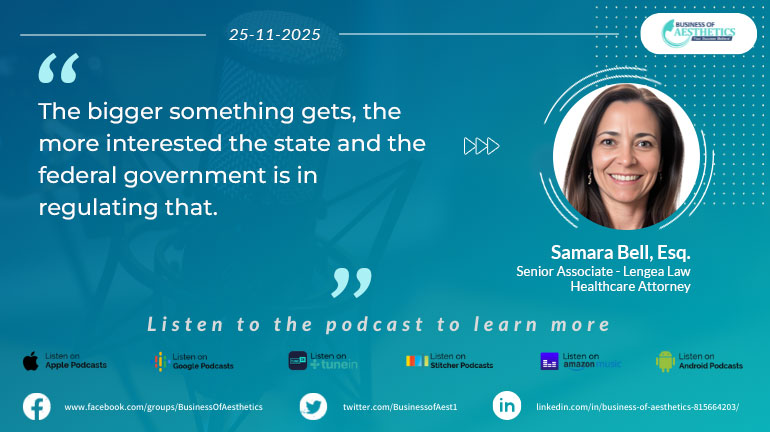
Samara Bell: Yeah, I mean, I think… Future-wise, I think as the industry is only going to continue to grow, we’re going to see tighter regulations and more enforcement like we’re seeing with microneedling and GLP ones. I think it’s, you know, being prepared for handling that enforcement. But I do think, you know, it’s trending in that way. The bigger something gets, the more interested the state and the federal government is in regulating that. And I do think that’s the future. But I think the good news is there’s a way to do all of this compliantly. So it’s not they’re going to, you know, regulate everything and take it all away. It’s just, you know, again, going back to, you know, growing those systems as you’re adding things and dealing with regulations.
Don Adeesha: Right. And all this regulation and compliance, they are an answer or rather a result of all the pleadings from the patients that have had it gone wrong for them, right? As we started this session and Sara mentioned that right off the bat, I think, so it’s a good way the industry is going. So just to wrap things up, I would love to hear one key takeaway from each of y’all for our audience, or rather our listeners to take away from. Sara, let’s start with you. What do you think is the number one key takeaway of this conversation?
Sara Shikhman: The number one key takeaway for me is that enforcement is really going up in this industry. And so we… all have to work hard to prepare ourselves for this enforcement and the number one way to prepare is by strengthening your processes and your paperwork and your training so Even if you can just do one of those three things, pick one and work on that. Rome wasn’t built in a day, right? You don’t have to do everything tomorrow. But let’s say you decide to update your micro-needling consent. That would already be better than not doing anything. So my advice would be pick one of those things, either get more training, update your paperwork, speak to your insurance company, pick one of those things, at least do that.
Don Adeesha: Okay. And Samara?
Samara Bell: Yeah, I mean, that might have been my takeaway, but I’ll add on to that. No, I think that another takeaway, you know, would be to before you are adding new things and growing to look at what you have now and to get that cleaned up and tightened up and then add on to things. I know it’s exciting and tempting to, you know, add new things, but it’s to clean up what you have now kind of compliance wise and regulatory rise.
Don Adeesha: okay uh so with that being said we will be wrapping up the session here and it has been a very important and perhaps an eye-opening conversation with Sara Shikhman and Samara Bell their insights into rf microneedling regulations compounded drug compliance and the fda’s shifting enforcement priorities highlight just how much the aesthetic landscape is truly evolving and how much opportunity there is for practices that stay informed and proactive. So if today’s discussion helped you gain clarity on the legal side of your practice, share this episode with a colleague or another practice owner who’s navigating similar challenges. And if you’re not already following the Business of Aesthetics podcast on your favorite platform, take a moment to do that. It helps more aesthetic professionals access conversations that truly move the industry forward. Now, as we wrap up, a quick reminder, Ekwa Marketing is offering a complimentary 60-minute digital strategy session, a one-on-one consultation with a senior strategist to help you map your 12-month high-value patient acquisition roadmap. You’ll walk away with clarity, direction, and an actionable plan tailored specifically to aesthetic practices. You can check availability and reserve your spot in under two minutes at www.businessofaesthetics.org/msm. I’m Don Adeesha, and this has been the Business of Aesthetics podcast. Thanks for listening, and here’s to entering 2026 informed, compliant, and ready for what’s next in aesthetic medicine.
GUEST – SARA SHIKHMAN

Sara Shikhman is an experienced healthcare lawyer and entrepreneur with over 16 years of expertise. She and her team have assisted more than a thousand clients in navigating the healthcare industry’s complex legal and regulatory landscape, negotiating contracts, protecting intellectual property, and obtaining funding. As CEO and COO, she has also led several multi-million-dollar ventures, including an e-commerce company that generated over $13 million in revenue in two years and a med spa that expanded from one room to 12 locations across multiple states, generating over $13 million in annual revenue. Sara is dedicated to helping individuals achieve their goals and dreams, one step at a time.
GUEST – SAMARA BELL

Samara Bell is an attorney specializing in all aspects of health care transactional and strategic matters with special focus on mergers, acquisitions, and partnerships for physicians, dentists, and veterinarians. Samara earned her B.A. in Native American Studies from Colgate University and her law degree from Suffolk University Law School.
HOST – Adeesha Pemananda

A seasoned marketing professional and a natural on-camera presence, Adeesha Pemananda is a skilled virtual event host and presenter. His extensive experience in brand building and project management provides a unique strategic advantage, allowing him to not only facilitate but also elevate virtual events.
Adeesha is known for his ability to captivate digital audiences, foster interaction, and ensure that the event’s core message resonates with every attendee. Whether you’re planning a global webinar, an interactive workshop, or a multi-session virtual conference, Adeesha brings the perfect blend of professionalism, energy, and technical savvy to guarantee a successful and impactful event.
Resources


Connect with Us:
Category: Business of Aesthetics Podcast