In this episode of the Business of Aesthetics Podcast, host Don Adeesha is joined by Audrey Neff, Chief Marketing Officer at Aviva Aesthetics, to discuss a critical industry paradox: why, in a booming $25.3 billion market, do so few practices build sustainable, scalable value? Audrey lays out a blueprint for long-term success, arguing that the practices that win will be those who master generational behavior, patient experience, and recurring revenue. She identifies major industry shifts, including the intersection of wellness with functional medicine and the acceleration of private equity consolidation, which is forcing owners to think strategically about their exit from day one.
A major focus is on the rise of the millennial consumer, now the largest demographic in aesthetics. Audrey explains that this group values human interaction and experiences above all else, and studies show they will pay more for a provider they trust. This makes “experience-driven marketing” the new invisible engine for growth. She provides actionable strategies for building this trust online, where millennials conduct their research, emphasizing the need to dominate Google Reviews (aiming for “triple digits”) and Instagram, a platform used by 83% of millennials to research aesthetic providers.
From a business perspective, Audrey advises owners to “begin with the end in mind” and operate “as if it were for sale” from the start. She warns against selling too early out of fear, noting that in a valuation, “culture is everything” because aesthetics is a human-to-human business, a nuance many investors miss. She also identifies a massive “profit leak” in most practices: retail. She urges owners to target 15-20% of gross revenue from retail, up from the common 2-5%, framing it not as being “pushy” but as a critical tool for delivering better clinical results, which in turn creates happier, more loyal patients.
Finally, Audrey looks to the future, predicting that as competition increases and treatments become commoditized, differentiation is paramount. She reminds listeners, “competition only exists if you’re doing the same thing as everybody else.” Her key takeaway for all practitioners is to “put the noise on mute” to ignore the social media drama and “shiny new toys” and instead focus with intensity on what is happening inside their own business, with their own patients, and with their own team.
Key Takeaways
- Win the Millennial Consumer with an “Experience-Driven” Model.
Millennials are the largest consumer group and “will pay more money” for a trusted experience. Shift your focus from patient quantity to “quality of patients”. This starts online by optimizing your Google reviews (aiming for “triple digits”) and leveraging Instagram, where 83% of millennials research providers. - Build Your Business “As If It Were For Sale” From Day One.
With industry consolidation accelerating, “begin… with the end in mind”. In this “relationship-driven industry,” this means focusing on your people and remembering that “Culture is everything.” Without a strong culture, you “do not have a sustainable or scalable business.” - Fix “Profit Leaks” by Using Retail as a Clinical Tool.
Most practices are at 2-5% of revenue from retail; the goal should be “at a minimum 15 ideally 20” percent. This isn’t being “pushy”; it’s ensuring “better clinical results” for your patients, which creates a “trickle down effect” of loyalty and referrals. - Differentiate Your Experience to Defeat Commoditization.
As competition grows, you must strategically differentiate your practice, because “competition only exists if you’re doing the same thing as everybody else”. You are not selling a product; you are selling the “outcome and experience”. - “Put the Noise on Mute” and Focus Internally.
The industry is filled with “so much noise” (social media drama, “shiny new toys,” PE panic). The most powerful strategy is to “put the noise on mute” and focus on what truly drives value: your patients, your team, and integrating new services with “strategy and intention.”
Podcast: Play in new window | Download
Audrey gave us the high-level strategy for building a future-proof practice. But it’s one thing to know the what, and another to execute the how.
If you’re wondering where to start, this session is your next step. It’s a 1-on-1 opportunity to get a clear diagnosis of your own online presence and build a 12-month roadmap to attract the high-value patients you need to thrive.

- Get a 1-on-1 diagnosis of your online presence & patient acquisition funnel
- Identify critical, untapped growth levers (SEO, Social, Referrals)
- Define a clear action plan to attract and convert your ideal patients
- Receive expert solutions for your most pressing marketing challenges
Subscribe To Our Podcast




Key Highlights:
- 00:00:12 – Introduction & Speaker/Topic Setup
- The episode focuses on the future of industry growth, generational shifts, patient experience, and building sustainable growth.
- Host Don Adeesha introduces the guest, Audrey Neff, Chief Marketing Officer at Aviva Aesthetics.
- The episode’s sponsor, Ekwa Marketing, offers a complimentary 60-minute "high-value patient growth plan session".
View TranscriptDon Adeesha: Welcome back to the Business of Aesthetics podcast. I’m Don Adeesha and today’s episode is all about the future of industry growth. generational shifts patient experience and building that sustainable growth so here’s what’s happening right now the global med spa market is estimated at around usd 25.3 billion in 2025 that’s a lot and it’s projected to grow at a 15 cagr to the next decade So even though the industry is booming, the number of platforms able to scale and be acquisition ready remains small. That means practice owners who understand generational behavior, build strong patient experiences and invest in recurring revenue are the ones really playing for the long game. Today, I’m thrilled to be joined by Audrey Neff, Chief Marketing Officer at Aviva Aesthetics and one of the most insightful voices in practice growth, brand strategy and scaling operations. Audrey’s work bridges consumer psychology with enterprise value, perfect for a discussion on building not just a profitable practice, but a sellable, sustainable business. Before we dive in, I would like to thank our sponsor for this episode, Ekwa Marketing. If you’re ready to position your clinic for sustainable growth and high value patients, They’re offering a complimentary high-value patient growth plan session, a 60-minute strategy call that helps build your 12-month roadmap to growth, retention, and long-term value. Reserve your spot now at www.businessofaesthetics.org/msm. It takes about 90 seconds to fill in. And with that being said, Audrey, welcome. Can we really kick things off by hearing about your journey and what drives your passion for this industry?
Audrey Neff: Yeah, so it’s a pleasure and an honor to be here. I’ve been in the industry for a little over a decade now. It’s been a wonderful journey. I feel very blessed and grateful for the opportunities I’ve been able to have along the way. So currently I’m the CMO to Viva Aesthetics. We have 10 locations. So med spa locations across the United States will be probably by end of 2026, around 25 to 30 locations. So we’re growing. Rapidly. So nothing fuels my fire more than helping practices build sustainable and thriving businesses. That’s where I invest a lot of my time, energy and effort into. I also invest a lot of my energy into training, lecturing and teaching globally across the world, as well at various conferences and with various leading brands in our industry, such as MERS, Galderma and Sinclair. So I love being in this industry and I don’t think I’ll ever leave it.
Don Adeesha: Fantastic.
- 00:03:06 – The Biggest Shifts: Wellness, Millennials, and Consolidation
- Audrey identifies three top shifts shaping the industry:
- The intersection of functional medicine and wellness for a comprehensive, 360-degree approach to patient care.
- The rise of the millennial consumer group, which is growing into the largest consumer group in aesthetics.
- Rising industry consolidation, which she predicts will accelerate over the next 5 to 15 years.
- She emphasizes that integrating wellness requires strategy and intention, not just adding it as a "shiny new trend".
View TranscriptDon Adeesha: Now, Audrey, you’ve seen aesthetic market evolve dramatically in recent years. From your perspective, what are some of the biggest shifts shaping the industry right now?
Audrey Neff: Yeah, there’s a lot of shifts shaping the industry. I would think three of the top ones would be one, the intersection of functional medicine and wellness. So truly, you know, building a more comprehensive 360 approach to patient care, health, wellness, beauty, and overall longevity and quality of life. I’m very excited that we’re finally seeing the integration of the two together for a very long time. Both sides of the industry had tunnel vision, in my opinion, and they were not putting the two two together. So I think we’ll see a lot more med spas incorporating thoughtful and intentional wellness integration, not just bringing it on because they think it’s a shiny new trend. So I think that there’s a lot there to do it the right way. It takes a lot of strategy. You can’t just start implementing peptides and you’re not doing panels and true functional medicine, getting to the root cause of why every patient is so different and what actual protocols and treatments do they actually need? So I think we’ll see. I think with that, it’ll weed out some of the weaker practices that just bring on wellness and things like that because they think it’s a trend and they just want an extra revenue stream. It takes a lot more strategy and intention. So I am excited about that trend. I think we’ll continue to see the rise of the millennial consumer group to grow into the largest consumer group in aesthetics, consuming these treatments and procedures, which is something I’ve spent a lot of my time energy and effort into over the last decade is just educating on how millennial consumers transact and buy and what influences their decision making in cash pay medicine and then i think the third trend that we’ll continue to see is just rising consolidation which, you know, that’s a very complex topic. A lot of people get very scared around that topic or when people hear the term private equity and things like that. But, you know, we can certainly jump into that at some point. But that’s something that will continue and it will not just continue. It will accelerate over the next five to 10 to 15 years in aesthetics.
Don Adeesha: Okay, it’s really nice to know that, you know, now feeling good on the outside is not enough, but also the inside needs to be considered with the rise of functional aesthetic medicine and practices, right?
- 00:05:17 – Understanding the Millennial Consumer
- Millennials are fueling global growth and value human interaction and experiences above all else.
- Studies show millennials will pay more money if they trust they will get a better experience from a provider.
- Practices should focus on "quality of patients over quantity of patients" by building strong relationships.
- This "experience-driven marketing" is an "invisible engine" that builds a resilient business and reduces the need for constant, expensive lead generation.
View TranscriptDon Adeesha: So, Audrey, you mentioned that millennials are the largest consumer group right now, or at least the highest growing ones in aesthetics. With this in mind, what are some of the general preferences um gen z millennials and gen x perhaps shaping the aesthetic industry today
Audrey Neff: yeah i think if we think about millennials because they’re definitely going to be the ones that are you know fueling global growth over the next decade um i think something that they very much value are human interaction and experiences. So for a while, I feel like a lot of people said that there’s just a lot of negative stigmas that are attached to the term millennials. I don’t know why, but if we actually look at this consumer group and there have been multiple studies done from a consumer standpoint across the entire country, I know I have a lot of them cited in a lot of my courses I teach in Millennials will pay more money if they trust they will get a better experience from that provider. So, you know, I think when it comes to how do we build sustainable and scalable businesses, it’s all like, do you need to have the right clinical skill set and always be advancing your education? Of course, that is paramount. But something we also can’t forget is how much these consumers just value that human-to-human experience. So spending a little bit of extra time during every appointment, even if it’s a tax appointment, instead of scheduling it for 15 minutes, I have a lot of practices I work with that will schedule it for 30 minutes, even though that’s less time that they’re making money. They’re using that extra time to build a relationship with that patient. And if you build stronger relationships with patients, they will spend more money. So at the end of the day, it’s truly about quality of patients over quantity of patients. So I think experience-driven marketing is kind of like an invisible engine for every single practice and provider in this industry. And I think the more that you focus on that, you’ll be able to build a more resilient business and you won’t have to continually go out and spend thousands and thousands and thousands always trying to get new leads if you just nurture the patients and relationships that you have in the practice.
- 00:07:49 – How to Communicate with Millennials (Before They Enter the Practice)
- Millennials start their research online.
- Practices must prioritize their Google Business Profile, ensuring it is optimized and has a high quantity of reviews (aiming for "triple digits").
- Instagram is critical; an Allergan report found 83% of millennials use it to research aesthetic providers.
- Content should include educational videos, team showcases, and before-and-after photos that clearly describe the treatment plan and set expectations.
- A huge "profit leak" is lead follow-up; Audrey notes 8 out of 10 practices do not follow up with inquiries.
View TranscriptDon Adeesha: Right. So if they are, how are we communicating to these millennials before they get inside the practice, right? As you mentioned, you know, before, well, if they’re in the consultation, we can maybe elongate or have a little bit more speaking time to them. But what if they haven’t stepped foot in the practice yet? How are we communicating with these millennials? And what’s the best way to go about doing it?
Audrey Neff: Definitely. So millennials, it’s still going to be online. So that’s where people in that consumer group go to start researching. So a couple of strong platforms I would advise people prioritize would be your Google business profile. Make sure it’s optimized. Make sure you have adequate reviews. And adequate reviews does not mean 25, 50, 75 reviews. Like your goal, your first goal should be triple digits. Yeah. And if you want to break it up into micro goals first to make it more attainable and less stressful for your team, do that. But triple digits, just like in a split millisecond, if someone is comparing two practices and they see 256 reviews versus 56 reviews, like within a split second, they’re naturally going to trust that practice with that higher quantity of reviews. So your Google business profile in Google reviews, I would say, is a very, very strong lever that everyone can pull to increase conversion on the pre-patient side of things. In addition to that, I would say social media as well, Instagram specifically. And this was actually, there was an Allergan consumer report a couple of years back. And I’m sure if they redid the report now, it would be higher. But the report, the most recent one I have, was i forget how many millennial consumers they surveyed but it basically the results were that 83 percent of millennials turned to instagram specifically when seeking information or researching aesthetic providers so 83 i mean that’s the majority of consumers and i guarantee it that’s that same consumer analysis was done now would be a lot higher so if we know that then we should know that we need to be showing up on social media so Before and after photos I think are great with proper patient consent describing the treatment plan in the caption to set expectations up front that these results were not achieved overnight, they took six 12 months using combination therapy approaches, because now you’re setting expectations. So when patients come in, they know that it’s going to be a long-term commitment if they want to get the clinical outcomes that they are seeking. Instagram, for sure, educational videos, showcasing your people, your team, like people want to connect with people. That’s how millennials, Honestly, regardless of generation, people buy an emotion and justify with logic. But there’s a big trust factor in aesthetic medicine because it’s a relationship-driven industry. So I think the more active you can be on social media, the more trust that will naturally compound over time for your business. And it’s good for existing patients, too. Even if they’re already coming to you, like, I love seeing my provider on social media. making videos, introducing new treatments and protocols and things like that in the practice. So social media, Google business profile, Google reviews. I think before and after photos are very, very powerful when done the right way. And then honestly, beyond that, just handling those initial inquiries the right way. So having tightened up talk tracks? How do you answer the phone? How do you talk to these consumers? Do you get their contact information to follow up with them? Eight out of 10 practices do not follow up with people. There are very few practices. I used to mystery shop practices a lot that wouldn’t even get my contact information. So I think there’s a lot of profit leaks that exist in lead generation and conversion. But from a millennial perspective, I would say you need to show up online just because that’s where they’re going to do their initial research before actually calling your practice
Don Adeesha: i mean uh eight out of ten practice is not calling up that’s a great number for those two out of ten it is yeah absolutely so i hope the practice owners that are listening to our podcast here are in that two out of ten if not well uh here’s your chance to make it work right
- 00:11:57 – Private Equity and the New Phase of Consolidation
- Audrey believes we are still in the "early stages of industry consolidation".
- She warns that many private equity (PE) firms miss that aesthetics is not a "typical roll up" because it’s driven by human connection and relationships, which cannot be easily replicated.
- Many practices sold too early out of fear of competition.
- Audrey advises that a single-location practice, even one doing $2 million in annual revenue, should not sell yet.
View TranscriptDon Adeesha: Audrey, so private equity activity in aesthetics has exploded over the past few years. It has died down a little bit in 2025. But still, are we entering a new phase of consolidation or correction?
Audrey Neff: definitely so I think we’re entering I think we’re still in the early stages of industry consolidation even though you know there are I don’t even know how many private equity platforms have have popped up in the last 24 months but it’s just going to grow I agree with you there was a bit of a slowdown with acquisitions over the last year and I think And not to get too much into detail, but I have my opinions on why I believe that happened. But I think a lot of private equity, I think something that a lot of PE firms miss is in aesthetics, it’s not a typical roll up, like where you can just roll up practices and then it’s all of a sudden profits over patient care. That model does not work in this industry. This is a very different industry than every other industry in the entire world is because it is truly driven by human connection and relationships. And those are things that you cannot replicate or replace in the world of private equity. So I think there are platforms that are doing it better than others, ones that understand the nuances of what truly builds a successful and sustainable aesthetic practice at the end of the day. But I think some people, you know, get very freaked out around the term private equity. And there’s a lot of obviously. know negative things that can go along with it but there’s there also are some positive things that can come out of it as well and ultimately that just falls down on practices truly doing their due diligence and making decisions very slowly on if they are in a stage of business and life where they want to partner with private equity or sell the majority of their business they just need to make they just need to on let’s say spend the time to ensure that they’re partnering people that they want to do business with so you know i i think sometimes people try to rush the decision or they make decisions i think a lot of practices made decisions too prematurely when The rolling up started with private equity. A lot of them all freaked out and thought, oh, my gosh, if I don’t sell my practice today, I’m not going to be able to compete with Joe Schmo down the road because they get all of their injectables at a lower cost. They have additional training support. They have all of these other things. And it’s a bit it’s a little disheartening to see that some people did truly sell too early. Now, not everyone sells too early. If someone has, you know, an eight location practice and they’re ready to, you know, have some type of exit in their business, you know, I think that’s a phenomenal route to go. But I think that if you’re a single location practice, and even if you’re doing, you know, $2 million in annual revenue, in my opinion, I would not sell your practice yet. I would continue building.
- 00:14:55 – Building for an Exit: Timelines and Strategy
- Entrepreneurs should "begin with the end in mind" and operate their business "as if it were for sale" from the start.
- This mindset means focusing on clinical excellence, scalable systems, efficient technology, and diversification of services and providers.
- A good timeline to begin planning an exit is 3-5 years out.
- That 3-5 year period should be used to optimize EBITDA and profitability, but without sacrificing patient care and relationships.
View TranscriptDon Adeesha: Now, you mentioned spending the time for our practice owner considering this transition. What is an adequate timeline, do you think, to make this consideration?
Audrey Neff: Yeah, and that’s a very good question. I think everyone that opens up their own business and as an entrepreneur at the end of the day, you should begin anything in entrepreneurship and business owning with the end in mind. So you don’t want to start a business with no exit plan ever. I don’t think anybody wants to run their business until they’re in the grave and then you get nothing for it. You know, I think. I think that everyone should operate and build their business as if it were for sale. Just with that mindset, even if technically you’re not at that point where you could sell it yet, it’s just a mindset of let’s operate my business as if it were for sale. And if it were for sale, what makes a business more attractive to a buyer in this industry? Steady flow of patience. um clinical excellence scalable systems and processes efficient technology that is integrated throughout diversification of services diversification of providers right so just thinking of all of these things even though it seems like a lot of things you don’t have to do all of them at once but if you know one day that you want to have some type of exit in place I think just Having a blueprint of these are all the things I need to achieve over the next 5, 10, 15 years, however long you want to build your business for until you’re considering exit. I think that’s how you should operate is always begin with the end in mind and operate your business as if it were for sale or try to do that, even if it’s not near where you want. You’re not near that timeline when you want to exit your business. And then once you do build a sustainable and a business that is sellable, I mean, it’s a long process to sell your practice, right? It’s not like it’s a two-week thing. So I think when you know you’re a couple years out, like, I think people typically know when they’re about if they start thinking about it when they’re three to five years out. And we talk to practices day in and day out. And I would say the majority of practices typically are like, no, I think I would like to have some type of transaction or exit or partnership in the next three to five years. I think that’s a very good time frame because once you know that you want to have that exit in the next three to five years, you use that next three to five years to truly do everything you can to optimize your EBITDA. your profitability, but without sacrificing clinical excellence, patient care and relationships.
- 00:17:27 – How Brand Equity and Culture Show Up in Valuation
- Brand equity is very important, but some investment firms make the mistake of only looking at dollar signs.
- Audrey emphasizes that at her firm (Aviva), "Culture is everything".
- Culture is built by leadership, teams, and patients.
- If a practice doesn’t have a strong culture, it does not have a sustainable or scalable business, which limits its future growth potential regardless of current financials.
View TranscriptDon Adeesha: Audrey, some of the things that you mentioned were fantastic for our practice owners, as well as giving them the timeline. But there was a certain thing that I was curious if you could expand on, which is you mentioned that aesthetics is driven by human connection and relations, right? So I’m curious, how does brand equity actually show up in valuation today?
Audrey Neff: I think brand equity is very important. I think private equity or buyers or investors in this industry, if they’re doing it the way that they should be approaching it in aesthetic medicine, which some do, some don’t. Some firms out there only look at the dollar signs. They’re not analyzing everything else that got that business to that stage, right? For instance, what we look at, because in Aviva, we have a very different model than everyone else. We’re the only one that has the model that we’re employing. We are very big on culture. Culture is everything. And culture is built by leadership, teams, people, and patients. So we make sure that when we are partnering with practices, we go out and visit the practice. We talk to the team members. We talk to the leadership. Culture is everything. If you don’t have strong culture in your practice, you do not have a sustainable or scalable business. So I think even though the numbers and the EBITDA and all of these other financial metrics are critically important, If you don’t have the foundation of people supporting that, there’s going to be a limit on the future growth of that business. So I think culture really drives everything in any practice. And it always boils down to how providers and team treat their patients and what type of client experiences that they give in the business.
Don Adeesha: Okay, thank you very much for that clarification, because absolutely at the end of the day, aesthetics is a people first business. So if the culture isn’t right, even if everything else lined up, perhaps it’s not going to be very sustainable.
- 00:19:24 – Trust is the New Currency
- Audrey states that "trust is everything" and is at the forefront of the entire patient journey—from pre-patient marketing to consultation, conversion, and retention.
- Trust is built online (social media, reviews) and in-practice (how you greet, treat, and consult with patients).
- The key mindset is for owners to ask, "If I was a consumer… What would build trust with me?".
View TranscriptDon Adeesha: Yep. So Audrey, you’ve said that before, trust is the new currency. How does that mindset translate into building a five star patient experience in today’s market?
Audrey Neff: Yeah, so trust is everything. Trust is truly at the forefront of every single thing in this business. It’s at the forefront. It’s at the forefront of pre-patient marketing. It’s at the forefront of converting patients. It’s at the forefront of turning consultations into treatment plans, paying patients, and ultimately loyalty and retention. Trust is a part of every single one of those conversions that have to happen for any practice to build a sustainable, successful, and resilient business. We talked a lot about this being a people-to-people business and a relationship-driven business. And once again, what’s at the forefront of that is always trust. So how do you build trust? Well, how do you build trust online? Social media, we talked about reviews. We talked about before and after photos done compliantly. taken the right way. Just think of things that build trust. So if I’m researching a provider, what are things that would build trust with me if I was a consumer? If I’m calling a practice, how would I want to be treated over the phone? When I walk into a practice, how do I want to be greeted? When I’m sitting in a consultation for 60 minutes, what would build trust with me? Right. Not not treating patients like transactions, but treating them as real human beings that you truly care 150 percent about. And then same goes with loyalty and retention. It’s trust is just like one of the biggest trust and experiences are probably the top two things that drive success and longevity in today’s modern medical aesthetics and cash pay wellness industry for sure.
Don Adeesha: I love that. What would build trust with me? I think if there’s something to take away, if we could look at every aspect of the business in that angle, we can look at areas where we can really improve that trust currency.
- 00:21:28 – Actionable Strategy: Increasing Revenue via Retail
- A "low hanging fruit" and common "profit leak" in most practices is retail revenue (e.g., medical-grade skincare).
- Most practices fall between 2-5% of gross revenue from retail, but the goal should be a minimum of 15%, and ideally 20%.
- This is not being "pushy" or "salesy". Selling more retail leads to better clinical results.
- Better results create happier patients, who in turn spend more money, refer more business, and leave better reviews.
View TranscriptDon Adeesha: With that being said, what are some actionable strategies practices can use to increase revenue without sacrificing patient care?
Audrey Neff: Yeah, definitely. There’s a lot of low hanging fruit, I would say, in most businesses to increase revenue while still putting patient care and experiences at the forefront of every single thing that you do. So one thing that I often find to be a very prominent profit leak is just retail. Retail revenue. So your skincare, if you have nutraceuticals, if you have supplements, whatever those products are, medical grade skincare is obviously going to be the largest chunk of that for your modern aesthetic practice or medical spa. If someone’s doing retail right, their gross percentage of revenue coming from retail skincare should be at a minimum 15 ideally 20 is like what you want to get to so 20 of your gross revenue is driven by retail and most practices typically fall between like two and five percent so if you think about that if you’re if the average and everyone should just go to your go to your books and look at this if you’re at two to five percent think of what where your practice would be in the next 12 months if you kept everything else the same in your practice, but you just increased your retail revenue by an extra 15%, right? Those are substantial numbers. And the cool thing about retail is people think, oh, I don’t want to be pushy. I don’t want to be salesy. I don’t want to be aggressive. If you’re selling more retail, your patients are going to get better clinical results. If they get better clinical results, they’re going to be happier. They’re going to want to come to you more. They’re going to want to spend more money. They’re going to want to refer you more business. They’re going to have better before and after photos. They’ll leave you better reviews. Like everything is just a trickle down effect in this industry. So while things like that might seem very small and minuscule, they actually have a very big impact on the bottom line of everyone’s practice. So that’s probably one of the biggest ones I see is honestly just retail skincare.
Don Adeesha: That’s wonderful. I mean, for our practice owners listening, as Audrey mentioned, you’ve got a goal now, 15%. If you’re doing 2% to 3%, look at all that leakage you’ve got going on. And for no additional cost, really, the overhead is not going to increase either. And better patient care and better patient relationship as well experience in the end.
- 00:24:13 – The Aesthetics Industry 5 Years From Now
- Audrey predicts more practices and increased competition, but views this as a good thing, as consumer penetration will also increase.
- Treatments, particularly injectables, will become more "commoditized".
- To fight commoditization, practices must differentiate. Audrey states: "Competition only exists if you’re doing the same thing as everybody else".
- Consolidation (M&A) will continue, which has had the positive effect of making practice owners start thinking about their business and exit strategy.
View TranscriptDon Adeesha: So Audrey, if you had to predict, what will the aesthetics industry look like five years from now?
Audrey Neff: I think we’ll have a lot more practices across the United States. So I think that there will be increased competition, but I don’t want people to get freaked out about that. Like competition is a good thing. That means we’re in a healthy industry. With the rise of competition, I will also say the consumer penetration will increase too. So more consumers are going to start getting treatment. So that’s why people shouldn’t get hyper-focused on, oh, there’s more practices in my local market. The way you need to think about it is if there’s more practices in your local market, there’s more consumers that are interested in also getting treatments, right? So competition’s definitely not a bad thing. So that’s something we’ll definitely continue to see is just, you know, there’ll be more Competition. I think treatments will start to get more commoditized as well. I think injectables have already become relatively commoditized. So if something is commoditized in this industry, practices need to figure out how to stand out against that. So I think the way that you package your products, I think the way that you build treatment plans, I think the way that you price them, I think the way that you ultimately cell treatment plans and comprehensive treatment packages is all gonna boil down to that. So if there’s a commoditized market and if everyone is offering lip filler, everyone’s offering bio-stimulators, everyone’s offering neuromodulators, how do you differentiate yourself? And I say this a lot, but competition only exists if you’re doing the same thing as everybody else. So someone is offering, because at the end of the day, you’re not selling a product, you’re selling what that outcome and experience is. So there’s a lot of strategies I can go into just around the concept of defeating commoditization in aesthetics, but I think it commoditization will just increase. So practices really need to be mindful and intentional of how they differentiate their practice from practices that are technically offering the same or similar products as them. And then obviously we’ll certainly see a lot more M&A and consolidation that’s just inevitable and that happens in any any industry that’s as fragmented as medical aesthetics you know 80 plus percent of the less than 20 percent of the industry has been consolidated at this point um we saw it in derm we saw it in dental it’s happening right now in aesthetics it’s not going away um so i think i think something positive that has come out of the consolidation is people are finally starting to think about their business as, man, you know, I do need to make sure that I can exit this thing one day. So I think that the rise of consolidation and private equity has actually started, you know, kind of getting people to think a little bit more about their business and not just operating day to day and only focusing on the next day, the next day, you know, having them really shift their focus to what can I do to build sustainability so that one day i have a business that is truly sellable
- 00:27:12 – Key Takeaway & Conclusion
- Audrey’s key takeaway: The industry has "so much noise"—social media drama, new trends, and "shiny toys".
- Her advice is for owners to "put the noise on mute" and just focus on what is really happening within their own business, with their patients, and with their team.
- Don Adeesha thanks the sponsor, Ekwa Marketing, and reminds listeners of the complimentary growth plan session.
View TranscriptDon Adeesha: wonderful uh with that being said audrey i would love to take your key takeaway of this session for our listeners here um what is it what what would you say as your key
Audrey Neff: yeah i mean i i would say um You know, I think that there’s a lot of noise in this industry and there’s always a new trend. There’s always something going on on social media. Now we’re seeing the whole back and forth about PDGF and it’s there’s so much noise that’s going on in aesthetics, private equity, eminent, like all of this crap. So for lack of a better term, I think what everyone needs to do at the end of the day is focus on your business. All of this stuff will still be here. There’s always going to be drama. There’s always going to be something going on on social media. There’s always going to be a new shiny toy that pops into the industry. And all of these people get paid to promote it. And I just think that there’s so much noise in this industry all the time and the noise will just get louder and so i think a powerful reminder to everyone is try to put the noise on mute and just focus on what’s really going on in your business with your patients and with your team and i think if you do that um you will naturally um you know build a business that is ultimately something that you’re very proud of one day
Don Adeesha: fantastic That was an incredible conversation with Audrey Neff, unpacking how generational behavior, authenticity and strategic business planning are shaping the next era of aesthetics. To our listeners, thank you for joining us on the Business of Aesthetics podcast. If you enjoyed today’s episode, please share it with your colleagues and leave a quick review. It helps us reach more practice owners and allows them to discover these insights. Also, don’t forget to take advantage of your complimentary high-value patient growth plan session from Ekwa Marketing. It’s a 60-minute one-on-one strategy call that helps you map out a personalized roadmap for growth, retention, and profitability. You can reserve your session at businessofaesthetics.org/msm. So with that being said, until next time, I’m Don Adeesha reminding you to keep innovating, keep connecting and keep building the kind of practice that defines the future of aesthetics.
GUEST – Audrey Neff
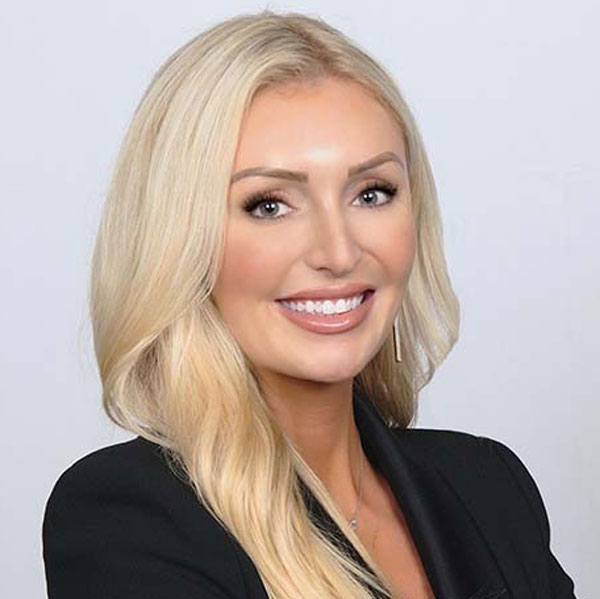
Audrey Neff is a leading marketing strategist and the Chief Marketing Officer (CMO) for Aviva Aesthetics. With over a decade of experience focused exclusively on the business of medical aesthetics and wellness, she has cultivated a deep passion for helping practices build sustainable, scalable, and high-value enterprises.
Beyond her executive role, Audrey is a globally recognized speaker and a sought-after Key Opinion Leader (KOL) for the industry’s most prominent brands. Her thought leadership is not just theoretical; she is an award-winning, peer-reviewed author with features in numerous key publications, including PRIME Journal, The Aesthetic Guide, and the PAN Journal, the official journal of the International Society of Plastic & Aesthetic Nurses (ISPAN).
As a premier business educator, Audrey is entrusted by the world’s top manufacturers to train other practitioners. She serves as a GAIN Business Trainer for Galderma, a frequent educator for Sinclair, and was one of only four speakers personally selected by Merz Aesthetics to launch their MAX Business Platform across Europe and the Middle East.
As a passionate advocate for industry growth, Audrey also hosts the “True to Form” podcast, a top 3% global show featuring transparent conversations with the leaders shaping the future of aesthetics. Her perspective is essential for any practice owner seeking to master the complexities of the modern market, providing an invaluable blueprint for translating consumer psychology and brand strategy into real enterprise value.
HOST – Adeesha Pemananda

A seasoned marketing professional and a natural on-camera presence, Adeesha Pemananda is a skilled virtual event host and presenter. His extensive experience in brand building and project management provides a unique strategic advantage, allowing him to not only facilitate but also elevate virtual events.
Adeesha is known for his ability to captivate digital audiences, foster interaction, and ensure that the event’s core message resonates with every attendee. Whether you’re planning a global webinar, an interactive workshop, or a multi-session virtual conference, Adeesha brings the perfect blend of professionalism, energy, and technical savvy to guarantee a successful and impactful event.
Resources


Connect with Us:
Category: Business of Aesthetics Podcast