In this week’s Business of Aesthetics episode, host Michael Walker sits down with Dr. Carla Pierson, nurse practitioner and co-founder of Smiley Aesthetics, for a real conversation about something the industry doesn’t talk about enough, how a lack of business know-how is holding providers back. Carla shares her own journey, the common mistakes she sees every day, and practical ways to build a business that actually supports your skills and goals.
Whether you’re just getting started or feeling stuck financially, this episode breaks down why understanding the business side isn’t optional, and what you can do about it.
Key Takeaways
- Clinical excellence isn’t enough
Without business understanding, many med spa owners risk burnout, poor decisions, or failure—even with great clinical results. - You don’t know what you don’t know
Many providers lack basic financial knowledge like what a P&L is or how to manage cash flow. - The dangers of DIY everything
Owning and operating without expert guidance or structure leads to chaos—especially when managing taxes, compliance, and partnerships. - Fight the myth of being the solo CEO
The glorified image of being the injector, marketer, owner, and strategist is often unsustainable. Strategic collaboration is key. - Track cash flow before chasing profit
A basic spreadsheet and regular tracking of money in and out can empower even the most non-business-savvy providers.
Podcast: Play in new window | Download
Subscribe To Our Podcast



Key Highlights:
- 00:01:08 – Meet Dr.Carla Pierson
- Introduction to Carla’s impressive educational and entrepreneurial journey
- Her motivation for co-founding Smiley Aesthetics
View TranscriptMichael Walker: Welcome to another episode of The Business of Aesthetics podcast. I’m Michael Walker, your host for this episode. Before we get started, I want to thank all of our incredible listeners from the United States, Canada, and around the globe. Your continuous support means everything to us. A special thank you also goes out to our sponsor for this episode, Ekwa Marketing. With nearly 20 years of experience, Ekwa Marketing is a leader in digital marketing services for aesthetic practices. They are offering our listeners — that’s you — a complimentary digital marketing consultation, which includes a tailor-made 12-month digital strategy for your practice. You’re gonna be able to head over to www.businessofaesthetics.org/msm to book your consultation today. But don’t worry about remembering the address — we’ll… we’ll talk about that a little later as well. It’ll be available on where you’ve picked up this podcast. So, without further delay, let’s dive into our topic for today.
Michael Walker: And the title is Bridging the Business Gap in Aesthetics: Why It Matters More Than Ever. And we have with us Carla Pearson today. I’m excited to welcome her — uh, who — she is a seasoned, uh, aesthetic professional and business strategist who’s passionate about helping spa and med spa owners strengthen the business backbone of their practices. I was on her website — the company that she co-founded with her twin sister — uh, that might come up later in the… in the podcast… uh, her. But Dr. Pearson is an accomplished healthcare leader turned entrepreneur, whose passion for quality patient care and operational excellence led her to co-found Smiley Aesthetics. Raised in Nashville, Tennessee — could tell that by the accent, Carla — Carla is an avid athlete and went on to earn her Bachelor of Science in Nursing. Fueled by her drive for leadership and innovation, she subsequently pursued a Master of Science in Nursing Administration, a Master of Business Administration with a healthcare focus, and ultimately — oh my goodness — a Doctor in Nursing Practice. So do you think we have the right person for this conversation here today? I think so. Carla, it is great to have you here.
Dr. Carla Pierson: Thank you, Michael. I appreciate it. Appreciate being honored to be on here with you.
Michael Walker: As the aesthetic industry continues to grow, many providers are discovering that clinical excellence alone isn’t enough to build a sustainable, profitable business. Carla believes one of the most pressing challenges in the field today is the widespread lack of business knowledge, and it’s starting to affect the industry at every level. This episode will dive into the real impact of this business gap, explore ways new and experienced owners can quickly handle a — uh, get a handle, pardon me — on their numbers, and talk about where to focus limited resources for the greatest return.
So, as I say, Carla, it’s great to have you here, and I always… I am really excited about this topic. Um, my — I have a, uh, a business background, but I always — with medical professionals — I kinda look at the… the… as a whole, with exception — like you — uh, they… most of them are accidental entrepreneurs. That they really, you know, if they took a business course, it was by mistake or… yeah —
Michael Walker: They couldn’t get into the one they wanted. And I’ve had — and I do, uh, webinars and podcasts in various, from veterinary to aesthetics to, uh, plastic surgery, to dental — all kinds of — and I… so I hear, and it’s pretty consistent. And so it’s like the one with the business background is the one that got away. Mm-hmm. And it’s such an important thing today to have that… to have that relevance. But I think that as we talk about that today, I know that’s what you’re gonna highlight. But I — the first question I want to throw out to you — mm-hmm — is kinda what has inspired you to shine a light on the business gaps in aesthetics, and really, why do you believe this conversation is so urgent right now?
- 00:04:07 – The Business Gap in Aesthetics
- How Carla discovered the critical lack of compliance and financial knowledge
- The systemic failure in nursing education that ignores business training
View TranscriptDr. Carla Pierson: Uh, yeah. So, Smiley exists because of the gap in business in the medical profession. Um, we— the story is… is a funny one. Again, we— we— that’s a different conversation. Um, but ultimately, when I started doing, uh, medical aesthetics with my sister, I not only recognized that compliantly, there was no chance we were doing this correctly— uh, no chance we were following the rules— but ultimately, um, she had no idea. Um, my background, again, had been in… in… in HCA, in a big corporation, and… and doing a lot of business things and money being top of mind. And she was just so lacking just the— some of the basic things of, like, great, we made a thousand dollars, now what? And I’m like, yeah, oh boy, we gotta really— you know— and as money starts coming in and not knowing what to do with it is… is… is fascinating.
Dr. Carla Pierson: Um, and so that’s kind of how we built our platform— to help medical professionals own and operate their own businesses and understand some of that stuff. Because inherently, as nurses— I say this all the time— and medical professionals and physicians, we are not taught this in school. There is no business course. There is nothing in nursing school as it relates to business, because the education in medicine is archaic. And you are designed to go into a hospital and work underneath a physician and work for da, dah, dah, dah, dah. And the doctor’s gonna own it, and that’s gonna be how medicine was designed. So why do you need to understand how to do your taxes? Uh, it was— it’s just all been, um— it… it’s a… it’s a catastrophe, in my opinion. Um, it’s— it’s an absolute— one of my passions is lobbying for nursing curriculum to require— require some form of business education. Uh, because nurses are able to… to go out and do things on their own and… and not be— you know, with most due respect— beholden to a physician. You can own a lot of things. You can do a lot of things.
So that’s really where my passion lies. Um, and it was all highlighted by the medical aesthetics industry, because you see a lot of nurses and medical professionals opening med spas and… and opening businesses and have no idea what they’re doing beyond that.
Michael Walker: So, yeah. Yeah. And I mean, and there— ideally, there’s a couple of people listening to this going, "That— that’s not true," and that’s awesome. Mm-hmm. I— sure— that’s exactly what we want, right? Because you’ve got something to give away. Now the question is, why are you not sharing that with others like Carla is? Mm-hmm. So—
- 00:06:30 – Collaboration vs. Competition in Medicine
- Why competitiveness in aesthetics feels unnatural to medical professionals
- The need to shift from “assigned patients” to “earned clients”
View TranscriptDr. Carla Pierson: Which is also part of the— so, I mean, it’s also part of the problem too in this industry, which is the competitiveness. Uh, because it’s— I did— the other problem with nursing and… and medicine is we don’t know how to deal with sales and competition, because that’s not what we’re made to do. Again, you go into a hospital, you’re assigned your patients. Um, there’s no competition. It’s like, here’s your six clients, take care of them all day, you know, and then go home. And there’s— if anything, it’s collaboration, it’s teamwork, it’s all these things. But there’s no competition to get the actual client. Which, you know, in the hospital, of course, we call ’em patients. Then jump into the business world, and all of a sudden we’re competing over those patients and trying to figure out, well, I walked into work today, why don’t I have my six assigned patients?
Dr. Carla Pierson: It’s like, no, you gotta go get those patients. Like, those patients don’t just walk in. So it’s just this totally different world that, um… it’s— it seems like, well, that’s common sense. And it’s just not. It just isn’t. Um, well, I have the skills. I’m the nurse. You have to come to me for the Botox, so why would I have to get the client? It’s the same thing as the hospital. You come to me. Uh, and it’s just wildly different. So it’s— to your point— collaborating and helping each other. And it is— it’s not— we find ourselves here at the hospital and here in business, and we just haven’t figured out how to be like, okay, this is okay. Instead of just— wha— um, and being really, really kind of not nice.
Michael Walker: Yeah. And that’s— it’s funny ’cause I— part of my— I have a leadership coaching company. I do— I work with healthcare professionals as well as I’m a… a professional mediator. So I see all the bad communication stuff.
Dr. Carla Pierson: Yeah.
Michael Walker: And… and it— so if I was to break it down, if I think about a— I mean, a doctor— I mean, the education, uh, the training, the work, the time you put in is… is massive. It’s— it… mm-hmm. It’s such a— I… I’m always— so I thank my doctor every time I go, because they make that commitment. I mean— and it’s— they gave up so much. And I understand, you know, there’s money involved in this, but at the end of the day— I mean, being on call and just— there’s just so many factors, and I have such appreciation for it. But I said, but I don’t understand why you want to be Heinz 57.
Michael Walker: Mm-hmm.
Michael Walker: Like, you… you don’t know anything about sales.
Dr. Carla Pierson: Mm-hmm.
Michael Walker: Therefore, you don’t know anything about the supply and demand equations. You don’t know much about business other than what you need to know to… to get your tax stuff to the accountant. Right? Um, you don’t know anything about marketing— digital marketing in particular— in the platform today where Google changes its algorithm 6,000 times a year.
Dr. Carla Pierson: Right.
Michael Walker: All right. You don’t know anything— and this is my— one of my fields as a field expert— you don’t have— you don’t really have any emotional wisdom.
Dr. Carla Pierson: Right.
Michael Walker: And what I call that is— that’s your… your EQ— your emotional quotient. That’s the science of people blended with the art of relationships. Now, what’s interesting is that we have some level of art of relation. Nurses in particular— the support staff—
Dr. Carla Pierson: Mm-hmm. Mm-hmm.
Michael Walker: They have to. They’re the… they’re the front line. The doctors— not so much. Right? I see this in the veteran field. But I think— so taking all of that and saying, okay, so what is it— what if you take 80% of what you do and focus on 20% of your… what you’re great at, which is the medical— the trained portion. Right? And the question is, who have you brought around in your circle—
Dr. Carla Pierson: Right.
Michael Walker: —to complete it, so that you don’t have a wheel with a notch out of it?
Dr. Carla Pierson: Yeah. Well— and that’s— that’s— that makes sense. Yeah, absolutely. And you’re… you’re defining the— what we— to circle back to your original comments— is the failure and the catastrophe that is happening in medical aesthetics. It’s the realization of, um, you can ignore the business part to start out. You know, everyone’s got, uh— you know, you’re a nurse practitioner and you add on Botox. Well, you… you have tons of patients who see you already. You have friends and family. Everybody knows you as the great nurse. So they come and you… and you make— you do well for— in the beginning, or just… just… just through the notion that you’ve been a nurse for a while, or whatever the case is— or a physician. So you open this— you add this service on. So surely people will come for that. And the first ones do. It’s that… that notion of friends and family— the hockey stick— you know, you have that little bump, and then it flattens out. And we still kind of ignore the business side of it—
Dr. Carla Pierson: —’cause it is still okay. Like, it’s fine. And then the problem is, you either go up or you go down. And we just— they just don’t know what to do. Um, and there are so many things that you don’t think of, ’cause you just don’t know what you don’t know. So, um, it’s a catastrophe because of the maturing industry that is medical aesthetics. The businesses that are successful are struggling because they just don’t know how to manage that money, or how to— what do I do with it? Or whatever the case is. And then you have the other side of it, who’ve spent a million dollars on machines and have done so many things, and the friends and family ran out. And so now they’re stuck with all this stuff— these debts and these personal liabilities they don’t know what to do with— have no idea, to your point, how to market.
- 00:10:57 – The Maturing Industry & New Challenges
- The “friends and family phase” is not a sustainable growth model
- Many practices are failing due to expensive decisions and a lack of planning
View TranscriptDr. Carla Pierson: And they don’t even know how. They don’t know. They don’t know. They don’t know how to garner the knowledge to market. So trying to go read it— you know, go Google an SEO book— you know, you’re gonna get a textbook that’s like that big. You have no clue what any of that stuff means. Like, you don’t even have access, almost, to the resources. Um, AI is helping, but— to the resources to help you learn. So, um, the catastrophe is watching all of these businesses then fail— ones that were doing well and ones that were destined to fail. I just— you just— ’cause they just don’t have someone helping them with business. And it’s tough.
Um, and it all goes back to that root cause. Which, until we change that— which is educating medical providers better, better on the front end, requiring some kind of business knowledge and awareness— um, you know, we’re just… we’re not gonna fix it. So I— no, it’s— yeah, it’s not… no negative. I mean, it’s great. It’s—
Michael Walker: Great. No, it isn’t though. We’re gonna— let’s go into— let’s just talk a bit about the, um, some of the— we’ll… we’ll stay on the— let’s just break it… continue to break it down. I said, you know, “Where there’s a lack of vision, people perish.” And the reality is that a lot of people— I’ve heard it in your… in this field— in the… in the aesthetics field— more so than in legal and dental, even, for that matter. Veterinarian are like you guys. But you gen— you all— there’s a genuine passion for— there’s a passion for who you are and why you matter.
Dr. Carla Pierson: Mm-hmm.
Michael Walker: But it gets pushed under what you do and how you do it.
Dr. Carla Pierson: Mm-hmm.
Michael Walker: And no one knows how to bring that back up and have that work well together, which brings out the creative space of an organization where the gift is. That’s where people love to come to you. That’s where referrals come from. That’s where… that’s where you go home at night, feel good about yourself and how you handled others. All of that happens in that space.
But generally, in these fields— ’cause the medical, the science side, tends to drive the transactional— and it holds… it holds—
Michael Walker: —up, and we just lose the other part. So I think… but in this, I have a question here that you— you know, we’re talking about lack of business education in aesthetics, and, um… and when we talk about business education, we’re… we’re— that’s a very broad statement. But let’s… let’s leave that at this point. But you said the lack of business education is doing real damage to the industry. Can you expand on what you’re seeing and why this matters now more than ever? Let’s give some anecdotal evidence here.
- 00:13:11 – Anecdotes from Smiley Aesthetics
- A provider loses $312 in a year—what that really says about financial misunderstanding
- The importance of understanding P&Ls, tax implications, and self-pay discipline
View TranscriptDr. Carla Pierson: Anecdotal evidence. Okay. So, uh, for Smiley, we have, uh— we have our brick and mortars, but we have a platform where people can own and operate their businesses. And they… they… they own their own LLCs. And we help them with some of those basics. Um, but what you see with them— so a perfect example is, um, “I’m not making any money. It’s been a year, and my total— my loss for the year was $312.” And that— that’s what one of them came to me and said. And it was not much, but it was like, “I can’t sustain this ’cause I’m giving all this time and energy and effort, and I’m not making any money.” And I’m like, “Well, congratulations. You got through one year of business and you lost $312.” First off, there’s an inherent misunderstanding of how business works right there. And it is perpetual in nursing especially— that they should immediately make money. That this industry will immediately garner you money that you can bring home.
Dr. Carla Pierson: And that— you’re just starting right off on the negative right there. So just that alone, I’m like, well, trigger number one. But then, uh, what I asked for— my trigger number two— is just a basic, you know, “Hey, just send over… send me over your P&L and I’ll look at it and I’ll meet with you.” You… you always get, “What’s a P&L?” And I’m like, okay, red flag number two. Basic, basic, basic stuff that, if we don’t know— we— I can’t stand talking about “knowing our numbers” because I just— that… that statement just bugs me, even though I find myself using it. It’s very popular in this industry to say those words. And that really doesn’t mean a whole lot, because people say they know their numbers. “Well, I made a thousand dollars and only spent five hundred. I’m good to go.”
Dr. Carla Pierson: I’m like, golly, that… that is a baseline, but boy, we’re still missing out on some really basic stuff. So that was trigger number two. And then, uh, when she sends it over, I’m literally like, “You have a $312 loss? Like, you purchased product, and you sold it, and you purchased it for less than you sold it. That— it— that— it is an impossibility that you are losing money. So something on here is not— you’re— you’re missing something. Because the column A and column C, you know, don’t add up. ’Cause there’s… there’s not— there’s something missing there.”
And as it turns out, she— whenever she would, um— we had a brief little session. I met with her and talked to her about some basic stuff. When she would go do a couple thousand dollar sale— she’d have a great, a full-face consultation, a full-face filler— she’d make two or three thousand dollars. Well, she’d make a run to the grocery store, and make sure she filled up her gas tank, um, you know, paid a credit card bill or two, and then put some on her credit card where she bought her product from her business. And I was like— I was like, “So, you… you paid yourself.” And she’s like, “Well, no, I just, you know, did some basic— you know, I had to get groceries for the family.” I’m like, “Uh… I mean, it’s almost mind boggling to you.” And it really was a moment for me of— and it is not a… it’s not a, um… Michael, I think it’s so important to say this. Like, I’m saying that with such awe, and it is not an insult. It is— goes back to what I originally said this whole podcast— which is an absolute catastrophe. That is the lack of education we’re given.
Dr. Carla Pierson: Um, and a bachelor’s degree in nursing— even a master’s— like, I didn’t— there was nothing in my master’s in leadership about this. In hospital nursing administration, there was nothing about it. Um, that you wouldn’t understand, “Oh gosh, that is— I’m literally— I’m paying myself.” Then let’s not get into the fact that that’s a distribution and, oh my gosh, it’s gonna be taxed differently and you’re— you’re— let’s talk— talk about taxes. Let’s not even go there. But what she turned in to her tax accountant, who didn’t even ask the questions and didn’t even notice— just saw $312, never looked further. ’Cause everyone relies on the tax accountant. “Well, they told me to spend, spend, spend.” I’m like, “Whoa. The last person we should be starting our business with is the tax accountant.” They’re the one trying to do some things at the end of the day. You’re at the beginning of the day.
Dr. Carla Pierson: So there’s just so many misleading things out there. Um, and I— per normal— Google’s our worst enemy, uh, in some of this because— “Well, talk to your tax accountant.” I’m like, “That’s not— different— that’s different than your accountant and your controller and your tax accountant.” They’re two different people. Um, so there were just so many things just in that little meeting. And that is so many— if you’re listening to this— there’s so many providers out there who have their sales and have their expenses. Hopefully they have every single thing they’ve used in their business to, you know, spend their money on. But at worst, that’s all they have. And so you are that person. And so, like, it’s not that far-fetched, and it’s not an insult. It’s just, that’s all we know. And that’s the limit of the knowledge.
Dr. Carla Pierson: And you can— the more successful she gets, the harder things become. And she can’t get a loan from a bank. She wants to buy a machine. She does very well. But she has no— no one’s helping her do any of that. So it all perpetuates itself if the foundational aspects aren’t there, of just knowing some of those basics. Um, and again, how do you… how do you learn some of those basics if you don’t know what you don’t know? So it’s just quite the conundrum.
Michael Walker: Yeah. And I concur with you. I’ve heard— I was… I’ve been surprised in all the fields I’m in, how surprised people are about some of this. I’ve been a part of webinars where we’re talking about just basic accounting, and they have— and there’s just a complete lack of understanding.
Dr. Carla Pierson: Mm-hmm.
Michael Walker: But, you know, that’s not their— it’s not their prob— it’s not their fault. It’s the system, you said. But it is their opportunity.
Dr. Carla Pierson: Agreed.
Michael Walker: And so, if I paint a picture right now for a listener that says— so if you think— if… if you own a car—
Dr. Carla Pierson: Mm-hmm.
Michael Walker: —probably everybody on this probably owns a car— maybe— or motorcycle, like I do. Um, but they own a car, and they— what do you know? When you get in the car, you turn it on, right? A whole bunch of lights flash up on the dashboard, and then they all settle down. And ideally, none of them stay on.
Dr. Carla Pierson: Yeah.
Michael Walker: Yeah. And off you go, right? And then, when a light comes on— it could be… it could be the engine’s running hot, or it could be the… um… or the fuel gauge is down, or you’ve got— or just a tire pressure’s low. Those are all— those are all indicators of something that’s changed in the performance of the car. Do you know how to fix it? No. Probably. Well, maybe you do. I mean, some— I— I’ll go— I shouldn’t generalize like that. I mean— yeah.
- 00:19:08 – The Business Dashboard Analogy
- Carla and Michael compare business metrics to a car dashboard
- Why defining “profit” in your terms matters for personal and professional goals
View TranscriptDr. Carla Pierson: Well, we can— let’s…
Michael Walker: This— yeah. But I know I can— you know, there’s things I can do and I’m— you know, pulling— doing my brakes is not one of them. But the interesting thing is that if you think about everything, like if suddenly— if… if you’re… if the… if the gas gauge is low— so on your business dashboard, imagine what does it look like? You say, “Well, I don’t have one.” Exactly.
Dr. Carla Pierson: Mm-hmm.
Michael Walker: That’s the— it’s a great analogy. This is the beauty— this is the beauty of the starting point that… that, uh, Carla’s talking about. It’s about defining what you want on the dashboard and then reverse engineering it to that.
Dr. Carla Pierson: Yeah. Yeah.
Michael Walker: And so if you think about a low, uh, low fuel gauge— it’s like low cash flow. So that means we go over and look and— oh, looks like the accounts receivable light’s on. And so is the inventory light. We got way too many accounts haven’t been paid, and we got way too much inventory. We’re using up all our cash there.
Anyway, just this idea of getting— and I… I think that’s what I’m discovering, Carla, is… is we have— it… it… it can’t come at this as a… economic— as a… a pure, uh, economic, um, financial model. Um, because the medical experts love to— to trying to turn it into a science.
Dr. Carla Pierson: Yeah.
Michael Walker: And that— but that’s the point— is sometimes you just have to let it move. And I was thinking— the big thing I’ve learned in my business is, one of the things that most often hasn’t happened, and most— with most people— is really, have we really defined the words we’re using? And in this case— profit.
Dr. Carla Pierson: Mm-hmm.
Michael Walker: And what do you mean? What does profit mean to you? What does profit mean to me? I— I— to me, profit is very much an economic thing. But if I said to you— but if… but if I look at profit from my core values, then it… it looks more like prosperity, which is financial, relational, spiritual, physical, and emotional.
Dr. Carla Pierson: Oh, that’s completely different.
Michael Walker: Well, yeah.
Dr. Carla Pierson: Mm-hmm.
Michael Walker: You know, and so there’s this gift. So the challenge of trying to— there’s no— I don’t think there’s any one entry point. But there has to— but you… you— to your point, if you have a catastrophe, do you just watch it just kind of go by your window, or do you try and stop it?
Dr. Carla Pierson: Yeah. Yeah. Well, I mean, your analogy’s perfect. Even the… even the what does profit mean to you— I mean, even… even knowing that— yeah, go back to technical. I mean, gross, net— I mean, it’s just… it’s the— it’s just the missing— yeah— the missing education. So— and to your point, it’s not— it is a systemic issue in the… in the educational part of things.
Because it still— to this day— in nursing school, you go out and I would still recommend all nurses go into the hospital, um, because it’s the baseline for everything. I… I do think that that is something that should happen. So I… I kind of perpetuate in that regard. Uh, but, uh, once you leave that, there’s just a world of… of things you can do. Um, we do a degree, and medical aesthetics is— medical aesthetics, excuse me, is the highlight of, I think, nursing and owning your own practice.
- 00:21:53 – Educating Medical Professionals for Ownership
- The growth of nurse-owned practices in aesthetics and primary care
- Why proper foundational knowledge prevents future business breakdowns
View TranscriptDr. Carla Pierson: But we’re seeing, like, direct primary care is coming out too— for nurse practitioners in full practice states— and even direct primary care for physicians with partners and stuff in… in… in other states that don’t have that. So it’s another example of nurses and medical providers— physicians or otherwise— going into direct businesses, and, um, and just not having that… that background to do so. So how are you educating yourself before you just jump off the cliff?
We also have a training program. That’s how we— we… we train on basic Botox and filler. I do a full business section on that, trying to… trying to get ’em— get people in there. And mostly I just terrify the bejesus out of people, because it’s basically slide after slide of the things you’re gonna need that you’re not thinking about right now. ’Cause you just signed up.
I… I used to ask them— when I taught it in person, I would tell them through, I’d be like, “Raise your hand if you found this class in the last 14 days and you signed up and you’re like, I’m gonna do that.” I mean, it was always— I would say 60–80% of the people would be like, “Oh yeah, me.” And I’m like, “Well, what… what’s your plan after this?” And it’s like, “Well, I was gonna, you know, either go work— I… I go work in a med spa,” was popular. And I’m like, “Have you attempted to get a job as a new injector in a med spa? Have you even thought about that?” And I wasn’t trying to be negative. I just— you’re already here, but have you thought about that?
And almost no chance in H-E double hockey sticks. And now that the aesthetics industry is older and more mature, now it’s about how do you keep your injector versus how do you find a good injector? Two years ago, that was the big topic. I mean, those were topics at the— you know, the, um, the conferences we were speaking on— is how to find a solid injector or how to train that new one.
And now it’s like, “Well, how do you keep ’em?” Because heck, there’s a bunch of ’em now.
Michael Walker: Mm-hmm.
Dr. Carla Pierson: Um, so you’re not gonna find a job as a new— new grad, as it were, in aesthetics. Okay, so now what? So now what? “I’m gonna do it on the side.” I’m like, “Okay, great. So… so what’s your first step?” “Well, I’m gonna, you know—” “So… so how do you get the Botox?” And I’m like, “Oh boy. Okay. You’re already here getting training, so you’re— every second from this day forward, you’re another second away from holding that needle in someone’s face.”
Which is terrifying as it is, whether you’re a nurse or not. And you don’t even know that— you know, medical— like… and people are better, Michael. I think that… that nurses are getting more educated in medical aesthetics because of the jibber-jabber, and that they do come and they do know a lot more.
- 00:24:06 – Legal & Compliance Pitfalls
- The confusion around PLLCs, ownership structures, and medical directors
- Why bad operating agreements are leading to broken partnerships
View TranscriptDr. Carla Pierson: So I’ll say that compared to two or three years ago, when we first started training people, they come knowing, um, a lot more. So I don’t want to— again, I don’t want to insult anybody. Like, no, I did a lot of that research. Like— but I’m like, “Well, how did you do it?” “Well, I Googled, and it said that, you know, that I… I had to have a medical director, but he had to own it. Um, you know, but I needed to do a— an LLC, but it needed to be a P… an LPLC, is what it said. You know, but he had to own my med spa.” And I’m like, “Really? Is that what Google— that’s what Google told you?” Um, you know. And that’s that.
So we’re seeing that. When I talk about the industry advancing, what you’re seeing now— and what I like to consult a lot on— is the disaster that is the partnerships and relationships and operating agreements, or lack thereof, and LLCs. And “Oh, I have a PLLC, and he owns it too with his PLLC.” And I’m like, “Hmm.” I mean, just the basic stuff that— and it’s not that basic. That’s starting to get more complicated. But as the industry gets more advanced, we’re starting to get into the complicated. And all these things are falling apart— and it’s business relationships. And “We don’t want to be in business together anymore ’cause we can’t agree.” “Okay, great. What does your operating agreement say?” “Well, we’re 50/50.” “So… so now what are we gonna do?”
So it’s… it’s all of those things that are perpetuating itself. And I think the industry is doing well, of course. And it’s a great thing. And I’m… I’m proud to see all these nurses succeeding. There’s plenty that are succeeding. But the issues are going to— I think they’re just kind of… it’s like a— it’s like a balloon.
Michael Walker: Yeah. Well, and it— and you hit the nail on the head. I mean, we have information at our fingertips at, you know, N-A-L speed.
Dr. Carla Pierson: Mm-hmm.
Michael Walker: And now we have AI that just summarizes what it… thinks the human is thinking, right? And— and— and without any controller or license on that. So yeah, it’s a very— so it really comes back, you know, to me, it’s about this idea: what’s— what did you get in this for? What do you— what’s your vision for yourself? And what are your core values that are holding that? And what’s your vision for the organization? What— what do you— the meaning— what do you want your story to be in five, ten years from now? Right?
And… and really coming back— it’s kind of coming back to the heart of what it was. Right? ’Cause I think you’re gonna have more salespeople coming in, selling you this, adding this, more access. And you know, at the end of the day, your greatest— your greatest asset is your existing customer, where you can continue to build a relationship with them and… and increase sales to them. But even more so, they… they can bring pre-qualified new customers in at a fraction of the cost of what—
Dr. Carla Pierson: Right.
Michael Walker: —it would take you to do it externally.
Dr. Carla Pierson: Right.
Michael Walker: But that requires a marketing strategy. That requires a digital platform to do that. That requires, um, the business pieces. And I, um— I don’t know if this makes— I’ve always said that I… I know I could run a hospital. Not because— you don’t want me doing any neurosurgery on—
Dr. Carla Pierson: Sure.
Michael Walker: But… but I… I know people and how to lead them. And I understand business enough to be able to apply the fundamentals. And I know to bring the right experts around me—
Dr. Carla Pierson: Exactly.
Michael Walker: —that’ll support the core activities.
Dr. Carla Pierson: Yep.
Michael Walker: And I think it’s just turning that around. Like, you guys know how to do the stuff, but the other— you don’t. So it’s… it’s just like— and… and— yeah, it’s just— it’s all— it’s, uh… I have my— we say we help leaders lead themselves well, so they can lead others well—
Dr. Carla Pierson: Mm-hmm.
Michael Walker: —so they get to go home at night and feel good about how they handled themselves and others.
Dr. Carla Pierson: Yeah.
Michael Walker: And that’s kind of our whole philosophy. And I think— how many times do you go home at night feeling just overwhelmed?
Dr. Carla Pierson: Mm-hmm.
Michael Walker: Or “Did I get this done?” or “Did I make a mistake?” or “How much are we losing?” or— and all those things. But when you don’t have anybody helping, like somebody like Carla— that we’re talking to here today— that helps craft an agenda-free space for you to explore really what… where you’re at and what’s happening in a way that you— it’s not about Carla taking over the company and running it. It’s about her just giving you different ways to look at something to… to make a more informed decision.
Dr. Carla Pierson: Yeah.
Michael Walker: Does that make sense?
Dr. Carla Pierson: It does. That’s— it makes perfect sense. And you… you hit another great point— the obsession with some of the ideals that is business, I think, also really hurts those that don’t have the education in it. You see things on TV and— that it just is what it is— on Instagram, social media. I think social media is ruining the world in so many ways. We need it for a variety of things— for business, um, sure, you keep a— whatever you want to say about it. But I just think that the… the impact of it— um, you see— whether you start following aesthetic nurses and it’s, you know, “CEO, founder, and main injector.” Well, that’s now your perfect story. So that’s what you want to be. You want to own, operate, be the injector, be the CEO. “It’s my baby. I built this beautiful practice.” And it’s—
My core belief in business is I rarely, if ever, have or will own 100% of anything. Because I don’t know, um, what I don’t know about certain areas of things.
- 00:28:51 – The Myth of the One-Person Empire
- Why doing it all (injecting, leading, marketing) is glorified but unrealistic
- Carla’s philosophy on sharing ownership and scaling sustainably
View TranscriptDr. Carla Pierson: And not that people need to give up equity— and like, let’s not all get all twisted on some of those things and partnerships— but doing it with somebody else, uh, has— tried and true for me— shown that I can allow— to your point, you said it perfectly— somebody else can run… can do the neurosurgery. I’m happy to run the hospital and be the leader. And then I’m also gonna bring in the, uh, nurse to make sure that the post-surgery is taken care of. Like, I can’t do all of those things.
But the world has told you in medical aesthetics that, oh, it is such a sexy idea to be the CEO, the injector, the leader, the… all the things of this practice. And then you’ll roll up these people underneath you— as you got to even get to a point of having an employee. Let’s just not talk about employment law and how difficult and all that type of stuff. You… you— it’s just the idea of “This is your baby, this is your thing,” and, you know, it’s Beauty by Carla, and… and I’m obsessed with that.
And I think that’s also what’s— we’re seeing is a lot of challenges. Uh, and it’s causing a lot of, uh, chaos in medical aesthetics— is the obsession with, “Well, it’s my baby.” And it’s like, well— we gave up a part of Smiley to, um, to another, um, profession from the very beginning, because I couldn’t afford to pay the person. And I was very strategic about that. I don’t recommend that without advice, but that— ’cause I knew I couldn’t do it without the right people in place. And so from day one, I was like, “I don’t have to own this whole thing, because we’ll go a lot farther. Where I go, you go, we go together.”
And that is a powerful thing in business. And, um, I think all too often we idolize the you can do it, you know— small business, break your neck, work 24 hours a day, burn it both ends for three years, and you’re gonna make it. Yeah, that sucks.
And you know what nurses are, Michael? Um, a lot— and… and so are physicians and everybody else. But you know, just in… in… in honing in on nurses— a lot of females, a lot of wives, a lot of moms, a lot of young kids, a lot of… a lot of a lot. And that’s just not— that idea of business in that old-school regard of working it 24/7— it’s your life, day in, day out, bleed it— that doesn’t mix with what a typical nurse is, which is a wife, and a mother, and all these other things.
Like, those things don’t work. That— this is a different person that we’re talking about from 50 years ago, that doesn’t… isn’t really a thing anymore. So unpacking some of those things to allow for the truth, which is doing things together with other people really takes everybody farther— if you choose the right partner. Then, you know, there’s a lot to that.
We— we— for you and I, I think talking about this at a high level is very difficult because that leads immediately into partnerships and how you structure those and operating agreements, and it’s like, “Woo, everybody chill.” You know? Don’t go just take on a partner. Like, everything requires thought.
But it’s hard for me not to dive into that. But the point is— this obsession with a singular person owning and operating something— and that’s idolized in… in… in Hollywood and everything else— woo. It’s frustrating for me. It’s frustrating.
Michael Walker: Yeah. I guess what— I can hear that. Yeah. I… so yeah, I was thinking, we were talking— I was— I… I never thought of this before. You think of a relay race, right?
Dr. Carla Pierson: Mm-hmm.
Michael Walker: A four-man or -woman relay race, right?
Dr. Carla Pierson: Yep.
Michael Walker: And they do their, uh— I don’t know how many— it’s around the track. Was it 200 yards, I think?
Dr. Carla Pierson: Yeah.
Michael Walker: Anyway, they’re around there. And they’re going full-tilt, right? Like, so they’re maximum, and they hand the baton off to the next person. They do it, and they— and somebody wins the race. Well, it’s not probably humanly possible for one person to run that fast—
Dr. Carla Pierson: Right.
Michael Walker: —for four laps and win that. It’s… it— that’s the— that’s the advantage— is you’re getting… you need… you need a… a team.
Dr. Carla Pierson: Exactly.
Michael Walker: It’s a… if— you know the idea of a… if you think about two magnets that are, uh, the polarization is matched, and you try and push them together, they try and come apart, right?
Dr. Carla Pierson: Mm-hmm.
Michael Walker: And it kind of feels like so much where people are just trying to be this Heinz 57— this jack of all trades— and they’re pushing together. And for a season, look— “I can do it. It’s working.” Yeah. But eventually, you’re gonna get tired. And it’s gonna come apart.
Dr. Carla Pierson: Yeah. Yeah.
Michael Walker: And so we’re just being preemptive. But I think it’s— so let’s just flip— let’s flip the page here. ’Cause let’s just jump into— so let’s— we’ve probably got owners that are thinking, “Okay, well like, so what numbers should I be looking at? What— you… you’re talking about this guy? We’re talking about numbers. I’m already in. I’m already—” Well, let’s talk about somebody that’s already in… in operating right now.
Dr. Carla Pierson: Yeah.
Michael Walker: And then we’ll talk about someone who’s just looking at starting. But somebody who’s already operating, um, and they’re struggling with the numbers— what are a couple of fast, efficient ways they can get a handle on their financials and make informed decisions?
- 00:33:26 – What Numbers to Track First
- Start with income and expenses in a simple spreadsheet
- How regular cash flow tracking informs better business decisions
View TranscriptDr. Carla Pierson: Yeah. At a— at a baseline, Michael, we all use a lot of these… um, a lot of us are using the EMRs, which— which is number one, and people skip over that a lot. Um, using an EMR— an electronic medical record of some kind— there’s a bunch of them out there— um, is… is step one. Um, that’s… that’s gonna be the— the best way to do that, which leads right into business.
Uh, and then just a simple— I mean, I give it out to all of our new injectors. It’s the simplest spreadsheet where you log all of your income and all of your expenses at a minimum. Every single time you get a dollar, and every single time you spend one of those dollars— at an absolute minimum— if you’re an owner and you’re not doing that, and you are not doing it— so you don’t have to physically do the logs if you’re lucky enough to have someone help you in the beginning— but if you are not looking at that on a regular basis, and that bottom number just goes up and down based on what you make or what you spend— at a minimum, know what that number is.
And then I— I really, really— cash flow and stuff like that… real balance sheets throw people off. All that stuff is pretty complicated. And I… I get that. But cash flow— you mentioned it earlier— that is not all that complicated. That is looking back at that number, grabbing that number every Friday, and putting it on another tab and just going and saying, “Okay, when I look back here—” so you can at least see, “This is where I got low. This is where I didn’t get low.”
So that historically, you can see like, “Oh, ’cause all my bills hit on the first. I got rent, I got that machine payment. You know, I tend to buy a lot of product. For some reason, people come in early in the month.” I don’t know— having some idea of the past helps you with your cash flow for the future to say, “Okay, I’ve got $5,000 in the bank today. It’s the third of the month. All of my bills already came out. Great. So next week, it looks like I have $400 coming out in ads. I probably am gonna be low on Botox based on the appointments I have, so I’ll need to buy that. Okay, so $5,000 becomes $1,000. Okay…”
But then again— everyone gets where this is going— “Okay, but I have eight appointments on the books. So on average, I’m doing like 40 units an appointment— that’s $400,” whatever. You know, that’s how you get a… a cash flow going. And so you can look and say, “My cash never seems to be below $10,000. And it never— and it’s actually kind of growing.”
“Could I afford to add a modality? Like, could I afford to— is this one room enough? Like, it seems like I— maybe I need to net. Like, could I—” Those things start happening. But if you don’t have just those basic things, then just looking at a bank account is… is not enough. And it’s where people get in trouble. Because it’s— you start to forget.
“Oh, it looks great on the 25th of the month. My gosh, I have more money than I’ve ever had.” But you’re forgetting that $8,000 worth of stuff is gonna come out. And have you started paying yourself? A lot of people don’t ever build in their own salary. Ever. They come to me and they’re like, “I’m doing great. I mean, I’m… I’m— it’s growing every month.” I’m like, “Okay, what are you paying yourself?” “Well, I’m not. ’Cause every single penny’s supposed to go back into the business.”
And I’m like, “That is super cute in the beginning. But no one can… no one can sustain that.” So, you know, knowing— getting some of those basic numbers on the books, Michael, I think is just— is step one. Because then you can take that information and you can go get help. Or honestly, you can ask AI if you need to. You can go find help somewhere if you have that basic information— especially nowadays.
So that would be my biggest recommendation: is to pull that information out. Be diligent. Every penny— that cup of coffee— that counts. That gas tank— that counts. Everything counts.
Michael Walker: Yeah. It’s not— and it’s not— it’s not a— it’s that cup of coffee— it’s not about being held accountable because you’re having a cup of coffee. It’s about being responsible for knowing what your financial position is.
Dr. Carla Pierson: Yes.
Michael Walker: I love— and that’s a different thing. It’s psychological. I don’t want— you know, my dad always wanted to know what I was spending, you know? And so it’s not— this isn’t about that. It’s about… and the cash flow, you know, is so different than profit. I mean, if you spend— if you spend $10,000 and pay… pay for the… the— those supplies— they, uh, in that one month— to what Carla is saying— I mean, there’s gonna be— you’re gonna have inflows and outflows that are dramatic based on cycle paying.
But that doesn’t reflect the actual, uh, net profit. Right? Most margin depending— because that… it’s only gonna take the portion of that expense that was related to whatever materials you sold in that period, right? And calculate that for the— so again, having that— but having that baseline of knowing kind of where your… where your, um… your— the cash flow is— I love the way you framed that. I think that’s a brilliant way to… to look at it.
That, you know, if your cash— if you have a consistent cash flow— because — as soon as you said it, I smiled because I said I remember that day.
Dr. Carla Pierson: Yeah.
Michael Walker: I remember one day that I just was looking at the bank account. I said, “Man, there’s just a lot of money in there.”
Dr. Carla Pierson: Yeah.
Michael Walker: And I… I said, “Jeez, I—” you know, and I had to be honest. I had— I wasn’t tracking it that way. I knew— I did have— I knew where things were at. But… but I thought, “That’s interesting. I wonder how… where are we— where’s our cash running?” So we just ran some past numbers. I said, “Huh, we’ve got like 30 grand in the bank we shouldn’t have.” So we put it in— you know, pulled it out, put it in a— or we put it into new equipment, or we put it into whatever.
Dr. Carla Pierson: Yeah.
Michael Walker: It’s— but we don’t make— we make that decision based on the plan, the vision, and where we’re trying to get. Not just because a salesman came in and said, “This is the best thing since sliced bread.”
Dr. Carla Pierson: Yeah.
Michael Walker: I hear— I hear a lot of that— that people are getting sold stuff all the time. And— but— so let’s— let’s just do, um… let’s talk about, um, somebody launching a practice. So now they’re going, “Well, I don’t want to do anything that Carla’s saying— all those mistakes. So how do I not do those?” So when I think— if we look at this— launching a practice— obviously budget is everything.
I mean, right? Unless you— unless you are one of Warren Buffett’s kids, then maybe that’s not an issue.
Dr. Carla Pierson: Mm-hmm.
Michael Walker: But he probably— even more so with him.
Dr. Carla Pierson: I know, right?
Michael Walker: When you talk about owning a part of a company— he is the example of what it looks like to own a part of a company and leverage it to what he achieved. That’s how he started. So— but this idea though of— of “budget is everything.” What’s the smartest place to invest in early on to get the most return? Kind of set this thing up, Carla.
- 00:39:31 – Starting a Practice on a Budget
- Why medical aesthetics isn’t a “band-aid business”
- Use low-cost or free tools like Meta ads, simple LLC filing, and budget EMRs
View TranscriptDr. Carla Pierson: Yeah. Um, that— it’s a great question. Um, I think that one of the things— again, going back before I… before I answer this and I’ll lead right into it— is the understanding that you have to spend money to open a business. Whether it’s even aesthetics— it’s training, the product is very expensive in our space. So the cost of goods are very high.
And I think that that is a missing link for so many people— that they’re like, “Well, I’ve already spent $5,000 to get started.” And I’m like, “Wow… you know, five thousand entire dollars.” Like— and that’s a lot for people. So I understand that. But if you— if $5,000 is… is making or breaking you— and this is specific to medical aesthetics— and you’re flipping out over that, then you are starting a business to band-aid something that’s going on somewhere else, as opposed to— which… which can be a thing— but that’s a really rocky place to start.
And so anybody who comes to me who’s like, “I’ve just gotta make extra money somewhere,” please take a moment, pause, and make sure that starting any business— but particularly this one, which is an expensive business— is the right one. Because if you can’t— you know, it can’t give you the clients, you can do all the things, but if you can’t get the people, then it’s very— and that’s almost any business, for sure— but you can spend a lot less starting a consulting business. ’Cause what overhead is there? It’s your time, it’s your… so you can spend a lot less money than that.
And I think medical aesthetics— I just want everybody to hear that— if you’re… if you’re like, “I’m gonna start a business, and that one’s real profitable”— yes, but I gotta spend money to make money in this business. And it is, um, not a band-aid. And I think— nursing especially— nurses miss that a lot. So I… I just feel remiss I didn’t say that.
But as far as where you’re spending your money up front, I am a bootstrapper in every single facet of the word. I think that you make sure that you don’t do it all. And so bootstrapping— I… is the opposite of what we’ve been talking about as it relates to— that’s kind of someone who does it all themselves. But it doesn’t have to mean that. When you look at the Google definition, that’s not necessarily what I mean.
Meta, by example— uh, Facebook— has done so much for social media, for advertising, for marketing. No, you don’t know necessarily what you’re doing, but that doesn’t mean you can’t get started for free. Um, you can get on there, you can get out on social media. We know that that’s king and queen of… of the marketing world in a lot of ways. There’s a lot of help you can get by that.
Um, again— I have to say, put a plug in for being so careful— there are predators abound in our industry all across the board. That’s attorneys, um, that are… that are the compliance— the… the sexiest term right now in the industry is compliance. And so people are taking advantage of that and really, really can make people spend a lot of money.
Marketing companies— you gotta make sure you vet them. Not— you know, there’s plenty of great ones, um, and… and plenty of really solid ones who know exactly what they’re doing. And I’m not a marketer. So knowing when and where to bring on a partner, um, is critical. It’s not something— it’s individualized, Michael, and it’s not something that… that is— there’s any individual roadmap.
’Cause to your point, do you have a little bit of money set aside? Hopefully you do. Like, did you say, “Okay, I’m gonna save up 10 grand before I go start this business”? Or are you trying to band-aid something and you’re gonna pull every penny you make and put it on a band-aid on your personal life? Two different businesses.
Or are you truly like, “You know what? I’m gonna work— burn it from both ends. I’m gonna be a nurse for three days a week, and then I’m gonna do this on my days off, and I’m gonna not take any money from this,” which is obviously an ideal bootstrapping mentality.
But to answer your question— some of the compliant things: LLCs, right? Like in the state of Tennessee, it’s 300 bucks to… to do a— to… to get an LLC open. Um, and so, you know, you’re gonna have to file taxes. Like, just making sure that you have some of those finances where you set aside or you immediately set those aside depending on where you are.
So many people start in the holidays because they want to make extra money. And then— boom— January 1st hits, and you gotta file taxes and you gotta do your annual report, and you’re out $800 right there. And that doesn’t sound like a lot, but for a brand-new business, you know, that can be a lot of money. So making sure that you get some of those baseline things set aside, um, from a financial perspective.
Using your free resources where you can before you spend any money on anything, quite frankly, and seeing— give yourself time to see if there’s any traction whatsoever in what you’re doing before you just dump a bunch of money into something. I think that that’s very important.
So I’m more telling you where not to spend your money than where to spend it.
But on compliant things and getting yourself right— your EMR, spending the money on that, getting that set up— it’s gonna be several hundred dollars to set it up and it’s gonna have a monthly charge. And then you understand, “What are my monthly— even annual— charges?” It’s not a bad thing. “Okay, this charge today— GoDaddy.com for a year— was 200 bucks. And I can make a very basic thing.” Is it not what we want long-term? But it’s fine for now.
So don’t let people tell you, “You need to spend a hundred…” whatever. The AMS— AMSPA had the average cost to start a med spa last year, or 2023 or something, was like $157,000. I’m like, “Boy, me and Mary got Smiley started I think with like, you know, 3,000 bucks and a… and, you know, ‘Let’s go get our first client.’” Not necessarily what I recommend, but it doesn’t have to be those things. There’s a middle ground there.
So I do think it’s a hard question to answer to say, “Where should I spend my money?” I’m like, “Let’s try not to spend the money first, and let’s exhaust the free stuff that we can do, and educate ourselves, and make sure there’s something here. And then we can talk about where we want to spend our money after we kind of get going.”
And that kind of answers your question, but it really is how I feel.
- 00:44:59 – Learn how to make every dollar work smarter for your practice
- Discover how to avoid overspending on unnecessary tools—like $10,000 websites—by getting expert guidance tailored to your budget
- Get a 12-month digital strategy and audit of your online presence, No strings attached: www.businessofaesthetics.org/msm
View TranscriptMichael Walker: I think that’s the way to look at it though. I think you’re right. Like, it’s what we’re not to spend. I mean, that’s the thing. There’s just so many pitfalls, you know? Yes—go after those things that are free.
In fact, I’m going to— that’s one of the things, um, I mentioned at the outset with Ekwa Marketing. Yeah. Like the high— like— so they’re basically— and you know, yes, this is part of the— the Ekwa Marketing sponsors this. Yes, there’s a— but I can tell you, I’ve seen the results.
Dr.Carla Pierson: Mm-hmm.
Michael Walker: Um, this— where they’re— they’re gonna go— go— they’re gonna go in and they’re gonna— they’re gonna have a— they’re gonna put— promote six hours in looking at your website, looking at all your digital platforms, right? All your entry points. You know, like 45% of your, uh, business contacts come after hours and through that, right?
Michael Walker: And— and so— and then they’re gonna come back with a report that tells you, “Here’s what you could do, here’s options, how you do it.” And then, to your point— now you could— this… you know, you were about to go and do this extravagant $10,000 website, right? You don’t need it.
Dr. Carla Pierson: Mm-hmm.
Michael Walker: But you could spend a hundred dollars on this, or two. Right? And it— so if… if you’re listening to this— like you, I really encourage you to go ahead and get— take that… that strategy call, because it’ll— yeah. There’s no— there’s no— there’s no hooks or tricks in that. But I just really— it’s just so important. ’Cause that’s what we’re talking about— like to… because if you— if you want to start out with $3,000 on a shoestring—
Dr. Carla Pierson: Mm-hmm.
Michael Walker: —then you’re gonna have to find a lot of creative ways to apply that—
Dr. Carla Pierson: Right.
Michael Walker: —every dollar.
Dr. Carla Pierson: Yeah.
Michael Walker: If you have $300,000, sometimes that’s worse. Because you don’t— you actually get lazy in doing your homework.
Dr. Carla Pierson: Right. Agree.
Michael Walker: You know, you just buy. So I— and to your point, Carla, I love how you put that— kind of finding that middle ground.
Hey, just looking at time. But I wanna just— what would be— let’s put one last word out for some folks from you.
Dr. Carla Pierson: Yeah.
Michael Walker: An encouraging word for somebody who’s in it and they know there’s areas of improvement they need to look at in terms of business or marketing, in terms of sales or, you know— they know what they— they know their stuff, but they don’t know that stuff. And something encouraging for somebody who’s just, “Okay, I… I want to go into this. I really have a passion for it.”
- 00:46:59 – Final Words of Encouragement
- Leverage partnerships, take free consults, and build with intention
- Contact Carla – Smiley Aesthetics (smileyaesthetics.com)
View TranscriptDr. Carla Pierson: Yeah. I mean, it’s so cliché, but you can do it. You really can. I do— I do think that anybody can do it. Um, anybody, you know, with the right qualifications— da da dah, dah, dah, dah— the right situations— you know, no, not everybody can do it in that regard. But anyone can… can start their own business.
And my biggest thing that I tell people is: fight immediate gratification. And so that requires you to not say, “Okay, I’m gonna go into aesthetics,” and then you sign up for a class this Friday. Fight it. Fight… fight the immediate gratification that we feel in our society as hard as you can. And as— and… and— and that’s throughout everything. The guy comes in the door, he’s got the most beautiful machine— “Three clients, you pay it off, you’re gonna be great.”
Like— fight the immediate gratification and shop. And we don’t like to shop as, uh, medical providers, Michael. We like to go into our supply room in the hospital, and there’s all these things and we just scan, scan, scan, scan, and we just grab it all. And that’s all— and the only options we have. And we can take care of our patient, and we can, you know, open your chest and save your life.
That’s not what business is.
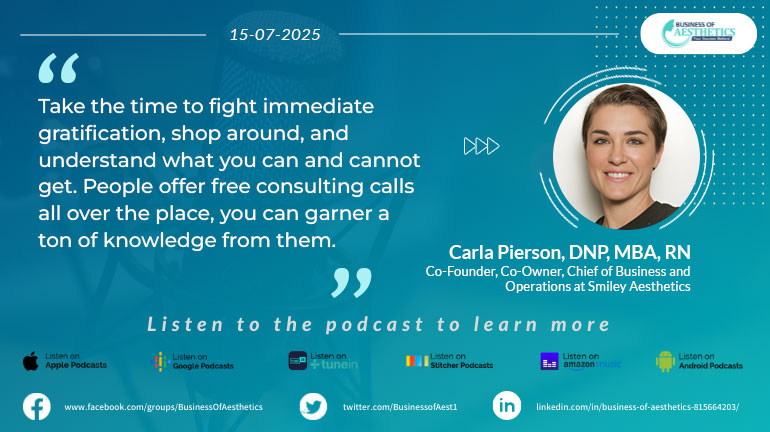
And so— take the time to fight immediate gratification and shop around and understand what you can and cannot get. Which, to your point, I love that you said that— take the free calls, guys. People have free consulting calls all over the place. Like, you can garner a ton of stuff from them. And then just because you can’t do it today, doesn’t mean that you can’t. You put that on a spreadsheet of like, “Man, this was wonderful. They were great. Things you can do tomorrow.”
So there’s just so much out there now that you can do it. And you can get started all by yourself, or go find a good person— a good partner— you know, protect yourself— but doing it with somebody else.
People often ask how we did what we did with Smiley in the last three years. It’s because there was more than one of us. A hundred percent. It’s because we said, “I can’t do this alone.” And if I want to get to where I’m going, or I just want to be successful— period— or I just want to have a day, Michael— where I’m like, “You know what? I’m at 10%. Great. You’re at 80. You got it today. Like, I need to— I need to chill.”
When you’re by yourself, you don’t get to do that. It’s like parenting— me and my husband. I’m like, “I’ve got 5% in my tank.” He’s like, “I’m at 50. I got it.” And I’m like, “Great. I’ve got nothing left.” It’s the beauty of a partnership— and doing it right.
So yeah, there’s just— it’s… it’s very doable. And… and, um, just seek help and guidance and… and don’t be cocky. You can’t— don’t— don’t think you know it all. ’Cause you don’t. None of us do.
Michael Walker: No, that’s right. But a great summary. It’s hard to imagine you at 10%, but I’ll… I’ll believe it could happen.
Dr. Carla Pierson: Not that often, but, you know, sometimes.
Michael Walker: I would say so. Probably if I checked with your husband, he’d say, “Well, sometimes she doesn’t know she’s at 10%.”
Dr. Carla Pierson: That could be true. That could be true.
Michael Walker: So thank— thank you so much, Carla, for joining us today and sharing your expertise on bridging the business gap in aesthetics. Just so you know— SmileyAesthetics.com is where you can find Carla and her twin sister. Make sure you check out their website. I know that there’s— this is— this is the— you now have a… you’ve just been able to spend almost an hour with Carla. You have a… you have a relationship with her.
You have some inside knowledge. I encourage you to take that next step. Um, and again, it’s not about— it’s… it’s… it’s bringing in expertise where you need it.
Dr. Carla Pierson: Yeah.
Michael Walker: And learning a little more and applying it. Your insights today and the importance of business education, understanding the numbers, making smart financial decisions— were not just incredible, but just, as we both have said, incredibly timely and very important. And I just really appreciate you sharing that with our listeners.
I want to take a moment to thank our amazing listeners. We appreciate each and every one of you, and we couldn’t do what we do without your support. So if you’ve enjoyed today’s episode, please share it with your colleagues and friends on social media and help us spread valuable knowledge throughout the aesthetics community.
And don’t forget to leave us— we love reviews. You should too. As a matter of fact, that’s one of the things with Ekwa Marketing— they show you how to create what we call— they call them love reviews. And I’ll just— that’s a teaser— but it’s amazing what can happen.
Yeah. We love reviews, so please— ’cause if you leave feedback, it helps other professionals, other aesthetic practice owners find us and… and get what you’re getting today. So please do that.
So again, as I say, just— I’m just gonna again thank our sponsor, Ekwa Marketing, for this episode. As I say, they’ve been around like 20 years in digital marketing for aesthetic practices, so they know their stuff.
Dr. Carla Pierson: Mm-hmm.
Michael Walker: And I really encourage you to jump on that complimentary digital marketing consultation. As I said, you’re gonna have a 12-month strategy you can work with to start working this thing through. And yeah, guess what? All of a sudden, you’re not on your own.
And yeah, you can— where you’ll be able to get that is at businessofaesthetics.org/msm. And it should also be available where you picked up this podcast. You’ll be able to click and link it there too.
So we said all that— until next time, keep nurturing client relationships, driving retention, and building long-term success for your practice.
And on behalf of Carla, wishing all of you an amazing week ahead.
Dr. Carla Pierson: Thank you, Michael.
GUEST – DR. CARLA PIERSON
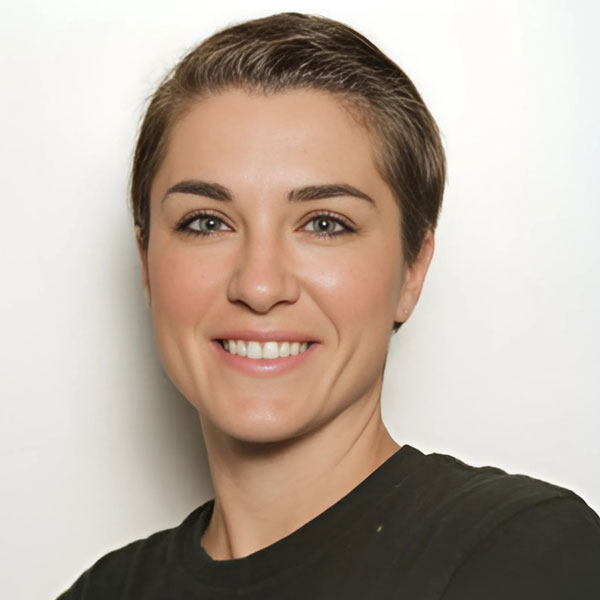
Dr. Carla Pierson is the Co-Founder, Co-Owner, and Chief of Business and Operations at Smiley Aesthetics, based in Nashville, Tennessee. Drawing from over 12 years of experience in critical care, trauma, and nursing leadership, Carla combines clinical excellence with entrepreneurial vision. Her academic achievements include a Doctorate of Nursing Practice and dual Master’s degrees in Nursing Administration and Business Administration, uniquely positioning her at the intersection of medical expertise and business strategy.
Carla is a passionate advocate for empowering nurses to venture confidently into the field of aesthetics. She pioneered a novel business model, nurturing independent medical professionals to embrace their roles as both skilled aesthetic injectors and entrepreneurs. Under her leadership, Smiley Aesthetics has rapidly become a respected force in the industry, generating a million dollars in revenue within its first year and impacting over 100 medical professionals nationwide.
Her commitment to holistic self-care, rigorous safety standards, and ongoing education reflects deeply in the Smiley Aesthetics ethos. Carla is also a published author in the American Nurse Journal, writing on business systems and healthcare processes. She believes in transformative leadership, transparency, and helping nurses find both career fulfillment and financial independence through aesthetics.
Carla’s story is one of resilience, innovation, and a relentless drive to elevate the standards of beauty, wellness, and business in medical aesthetics. Through training, mentorship, and community-building, she continues to inspire clinicians across the country to redefine what’s possible in aesthetics.
HOST – MICHAEL WALKER

Michael Walker is a seasoned leadership coach and analyst (Q.MED) who is passionate about adding value to individuals and helping them unlock their untapped potential. With over 35 years of diverse business experience, he specializes in organizational development, succession planning, conflict resolution, and mediation.
As a Qualified (Q.MED) mediator with the ADR Institute of Canada and an Analyst (WFA) with the Workplace Fairness Institute, Michael has a strong foundation in conflict resolution and workplace dynamics.
His expertise extends to providing workshops and seminars that equip participants with practical tools to apply immediately for improved relationships, fairness, innovation, productivity, and profitability.
Michael is dedicated to supporting personal and professional transformations and is committed to helping individuals achieve greater financial, relational, physical, spiritual, and emotional prosperity through his coaching and advisory services.
Resources


Connect with Us:
Category: Business of Aesthetics Podcast