In this episode of the Business of Aesthetics Podcast, host Adeesha Pemananda is joined by Dr. Shino Bay Aguilera, a world-renowned dual board-certified cosmetic dermatologist and a pioneer in bioregenerative techniques and the number one provider of Sculptra aesthetics in the U.S. The discussion, titled “Breaking the Regenerative Plateau: How Clinics Can Differentiate, Diversify, and Scale Beyond Biostimulators in 2026,” provides a visionary roadmap for clinics looking to move past traditional biostimulation and into the future of cellular longevity and orchestration.
Dr. Shino Bay emphasizes that the next wave of aesthetics isn’t about adding more biostimulators; it’s about activating the body’s own cellular intelligence through orthomolecular signaling, like polyrevitalizing micronutrients, to improve tissue structure and function. He explains the difference between these micronutrients and PRP, detailing how combining them with traditional biostimulators like Sculptra or Radiesse can amplify results, leading to a total rejuvenation of the dermis’s structure and function. He shares his practice’s financial success, showing a massive return on investment from integrating these inexpensive micronutrients.
To stand out in a crowded regenerative space, Dr. Shino Bay advises clinics to educate and elevate their patients’ understanding, positioning the body as an ecosystem, not a canvas. He urges practitioners to adopt a philosophy of achieving true bio-restoration—not just external rejuvenation, by integrating functional aesthetic medicine principles like orthomolecular diagnostics, mitochondrial optimization, and hormonal balance into a unified, evidence-based system.
Finally, he provides strategic advice on scaling, focusing on diversity through depth, not volume. He covers the financial, operational (investing in full-team training), and regulatory obstacles, stressing the need for compliance, transparency, and partnering with credible, ethical suppliers. Dr. Shino Bay’s key takeaway is that every cell is a conscious, living entity that needs nutrition, protection, and hydration; when practitioners deliver this locally, they amplify all other treatment results.
Key Takeaways
- Shift to Cellular Longevity and Bio-Restoration
The future of aesthetics is in cellular longevity and orchestration, which goes beyond mere collagen stimulation. Clinics must move from seeking external rejuvenation to providing true bio-restoration at a cellular level, making patients younger rather than just having them appear younger. - Amplify Results with Polyrevitalizing Micronutrients (PRMs)
PRMs provide local nutrition that activates the body’s own cellular intelligence. Mixing PRMs (like NCTF or NCPR) with biostimulators like PLLA or Radiesse amplifies all results. This is also a significant business opportunity, with one box of PRMs generating $10,000 to $16,000 in revenue when integrated into practice. - Differentiate with Functional Aesthetic Medicine
Stop following trends. Differentiate by educating patients and elevating their understanding that the body is an ecosystem, not a canvas. Integrate orthomolecular diagnostics, mitochondrial optimization, and hormonal balance into a unified, evidence-based system called Functional Aesthetic Medicine. - Scale Smartly with Depth and Education
Scale through diversity through depth, not volume, by focusing on synergistic treatments. Invest in training for the entire team, from the front desk to providers, so everyone understands and can ethically communicate the value of biologics. Ensure compliance and transparency, and only partner with credible suppliers to protect your license and patients. - Prioritize Cellular Health as the Core Principle
The most important action is to start bringing polyrevitalized micronutrients and supplementation into your practice. Think of every cell as a citizen of the body that requires nutrition, protection, and hydration to thrive. Everything else in your practice, including energy devices and biostimulators, will be amplified by this cellular focus.
Podcast: Play in new window | Download

- Get a 1-on-1 diagnosis of your online presence & patient acquisition funnel
- Identify critical, untapped growth levers (SEO, Social, Referrals)
- Define a clear action plan to attract and convert your ideal patients
- Receive expert solutions for your most pressing marketing challenges
Subscribe To Our Podcast



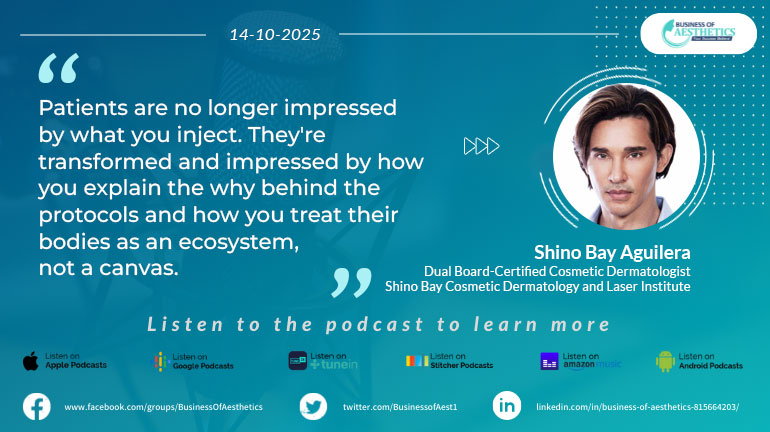
Key Highlights:
- 00:00:12 – Introduction & Speaker/Topic Setup
- The episode focuses on breaking the regenerative plateau and how clinics can differentiate, diversify, and scale beyond biostimulators in 2026.
- Host Adeesha Pemananda introduces the guest, Dr. Shino Bay, a dual board-certified cosmetic dermatologist and the number one provider of Sculptra in the U.S.
- The episode’s sponsor, Ekwa Marketing, offers a complimentary 60-minute "high-value patient growth plan session".
View TranscriptAdeesha: Welcome back to the Business of Aesthetics podcast. I’m Adeesha, your host, and I’m excited about today’s episode. If you’re a clinic owner or practitioner, you know that feeling of being on the cutting edge. But what happens when the edge starts to feel crowded? You’ve mastered biostimulators. You’re getting great results, but you’re starting to wonder what’s next. It’s that moment when you realize that what you got here won’t get you there. And it leaves you searching for a way to stand out without chasing every new trend. To guide us through this, we are truly honored to be joined by a pioneer who is already defining what’s next. Dr. Shino Bay Aguilera. Dr. Shino is a world-renowned dual board certified cosmetic dermatologist and the number one provider of Sculptra aesthetics in the U.S. Today, we are diving into our topic, breaking the regenerative plateau, how clinics can differentiate, diversify, and scale beyond biostimulators in 2026. We’ll explore the advanced protocols and strategic business decisions that turn hesitation into innovation without compromising the world-class results your patients expect. And before we jump in, a special thank you to our sponsor for this episode, Ekwa Marketing. To help you build that roadmap for growth, they’re offering a complimentary high-value patient growth plan session. That’s a one-on-one dedicated 60-minute strategy call to build a tangible 12-month roadmap for attracting the high-value patients you want. If that’s a priority for your practice, you can find all the details at www.businessofaesthetics.org/msm. The form to secure your spot is brief and takes about 90 seconds to fill up. With that being said, Dr. Shino, it’s truly an honor to have you on the show. Shall we jump in?
Dr. Shino Bay: Sure. Thank you. I’m excited about this. I can’t wait to hear your questions. Okay. Superb.
- 00:02:34 – The Next Wave: Cellular Longevity & Orchestration
- Dr. Bay states the aesthetic market has evolved beyond mere collagen stimulation into cellular longevity and orchestration.
- The next wave involves activating the body’s cellular intelligence through growth factors and metabolic support to improve tissue structure and function.
- The goal is to actually become younger, not just appear younger for a finite period, which was the old approach with fillers.
- Cellular health and beauty are the same thing, so the focus must shift from biostimulation to cellular longevity.
View TranscriptAdeesha: Dr. Bay, you’re recognized globally as a pioneer, especially with your work on sculpture and bioregenerative techniques. Your whole philosophy seems to be about moving beyond the temporary fixes to create natural, long-lasting results. So, looking ahead to 2026, What innovative treatments or services do you see as the next big opportunities to move beyond our current biostimulators?
Dr. Shino Bay: Well, we are now entering a very interesting space in the aesthetic market. We are actually entered in a phase where bio-oriented medicines evolved beyond mere collagen stimulation or fat stimulation into cellular longevity and orchestration. The next wave isn’t about adding more bio-stimulators. It is about activating the body’s own cellular intelligence, like what we see with our parasites and fibroblasts through auto-molecular signaling, like growth factors, like PDGF, poly revitalizing micronutrients and metabolic support that improve tissue structure and function. So basically what I’m saying is that we want to get younger. We just don’t want to just appear younger for a finite period of time. And that’s what we were doing in the past with injectable fillers. Now, biocollagin stimulators became popular because we saw a need for it, and we understand them well, and we know that we’re capable to regenerate tissue with them, but we got to think past biostimulation. We need to think about cellular longevity because cellular health and beauty equals to the same thing.
- 00:04:34 – Polyrevitalizing Micronutrients vs. PRP
- PRP’s effectiveness depends on the patient’s age, habits, diet, and overall health.
- Polyrevitalizing micronutrients come from orthomolecular science, which posits that nutritional factors are essential for the body to thrive.
- Studies showed that mixing calcium hydroxyapatite (Radiesse) with NCTF (a polyrevitalizing micronutrient) amplified results, including volume augmentation and skin retraction.
- Delivering nutrition at a local level directly to fibroblasts is effective because gut absorption can be inefficient as we age.
View TranscriptAdeesha: Okay, so now you mentioned polyrevitalizing micronutrients. For a clinic owner listening, what’s the difference between that and the PRP treatments many are familiar with today?
Dr. Shino Bay: Well, so very, very simple. PRP is, you know, you get your blood, your drug, and you wish and you hope that you had a good night’s sleep that day before you got your PRP. Your age matter, your habits matter. Do you have a good diet? Do you have high cholesterol? It all depends. But what we try to extract out of PRP are all these wonderful growth factors that are autologous. And they’re great, and they’re important, but they’re very different from polyuretalyzed micronutrients. Polyuretalyzed micronutrients come from automolecular science, which was coined in 1968 by Lidus Padmi, a two-time Nobel Prize winner. Back in the day, the premises of Dr. Pauli was that within food, there were nutritional factors like vitamins, minerals, cofactors, coenzymes that were essential for the body to thrive. That food is medicine, that what we eat can kill us or can make us thrive. But back in the day, people, due to academic arrogance, because they were not allowed peer review papers about the subject, and he believed in supplementation because he understood that as we get older, our gut cells also get older. So you could be eating the same, but you are not assimilating the same because your cells on the gut are older. And he believed that we needed to supplement. Now, there were not too many peer-reviewed papers, so a lot of colleagues of the area thought that this was hocus pocus. But now, I don’t have to convince anybody that, yes, food is medicine, and what we eat matters. So polyvirtualized macronutrients are things like NCPR by Toscani Medical, NCTF by FieldMed, uh all the companies that have products and macronutrients will be from italia now i wrote a paper with a wonderful orchestration of colleagues of mine like viviana perico from colombia she was the one with the idea of mixing um of NCTF with Radias, calcium hydroxychloroquine appetite. I couldn’t do the study here in the United States because we didn’t have any polyvirtualized macronutrients at a time like NCTF or NCPR by Toscani. So my friend Elina Teos in Greece did a study. And what we did was when we missed calcium hydroxychloroquine appetite with NCTF, we got amplification of the results. And we were so excited because not only we got augmentation in volume, we got skin retraction, but we got a total rejuvenation of the structure and function of the dermis of the patients that were treated with it. And keep in mind that was only one syringe of radius with 1.5 cc of the NCTF, a one-to-one. And we got results that were incredible. And it changed completely the landscape of the aesthetic market. Because after we published that, Alessio Radeli mixed PLLA sculpture with NCTF, got the same results. Ferio Fanion, which is the main scientist of field men she did her own independent studies where she was able to in vitro show what all fibroblasts look like she used the nctf for about six weeks and she was able to measure in that glass box apparatus the strength of the fibroblast not only phenotypically the fibroblast look young again but they perform young and with a lot of strength. So what Linus Poundly in 1968 was trying to teach us is something that we need to adopt now. And you don’t need to be a rocket scientist to understand this. Imagine that our planet Earth is a cell of a galaxy. And you yourself are a galaxy with 50 trillion cells in your body. And those cells in your body have your genome and they have the same requirements as you and I. They need nutrition. they need protection, and they need hydration in order to thrive. And what we were able to publish in this paper, and with the help of Ferio Fania, Angelina Teos, and Viviana Perico, Alec McCarthy, we were able to show that if you give the nutrition at a local level, where the fibroblast exists, it works because you could be eating or you could take supplementation, but if your gut cells are old, you are not gonna get it. So local nutrition matters for your fibroblast to thrive. So this is the future. That’s why a lot of us are now thinking consciously at what we do to ourselves. Because as humans, we’re very demanding. We want everything. Gimme, gimme, gimme, gimme. But we are takers, we are not givers. So what we notice is that when we give the nutrition, the protection, and the hydration to our cells via polyurethrolysis macronutrients, our cells will amplify the results. They will be grateful because they’re living conscious entities.
- 00:10:37 – The Importance of Functional Medicine and Cellular Health
- Dr. Shino emphasizes that gut health is very important because the body depends on it for many physiological processes.
- He prefers functional doctors because traditional medical teaching focuses on post-care (treating symptoms) rather than pre-care (nutrition and prevention).
- He advocates for a philosophy where we think of our cells as citizens of our body that are born, mature, work, and die, just like us.
- Treating our cells with kindness, by providing for their needs, will result in them being kind to us in return.
View TranscriptAdeesha: Absolutely. And Dr. Shino, is there recent studies or science that acknowledges the fact the gut, or rather revitalizing the gut itself, how that can transform one’s aesthetic?
Dr. Shino Bay: I mean, gut health is very important. If your gut is not healthy, it affects everything else in the body because we depend on the health of gut self for so many different physiological processes in the human body. But unfortunately, we just… finally is trying to accept this knowledge and implement it. That’s why I don’t go to a regular doctor anymore. I go to a functional doctor. Because as a doctor, and I’ve been three different types of doctor, maybe four, I did family practice, then I did hospice, then I did general dermatology, and now I’m doing aesthetic dermatology. And traditional teaching in medicine teaches post-care. No pre-care. None of us took a class about nutrition or what to tell our patients or supplementation. We only give pills to treat a symptoms or a disease. Well, we can do better than that. We need to understand that longevity, beauty and health starts at a cellular level. And none of us think about ourselves until we get the diagnosis that we have a cancer or we have a disease. But if we think about ourselves as citizens of our body, that they are birthed, they mature, they go to work, they get old and they die just the way you and I, if we have that correlation, we’ll be kinder to ourselves. And they, in return, will be kind to us too, because they do it time after time again.
Adeesha: Wow. I mean, that’s a beautiful philosophy. And yeah, food can either be Medicine or poison, it depends on how you use it. I think bringing this back up again is really great for the practice owners to keep in mind moving forward.
- 00:12:57 – Differentiating in a Crowded Regenerative Market
- To stand out, clinics must educate patients and elevate their understanding, rather than just following trends.
- The future is functional aesthetic medicine, where beauty and longevity merge.
- Clinics that treat the body as an ecosystem, not a canvas, and explain the "why" behind their protocols will lead the field.
- The goal is to move from rejuvenation to "true bio-restoration," which means completely restoring tissue that is failing due to time.
View TranscriptAdeesha: And now with so many clinics, doctor, entering the regenerative space, it’s getting crowded. You’ve built an incredible world-renowned brand in Fort Lauderdale. How can a practice today truly stand out and build that unique value proposition when everyone is offering similar technologies?
Dr. Shino Bay: Well, you cannot stand out by just following trends. And this is, you know, with social media, you could see that everybody is just up to just follow trends. You cannot stand out by doing that anymore. You stand out by educating and elevating your patients’ understanding. that the future of aesthetic medicine is functional as well, where beauty and longevity merge under the same biological principles. And clinics that integrate orthomolecular diagnostic, mitochondrial optimization, hormonal balance, and regenerative injectables into a unified evidence-based system will lead the field. Patients are no longer impressed by what you inject. They’re transformed and impressed by how you explain the why behind the protocols and how you treat their bodies as an ecosystem, not a canvas, which is what we did with fillers. Oh, your face is a canvas. No, the body is an ecosystem and we need to care about ourselves because beauty, youth, longevity, depends on cellular health.
Adeesha: Okay. Now, you talk about making patients younger instead of faking younger, right?. And developing that core philosophy, like, is that the key to differentiation even more than the technology itself?
Dr. Shino Bay: Yeah, definitely. Because, I mean, patients are getting savvy now with AI, intelligent, with child GPT, they’re well-versed and they can find everything. So they’re understanding that, and just by looking at the outcomes, right?. Facelifts of today’s are so much better than the facelifts in the 1950s. That is the natural evolution of aesthetics. A lot of companies, I mean, They have noticed that there’s a decline on injectable fillers. And there’s an agenda to trying to get them back, right? Because there’s money to make with it. I use fillers. They’re my bread and butter. But they’re not anti-aging. Fillers, as it stands now, are for beautification. You can make beautiful lips with it. Enhancements. You don’t have a strong chin, I can enhance your chin. And structural support. Like I can do all my bioregative technique and I can bring fat back and preserve the bone and make collagen on the skin, but there are some people that need structural support. I will use a filler. But feelers are not anti-aging, and most people don’t want to just appear young. They want to stay young and feel young because it is possible in the year 2025, We already know how to make every single old cell in the human body young again. We are not using it yet because we have to make sure that it’s ethically done and that it’s safe. But that we know how to do this? Yes. I sit in two different advisory boards of two companies competing for this technology, completely different technologies, same ad results, that we can’t make every old cell young again. The future is very promising, and people need to be aware of that.
Adeesha: Thank you for that, Dr. Shino. That’s really a great take on philosophy and how you can use that to differentiate yourself in this competitive regenerative space, right?.
Dr. Shino Bay: No, I’m so excited because the most exciting frontier on all of this is the synergy between orthomolecular science and the regenerative biotechnology that we have now. Combining targeted molecular nutrition, biomimetic peptides, exosome terrain vesicles, and parasite activation protocols, this will allow us all to move from rejuvenation to true bio-restoration. And that’s the important key. Through biorestoration instead of just rejuvenation. I don’t want to be rejuvenated just by the way I look in the outside. I want to completely biorestore any tissue that is failing me because the passing of time.
Adeesha: Okay, that’s a very wonderful clarification you made on the difference between biorestoration and rejuvenation. Perhaps the business, the practice owners listening to it can take a look at their own mirror and decide which way they want to go with regards to differentiating themselves in this space.
- 00:18:33 – Smart Diversification & Financial ROI
- Clinics should aim for "diversity through depth, not volume," focusing on synergistic modalities rather than adding endless devices.
- Using polyrevitalizing micronutrients has a huge return on investment that stays within the practice, not with Big Pharma.
- Dr. Bay shares that his practice spent $3,739 on NCPR by Toscani for the year and generated $110,347 in profit from it.
- A single box of a product costing around $300 can generate $10,000 to $16,000 in revenue when using his published technique.
View TranscriptAdeesha: Doctor, so many clinic owners want to diversify their services. From your experience running your own successful institute, what are some smart ways clinics can add regenerative services without overextending their resources or confusing their brand identity?
Dr. Shino Bay: Well, diversity through depth, not volume. So you don’t need to like add endless devices and trendy treatments. Focus on synergistic modalities that share a biological purpose. For instance, the paper that I published in 2023, or actually that we published with my colleagues in September, 2023, mixing, If in your country, if you’re in country, you’re allowed to do this, because not every country is allowed to do this. Mixing PDG, NCTF by FiltMed, or NCPR by ToscaniMed, which is the polyurethrolytic macronutrients, with PLLA, or calcium hydroso-appetite radius 1 to 1, will amplify the results. Now, if you cannot mix this product, you still can microneedle the polyuretosacet micronutrients, but you will use a little bit more of it and it won’t be as efficacious when you mix one to one. So let me tell you something. The return of investment when you do this, stay within the practice. within the practice instead of Big Pharma. Because one syringial radius doesn’t cost that much for us. And if you buy a box of NCPR by Toscani that costs $300 and something and have 25 ml, and I only need 1.5 for that, I can’t tell you my practice because I just asked for you guys because I saw the revenues. So we bought NCPR by Toscani. It cost us for the year $3,739. The profit with no tax added was $110,347. Tell me which company is doing that. And you’re doing something that nobody else doing. And you’re doing something ethically and perfect for your aging fibroblasts. You are giving the nutrition that this fibroblast needs at a local level in order to become vigorous and perform. So one box that I paid 300 and something with this particular technique that we published generates me 10 to 16K, 10 to $16,000. So it is about being smart and think about the cellular level because you want to amplify the results that you were getting before with new technology that is proven and studied now to be real that if you give your aging fibroblasts a reason to become more vigorous, they will do it.
- 00:22:10 – The Dangers of Overtreatment and the Future of Cellular Health
- Dr. Bay warns that aggressive treatments (radiofrequency, lasers, chemicals) act as "control injuries" that can exhaust aging fibroblasts if done without providing nutritional support.
- Pushing these cells too hard without support can cause them to become senescent, or "zombie cells," at which point treatments stop working.
- The focus is shifting to cellular longevity and health.
- New peptides and products are emerging that help the body heal and look younger, with a focus on staying young, not just appearing young.
View TranscriptAdeesha: We just need to wait. I think at the end of the year, there’s going to be so many papers written by my dear friend Ferio Fania and myself and so many other papers coming that talks about the 15th armor of aging and how can we help aging fibroblasts thrive. Sorry, can you please repeat that last bit again? The name of the paper?
Dr. Shino Bay: Well, no, there’s going to be a lot of papers like my friend Ferio Fania. She is the director, scientific director of FieldMed. She has so many great… articles to be published, so much that she has studied, that everything that I’m saying is gonna make more sense when people get hold of this paper, right?. Because everything that I’m saying right now sounds very exciting. I’m doing my best to simplify so everybody can understand, but I’m pretty sure that some people, this may go over their head. But let’s make it simple, you guys. Every single human cell in your body has the same requirements as you and I. They need the nutrition, they need the protection, and they need the hydration. What do we do to them? We want them to make collagen elastic fiber, but how do we do that?. We do it by using control injuries. It’s savage. We electrocute them with radio frequency, we stop them with background needle, we burn them with chemicals, we burn them with energy devices without ever thinking one time. It does fibroblasts that all are starved. Do they need some minerals? Do they need some vitamins in order to perform?. Now we thinking like that, and we have the scientific proof to back this. And it’s so unfortunate that it took so many years in order for us to accept this, because this was played in 1968 by Linus Pauli.
Adeesha: Right. And Dr. Shino, thank you very much for being transparent with the numbers, too. I mean, for our practice owners who are in the considering stage and wondering if this is just all, as you mentioned before, hocus pocus, or is it real practice?. business development right um and there is evidence of both sides where it’s being real science as well as a real business development opportunity now um what is the first step to mastering um like one regenerative technique like prp before even thinking about adding something more complex as you mentioned well is that the better way to go for uh clinics If they want to add in….
Dr. Shino Bay: The PRP is great, but unfortunately, it’s getting obsolete. I hate to say, OK, because there’s so many other things that we have predetermined growth factors, which is what we hope to get from the PRP, which is 3000 more potent than PRP. Right. But again, this is not available in every country. So you don’t have, then you need to use PRP, PRF, which I find PRF being superior than PRP, in my own personal opinion, but all of these are great. So you can try to give a try and mix your PLLA, or mix your calcium hydroxychloroquine appetite radius with your PRP one-to-one and see the type of result that you’re gonna get. After we published our papers with NCTF and calcium hydroxychloroquine appetite, there was a paper published by some colleagues of mine where they used liquid fat and they mixed calcium hydroxychloroquine appetite with the liquid fat. And what did they get? Exactly what we got, amplifications of results, because that liquid fat has such a nutritional value and stem cells. So they were able to replicate what we got with NCTF and it shows that nutrition is important, that our cells are conscious entities that have the same requirement as any human being and we need to give that to them in order to let them perform better and extend the longevity. One thing that’s coming that is amazing, and it’s probably on this year, is a product by a company called Rappologix. And this product inhibits mTOR1, but it doesn’t inhibit mTOR2. And what it does is that allows for aging cells to not to be on overdrive all the time. Let’s take a step back that makes sense. People that use Retin-A have beautiful skin to a certain point. There comes a point that nothing is working. Why? Because you still are making those old fibroblasts in hyperdrive. They’re working so hard for us because we force them. And what happens when you push them and push them and push them without giving a refractory period or giving nutrition?. they go immediately to become zombie cells, senescent cells. So by a lot of the techniques that we use that give us these short-term gains, we push them into senescent cells. And the more accumulation of senescent cells we have, there’s going to be a point that nothing works. And I see in my practice, nothing is working because we never stop to think on cellular longevity and cellular health. but we are now and this is where we’re going to so for business owners the sooner you educate yourself about this me we’re using in united states we’re using so many peptides now right now i’m using a peptide bpc 157 with thymusine 4 we call that wolverine why because i exercise and i tear my meniscus all the time my ligaments I get healed within days with it. Right now, my body at 57 years old is exactly as what I look like on my 20s, which I was doing keto diet, paleo diet, working out twice a day, starving myself, intermittent fasting, yet my body continue to look older you know i couldn’t see my abs i just been doing this uh tesamorelin peptide zero side effects and within two months everybody just noticing my body i feel i look younger my body looks younger we heading that way we want to stay young i don’t just want to appear young while the rest of my body is falling apart you know this is the future.
Adeesha: absolutely i i feel it i feel it when you’re talking about it i mean we are now at a level we are even thinking about slowing down at a cellular level right um instead of always considering that addition is better looking back to kind of slow things down and i think that’s a wonderful new philosophy that’s coming into aesthetics and taken seriously i mean this is as you mentioned science that has been around for ages but hasn’t been taken seriously because they weren’t peer-reviewed papers or whatnot. So fantastic, thank you very much for sharing that Dr. Shino.
- 00:29:35 – Obstacles to Scaling Regenerative Services
- Financial: Some regenerative products have high entry costs and short shelf lives, requiring smart inventory management. However, products like polyrevitalizing micronutrients and polynucleotides are inexpensive and have a huge return on investment.
- Operational: Training for the entire staff—from the front desk to providers—is critical so everyone can communicate the value of these new treatments effectively and ethically.
- Regulatory: Frameworks are still evolving, so compliance and transparency are essential. Clinics must partner with credible suppliers and avoid cutting corners by purchasing from unverified sources like Alibaba.
View TranscriptAdeesha: And now when you’re teaching your master classes or speaking internationally, you’re talking to clinic owners who want to scale. When a clinic is ready to go big with regenerative services, what are the biggest obstacles, financial, operational or even regulatory, that you warn them that they need to be prepared for?
Dr. Shino Bay: Well, all three. So let’s talk financially. And there’s pros and cons, but let’s talk financially. Regenerative products, some of them and some biological often have a higher entry cost, right? And shorter shelf life. So requires smart inventory management and patient education to maintain consistent value is important for some of these biologicals or regenerative products. That said, I just gave you an amazing pearl. Use poly revitalizing micronutrients, you guys. Invest on Toscani, you know, polyverletous micro nutrients or FieldMed and CTF or any other company that have those. Think about polynucleotides. Bring polynucleotides into your practice because the return of investment is huge. Let me give you an example. Let’s say that in your country, you cannot inject any of these products and you are gonna need to microneedling. There’s some of these products that I mentioned in our clinic, we cannot inject. We can inject PRP, we can inject PRF. But let’s say I’m using Toscani NCPR and polynucleotides. We cannot inject it. But in my practice, we buy a box of 300 and something. I have 25 ml. I have Lumicent, which is polynucleotides. I have 40 ml and I pay 300 and something. Engel practiced every one ml of each product that I used to create a customized cocktail for the problem that the patient presents, which are $250 per one ml, from a box that cost me $300 and something. So we tell the patient, this is the technique with PLLA, and this is what Dr. Shino is doing now to protect your cells and make it perform better. This is how much glucose with amplification. The average is about $575 extra. When people spending that kind of money and you tell them this is the old way, this is with amplification and educating the patient what does the amplification means for cellular health, to prevent cellular exhalations, to make the cell young and more vigorous, 90% of the time, what do you think the patient’s gonna choose?. Give me the amplification. I don’t want the old version. I already know the old version, especially your existing patients. I want the amplification because when they’re spending that kind of money, $575 extra to the thing is nothing for them. Now, I am in an affluent area, but even if you were to charge $50 extra for one ml of product and you make a cocktail of four things accordingly to your knowledge, according to the problem that the patient have. Does the patient need nutrition? Everything needs to have nutrition. So I use NCPR. Does the patient need DNA repair?. Yes, we all do with U50+. Let me add the polynucleotides. Does the patient have melasma or brown spot?. Let me add a product for that. And then I might macro needle that. That takes me five minutes. So financially, there are products in the regular space that are a little bit expensive. So those products try not to, if you wanna use it, understand them really well, but make sure that you maintain an inventory. But the other products that I’m talking about from FieldMed, from Toscani, these products are so inexpensive. And they are part of the armamentarium of orthomolecular medicine. And it has a huge return on investment. So that’s the financial part. Operationally, Training is everything, not just for providers, but for the front desk, the coordinators, to your consultant who must understand the value of biologics and to be able to communicate them ethically and effectively to your patients. So that is the way you need to do that. So you need to invest on education. Everybody from the front desk, when somebody called to make an appointment, you should be well-versed of all these bio-related techniques that you bring into the practice. Your cosmetic consultant, the nurses, everybody should understand the value of it and what we do it. And finally, regulatory frameworks are still evolving. So compliance and transparency are essential. Always differentiate between FDA-clear devices, off-label application of products, what can be injected, what cannot be injected, wellness positioning. So clinics that scale responsibly. document outcomes, and partner with credible suppliers and scientific advisors will thrive, while others get lost in the marketing noise. Especially because I know that you can go in Alibaba and buy PDGF or buy injectable fillers and PLLA and polynucotides. You do not want to be that kind of provider that you are cutting corners in order to save money. Because at the end of the day, when we became doctors, we took an oath and we have to maintain it. So only make an alliance, especially when you know that we’re working at a cellular level with companies that are ethical. that are going to back you up never order for places especially again we’re working at a cellular level we can do a lot of harm so let’s make sure that you partner with credible suppliers that have great scientific advisors.
- 00:36:40 – The Ethical & Regulatory Gray Areas
- A major ethical barrier is companies marketing products for topical use in the U.S. that are approved for injection elsewhere, creating a legal gray area for providers.
- This creates a "wink, wink" situation where companies imply providers should inject the product off-label, putting the provider’s license at risk.
- Dr. Bay advocates for community collaboration to push companies to get proper approvals, rather than creating a "circus" on social media that divides colleagues and confuses patients.
- His advice is to know your country and state regulations, be transparent with patients, and find ways to work ethically, legally, and efficiently, whether that means injecting or microneedling a product.
View TranscriptAdeesha: Actually, Dr. Shino, a few questions back, you actually mentioned this part about new regenerative techniques coming up and there is a lot of excitement in it as well. But there is a sense of ethical barrier, right? Doing it in an ethical sense. Can you actually elaborate a little bit more on that?. What is the ethical barrier that is stopping current regenerative techniques from coming out?.
Dr. Shino Bay: So the ethical barrier is that, I’ll tell you what’s happening right now in the United States, because we have a big battle with PDGS, pletidiviracus factor. Pletidiviracus factor, the one that exists to inject intra-articular, intraoral, is allowed to be injected in the human body. Now there’s another company, without saying names, that created one that is exactly, exactly as the one that we can inject. The only problem that it is easier to come through the FDA as cosmetic. Toscani Med did it with NCPR, FieldMed with NCTF, which in other countries that can be injected, they also come in topically. And we’re getting all these companies that are coming with products that are supposed to be injected, and they are injected outside the United States, but because it’s easy and cheaper to come cosmetic and topically, then we cannot legally inject it, right?. But they sell it and they say, wait, Europe, we can inject it. So the problem with that, it is like wink, wink and leave us exposed. Because basically, without saying it, they’re telling us to do it. But it is all medical license that is in question. But we want to not fall behind the curve. We want the same results that I published in Greece, but I cannot do it here. So right now there’s a big noise because the company that is in cosmetic with a PDGF, it says do not inject. But it is a great area because it’s exactly the same product that can be injected. And depends what state you are. So it’s a big controversy because some people are injecting it. I about to publish and I had to retract my paper. until I get my INDIRB, which I thought we already were on the process to get it, and somebody dropped the ball. So until I get my INDIRB, I won’t publish the paper. But we need progress. The problem is that my colleague of ours, a few of them, instead of doing this in a way that was to protect people this space they went public and by going public and i know they have good intentions because i know them very well the intentions are good but you also need to understand that you’re exposing everybody else that did it and you’re creating commotion to make patients do not not trusting us because we all look bad when we cannot agree i mean they look good the people that want to be the hero but the conversation is not only one way and although i appreciate what he’s doing or there’s other people appreciate what they’re doing because if it forces the company to do the right thing so i have no hard feelings to them i love them. I think that there are better ways to do things to protect everyone within the industry, because it’s community collaboration, not competition. And we want to grow ethically and do the right thing. But I think the approach that they use wasn’t the right approach, but the way from where I see it is pushing for companies to do the right thing. Because I wish these companies that have these polyverterized macronutrients and gross factors will take the time and pay the money so we can use it. But all this will create pressure. I have a different style. I have a different style to approach things. And the first thing is protect my colleagues and protect the patients, right?. But it’s different ways that we can do this, not create this circus that was created in social media that left everybody don’t fund it, patients, providers, and create this animosity within colleagues, which it should never be like that. It should not be them versus us because it’s one community and I’ll protect it. I’ll do anything to protect my colleagues, the patient and the community. That’s why I created this meeting called Genesis to protect the peptides, to protect the exercise, to protect the growth factors because we wanna grow together. I mean, this been going on, bioregenerative medicine started 300 BC with the Egyptian, 600 BC with India, with Dr. Chuchutra, with the front of flat. This is nothing new. We just got lost for a long time, but I’ll do anything to protect the bio-related space. And we need to stick together. And we need to do things ethically, but we cannot use fear. You know, we need to grow. We need to, we need progress.
Adeesha: Definitely need progress as well as I, what I’m understanding is a lot more communication within the community itself would have helped the matter be a much more smoother in processing.
Dr. Shino Bay: So the best advice that I can tell for, because I don’t know who is going to watch this in the world. So make sure that look at your regulations. And United States goes state by state. Some of us can inject PDGS, some people not. So look in your country, what are the regulations?. Be transparent with your patients. If you want to do what I’m doing, I’m getting an INDIRB so I can create the research. So I can work and show the FDA that It is valuable that it is important for us to have in our armamentarium. So there’s many ways to do that. It’s just like a lot of people don’t want to spend the time, the money or bothered by it. Let other people do it. For me, if nobody else doing it, I’m going to do it or find a way to do it or find somebody to do it. But protect your licenses. See what you can do. Can you inject it? Great. You can find my papers, you know, to mix it. If you cannot inject it, then you’re going to microneedle it. Microneedle it. Find a way. Because where there is a will, there’s a way to do it. And you can find a way to do it. Ethically, legally, and efficiently.
- 00:44:03 – The Future: Merging Data, Biology, and AI
- The future of aesthetics is the merger of data and biology, integrating genomic insights, molecular diagnostics, and AI-assisted personalized protocols.
- Dr. Bay coined the term "functional aesthetic medicine," which bridges bioregenerative medicine with orthomolecular science.
- Clinics that embrace this concept will define the standard of care by 2026 and beyond.
- The key takeaway is to view cells as conscious, living entities that require nutrition, hydration, and protection to thrive. Introducing polyrevitalizing micronutrients is the first step toward cellular longevity.
View TranscriptAdeesha: Thank you for that, Dr. Shino. And rounding things out over here, we really understand the need for communication. We really understand the need for protecting the practice, the space, as well as protecting your own self, the license, but also making sure that you do Follow your will, per se. Follow your will and grow this whole industry. Now, let’s look at the horizon, Doctor. You’ve written the book, Be Youthful, and you focus on helping people embrace every stage of life on their own terms. What trends or technologies should clinic owners be investing in in now so that they can thrive and avoid stagnation in the next three to five years?
Dr. Shino Bay: Well, just look around. Well, it is obvious, right? And we cannot resist it. It’s happening. Data and biology will merge. that’s a truth, that’s a given, the winning practices will be those that integrate genomic insights, molecular diagnostics, and AI assisted personalized protocols into patient care. Imagine assessing biological age, inflammatory load, mitochondrial efficiency, and then designing a regenerative program tailored to each patient that works in your practice. Every patient has a molecular fingerprint, and you can tailor every treatment accordingly to what they need. This is not the future, guys. It is already unfolding. We see it everywhere. The clinics that prepare now who embrace functional aesthetic medicine, which I coined that term. I coined the term functional aesthetic medicine by bridging bio-reactive medicine and orthomolecular science. These will be the ones that are defining the standard of regenerative care by 2026 and beyond. So it is important to not to oppose change. Be flexible. Don’t have a rigid mind. Rigid things break. You cannot fight the system and you cannot find evolution. And that’s what I see with companies that are trying really hard because they still want to hold on to the injectable fillers as the holy grail of anti-aging. And I keep telling them, you guys, I use them. I love them. It’s my bread and butter. But this is natural evolution. This is not a trend. It’s not a trend. It’s natural evolution. I mean, You know, we’re in the year 2025. We understand the aging process at a cellular level, and we can do things with the use of peptides, polyleucleotides, polyleucleotide micronutrients, growth factors, and adding AI as a tool to diagnose we are entering exciting moments that there’s going to be a point that being 80 years of age is middle age. It is exciting time we’re living.
Adeesha: Absolutely. And if a clinic owner could only do one thing after listening to this podcast to prepare for the future, what would that one action be?
Dr. Shino Bay: I think everybody, the take-home message is that I want everybody to think that every single cell in their body is a citizen of that body. And they depend on your choices. How you sleep, how you eat, what you’re thinking. Because stay useful is an earned privilege. And it has to do with an alignment of mind, body, and spirit. but understanding that your cells are conscious living entities that have the same requirement as you and I, and start to bring into your practice polyuretrized micronutrients, supplementation is the first step for cellular longevity, because none of us will thrive if we don’t have the adequate nutrition and the adequate hydration. We need to think that way. Everything else will solve itself. When we do energy devices, when we do PLLA, scultura, or radius, we amplify the results by always thinking at a cellular level. I am going to add this nutritional component You know, there are nutritional components that you can supplement via mouth. They take longer. And again, if your gut cells are also old, they’re not going to perform that great. So you can bring everything that that cell needs, that’s supposed to get from your food and supplements, localized. And it will work just as good. Just give it a try. You won’t be disappointed. We are doing it. We are thriving with these things here and in South America. It is important that we all go beyond appearances. You know, we need to start with cellular longevity, cellular health.
Adeesha: Beautiful. Thank you very much, Dr. Shino. I mean, that is the pinnacle of breaking the regenerative plateau. And is to think beyond just beautification and think at a cellular level and at a growth level. So Dr. Shino, thank you very much for your insights on diversifying beyond biostimulators, offering a very clear roadmap for clinics looking to lead the future of this industry and To our listeners, thank you always for tuning in and giving us the privilege of your time. We truly appreciate your continued support and love being able to bring you conversations that help you grow and navigate the evolving world of aesthetics. If you did enjoy this episode, please share it with your colleagues and take a moment to leave us a review on your favorite podcast platform. Your feedback helps us and other professionals discover the podcast and gain valuable industry insights. Finally, a quick reminder to take advantage of the complimentary high value patient growth plan session from our sponsor, Ekwa Marketing. If attracting or high value patients is a priority, secure your spot today at www.businessofaesthetics.org/msm. So with that being said, until next time, keep learning, keep growing, and keep building the kind of business that truly sets the standard in aesthetic medicine. Thank you.
GUEST – Dr. Shino Bay Aguilera
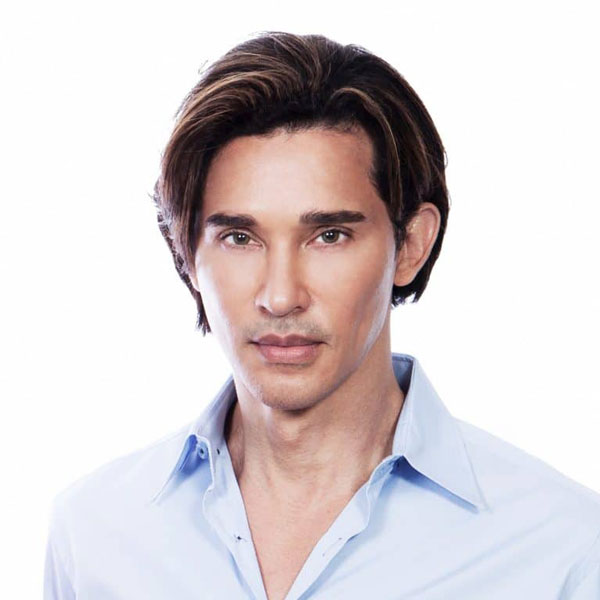
Dr. Shino Bay Aguilera is a world-renowned, dual board-certified Cosmetic Dermatologist and a leading figure in the field of aesthetic medicine. With over 17 years of advanced training, he is celebrated for his master artistry in achieving natural-looking enhancements, utilizing the most effective and cutting-edge non-invasive and minimally invasive techniques.
Dr. Aguilera is recognized as the #1 provider of Sculptra Aesthetic treatments in the entire United States. His Fort Lauderdale-based practice, Shino Bay Cosmetic Dermatology, Plastic Surgery & Laser Institute, is a state-of-the-art center featuring over 50 premier laser and cosmetic technologies.
Beyond his clinical practice, Dr. Aguilera is a highly sought-after keynote speaker and national trainer for major manufacturers of dermal fillers and aesthetic lasers. His clinic is also a leading-edge research center, continually pioneering the development of advanced age-reversing and cosmetic enhancing therapies. Dr. Aguilera’s perspective is invaluable for understanding the future trends, advanced technologies, and business strategies driving regenerative aesthetics.
HOST – Adeesha Pemananda
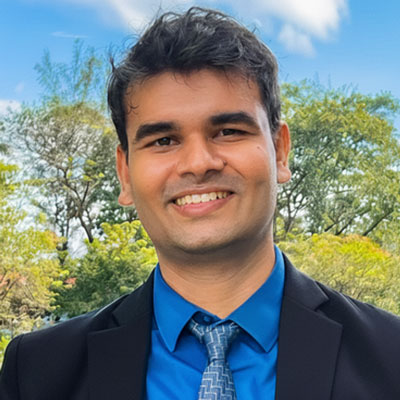
A seasoned marketing professional and a natural on-camera presence, Adeesha Pemananda is a skilled virtual event host and presenter. His extensive experience in brand building and project management provides a unique strategic advantage, allowing him to not only facilitate but also elevate virtual events.
Adeesha is known for his ability to captivate digital audiences, foster interaction, and ensure that the event’s core message resonates with every attendee. Whether you’re planning a global webinar, an interactive workshop, or a multi-session virtual conference, Adeesha brings the perfect blend of professionalism, energy, and technical savvy to guarantee a successful and impactful event.
Resources


Connect with Us:
Category: Business of Aesthetics Podcast