Podcast: Play in new window | Download
Subscribe To Our Podcast




In this episode, host Manjali Kulathunga joins Mike de Jong to expose the operator trap, the profitable but unsellable reality that forms when an aesthetic practice cannot function without its founder.
Mike breaks down the GSD, architect, and hunter leadership types, then shows owners how to capture decision-making in SOPs, delegate simple tasks first, train through role-play, and build a team that can sustain patient volume without constant founder involvement.
His final framework is uncompromising: transfer trust from the owner to the practice, incentivize capable leaders, and systemize the first location before expanding, or risk scaling chaos instead of building a valuable asset.
Key Takeaways
- Diagnose owner dependence with the unplugged-vacation test. If the practice cannot operate while you leave your phone and laptop off, you are still functioning as its operator rather than its owner.
- Turn your judgment into a repeatable operating system. Document policies, decision trees, room setups, supply thresholds, consultations, and service standards so the team can act consistently without calling you.
- Start with the smallest SOP you can delegate on Monday. Record yourself completing one simple task, have a team member follow it without assumptions, and use every question they raise to close gaps in the process.
- Train until the team cannot get the process wrong. Use disclosed recordings, FAQs, and repeated role-play to make patient conversations and operational decisions automatic under pressure.
- Find people who are better than you at defined tasks. Expand beyond passive job postings, build a deliberate recruiting process, and use meaningful incentives, including selective equity, to retain high-capability leaders.
- Transfer patient loyalty from the founder to the practice. Introduce founder-trained practitioners, route services by expertise, and use tiered pricing so patients learn to trust the clinical system rather than one pair of hands.
- Systemize the first location before expanding. Opening another site without stable SOPs, leadership, and quality controls only scales chaos and weakens the value of the entire business.
Mike de Jong emphasized that true ownership begins when documented systems, empowered people, and transferable patient trust allow the practice to thrive without the founder at the center of every decision. This session is the logical next step for turning that philosophy into a focused growth roadmap that expands demand without deepening owner dependence.

- Get a 1-on-1 diagnosis of your online presence & patient acquisition funnel
- Identify critical, untapped growth levers (SEO, Social, Referrals)
- Define a clear action plan to attract and convert your ideal patients
- Receive expert solutions for your most pressing marketing challenges
Resources

Live Webinar: Future-Proofing Your Aesthetic Practice: Decisions You Must Get Right in the Next 18 Months
Join industry experts to modernize operations, enhance patient experience, and drive sustainable growth.
Wednesday, May 20, 2026 @ 7:00 PM EST – 9:00 PM EST

Are you ready for the “GLP-1 Body” Era?
Download the 2026 Aesthetic Patient Behavior Model to see the numbers driving decisions this year:
- Why 73% of patients now define beauty by “individuality” over transformation?
- The shift away from non-invasive fat reduction (down ~40%).
- Real data on the rise of the male aesthetic patient.
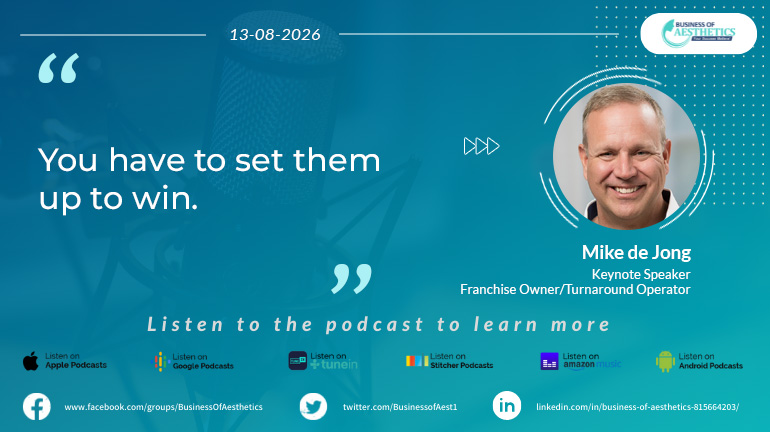
Key Highlights:
- 00:00:13 – Introduction & Diagnosing the Operator Trap
- Manjali introduces Mike de Jong and frames the operator trap: a profitable practice can still be an unsellable job when everything depends on the owner.
- Mike’s background spans business building, profitable exits, franchise turnarounds, and ownership coaching.
- The episode sets out to identify leadership types, reduce owner dependence, and build a practice with transferable value.
View TranscriptManjali: Your practice is booked solid. Revenue looks great. So why does the whole thing seize up the second you take a day off? If the answer is because nothing moves without me, then you don’t own a business. You own the highest paying job you’ll never be able to sell.
Manjali: Welcome back to the Business of Aesthetics podcast. I’m your host, Manjali. Today we’re talking about something a lot of owners quietly struggle with: the operator trap. To help us break this down, we’re joined by Mike de Jong. Am I saying that right, Mike de Jong?
Mike de Jong: Yes, ma’am.
Manjali: To help us break this down, we’re joined by Mike de Jong. Mike is the author of Grow Smart and Freedom, Mastering the Mindset of Ownership, a Multi-Unit Franchise Owner, Turnaround Expert, and Tony Robbins Platinum Partner.
Mike de Jong: He’s built four businesses from zero, profitably exited six, and helped turn around several others that were circling the drain. Which honestly makes him one of the few people qualified to tell you exactly what kind of leader you really are. So today we’re talking about the operator trap, the three types of business leaders, why owner dependence is especially brutal in aesthetics, and how to build a practice that’s actually worth something the day you decide to walk away.
Manjali: This episode is brought to you by Ekwa Marketing. All right, let’s get into the conversation.
Mike de Jong: I am looking forward to it.
Manjali: Of course. Amazing. Let’s start with a diagnostic everyone listening is probably doing on themselves right now. When you sit across from a business owner and you’re figuring out whether they’re an owner, an operator, or a hostage, what’s usually the first step?
- 00:02:05 – Why Founder Dependence Creates a Gilded Cage
- Mike uses the unplugged-vacation test to distinguish a true owner from an operator who remains essential to daily execution.
- Aesthetic founders often become the clinical product, lead injector, and face of the brand, making patient demand inseparable from their personal labor.
- Mike identifies three business-leader profiles, GSD, architect, and hunter, and explains why GSD leaders are especially vulnerable to overwork.
View TranscriptMike de Jong: I asked them when’s the last time they took a vacation. And then most of them have taken a vacation. Then I asked them the last time they took a vacation, left their laptop and their phone at home or left it off. And usually they go pale. And like, that’s impossible. I, you know, I run a business. I have to be in touch with people. Yeah.
Manjali: That’s when I start the conversation that they might actually be an operator, not an owner. They might own the business, but they’re operating it. And it’s maybe holding on to them a little bit too tight. Yeah. Yeah.
Manjali: Okay, so that’s how you spot it across any business. But I want to zero in on aesthetics for a second because I think this industry has a version of the problem that’s even harder. Mostly because of who the owner usually is in the room. So…
Mike de Jong: The owner is usually the top injector, the face of the brand, and the person patients are booking by name. So walk me through why being the actual clinical product makes the hostage trap even harder to escape. Well, you, not you, but the average aesthetics owner, I guess I could use the broad you, has set themselves up to be in that spot.
Mike de Jong: So most business owners in this area, in most areas actually, but it’s particularly in this area, they work really hard. They were probably doing it for someone else and they’re like, I could do this myself and I’m gonna go and take care of this and make more money and I’m not gonna make all those silly mistakes that the other owners were making. And they found that more hours in the day and more days of the week, the more money they make and the better the business is.
Mike de Jong: And that works right up until it doesn’t because there’s only 168 hours in the week. And people don’t want to come and see you usually at one o’clock in the morning. So, you know, there’s only so many hours of the day that people actually want to show up. So they kind of built a gilded cage. The money’s coming in. But it’s reliant upon them.
Mike de Jong: And this has to do with uh most people in the aesthetics field are I call them the gsd type of leader they get uh they get stuff done we’ll keep it we’ll keep it pg versus versus the other two types of leaders that I like to talk about which are the uh the architect or or the hunter um Yeah all right thinking you want me to elaborate that I don’t know
Mike de Jong: Would you mind elaborating? I’d be happy to. I just find sometimes I ramble on, and I should pause for a minute and let the host have a chance to ask a question. I get so excited. I’m so passionate about this, Manjali. It’s just insane.
Manjali: Talk as much as you want. You’ve got one hour. We have plenty of time.
Mike de Jong: Wonderful. I’m excited.
Mike de Jong: You’ve got one hour. We have plenty of time. Wonderful. I’m excited. There’s thousands of labels for business leaders. You have your charismatic leader and your dynamic leader and your bureaucratic leader. It goes on forever. But all of them in business fall into three categories, including the aesthetics business.
Mike de Jong: And those are your GSD, your get stuff done leader, your architect, and your hunter. And your GSD leader is just what it sounds like. They are used to getting stuff done. If a task needs done, they do it. If something’s in their way, they move it, they go around it, they go over it, they go through it, they go under it, whatever it takes.
Mike de Jong: They’re just committed to getting to the end result. And that makes them very successful for a while. The other two types, the architect, are people that love building systems. They’re not so great at actually executing on those systems, but they really are good at putting them all together. And that’s probably 10%-ish of the workforce, 10%. And then you have, I call it the hunters. Those are the people that are
Mike de Jong: Not just that, I love marketing and love advertising. They also love the next idea. Like what’s, what’s the next big thing, maybe not even in aesthetics that they can go work on because like they heard from their neighbor that’s doing this, this cool thing over here and oh that sounds pretty cool and I want to go, I want to go work on that too.
Mike de Jong: But we’ll focus on the GSD person for today because that’s most of your listeners. So they’re in this trap. They’re working all the hours. They’re working 100 hours a week, 120 hours a week. Remember, it’s only 168. You’ve got to sleep during some of them. You probably have to bathe because you’re dealing with the public. So maybe you can spend a little time there. Eat a little bit. Maybe you don’t need to see your family, but maybe you do. I don’t know. Yeah.
Mike de Jong: You’ve built this gilded cage, and you’re stuck. Like you said, you’re the one in the room. You’re the one people are coming to see. You’re the brand that’s been built. But there is a way out.
Manjali: Okay, and what is the way?
- 00:07:22 – Build Systems That Transfer the Owner’s Judgment
- The path out begins by documenting policies, procedures, decision trees, and service standards so the team can reproduce the founder’s judgment.
- Delegation should preserve a human patient experience: trained team members can handle assessments while the founder joins only where their expertise adds the most value.
- Clear SOPs increase trust, reduce supervision, expand capacity, and allow the clinic to operate even when the owner is away.
View TranscriptMike de Jong: So it’s building systems around and processes around everything you do. So it doesn’t have to be you. Your face, the moneymaker, can still be like, I don’t have a face for aesthetics. I could use a lot of aesthetics, but I don’t have a face for aesthetics. You, on the other hand, and your audience, I’m sure all very like you’re the face of the business.
Mike de Jong: But it doesn’t mean you have to be the one doing everything. And I see this in all sorts of health care professionals, veterinarians, eye doctors. Like there’s just people I work with in this area and they really believe that they are like everything needs to be around them. And there’s so many other tasks in the process.
Mike de Jong: That could be handed off if you have a policy and a procedure around it. And it doesn’t have to be like, and I’ve seen it done badly. I want to be very clear, Manjali. I’ve seen it done badly where, you know, you walk into a room and you sit down with someone and they ask you with a clipboard, can you tell me why you’re here? Can you tell me what your biggest problem is? Like, it’s just this robotic stuff. That’s not what I’m talking about.
Mike de Jong: I’m talking about finding the right people or training the people you have in doing some of these consultations. And then you parachute in. You meet with the person. Maybe it’s at the beginning. Maybe it’s at the end. Maybe it’s at both times.
Mike de Jong: Hi, I’m Manjali. Mike’s going to do a great assessment for you. He’s actually really so much better at it than I am. Really get some of the details. I’ll be back at the end to look at it. Have a great day. Out you go. The person is doing the assessment. You can see you get more people through this way. I know some people do this, but I don’t think they do it very well. Then there’s a lot of stuff that can be done
Mike de Jong: Under supervision, but not direct supervision, right? So it doesn’t have to be Manjali doing every injection. It doesn’t have to be Manjali doing every little piece. Yeah. So it comes to training, trusting. This is the big part. Trusting and believing in your people. But before any of that happens, it’s building the SOPs around it. Yeah. If you’re asking your people…
Mike de Jong: To provide a consistent service and a consistent product at a very high level every single time you have to set them up to win. You have to give those
Mike de Jong: From all of the tools, all of the decision trees that you know automatically in your head, it has to be written down. Because so many times I see, I have a dear friend that just moved from…
Mike de Jong: Just outside of Tampa, Florida, up to Cleveland and is restarting her clinic up there, actually, Dr. Sasha. And she’s like, I’m rebuilding it completely different this time because she was like just stuck. And we had some conversation. I called her before I came on this podcast just to ask her some ideas and what was going on and what’s going on in the field, et cetera. But she’s like, everything’s in my head. And what I’ve done and I’m setting up the new thing is,
Mike de Jong: I’ve laid it all out so anybody can see when this happens, I gotta do this. When that happens, I gotta do that. And they don’t have to make a decision. They don’t have to use their judgment. They’re using my judgment because I’ve written it down for them already. And then the supervision level goes, the trust goes up, the supervision goes down, more people are moving through the office. And then the next step is you not even being the one that says the hello or the goodbye or doing the policy or doing the procedure.
Mike de Jong: And this is building on it. Maybe it’s bringing in an associate and they get some equity buy-in over time. Maybe it’s, that’s probably what I would see most commonly so that you could get a few days off here and there. But depending on the exact stuff you’re doing, you don’t necessarily have to be in the office for all of it. Some of you do, I get that.
Mike de Jong: Schedule that for the days you’re there. Schedule other services for the days you’re gone, so your clinic is still open when you’re gone. But again, it’s all set up ahead of time, so people don’t have to call you. It’s all about the policies and procedures. It’s all about writing it down.
Manjali: One hundred percent. Let’s make this real for someone listening. Say everything you just described hit a little too close to home, and they’re realizing, “Yeah, that’s me.” Forget the mindset shift for a second. What’s the first mechanical change you’d make in the practice on Monday morning?
- 00:12:08 – Start Small: Create the First SOP and Train for Consistency
- Mike recommends documenting the simplest repeatable task first instead of attacking the largest revenue process.
- Owners can record a task on a phone, Loom, or Descript; team members then test the instructions and surface every hidden assumption.
- Training should progress from easy tasks to complex conversations, with role-play repeated until the team cannot get the process wrong.
View TranscriptMike de Jong: And they’re realizing, Yeah, that’s me. All right. So forget the mindset shift for a second. What’s the real, what’s the first rather mechanical change you’d make in the practice on Monday morning? Yeah.
Mike de Jong: So I used to do this differently. And I used to be like, okay, what’s your biggest moneymaker? We got to attack that first. That’s where you’re going to get your biggest bang for the buck. And it’s too big to hang on to. It’s just too much to work on all at once. And I just say that out loud because I don’t want people to go start doing that. They’re like, I’m just going to go fix this one thing. You got to start with something small. You got to go to the office on Monday morning.
Mike de Jong: And decide that you’re going to build a procedure or an SOP around the simplest thing that you do. It could be how to book an appointment. It could be how you want a room laid out. That’s usually not written down anywhere. It’s training. You get a new person, they’re showing how to do it, blah, blah, blah.
Mike de Jong: It’s actually written down. And then the next time you do it, you don’t sit there and type it all out on your computer. Just use your cell phone. Just hold it up here and record yourself. Or if it’s a computer-based task, turn on Descript or Loom or one of those and record yourself doing it. If it’s going and ordering supplies, most people still order their own damn supplies. It drives me insane. Why are you doing that? You have people for that.
Mike de Jong: Just sit down at the computer and say okay I’m going to this website and type it in and then I go to this menu and then I click here and then if we have 27 widgets left I know I need to have at least a minimum of 30 so I’m going to order three unless it’s this time of the year because summer is coming and we do more of these procedures in the summer so then my par level goes up and you just verbal diarrhea as you’re doing it and then
Mike de Jong: Finish it and hand it off to anybody in your office, anyone you think that can do it, which should be anybody in your office, maybe, and say, go do this. And don’t look at it.
Mike de Jong: Please don’t look at it because every um and ah and oh, I didn’t mean that. And I clicked and I went back here is going to drive you crazy and you’re going to want to redo it. And that’s not the point of this. The point of it is just to see if you can hand something off. Because once you hand it off, you tell them, hey, can you try this? Don’t make assumptions. Go step by step. Go step by step. And if you get to the end without having to make an assumption, great. And if you have to make an assumption, come and ask me.
Mike de Jong: And then you fill in those blanks and then you get your first SOP. And then you put it in your favorite AI tool and it can transcribe it for you or other AI tools. Like I mentioned Descript, you could just dump it in. If you’re really worried about the ahs and the ums and the stuff, you could do some quick video editing if that’s really important. But I say it’s not. It’s really not. The key is just to have it. And then you get this little dopamine hit in your brain. You’re like, oh, I got this one little thing done. Oh.
Mike de Jong: Then do another one and then do another one and then do another one. And then you start working your way up the ladder to the most complex things you do. You’ve already got 30, 40, 50 smaller things under your belt. I’m not going to say it’s easy, but it is becoming easier. And then once you have all that done, then you can start evaluating your staff and yourself and deciding who you want doing what. So there’s not you doing everything. Do you have any leaders?
Mike de Jong: That’s what you’ll do on Tuesday. Monday, you’ll do your first SOP. You’ll get the dopamine hit and you’ll probably do two or three more that day. That’s usually the way it works. Then you’ll hit a roadblock around Thursday because the next one will be like, you get some harder ones and you’ll fail at it. And you’re like, ah, see, I don’t have time for this.
Mike de Jong: Just give yourself a little bit of grace and go back and do it. But like Tuesday, start thinking about your leadership team. Who do I have here that is really personable and is really great with clients and customers? And who is just naturally not salesy, but can just have conversations with people? And then record yourself having the conversations with people as you’re like talking them through different procedures that they want done and you don’t think are a good idea or that you think are a good idea for them, all the variations.
Mike de Jong: And then turn those into training videos. It could just be audio. You don’t have to have a video going. Of course, disclose. You don’t want to get into trouble by recording people without telling them. But for training purposes only, people understand and they don’t mind, especially if there’s no video involved. And then now you’ve got your core of your training. So then the next thing is like, okay, I’m going to like now empower someone to go do this thing. Oh, and then they fail at it.
Mike de Jong: Because so many people, Manjali, practice until they get it right. You really have to get people to role-play and practice until they don’t get it wrong. There’s this much space between those two things. Then it becomes automatic, including the pauses and how to answer questions.
Manjali: Yeah.
Mike de Jong: And how to answer questions automatically. By the way, you should never really answer questions. You should ask a question, right? That’s sales training 101, right? And you start building the list of FAQs and questions and training, and you start them with the easy stuff for people that are coming in just like a little bit right here. And before you know it, you have them training on the whole.
Mike de Jong: The whole the whole deal right it’s um it’s just that practice and they will fail and that’s where the other people give up they’re like see I told you I couldn’t get anyone as good as me to do this my business is going to suffer you just got to work harder at it you put the time in to build your business this big how come you can’t put the time in to just make this little switch and get the freedom you want
Mike de Jong: And get the vacations you want and get the time off you want and get the time with your family that you want. And then get the growth that you want because you can’t be in two places at once. And if you get one dialed in and buttoned up,
Mike de Jong: It’s very simple to go do that in a second one. Okay, it’s not that simple, but it’s simpler. I could tell you if you go do it without doing this, all you’re doing is scaling chaos. I’ve done this. It was a disaster. It cost me so much money, so much sleep, so much time. I’ve worked with so many people that have done it. Don’t do it. Button up the first one first. That’s how you escape the operator trap.
- 00:19:14 – From Insight to an Actionable Growth Roadmap
- Manjali summarizes the central bottleneck: owners know the practice depends on them but often cannot identify the first move out.
- The Ekwa Marketing strategy session is positioned as a practical next step for building a realistic patient-growth roadmap.
- Listeners are directed to www.businessofaesthetics.org/msm.
View TranscriptManjali: Yeah, that’s really, really interesting, Mike. So let’s take a quick pause because what Mike just laid out is the exact wall most owners hit. They know they’re the bottleneck. They just can’t see the first move out.
Manjali: That’s the whole point of the complimentary 60-minute strategy session from Ekwa Marketing. It’s a one-on-one conversation designed to map out a realistic 12-month roadmap for attracting high-value patients so growth stops depending on you working more hours. You can grab a time at www.businessofaesthetics.org/msm. All right, so back to Mike. Let’s get into the part
- 00:20:00 – Build a Team That Can Hold Revenue Without the Founder
- Owners must first decide whether stepping back is genuinely their goal; remaining hands-on is valid when it aligns with the life they want.
- The better hiring question is not whether anyone can match the owner, but how to find and develop someone better at a specific task.
- Equity or another meaningful incentive can create long-term buy-in and support a gradual transition from employee dependence to shared ownership.
View TranscriptManjali: That honestly terrifies most people: stepping off the treatment flow. How do you build a team that can hold revenue and patient volume when the founder isn’t the one holding the syringe anymore?
Mike de Jong: I can think of a couple of paths forward, and I’m sure there are hundreds. First is deciding that’s the step they want to take. Some people don’t, and that’s okay.
Mike de Jong: I’ve worked with some owners that realize they don’t want to grow. They want to be in their business every day. And that’s what gives them joy and happiness. And that’s okay. So I just want to start with that. So not everyone’s thinking I’m broken. Why don’t I want to change? That’s totally fine. But for those that do, the first step is awareness. And then the next step is asking this question.
Mike de Jong: How do I find someone that’s better than me at filling in the blank task? Because we always, always, always, I know you should never use the word always, but we always say, ah, I can’t find anyone as good as me to do this. I just can’t. There’s just no good people out there. And it’s not true. The next thing I hear is,
Mike de Jong: I’ve tried everything. I’ve tried everything and I can’t find good people. I want you to sit down and list out what everything is because it usually involves like I posted an ad in Indeed and I asked my friends and I talked to this dude I met in a coffee shop. Like it’s not a very long list. And because none of them produced anything and failure is hard for us. Yes, I use the F word. Right.
Mike de Jong: And it feels like it. We won’t admit that to ourselves, but it feels like it. Therefore, we don’t want to do it anymore. It’s just basic human nature. We don’t like to fail at things, especially as we get older and older. When we’re kids, we fail at everything all the time. Can’t even tie our shoes. We couldn’t even walk initially. Like you look at your kid and go, ah, you’re never going to be a walker. You’re going to crawl for your whole life. Like, no, you like they eventually learn how to walk. They eventually learn how to tie their shoes.
Mike de Jong: You eventually learn how to put your shirt on the right way around. Like it’s just, and we’re just, it’s kids. You’re like, Yeah, whatever. But as adults, we just hate it. So make the mindset shift of how can I find someone that’s better at this than me? And then devise a process for doing that. Now there’s like, Yeah, I’m sure there’s hundreds or thousands of processes, but if you’re doing the same thing as everybody who’s not doing it well, that’s probably not going to work for you.
Mike de Jong: And it’s probably got to do with how you’re attacking the problem. So if you like, I met a gentleman who is, I’ve actually met two people that have done this now. One’s a dentist and one is not directly in aesthetics, but does it with surgery centers, doctors.
Mike de Jong: And what they do is they’ll build up a practice, put in all the SOPs, train all the sales scripting like I talked about, et cetera, et cetera, trained all the technicians on how to do all the stuff, bring in one or more equity partners after it’s already going, and then slowly get bought out over a number of years, one to 10 years.
Mike de Jong: Then they rebuild. One of these gentlemen owns part of, I think, six dental offices. The other owns part of 30 surgery centers,five to ten percent of them. Ten percent of 30 is pretty darn good versus 100 percent of one, or 50 percent of one or two. You get the idea. So many of us try to find an employee, but the employee has no incentive to stay.
Manjali: Yeah.
Mike de Jong: And rebuild. And these gentlemen, one of them owns part of, I think it’s six dental offices. The other one owns part of 30 surgery centers, five to 10% of them. But 10% of 30 of them, pretty darn good versus 100% of one or 50% of one or two. You get the idea. So many of us try to find an employee. I’m going to find an employee, but the employee has no incentive to stay.
Mike de Jong: In this sort of role? How do you incentivize them to stay? It’s usually through equity. It doesn’t have to be the whole farm. You don’t have to give away the whole business, but just something that makes them have the buy-in to wanna be there. So those are a couple of ideas I have in this area.
- 00:24:30 – Transfer Patient Loyalty and Build a Sellable Asset
- A founder-led aesthetic practice requires a multi-year plan to transfer trust from the owner’s hands and reputation to the broader practice brand.
- Tiered pricing, founder-trained practitioners, supervisory leadership, and multiple locations can reduce single-point-of-failure risk.
- Manjali closes by reinforcing the difference between owning an asset and owning a prison, then shares Mike’s website and the MSM booking link.
View TranscriptManjali: Okay, interesting. So let’s say an owner does all of this. They build the systems, they build the team, they finally step back. There’s one last piece nobody in aesthetics really talks about. Most aesthetic practices are basically unsellable because patients only came for the owner’s hands and reputation. So what has to happen for that loyalty to transfer from the owner to the practice itself? So the business is actually worth something to a buyer.
Mike de Jong: Yeah, that’s, again, I want people to understand this is like a universal problem in business. Yeah. So I just, and I say that because I don’t want to undersell what’s going on in aesthetics. I just want people to understand they’re not alone, that this is a very common issue where like the owner is the business.
Mike de Jong: It’s more so in this business because of, like you said, they want the owner’s hand. So it’s not bringing someone in and starting this plan that we talked about earlier and leaving 10 minutes later or 10 months later. It’s a multi-year exit strategy. And there’s a few ways, again, that could be done. It could be bringing in the equity partner. It could be
Mike de Jong: Bringing in the incentivized individuals to do it. It could be just having your team so good, and this exists, where you’re literally just in a supervisory role. So if someone else comes in that can provide the supervisory role, and then it’s setting up the marketing and the conversation with the patients, like you’re coming to Manjali’s Aesthetics Clinic, you’re not necessarily coming to see Manjali.
Mike de Jong: It could be setting up your pricing. You want Manjali? All right. That’s 10 times as much, five times as much, three times as much. I don’t know. But I have these wonderful technicians that have been trained by me. And I think technician is not the right word. I apologize. I’m not using the right language. Sasha trained me. And my brain today is not great. She gave me all the lingo and here I am failing. But you have these awesome other practitioners that
Mike de Jong: That may be lower in the billing scale. And some people are going to want Manjali, but some people aren’t. And then when their results are as good at maybe a lower price point, problem solved. Also, if you get to the point where you can have more than one location, you’ll sell at a higher multiple. That’s true in most businesses because you don’t have one single point of failure.
Manjali: Interesting. That’s really, really interesting. So that was a powerful look at the operator trap with Mike de Jong. And honestly, if you’ve been feeling like the bottleneck, like the practice only works when you’re in the room, hopefully this conversation gave you a clearer framework for figuring out which type of leader you really are and what the first move forward looks like.
Manjali: Because building a practice that runs without you isn’t some someday luxury. It’s the difference between owning an asset and owning a prison. And if Mike’s approach resonated with you, I definitely recommend connecting with him and checking out his work at MikeDeJong.com, where he helps owners scale without sacrificing their time or peace of mind.
Manjali: So before we wrap up, if you’re looking for more clarity around the digital side of your practice, Ekwa Marketing is offering our listeners a complimentary 60-minute strategy session. It’s a one-on-one conversation designed to help you map out a realistic 12-month roadmap for attracting high-value patients.
Manjali: You can book a time at www.businessofaesthetics.org/msm. I’m Manjali, and this has been the Business of Aesthetics podcast. Thanks for listening, and keep on leading.
GUEST – Mike de Jong
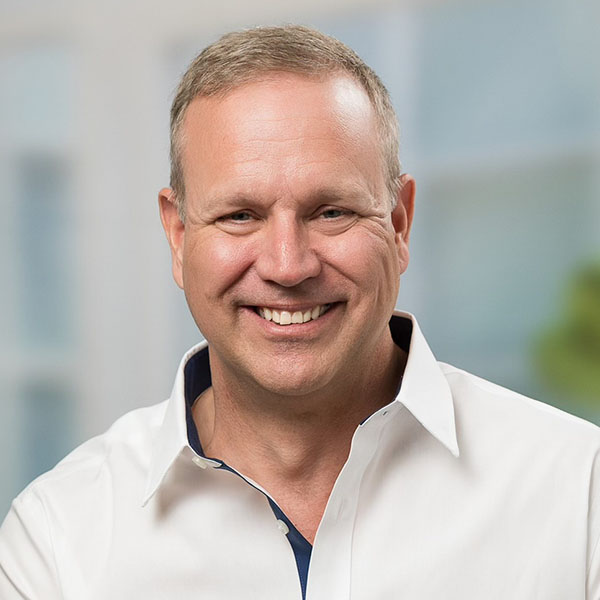
Mike DeJong is an experienced entrepreneur, franchise leader, author, and business coach who understands what it takes to build a successful company, and what it takes to save one that is struggling.
Over more than three decades, Mike has built four franchises from the ground up, successfully exited six businesses, and helped turn around several failing operations. These experiences taught him that sustainable growth rarely comes from chasing the next big idea. It comes from building reliable systems, creating the right culture, and giving people the clarity they need to perform consistently.
With a background in leadership, engineering, and franchising, Mike helps business owners escape the “operator trap”, where the owner becomes the most overworked employee in the company—and begin leading like true owners. His practical frameworks show entrepreneurs how to simplify their operations, strengthen their teams, and build businesses that can succeed without depending on them every day.
As a Platinum Partner with Tony Robbins, Mike has coached countless leaders through this transformation. He shares his insights in his books, Grow Smart and Freedom: Mastering the Mindset of Ownership, as well as through his coaching program for entrepreneurs who want to scale their businesses without sacrificing their time, well-being, or peace of mind.
At the heart of Mike’s work is a simple belief: true freedom comes from building a business that can thrive without you.
Learn more: mikedejong.com
HOST – Manjali Kulathunga
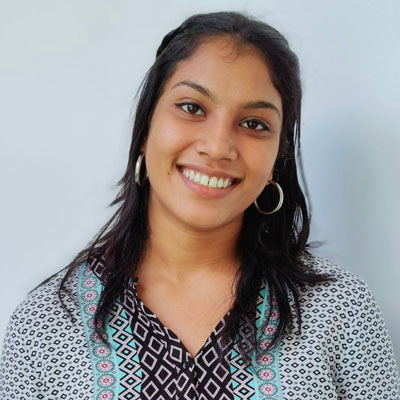
Drawing on her background in radio broadcasting, Angie brings confidence, energy, and a conversational approach to every virtual event she hosts. As the host of Business of Aesthetics (BOA) webinars and podcasts, she leads discussions with renowned industry experts, creating an engaging environment where knowledge is shared and meaningful conversations thrive.
Recognized for her approachable hosting style and strong communication skills, Angie excels at connecting with both speakers and audiences. Her ability to keep conversations engaging, encourage audience participation, and maintain a seamless flow helps make every webinar and podcast an insightful and enjoyable experience.
Connect with Us:
Category: Business of Aesthetics Podcast