Podcast: Play in new window | Download
Subscribe To Our Podcast




In this episode, host Don sits down with Dr. Sinehan Bayrak, a board-certified facial plastic surgeon who filled her Philadelphia practice in under two years without spending a dollar on paid advertising. She takes apart the assumption that growth requires more ad spend, more staff, and more square footage, arguing that most practices are buying volume when they should be building fit.
Dr. Bayrak walks through the actual mechanics: how her first 25 surgical cases came out of non-surgical appointments, why she never discounted them, and how Instagram functions as pre-education that shortens consults instead of just filling them. She details the free online consult pre-assessment that screens candidacy and pricing before anyone books, the $100 non-refundable consult fee that separates serious patients from browsers, and the self-scheduling technology that let her operate for two years without a receptionist.
Her framework for scaling is deliberately unglamorous. Grow revenue by raising prices you can genuinely justify, reevaluated every six months, before you grow complexity. And her closing warning is aimed squarely at anyone trying to copy someone else’s model: patients can tell when it isn’t yours.
Key Takeaways
- Use non-surgical services as the front door to surgical cases. Dr. Bayrak’s first 25 surgical patients came from filler and neuromodulator appointments where a passing comment about heavy eyelids opened a blepharoplasty conversation.
- Refuse to discount, but price honestly against your stage. She set fees lower than the 20-year veteran across town without ever discounting, choosing numbers that fairly compensated her time and skill while the results justified them.
- Treat social media as pre-education, not promotion. A single video explaining facelift incisions cuts that portion of the consult from five minutes to one, freeing the appointment for logistics and rapport.
- Filter patients before they reach your calendar. A free three-minute online pre-assessment collects photos, history, and estimated costs, and a $100 non-refundable consult fee confirms the patient has skin in the game.
- Replace headcount with technology before you replace it with hires. Patient self-scheduling and AI-assisted messaging let her run without a receptionist for two years, because payroll is owed whether or not the schedule is full.
- Raise prices before you add complexity. Revenue grows with no new overhead when your skill genuinely justifies the increase, which she reevaluates every six months on the surgical side.
- Stop replicating another provider’s playbook. Patients can sense when a model doesn’t fit the person running it, so build around your own personality and your real tolerance for staying involved.
Dr. Bayrak made the case that profitable growth comes from curating the right patients and building systems that fit how you actually work, rather than spending your way into a fuller calendar. This session is your chance to get an objective read on where that fit is breaking down in your own practice and what a realistic path to higher-value patients looks like from here.

- Get a 1-on-1 diagnosis of your online presence & patient acquisition funnel
- Identify critical, untapped growth levers (SEO, Social, Referrals)
- Define a clear action plan to attract and convert your ideal patients
- Receive expert solutions for your most pressing marketing challenges
Resources

Live Webinar: Future-Proofing Your Aesthetic Practice: Decisions You Must Get Right in the Next 18 Months
Join industry experts to modernize operations, enhance patient experience, and drive sustainable growth.
Wednesday, May 20, 2026 @ 7:00 PM EST – 9:00 PM EST

Are you ready for the “GLP-1 Body” Era?
Download the 2026 Aesthetic Patient Behavior Model to see the numbers driving decisions this year:
- Why 73% of patients now define beauty by “individuality” over transformation?
- The shift away from non-invasive fat reduction (down ~40%).
- Real data on the rise of the male aesthetic patient.
Key Highlights:
- 00:00:13 – Introduction & Speaker/Topic Setup
- The episode challenges the standard growth advice in aesthetics: spend more on ads, hire more people, buy more tools, and hope revenue catches up with the overhead.
- Host Don introduces Dr. Sinehan Bayrak, a board-certified, fellowship-trained facial plastic surgeon in Philadelphia who built a fully booked practice in under two years without spending a dollar on paid advertising.
- The conversation previews three areas: landing the first surgical cases without ads, turning Instagram into a patient acquisition channel, and building sustainable demand while keeping overhead lean.
- The episode is brought to you by Ekwa Marketing, the growth partner behind this podcast.
View TranscriptDon: Most aesthetic practice owners are being told the same thing. Spend more on ads, hire more people, buy more tools, and hope the growth eventually justifies the overhead. But what if the smarter path is the exact opposite? Welcome back to the Business of Aesthetics podcast. I’m your host for this session, Don. And to help us rethink what profitable growth actually looks like in a modern aesthetic practice, we are joined by Dr. Sinehan Bayrak. Dr. Bayrak is a board-certified, fellowship-trained facial plastic surgeon in Philadelphia who built a fully booked practice in under two years without spending a dollar on paid advertising. Her approach challenges many of the assumptions practice owners hear every day about growth, proving that strong patient trust, strategic positioning, and operational discipline can outperform expensive marketing campaigns. Today we are discussing how she landed her first surgical cases without paid advertising, how she turned Instagram into a powerful patient acquisition channel, and what it takes to build sustainable demand while keeping overhead under control. This episode is brought to you by Ekwa Marketing, the growth partner behind this podcast and a trusted resource in the aesthetic community. That being said, Dr. Bayrak, welcome to the podcast. It’s great to have you here.
Dr. Bayrak: Thank you so much for having me. I’m so excited to be here, and I love talking about this stuff. So any chance or opportunity I get to do it, I’m game. I’m really excited, and thank you for inviting me.
Don: Amazing. It’s great to have you here, Dr. Bayrak, and we really appreciate you being here.
- 00:02:13 – Where the First 10 Surgical Cases Actually Came From
- Dr. Bayrak went straight from fellowship into a purely cosmetic private practice, deliberately avoiding insurance-based surgery because of the administrative complexity.
- Her first 25 surgical patients were not surgical inquiries. They were filler and neuromodulator patients whose in-chair concerns opened the door to a surgical conversation.
- Non-surgical services functioned as the introduction mechanism in a city where she had no existing name recognition.
View TranscriptDon: Now, let’s get into the conversation. You were fully booked in under two years with zero paid advertising. Walk us through the very first thing you did to put surgical cases on your calendar before you had any name recognition in Philadelphia. And what was the actual mechanism that brought in patient number one through patient 10?
Dr. Bayrak: Right. So, as a surgeon, when I finished my fellowship, I immediately went into private practice, and I immediately went into a practice that was purely cosmetic. I didn’t do any insurance cases, honestly, because it’s just so complicated to do insurance-based surgery now that it was easier to focus on the cosmetic procedures. But the reality is, if that’s what you’re doing, people are not just going to walk into your office and ask you to operate on them. That was not my experience. For my first 10 surgical patients, and probably more than that, probably my first 25 surgical patients, they were patients of mine who were actually patients for non-surgical services. These were my filler patients. These were my neuromodulator patients. Even though I was a surgeon, I found value in providing those services because they allowed me the opportunity to meet people. A very typical scenario would be I meet somebody and I’m doing their Dysport, and it’s a tale as old as time: "Dr. Bayrak, can you give me a little bit of a lift? My eyelids just feel heavier than they used to be. I can’t do my eye shadow the way I used to." You can do a little bit for that with non-surgical modalities, but what a perfect conduit to the conversation of, "Hey, Lisa, have you ever heard about an upper blepharoplasty? It’s a really straightforward, small surgical procedure." So my first 10 cases were very organic in the sense that they typically did not start as pure surgical consults. The non-surgical allowed me the opportunity to meet people in an area that I did not grow up in, that I am not from, that I had literally just moved to. No one knew who I was.
- 00:04:50 – Pricing on Value Instead of Discounting
- Dr. Bayrak never discounted her services, even as a new surgeon in a market crowded with more established competitors.
- Her early prices were lower than they are now, but she set them at a level she considered fair to her time and skill rather than as a promotional tactic.
- She frames pricing around the value the patient receives and the work behind delivering that level of service.
View TranscriptDon: Right. So the opportunity to meet people was really the value you were looking for. Now, when you were mentioning these smaller surgical procedures, were you also discounting them?
Dr. Bayrak: I wasn’t discounting. There’s a saying that if you ask 10 surgeons how to do something, you’ll get 10 different opinions. I think that’s true for any industry and in any walk of life. But to me, I saw and I knew that I was performing a service with a lot of value. Maybe it’s ego, maybe it’s narcissism, but I felt like I was doing it really well. I do think I’m a good surgeon. I have no problem saying that publicly. So while I didn’t discount the service, if you look back at my prices from four years ago, they’re different. They were lower back then, and I felt like that was fair. I felt like it still compensated me in a way that was fair to me, my time, and my skill. But at the same time, as a business owner, you have to remain objective and you have to zoom out a little. So when I zoomed out, I saw that I was the youngest facial plastic surgeon in an area with not only lots of other plastic surgeons, but other facial plastic surgeons who were more established. So there is an element of, yeah, I don’t think I can charge what the surgeon who has been here for 20 years is charging, but I can charge something that’s fair to me and fair to the patient, adequately compensates me for my time and skill, and gives the patient a result that I’m proud of and they’re delighted with. I like the saying, you don’t go to Chanel and expect a discount. And I do think I provide that level of service. A lot of work goes into providing that level of service. So I’m kind of allergic to the D word. But even now, although my prices are significantly higher than they were when I first started, I still think they accurately reflect the value the patient is getting. Ultimately, I think that’s what cost should be based on.
- 00:07:32 – Building the Trust That Produces Word of Mouth
- Dr. Bayrak attributes early trust to the interaction itself, describing patients who repeatedly used the word "comfortable" in reviews and messages.
- She points out that elective facial surgery is uniquely intimidating, so reducing anxiety at every touchpoint is part of the clinical job.
- Word of mouth became her primary acquisition channel before she had a significant social media presence, and referred leads convert at a high rate.
View TranscriptDon: And you also mentioned that you stand on value. You believe in your value. You stand your ground there. In those first 25 patients, what did you do to make people feel that they could trust you?
Dr. Bayrak: Great question. For me, this question is a little challenging to answer, because it’s probably the least easily replicated. I find a fair amount of joy in interacting with people. I think one of the best parts of what I do for a living is that I interact with people I would hang out with, that I would go to a dinner party with. So I think what happened is that it translated into experiences and interactions that felt very comfortable for the patient. That’s a word I’ve heard and seen over the years in Google reviews and in messages patients send in. "I felt so comfortable." Because ultimately this is a very scary thing that people are choosing to do. Surgery in general is scary. Surgery on your face is even worse. And surgery on your face that you don’t even need is peak scary. So what I really tried to do, not even for the first 10 patients but what I still try to do today, is make every visit the best part of someone’s day. I try to make things seem very comfortable and accessible and tangible. No part of this should be any more anxiety-provoking than it has to be. Whether it’s Botox, whether it’s lip filler, whether it’s surgery, I want that to be an awesome experience for you. Because especially starting out, and even today, before I had the social media presence I have now, it was word of mouth for me. You can’t buy that. It takes a little more work to get it, but when you have it, those are typically very high-yield leads. If someone’s friend is telling them, "Hey, I just saw this new doctor, Dr. Bayrak, she’s in West Chester, it was awesome," then they send all their friends. So the short version is I just try to make it such a pleasant experience for people that they can’t help but tell their family, their friends, their neighbors, other moms in the carpool line. Ultimately, that is what built my practice.
- 00:10:38 – Instagram as Pre-Education and Patient Filtering
- Early on, Dr. Bayrak charged no consultation fee because she had time. As demand grew, the constraint became her own hours, not lead volume.
- Long consultations with patients in the pre-contemplation phase were consuming time better spent with patients ready to move within a year, and the information given goes stale anyway.
- The core value of social media is pre-education: patients meet her before they meet her, arriving with trust already established and technical questions already answered.
View TranscriptDon: Thank you very much for sharing that with us, Dr. Bayrak. Now that’s how you first got your first few patients in. Now we want to understand how you filter them out, especially when we’re looking through your social media. How do you practically use your Instagram presence to filter out the wrong patient before they ever land in your consultation room, so the people who sit across from you are already pre-sold?
Dr. Bayrak: Yeah. So when I first started, and this applies to everybody, you have all the time in the world. People are not knocking down your door to see you or to come in. So starting out, I didn’t charge a consultation fee. I didn’t do any of the things I do now, which I’ll tell you about. That’s because I had time. What ended up happening is that the limitation of my practice, like probably most surgical practices, is that there’s one of me and I can only be in one place with one person at one time. So as things got busier, I was like, okay, I only have so many hours in the day. I can’t spend 45 minutes talking about, let’s say, a facelift with somebody who really is in the pre-contemplation phase, meaning they’re interested, they want to learn more, but they don’t really plan on doing this in the next year, maybe not even in the next five years. While those conversations are fun, because I love what I do and I enjoy talking about it, it’s never a burden. But the reality is that time should probably be spent with someone who is ready to do something in the next year. The other thing is that prices change, techniques change, availability changes. So just for planning purposes, the information someone would get at an initial consult would not be applicable for surgery in three years. So ultimately I did a few things very slowly to meet needs that popped up over time. I think the biggest advantage of social media for really any provider, it doesn’t have to be a surgeon, and it can be Instagram or TikTok, I like Instagram personally, and it is pre-education. I get on there, and to me it’s a part of my job. I enjoy doing it, but it’s definitely something that sometimes I have to make myself do. Pre-education is so valuable because it allows people to meet you without actually meeting you. So when I meet somebody now in my office, they already feel like they know me, even though obviously it’s our first time in the same room. That’s so valuable, because it means they already like you, and it means that to some level they already trust you. Otherwise they wouldn’t be there. The other thing is that you’re able to distribute information on a mass scale. If I have a video on how I do my facelift incisions, instead of spending five minutes of a consultation talking about that, we probably only spend about a minute. Usually what people say is, "I saw your video, it’s around the ear, under the chin, right?" And I’m like, yeah, that’s perfect. So it really cuts down on the technical material we have to discuss. Of course we still review it and it’s still part of the consultation, but any time we spend not doing that, we get to spend talking about what you do for work. Are you married? Are you single? Do you have children? Do you have pets? One, because I like to get to know people. But two, because those pieces of information are also important when helping people plan logistically for surgery. There’s doing the surgery, and then there’s helping someone figure out, okay, it’s your face, it’s hard to work that into your life based on the things you’ve told me. When do we think makes the most sense?
- 00:15:39 – The Consult Pre-Assessment and the Non-Refundable Fee
- Dr. Bayrak built a free online consult pre-assessment that takes under three minutes and collects demographics, physical data, surgical history, submitted photos, and areas of interest.
- The form lets her assess candidacy and provide estimated costs before a patient ever books, removing the most awkward part of the consultation from the room.
- She now charges a small non-refundable consultation fee of $100, positioned not as revenue but as proof that a patient has skin in the game.
View TranscriptDr. Bayrak: So the pre-education is awesome, and that’s probably the main reason I put as much work and effort and time into posting on Instagram. I think the next thing I did that was really fundamental in streamlining consult efficiency and pre-selection is what I call the consult pre-assessment. It’s easily accessible on my website. Anyone can go look at it. Essentially it’s a form. I timed myself filling it out. It’s very fast, less than three minutes. But it collects some demographic data. It collects age, which isn’t the be-all and end-all, but is something to consider. It collects some physical data, like height and weight, because sometimes we need to optimize certain factors to get the best result for certain surgeries. And then it also collects information on, okay, have you had plastic surgery before? What kind? Were you happy with it? And then patients send in photos. This is completely free for someone to do. You could log on and do it right now, and I personally would look at it and say, okay, I see this, this, and this. It also has an area for patients to select what they’re interested in. So using all those pieces of information, I’m mostly able to say, yes, you’re a candidate for that, no, you’re not a candidate for that, here’s something else I would consider just as an expert in facial aging and facial rejuvenation. I think the least sexy part of what I do is the cost of things, because you have to talk money, but no one wants to talk money and it can be a little awkward. I remember starting out, that was the hardest part for me, because they don’t teach you that in medical school, they don’t teach you that in residency, they don’t teach you that in fellowship. But ultimately a big piece of information patients need is how much is this going to cost me? So there’s an area where patients can also see estimated costs. And in our response to them, we include an estimated cost for what we think a nice menu for them would be. So patients are able to get the fundamental basic information without ever coming into the office, without ever even having an appointment with me first. And if all of that sounds good, then they’re scheduled for a consultation. The most recent change I’ve implemented in this sequence of pre-selecting people is that I do charge a small consultation fee now, and it’s non-refundable. It basically pays for the time we spend discussing things. To be honest with you, it’s a hundred bucks, and you can do a lot with a hundred dollars. But in a world where people are charging two hundred fifty, eight hundred, a thousand dollars for a consultation fee, it’s kind of a drop in the bucket. For me, it’s important because it tells me that you have skin in the game and that a patient is actually serious. Like I said, I love talking about this stuff, but at this point there’s only one of me and many more people who are interested in surgical procedures. So I need to know that you’re serious, and I need to know that you’re coming to play ball, so to speak.
Don: Right, so you prioritize accordingly.
Dr. Bayrak: Exactly.
- 00:19:17 – The Unglamorous Reality of the Content Operation
- A finished Instagram reel under two minutes long comes from roughly 10 minutes of raw footage and about two hours of production time.
- Dr. Bayrak treats posting as the work that replaces an ad budget, reminding herself on low-motivation days that this is what generates revenue.
- Consistency beats perfection. She keeps a small backlog of content for weeks when she doesn’t want to be on camera, and she notices measurable drops in inquiries when posting slips.
- She does all of it herself, believing patients can sense when content is outsourced.
View TranscriptDon: So that screening works, if the audience is paying attention right now. That brings me to the engine behind it all. Thirty thousand followers is the asset that replaced your ad budget. Let’s keep the highlight reel out for a second. What does the unglamorous week-to-week content operation actually look like for you to keep that channel producing surgical cases, and how much of it have you systemized versus doing yourself?
Dr. Bayrak: Well, I was born in 1989. I grew up without the internet, and then my generation was there for when things got really popular. MySpace, Facebook. So I’ve always enjoyed social media. At this point it’s part of my job, and that’s how I see it. That’s what allows me to not spend thousands on Google ads. I’ve never spent a dollar on Google ads. So it’s important. Any time I don’t feel like doing it, I remind myself, this is what gets you paid. Basically, you have to do it. What people don’t realize is that the video I posted as an Instagram reel this morning is, I think, a minute and 53 seconds long. What people don’t realize is that the original video was probably closer to 10 minutes long. And after you do the post-production, the editing, the captions, the cover photo, all the stuff, it takes time. Probably about two hours for one video that is less than two minutes long. Social media is something we can consume very quickly, but for me, my production time does not match the content time. Part of that is my fault, because I’m a perfectionist. I like it to look nice. I like it to be well edited. I like the sound to be optimized. I like a nice cover photo. I like a caption that’s thoughtful and meaningful. There are certainly people who prioritize quantity over quality. I like to think I’m somewhere in the middle. I will say the hardest part for me, as not just a professional perfectionist but a personal perfectionist, is that no piece of content is ever going to be perfect. There are videos where I hate how my hair looks. There are videos where there’s a typo in the caption. There are videos where maybe the sound isn’t great, my mic wasn’t plugged in. If you focus on the small imperfections, you’re not going to be able to post consistently. And from what I have experienced, that is the most important thing. You have to be posting consistently. It doesn’t have to be every day, but it has to be at regular intervals, and you’re not always going to feel like posting. That’s why I typically like to have a couple of videos or posts in my back pocket for times when I don’t feel like being on camera, for times when I just want to phone it in. There have been times where I just don’t feel like doing it, and maybe I’m only posting once or twice a week, or sometimes not at all. It just depends. Life is busy. If I’m in the OR for eight or nine hours a day, the last thing I want to do when I get home is figure out what to post on Instagram. But I see, and maybe it’s all in my head, but I see a difference in the inquiries and the text messages people send and how many consultation requests we’re getting. So for me, that’s like, all right, you need to get up off the couch and you need to actually do something, because you’re not paying for Google ads and you’re not paying for a marketing agency. It is all me. That brings me to my next point, which is that there are certainly people who hire others to do this for them, and I think that’s okay. In my opinion, I can tell the second someone is not doing it themselves, and I think patients can pick up on that too. So for me, just coming across as your authentic self, as cliché as that sounds, the best way to do that is to just pick up your phone and record yourself. You don’t need fancy equipment. You don’t need another person. But for people who really don’t want to do it at all and hire third parties to do it for them, I just don’t think you’re getting the same product. So I think I’m just going to do it myself for as long as I can.
- 00:24:49 – What She Deliberately Refuses to Post
- Dr. Bayrak does not post complications, noting almost no surgeon does, and she is equally unwilling to post outlier results that heal far better than average.
- Her stated goal is to represent the middle of the bell curve, so patients form realistic expectations rather than comparing themselves to exceptions.
- She avoids clickbait entirely, including public commentary on celebrity appearances, preferring to have those conversations privately with patients in the office.
View TranscriptDon: That’s very interesting. Now, a lot of people distrust Instagram because they think it rewards drama and unrealistic results. What content do you intentionally avoid, even if it might get attention? Are there any particulars?
Dr. Bayrak: Yes, of course. I tell patients very bluntly, no one puts their complications on Instagram. That’s a blanket statement, and I’ll take it back a little, because there are some surgeons who will. There’s like one or two of them in the world, for facelift surgery at least, who are just so established and so good that they’re not scared of doing that. There’s a saying, if you’re not getting any complications, you’re not operating enough. Luckily for most people it’s a minority of their practice. But no, I’m not putting that on the internet, because the reality is that is not most people’s experience. That is not 99% of people’s experience. Now, on the flip side of that, I also don’t post people who do really, really well, because I don’t think that’s an accurate representation of the typical experience. My goal is always to try to promote truthful, realistic information. There have been multiple times where I’ll have someone who is, let’s say, a week out from a very big surgery. Brow lift, eyelids, facelift, neck lift, fat, laser, all the things. And they look amazing. I don’t know why they look amazing, because they got the same instructions everyone else got. They did the same things everyone else did. And I tell them, I’m not putting you anywhere, because what is going to happen is someone is going to see that and they’re going to say, well, why don’t I look like her? Because she is not the norm. My job is to educate you on what the middle of the bell curve is. The other category of things I try to avoid is anything that’s really click-baity. A big category is commenting on celebrity appearances. I feel bad saying this, because there are a lot of surgeons I respect who do this, but I personally am not interested in commenting publicly on celebrity appearances. I’m not going to do a whole video on so-and-so’s eyelids. It’s certainly something I talk about with patients regularly in the office, where I’ll recommend something and they’ll say, well, I don’t want to look like so-and-so. And then I’ll explain to them, here’s what happened there, here’s what we’re going to do for you. I just think some conversations are better had in private. That’s one specific example, but anything that’s obviously clickbaity, I think I’m a little more sophisticated than that, honestly.
Don: It’s a personal taste.
Dr. Bayrak: Definitely.
- 00:28:26 – Sponsor Break: Ekwa Marketing
- Don ties Dr. Bayrak’s philosophy back to the core theme: profitable growth is about knowing which patients are worth building your system around, not simply generating more leads.
- Listeners seeing rising cost per lead, declining consult quality, or tightening margins are invited to claim a complimentary 60-minute Marketing Strategy Meeting.
- The one-on-one session covers where the practice stands now, where the real growth opportunities are, and what a 12-month roadmap could look like.
View TranscriptDon: Right, we’re going to take a pause here. Everything Dr. Bayrak is describing today comes back to one thing. Profitable growth is not just about getting more leads. It’s about knowing which patients are actually worth building your system around. And that is exactly what our partners at Ekwa Marketing do. So if you are listening to this and you’re watching your cost per lead go up, your consult quality going down, or your margins getting tighter even though you’re spending more on marketing, we are giving away to our listeners a complimentary 60-minute marketing strategy meeting. It’s a one-on-one session where an Ekwa Marketing analyst will help you look at where your practice is right now, where the real growth opportunities are, and what a 12-month roadmap could look like for attracting more of those high-value patients without adding unnecessary complexity. You can book that session at www.businessofaesthetics.org/msm. Now let’s get back to the lean growth playbook.
- 00:29:50 – The Lean Operation: Technology Instead of Headcount
- Dr. Bayrak identifies wages and salaries as the single largest expense category for most practices, and payroll is owed whether or not the schedule is full.
- Rather than hiring, she leaned on technology: an intuitive scheduling platform with patient self-scheduling and an AI messaging component, which was unusual for a surgeon at the time.
- The tradeoff is self-selection. Her systems attract patients comfortable with online forms and text communication, and she is content to let traditional phone-and-paper patients go elsewhere.
View TranscriptDon: Dr. Bayrak, let’s get into the part most surgeons are afraid of, the lean operation. You deliberately chose not to hire your way to growth. What is the single most expensive thing a typical facial plastic practice overstaffs or overbuilds, and what did you replace it with so that you could stay booked without carrying that overhead?
Dr. Bayrak: Okay. Well, my answer to this is based on other things I’ve read and listened to, but I think the biggest category of expense for most practices is wages, salaries, people. When I was starting out, I wasn’t sure what the demand for my services would be. And in general, just as a person, I’m financially conscious. I like to be deliberate with my spending. So I thought, listen, I’m very realistic. People are not going to be beating down my door to be seen by me. I will be happy if I see 10 patients a week, and I can handle that. So I think the biggest expenditure for most practices is the cost of having people. And guess what? You have to pay those people whether or not you’re busy. So for me, the decision was kind of an unconscious, subconscious one, where I was like, I don’t think I need anybody else right now. Ultimately, I was able to do that by relying on technology. It sounds like the plot of a movie where I’m replacing people with machines, but initially that’s what I did. I chose a scheduling platform that was very intuitive for people to use, and I elected to have online scheduling, where people could schedule themselves. That’s a little more normal now, you see it a little more now, but when I was doing it, for a surgeon, for a physician to be doing it, it was kind of crazy. I did a couple of things like that where people were like, are you serious? So I allowed people to put themselves on my schedule. When you do that, guess what? I don’t really need a receptionist to schedule appointments. And I chose a scheduling platform that has a small AI component, so people can change their appointments after they book them with the help of an AI messenger. And I would respond to some messages myself, because again, I had the time. The other piece of the equation is that people can be unpredictable. Machines typically have a little more reliability. Nothing’s 100%, but I can tell you that online scheduling never gets sick or takes a vacation. So the short answer is I relied heavily on technology. And when you do that, the reality is you are also self-selecting people who are comfortable with technology, because that’s what I needed. I needed people who could figure out how to schedule themselves online, how to fill out electronic forms, and basically how to send a text message. Is that everybody? Probably not. But there are plenty of other practices that operate very differently and can give someone that traditional experience of, I want to pick up the phone, I want to talk to a person, I want to go to the office and fill out paper forms. That’s just not me.
- 00:34:11 – Curating the Right Patient Instead of Chasing Everyone
- Dr. Bayrak opened her practice in October 2022 and describes the funnel she built as an extension of her own personality rather than a generic best practice.
- Trying to attract every patient may produce a good week or month, but long term it fills the schedule with people the practice does not fit.
- Because cosmetic surgery is elective and the market has many qualified surgeons, she argues the real variable is fit. Her benchmark is a schedule with no names she dreads seeing.
View TranscriptDon: That’s so interesting, Dr. Bayrak. It seems like you have really filtered your whole patient funnel in a way that is very intuitive to your own personality.
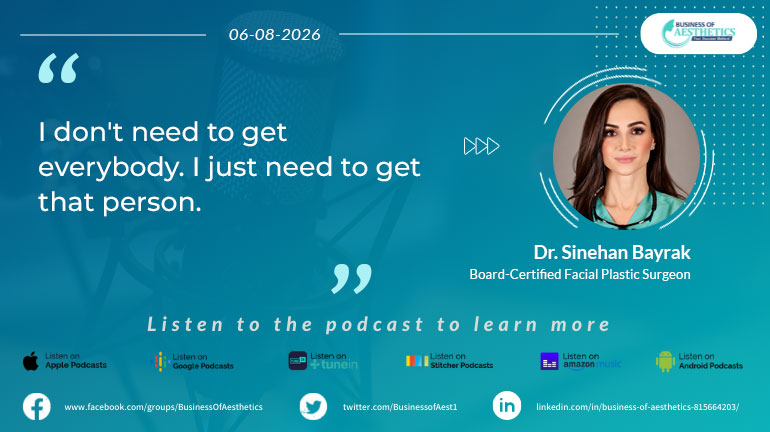
Dr. Bayrak: I think that’s true, and I think everything around that. I mean, obviously I’m no expert. I’ve been in practice for, it’s 2026 now, I started my practice in October of 2022, and I worked somewhere else before then, so I’ve been doing it a little bit longer than that. But from my experience and what I’ve seen and heard from colleagues, I think people spend a lot of time and energy trying to attract every patient. I want to attract everybody, I want to see everybody. In the short term, does that work out? Probably. You probably end up having a really good week or a really good month. But in the long term it may not work out so well, because you end up with patients you may not particularly jive with. For me, it was always about, I don’t want to say attracting or capturing the right person, because who am I to determine what the right patient is? The right person for me, the right person for how my practice runs, the right person for my personality. Because again, I am not performing life-saving surgery. I do elective cosmetic surgery. No one needs my services. There are plenty of very qualified surgeons in my area and beyond who can do a really nice facelift or a really nice rhinoplasty. Ultimately it becomes a fit issue. So for me it was always about figuring out who I wanted and figuring out what I needed to do to get that person. I don’t need to get everybody. I just need to get that person. And what ends up happening is I look at my schedule and I don’t dread seeing any names. If you are a provider of any sort, you know that there are times where you see someone’s name on your schedule and you’re like, oh God, I’m kind of dreading that conversation, I don’t really want to see that person. That’s what happens when you try to be everything for everybody. That’s my two cents.
Don: It seems to be working out great for you.
Dr. Bayrak: Yeah, I can’t complain. I think it has worked out for me. I do think it is a different approach, because when you’re starting a business, it’s not a good feeling to not have your calendar full. Even now, if someone has to cancel or reschedule, if I have a 15-minute gap in my schedule, there’s a little voice that’s like, oh my God, that’s not a good feeling. Does everyone hate me? We’ve got to fill that gap. When in reality, it’s just that I have very much curated a very specific patient population and I have figured out exactly the population I work best with. I think when you do that, it helps what we talked about at the beginning of the podcast, which is making the experiences comfortable. The reality is there are all sorts of different personalities, and sometimes we have interactions that feel a little more natural and enjoyable than others. I always joke and say I’m just trying to attract people like myself, because that’s what I know. My very typical patient is a female between the ages of 35 and 55, knowledgeable about these things, places value on external appearance, likes to learn, but ultimately, if they’re sitting in front of someone who is an expert or a professional, they say, whatever you think is best. Because I do think that’s how people tend to get the best results. When you let the people you hire do what they do day in and day out. I do this. I don’t even want to say five days a week, because I feel like I work seven days a week. I feel like I do this stuff 24/7. So let me help you. I figure out who that person is, and the beauty of it is that it does feel like we’re just hanging out with a friend at your appointment.
- 00:39:43 – Scaling Without Complexity: Raise Prices, Then Delegate
- Dr. Bayrak’s answer to "lean doesn’t scale" is that revenue can grow without operational complexity by raising prices, provided you are genuinely good enough to justify them.
- She waited roughly two years to raise non-surgical pricing and reevaluates surgical pricing every six months against the results she is producing.
- Once the ceiling on her own time was reached, she added administrative help and nurses, accepting that delegated work done at 80% of her own standard is still worth doing.
- She names control as her constraint, and reframes letting go as the thing that freed her to communicate with many patients at once instead of one.
View TranscriptDon: A lot of the times during our conversation you mentioned that you’re not working only five days a week but rather seven, and that when it comes to marketing, you will take the time in your schedule to do that. You’re thinking in terms of a business owner’s mindset. You have your surgeon mindset, but you are also a business owner. Now, for a lot of our business owners listening in, a pushback you might get from them, especially with regards to the lean part of it, is that lean doesn’t scale, you’ll cap out. For the owners sitting there convinced that more revenue requires more staff and more square footage, what’s the one operational decision you tell them to make this quarter to grow profit without growing complexity?
Dr. Bayrak: I think my practice now looks very different than it did for the first two years. I do have more help now, because I got to a point where I was like, okay, I can’t. This is a different game. I think you have a decision at a certain point. You can increase your revenue without increasing your complexity or changing how your business functions on a day-to-day basis by simply raising your prices. Now, when you raise your prices, you need to be able to justify them. Ultimately you need to be good enough to justify what you’re charging. I have done that. I am better now than I was four years ago, both with the non-surgical and the surgical, and my prices reflect that. I waited probably about two years to increase non-surgical pricing. And then surgical pricing, every six months I try to reevaluate where I am and how that corresponds to the results I’m producing. So if the question is how can you be more financially successful, it’s so good that you can justify charging more. Because it’s still the same amount of time to perform the surgery. But if I’m better at it now, and if I have a higher rate of predictability and the outcomes are worth it, then I can justify charging more. I’ve also done the other side of things, where it’s like, okay, I do need to increase complexity a little bit, because I don’t have the time to respond to messages anymore. I don’t have the time to make sure surgery patients have their labs done, their EKGs done, all that. So I have administrative help now. I have a couple of nurses who are helping me. They’re new additions to the practice, but ultimately you do get to a point where you have to outsource some things, and I just try to figure out where my time is best spent. If someone can do a job 80% as good as I can do it, then, well, the other part you don’t know about me that I haven’t admitted is that I’m a control freak. I like being involved. I think that’s a good and bad thing, and for a long time it was a very good thing. Everything is very curated. A lot of thought goes into every touchpoint. But at a certain point it’s like, okay, I’ve got to back off now. I’ve created this machine, I’ve done things to make sure it works well, and I need to trust someone else to do it as close to how I would do it as possible. The reality is no one’s ever going to do it exactly the way you would do it. A lot of my evolution has just come from accepting those hard truths. And the reality is, it works out. It’s fine. Now I have more time to do things like this, to spend more time on social media, where I’m communicating to more than one person at a time.
- 00:44:38 – Final Takeaway: Stop Replicating Someone Else’s Playbook
- Dr. Bayrak’s closing advice is that copying another provider’s model rarely works because patients are perceptive and can sense when something is not authentic.
- She fields regular calls from surgeons wanting to replicate her results, and is upfront that her model requires working outside business hours and a high tolerance for staying personally involved.
- The instruction is to identify what genuinely fits your own personality and capacity, then commit to that instead of tracking what everyone else is doing.
View TranscriptDon: You have effectively scaled yourself in those terms. Now, Dr. Bayrak, just to wrap up our podcast here, I would love to hear one key takeaway for our audience members. What is the key takeaway from this conversation?
Dr. Bayrak: Oh my gosh. I think people, and just human beings in general, are very perceptive. I’m specifically talking about patients. So if you go online, or even if you just think about another surgeon’s practice, or another provider’s practice, it doesn’t have to be surgery, I think there needs to be less focus on, so-and-so is doing really well, I want to replicate that. Because what works for one person may not work for another. I’ve had many, many phone calls with people, surgeons specifically, over the years who are like, I heard you talk at whatever conference, how did you do it, I want to do that. And I’m very upfront: you have to be willing to work not during business hours. You also have to have the personality and patience for the type of practice I definitely had starting out and still pretty much have to this day. I’m still very involved. Some people do not want to be involved to that level. I think that’s really important to figure out in yourself, because there’s nothing worse than trying to replicate what may not work for you. People can tell. I was just listening to a podcast episode this morning where they were talking about how not everyone can do the same thing on social media. Some people are really good at dancing. Trust me when I say you do not want to see me dance on the internet. So I’m not going to do that. I know it’s not part of my personality, and I also don’t think I’m a great dancer. So you have to figure out ultimately what works for you, focus on that, and don’t worry about what everyone else is doing. I think that’s where a lot of people get lost, and for your audience, it just doesn’t feel authentic and it feels a little disingenuous to them, not because you’re trying to be that way, but because you haven’t quite figured out who you want to be and how you want to convey that. So ultimately, just don’t worry about what everyone else is doing. Do what feels natural to you, and I think the rest just comes.
- 00:47:48 – Where to Find Dr. Bayrak & Closing
- Dr. Bayrak points listeners to her website and notes she is most active on Instagram, where she posts education and before-and-after work.
- Don closes with the complimentary 60-minute strategy session offer from Ekwa Marketing, framed as a one-on-one conversation to map a realistic 12-month roadmap for attracting high-value patients.
View TranscriptDon: What a great way to end this session. Dr. Bayrak, where can our listeners find you and learn more about your work?
Dr. Bayrak: So my website is www.bayrakmd.com. That’s B-A-Y-R-A-K. A lot of people like to put a C in there, but unfortunately there’s no C. I am probably the most active on Instagram, and my handle is @dr.bayrakmd. I think it’s the same on TikTok, but to be honest with you, I’m not really on there much. So I spend most of my time on Instagram. I have fun with it. I post some educational stuff, a lot of before-and-afters, if that’s something someone’s interested in, but that’s typically where I am.
Don: That’s great. So, Dr. Sinehan Bayrak, thank you so much for joining us today.
Dr. Bayrak: Thank you for having me. It’s been a pleasure.
Don: Absolutely. Now, as we wrap up, if you are looking for clarity on the digital side of your own practice, Ekwa Marketing is giving away to our listeners a complimentary 60-minute strategy session. It’s simply a one-on-one conversation to help you map out a realistic 12-month roadmap for attracting high-value patients without adding unnecessary complexity. Book yours at www.businessofaesthetics.org/msm. I’m Don, and this has been the Business of Aesthetics podcast. Thanks for listening. Keep on building. We’ll see you on the next one. Take care.
GUEST – Dr. Sinehan Bayrak
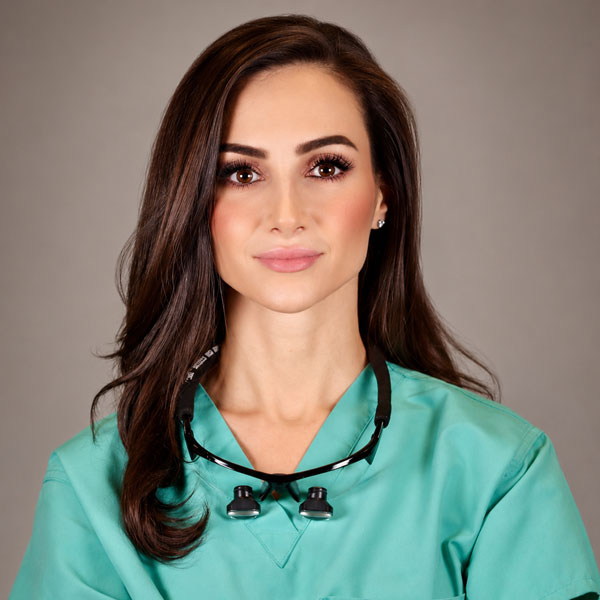
Dr. Sinehan Bayrak is a board-certified facial plastic surgeon in Philadelphia who took a brand-new practice to fully booked in under two years, with no big team, no heavy overhead, and not a dollar of paid advertising.
She earned her medical degree from the University of Arkansas for Medical Sciences and completed a five-year residency in otolaryngology and head and neck surgery at the University of Kansas Medical Center. She then trained under Dr. Edward Farrior, a past president of the American Academy of Facial Plastic and Reconstructive Surgery, in a sought-after fellowship in facial plastic and reconstructive surgery. That training gave her command of the field’s most demanding procedures: deep-plane face and neck lifts, rhinoplasty, and blepharoplasty.
What sets Dr. Bayrak apart is that she runs her practice like an operator, not just a clinician. Instead of scaling the old way with more staff, more space, and more complexity, she built a lean, technology-driven practice powered by automation and a 30,000-strong Instagram following. Her results make the case that bigger is not always better, and that profit does not require bloat. She is a member of the AAFPRS, the American Academy of Otolaryngology-Head and Neck Surgery, and The Triological Society. Her clinical philosophy is straightforward: natural, refined results that make patients look like the best version of themselves, never overdone.
Learn more: www.bayrakmd.com @dr.bayrak
HOST – Adeesha Pemananda
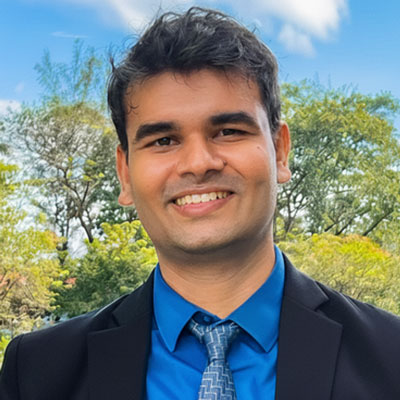
A seasoned marketing professional and a natural on-camera presence, Adeesha Pemananda is a skilled virtual event host and presenter. His extensive experience in brand building and project management provides a unique strategic advantage, allowing him to not only facilitate but also elevate virtual events.
Adeesha is known for his ability to captivate digital audiences, foster interaction, and ensure that the event’s core message resonates with every attendee. Whether you’re planning a global webinar, an interactive workshop, or a multi-session virtual conference, Adeesha brings the perfect blend of professionalism, energy, and technical savvy to guarantee a successful and impactful event.
Connect with Us:
Category: Business of Aesthetics Podcast