
About This Episode
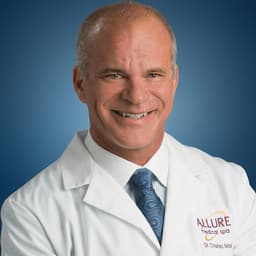
Dr. Charles Mok moves beyond the 'injectable only' model to build a preventative empire scaling HRT, weight loss, and vein health services. Part of the Business of Aesthetics podcast collection, Episode 278, “Building a Preventative Empire: Scaling HRT, Weight Loss, and Vein Health,” adds useful context for aesthetic-practice professionals. It gives providers and practice teams a useful framework for considering clinical innovation alongside patient expectations, education, and responsible implementation. Listeners can use the conversation to reflect on their current approach, discuss relevant questions with their team, and identify practical next steps.
Read the full conversation
[00:06:30] Introduction & Speaker/Topic Setup
The aesthetics industry is hitting a ceiling. As injectable become more commoditized and price wars drive margins down, the most successful practices are no longer just treating wrinkles. They are treating the entire lifespan of the patient. Welcome back to the Business of Aesthetics podcast. I'm your host, Don Adeesha. To help us navigate the massive shift towards integrated wellness, we are joined by Dr. Charles Mok. Dr. Mok is the founder of Allure Medical. After a career running an emergency department, he transitioned into private practice to focus entirely on preventing the emergencies he used to treat. Now he has built a massive multi-state footprint that seamlessly blends traditional cosmetic injectable with high retention medical services. Today we're going to discuss the financial realities of female HRTs, monetizing non-surgical weight loss, and how to seamlessly cross-sell vein health with your injectable business. This episode is brought to you by Ekwa Marketing, the digital growth partner behind this podcast and a trusted resource for aesthetic practices looking to dominate their local markets. That being said, Dr. Mok, welcome to the show.
Thank you.
________________
[00:08:08] Using Injectables as a Gateway to Preventative Wellness
Dr. Mok, the traditional aesthetic model relies heavily on constant churn of injectable appointments. As those services become more commoditized, how does pivoting your operational focus towards preventative wellness actually insulate a practice's cash flow from local price wars?
Yeah, great question. So I see the injectable patient as this kind of a filter for people who love themselves more than their possessions. Our average patient is a 47-and-a-half-year-old woman — we're about 97% women in our practice. They're looking to look and feel better with less risk. That's really the fundamental avatar for our patient. And when we look at the industry shift, the biggest industry in the future is gonna be the longevity industry. The problem is that it is very hard to attract people for wellness because the insurance industry has dominated people's mindsets about what they should and should not do.
We continue to use the platform of bringing people in for toxins and fillers, then convert them into a membership model. Once they're with us for a year or two, they'll start venturing into other services that can expand their healthspan. Healthspan is how many years you're on this planet without being sick with major issues such as stroke, heart attack, or Alzheimer's. Cosmetic patients select out the people who are going to want to pay out of pocket for things that make them healthier and live longer. Our company's goal is to add 250,000 years of healthspan to our community.
Before we move on, I really want you to make the distinction between lifespan and healthspan.
Healthspan is generally referred to as the time you live where you do not have major disease or disability. Somebody who dies in their seventies typically had a few years where they were disabled in some way — a stroke, premature Alzheimer's, or heart failure. Healthspan is the number of years you live without being sick where you can still enjoy life. If a woman goes on non-oral estrogen and progesterone, she likely adds 2.5 years of lifespan, but about three and a half years of healthspan — for something you can buy on Amazon Pharmacy for a hundred dollars a month. Expanding your healthspan actually shrinks the period of illness before you die.
So your quality of life overall increases.
The duration of quality of life. Yes. To put it in numbers: one person lives to 80 and at 75 gets Alzheimer's — that's 75 years of healthspan. Somebody else lives to 80, is fine until 79.5, and then falls and breaks their hip. That's 79 and a half years of healthspan. That was a better, more quantified life.
________________
[00:18:05] Operational Roadmap for Adding Female HRT