About This Episode
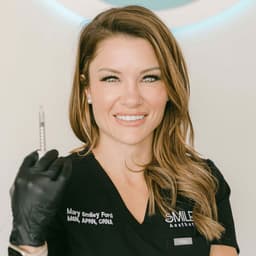
Clinical education powerhouse Mary Ford tackles the operational stress tests needed to scale a medspa without sacrificing quality. Part of the Business of Aesthetics podcast collection, Episode 275, “Scaling Without Compromise: Closing the Associate Competency Gap, Ensuring Multi-Site Consistency, and Integrating AI Automation,” adds useful context for aesthetic-practice professionals. It helps providers and owners evaluate innovations thoughtfully, connecting technology decisions to team adoption, patient value, and measurable practice outcomes. Listeners can use the conversation to reflect on their current approach, discuss relevant questions with their team, and identify practical next steps.
Read the full conversation
[00:00:12] Introduction & Speaker/Topic Setup
One of the biggest fears for any successful practice owner is the dilution effect. You spend years building a reputation for excellence, but the moment you open a second location or hire that new injector, you lose control of the quality. Welcome back to the Business of Aesthetics podcast. I'm your host, Don Adeesha. So how do you scale your business without downgrading your brand? To answer that, we are joined by Mary Ford. Mary Ford is a powerhouse in clinical education. She is a CRNA, the co-founder of Smiley Aesthetics, and faculty trainer for the Allergan Medical Institute. She has successfully navigated the challenge of scaling multi-location practice while maintaining elite clinical standards. Today we are going to be discussing the real competencies new injectors need, the operational stress test that you must pass before expanding and how AI automation is changing the way modern clinics operate. This episode is brought to you by Ekwa Marketing, the digital growth partner behind this podcast and a trusted resource for aesthetic practices looking to dominate their local markets. Now, with that being said, Mary Ford, welcome back to the show.
Thank you, Don Adeesha. So happy to be here as always.
Absolutely. Let's get into the conversation.
________________
[00:01:33] Closing the Clinical Competency Gap
Now, as an Allergan Medical Institute faculty member, you see hundreds of injectors. When an established practice owner is hiring their first or second associate, what is the specific clinical competency gap you most often see that separates a certified injector from one who is truly ready to treat patients autonomously?
Yeah, it's a good question because we get super focused in on our hands-on skill, which is obviously very important. But, you know, the market is dominated by nurses, and most nurses already are pretty skilled with a needle, actually, as it comes out. So the hands-on, it's a confidence booster and really just about nerves in what I see in training more so than the actual skill set. So my answer to what is the gap that is consistently missed is much more anatomy focused and then rheology. So two totally kind of separate things that are obviously connected and extremely important. But the rheology behind the dermal fillers, that also goes to the background of neurotoxins and just what's happening down at that molecular level, which then folds right into how and where we inject it. And then anatomy being the second, you know, not secondary by any means, but just another thing that there's a gap for it. It's just not, we're not taught facial anatomy. Most, I would argue, nursing and physicians are not intentionally taught this unless, of course, you're a derm or ENT or oculoplastic, but those are pretty specific fields. And this is just glazed over kind of in school for all of us. And then we glaze over it as well as injecting. If I know where to inject, you know, why does it matter exactly anatomically what's going on? And we find out every day more and more with research that it does. So those gaps of rheology and anatomy are just ones that, they certainly come in almost 100% of the time with zero knowledge, literally, quite literally zero, aside from maybe what we had given them in their pre-course materials. And then it's just kind of skimmed over after. They're just so focused on hands-on. So I think those are the two things I see the most, I don't think, I know, those are the two things I see most consistently.
And how do you structure a mentorship or perhaps a shadowing period at your own practice to actively close this gap before they ever see a patient alone?
You know, training's expensive, right? And so I'm going to acknowledge that first off. And while the easy answer is like, it's investing in the training, you know, it's them, you know, we either, a lot of our shattering opportunities are free, especially once internally. But, you know, it costs money to go shadow people, all these things. So that's typically kind of the cost is always the excuse. So while acknowledging that as a practice owner, still thinking that's the number one thing we should be investing in as clinical providers, but then bringing back in the money part of it, which we have to, which this podcast and business is so good with, is acknowledged. So then my best answer is when we do mentorships or training, we bring in the free resources or make sure that they are done or if it's an outside person who has no affiliation with Smiley and is just simply training with me, I just ensure they have the access and understand the importance of it. You know, the AMIs of the world, GAIN, you know, really all of the large manufacturers, but I can certainly speak to AMI and GAIN, their programs are exceptional. Like the free resources, the free tools, the videos. I mean, it's just… It's really not even comprehensible how you can go Google a webinar that costs $300 and AMI has 17 of them that are free and done with a $2 million budget. And so didactically in video, it's just… It's getting people to realize that the at-home work continues, right? We had to study to get a nursing degree. We had to study for anesthesia. We had to study for these medical degrees. That only continues at home in a brand new field of medicine. It's like you're getting a new degree, Don Adeesha. I mean, it's like you're getting a brand new degree in a certain field of medicine or a fellowship or a residency, and you have to treat it as such. And so… Back to your question, I love, you know me, I get on my little tangents, but I love structuring our hands-on and our mentorship or our shattering and with the free resources that are out there or the best options, the Patreons and stuff that are low cost, but are offering just so much value to trainees and stuff.
Absolutely. Free doesn't mean you're lacking on quality as long as you choose the correct option. Right. Now, a little bit of a follow up question to that. A lot of owners are kind of terrified to over invest in training because the projector might just leave and open up a competitor. How do you balance that rigorous clinical training with staff retention?
Yeah, so we, if I was being fully transparent, which why not, we at Smiley don't have, my answer is going to be surrounding like a callback, you know, in their contract. I think that's the best, most practical way to do it. But those can be, if I was being practical, and I hate to kind of say this out loud, those are really difficult to track down. You have to pay somebody to go after this person, and it costs to pay said person. The attorney to go after you know whatever amount of money it is and it's typically you know not nothing crazy right if i send someone you know to a two-day training or i mean depends on your definition of crazy let's just say 10 grand well an attorney going after this person for that can be you know pretty costly in doing that so it's still the best protection would be putting it in a contract you know and then if they leave within a certain amount of time you know their initial training or orientation is kind of given they owe that back to you if they don't stay for a certain amount of time. That would be contractually how to protect yourself. Outside of that, I mean, it's a risk that you take. I mean, the way I see it, and I'm overly, I've been told, I've been an overly positive person in some things, but at least I'm putting out, that person left, that would be unfortunate. They were probably not the right fit to begin with. And at least I'm putting someone out in the world, a medical provider that has my level and standard of training. And I know at least that they're going to run out and do hopefully okay, knowing that they came from that basis. So that's the very positive one. But there are some things in, you know, once again, tiny tangent and something that my sister and I, who owns Smiley with me really good on is focus. You know, that's something that we can't control. You can't control people's lives change, you know, whether it's truthful or they're just leaving to leave and following up, following them up, being mad about how an attorney going after your five grand, your six grand, you know, it's a distraction. It's ultimately a distraction. Moving on is really what's going to produce the revenue, not not the other way around. And I will say I hate I do hate to say that out loud because. You know, it's like, oh, maybe I have an employee in my current, you know, practice that has been there for three months. We've invested all this time and consider and they're considering leaving. But, you know, it just kind of is what it is. And then I'll say one more thing with this. You could utilize, you know, once again, our manufacturer trainings, our AMIs, our gains, you know, that the hands-on trainings that have people who, you know, AMI trainers who come into your practice, you know, ask your start there first, ask them if they have one available in their budget, because typically if the rep's providing, it can be free. You can include other employees and it's a great way to get some training that, you know, you don't necessarily are coming straight out of your pocket.